AWS Database Blog
Category: Amazon Aurora

Automate benchmark tests for Amazon Aurora PostgreSQL
Optimizing a database is an important activity for new and existing application workloads. You need to take cost, operations, performance, security, and reliability into consideration. Conducting benchmark tests help with these considerations. With Amazon Aurora PostgreSQL-Compatible Edition, you can run multiple benchmark tests with different transaction characteristics matching your data access patterns. In this post, […]
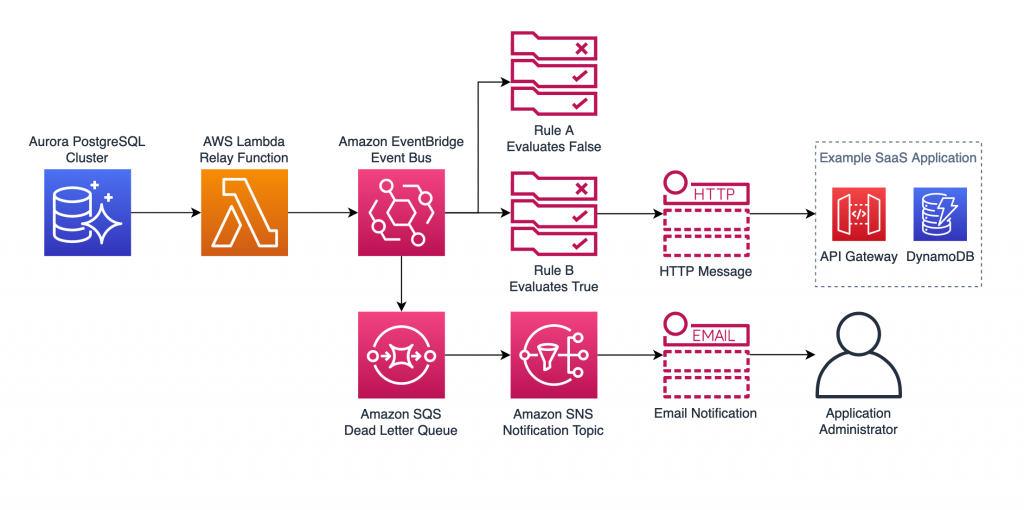
Send webhooks to SaaS applications from Amazon Aurora via Amazon EventBridge
Customers developing software as a service (SaaS) applications often need to send outgoing webhooks (HTTP call-backs in response to events) to other SaaS applications such as Salesforce, Marketo, or ServiceNow. When processing webhooks, you often have to implement custom logic or services to enqueue and emit these events. This introduces additional complexity and operational overhead. […]
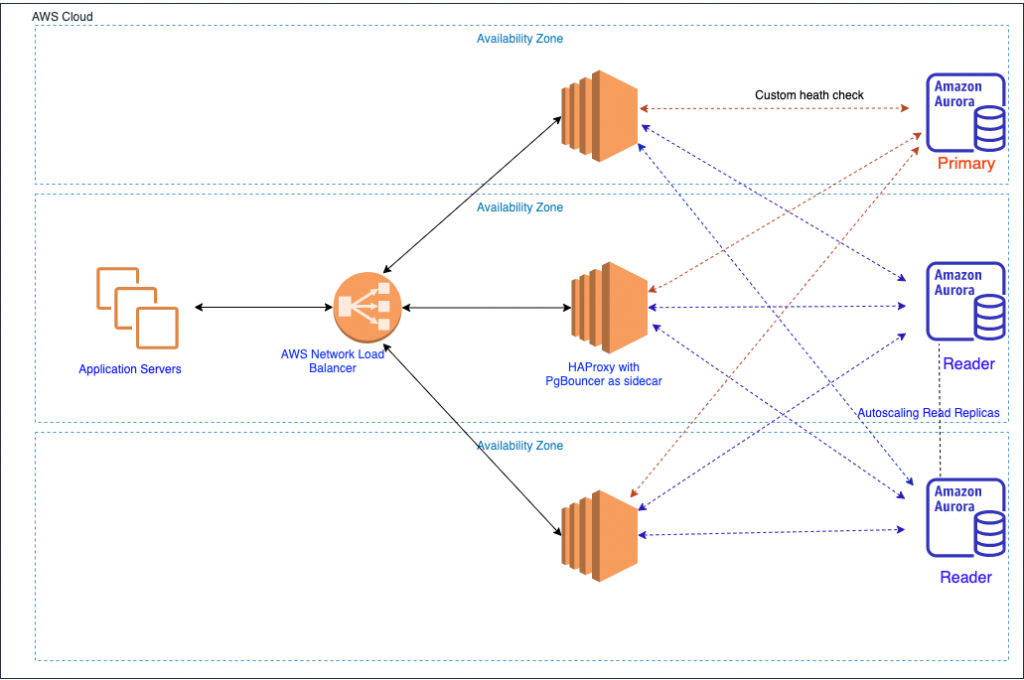
Set up highly available PgBouncer and HAProxy with Amazon Aurora PostgreSQL readers
Relational database engines are typically monolithic by design, therefore the easiest method to horizontally scale a workload on them is to scale read operations with multiple read replicas. Some of the strongest motivations for Amazon Aurora PostgreSQL-Compatible Edition adoption include low replication lag and the ability to spin up a reader node in minutes regardless […]

Filter Amazon Aurora database activity stream data for segregation and monitoring
Most organizations need to monitor activity on databases containing sensitive information to ensure security auditing and compliance. Although some security operations teams might be interested in monitoring all activities like read, write, and logons, others might want to restrict monitoring to activities that lead to changes in data and data structures only. In this post, […]

Upgrade your Amazon RDS for PostgreSQL or Amazon Aurora PostgreSQL database, Part 2: Using the pglogical extension
This is the second of a two-part post. In Part 1, we discussed various approaches to upgrade Amazon Relational Database Service (Amazon RDS) for PostgreSQL and Amazon Aurora PostgreSQL-Compatible Edition databases and explained the high-level steps in these approaches. In this post, we demonstrate how to upgrade an RDS for PostgreSQL database using the pglogical […]

Upgrade your Amazon RDS for PostgreSQL or Amazon Aurora PostgreSQL database, Part 1: Comparing upgrade approaches
If you need to upgrade your Amazon Relational Database Service (Amazon RDS) for PostgreSQL or Amazon Aurora PostgreSQL-Compatible Edition database to a newer version, you can choose from in-place and out-of-place upgrade options. You may prefer either in-place upgrades (where you don’t have to create a new DB instance) or out-of-place upgrades depending on the […]

Speed up time series data ingestion by partitioning tables on Amazon RDS for PostgreSQL
In the post Designing high-performance time series data tables on Amazon RDS for PostgreSQL, we explained how to use partitioned tables as a strategy to improve performance when handling time series data. In this post, we focus on data ingestion and why partitioned tables help with data ingestion. PostgreSQL has had the ability to handle […]

Work with files in Amazon Aurora PostgreSQL and Amazon RDS for PostgreSQL
An Oracle to Amazon Aurora PostgreSQL-Compatible Edition or Amazon Relational Database Service (Amazon RDS) for PostgreSQL migration into the AWS Cloud can be a multistage process with different technologies and skills involved, starting from the assessment stage to the cutover stage. For more information about the migration process, see Database Migration—What Do You Need to […]

Automate the Amazon Aurora MySQL blue/green deployment process
December, 2022: Amazon Relational Database Service (Amazon RDS) now supports Amazon RDS Blue/Green Deployments to help you with safer, simpler, and faster updates to your Amazon Aurora and Amazon RDS databases. Blue/Green Deployments create a fully managed staging environment that allows you to deploy and test production changes, keeping your current production database safe. Learn […]

Access Amazon Location Service from Amazon Aurora
Organizations typically store business and customer data in databases like Amazon Relational Database Service (Amazon RDS) and Amazon Redshift, and often want to enrich this data by integrating with external services. One such enrichment is to add spatial attributes such as location coordinates for an address. With the introduction of Amazon Location Service, you now […]