- Amazon Redshift
- Features
- Amazon Redshift Data Sharing
Amazon Redshift Data Sharing
Share data securely across warehouses without copying data
Benefits
-
Make data available for use in multiple warehouses as soon as it's in any Amazon Redshift database. Extract, transform, and load (ETL) the data using one warehouse and the data is accessible within and across organizations and AWS regions. No need for data engineers to build and maintain multiple pipelines that ETL the data into multiple places.
-
Access data with compute of choice: different sizes (nodes or RPUs), types (provisioned vs serverless), and pricing plans (on-demand vs Reserved Instances). Choose the warehouse based on the price-performance needs of the team, application, or workload. Track and monitor usage by team, controlling costs and increasing transparency
-
Eliminate data silos and data duplication as teams don't have to move or copy the data from one location to another. Teams can collaborate on live data at the point of source to act on data quickly. Access is governed centrally through AWS Lake Formation, enabling fine grained access controls.
-
Access data from 3rd party providers securely and easily, without the hassles of manual licensing processes or conducting ETL operations into your warehouse. Simply subscribe to the data set in AWS Data Exchange from Amazon Redshift. Data providers can monetize their data and provide value to their customers by making the data available for consumption in customer warehouses in just a few clicks
Amazon Redshift Data Sharing
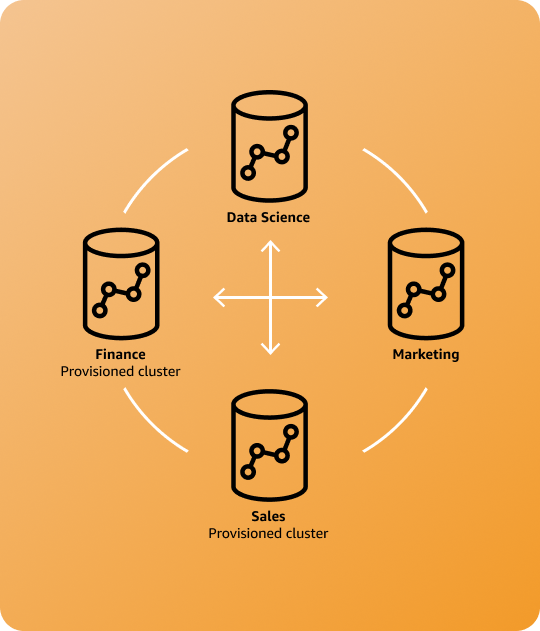
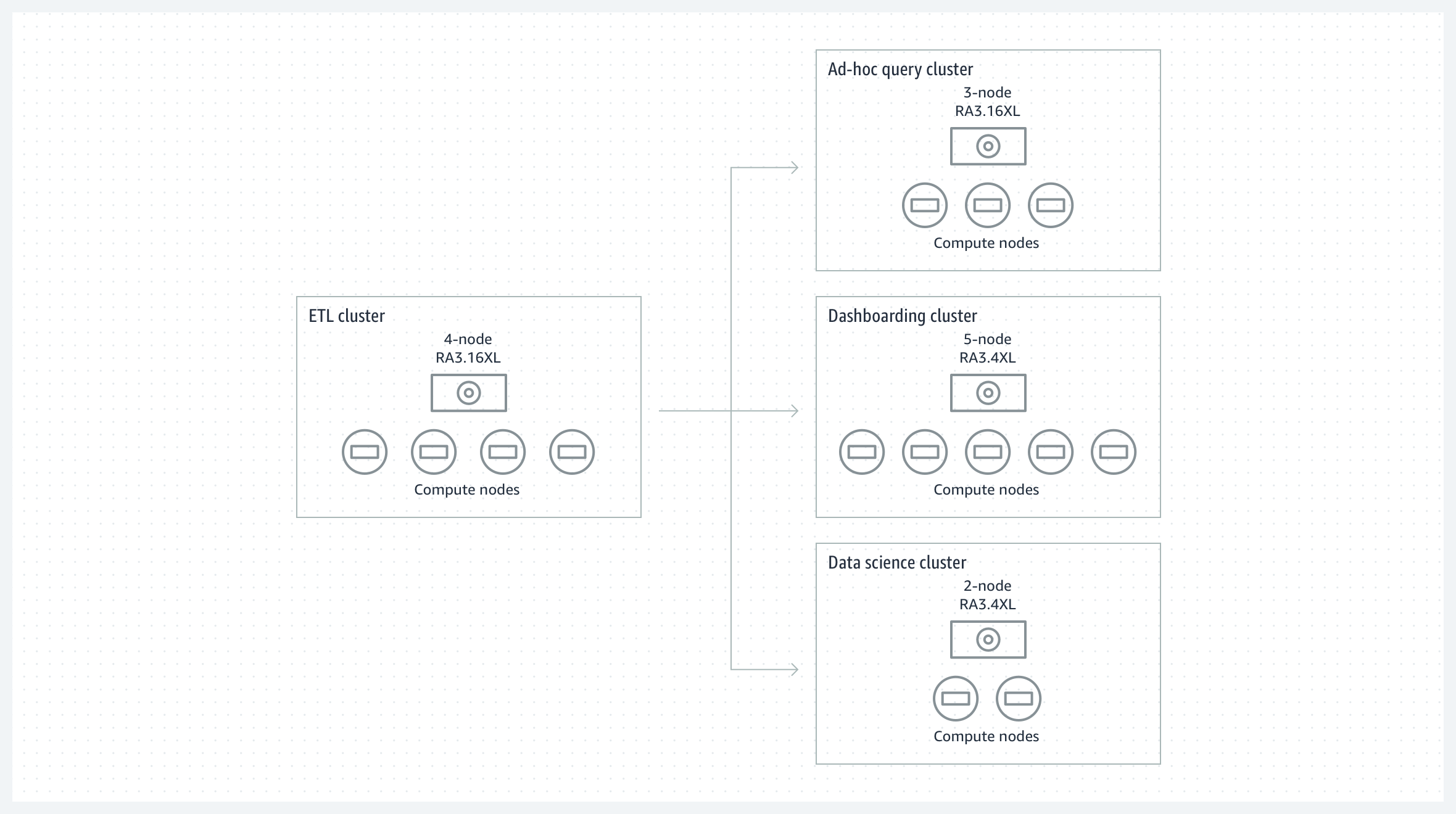
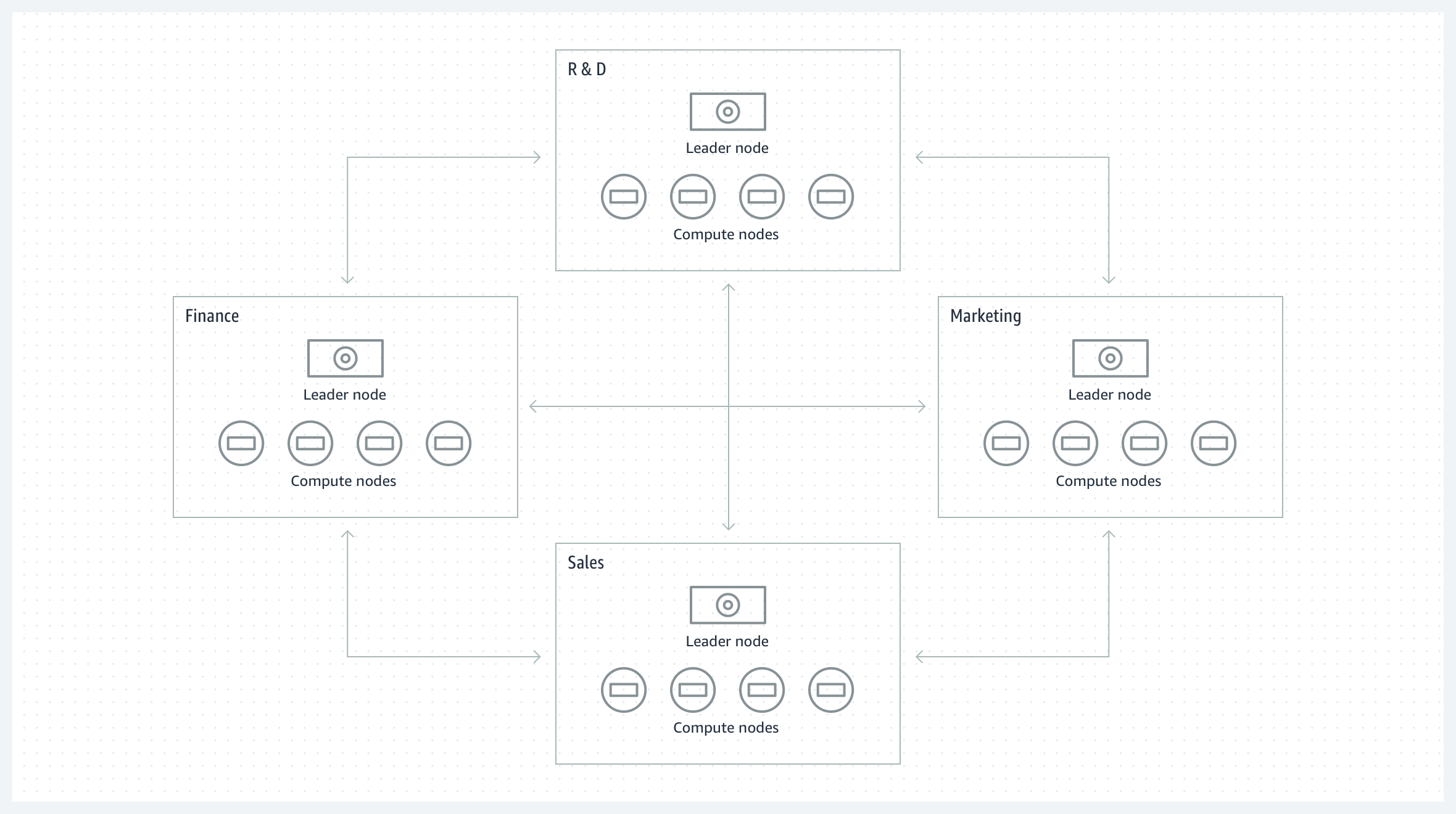
Amazon Redshift data sharing allows you to share data within and across organizations, AWS regions, and even 3rd party providers, without moving or copying the data. Read from and write to the same Redshift databases using multiple data warehouses and extend the ease of use, performance, and cost benefits that Amazon Redshift offers to multi-warehouse, data mesh architectures. Enable access to live, up-to-date data within and across the organization instantly, eliminating multiple Extract, Transform, Load (ETL) pipelines, enabling collaboration on data, and reducing time to insights. Additionally, it allows you to use multiple warehouses of different types/sizes for ETL so that you can tune your warehouses based on your write workloads’ price-performance needs. With integration into AWS Data Exchange, AWS’s marketplace housing thousands of 3rd party data sets, Amazon Redshift users can easily and securely license 3rd party data sets to combine with the data in their Redshift databases for holistic analysis and power new data monetization opportunities.
Use cases
Workload isolation and chargeability
Cross-group collaboration
Data and analytics as a service

Development agility
