Migration & Modernization
Reimagine mainframe applications with traceability and speed using AWS Transform
Enterprises need their core systems to support business transformation and AI. When those systems are undocumented mainframe monoliths, they become the bottleneck. Reverse engineering a mainframe application, capturing its business intent, and translating that into modern code could take months or years for even a small set of business functionality. Many organizations settled for migration approaches that carried their legacy constraints forward. Recent advances in AI have made reimagining these applications practical, but how AI is applied determines whether the result can be trusted.
General-purpose AI tools break down at enterprise scale in three ways: a pipeline tuned for one application fails on the next, they reason only from source code without understanding system-level context, and they leave no reliable trace from source through to modernization requirements. AWS Transform addresses this by building a deterministic ground truth of the system before applying AI reasoning, so every generated rule can be audited and traced back to the mainframe source.
At the AWS New York Summit 2026, two new workflows were announced to solve these challenges for customers. The Assess workflow identifies modernization starting points by business function. The Reimagine workflow extracts business rules with full traceability and generates development-ready requirements for forward engineering.
This blog describes the capabilities of the Assess and Reimagine workflows:
- Business Function Catalog discovers business functions from the codebase to produce a catalog of logical modernization boundaries. This gives both business and technical stakeholders a shared language for scoping transformation, replacing spreadsheet-driven guesswork with evidence from the code itself.
- Reimagine produces formal functional requirements that are technology-agnostic and include testable acceptance criteria, replacing undocumented business logic in applications with a verified, traceable starting point for forward engineering.
Assess and Reimagine Experiences
Instead of manually inventorying programs and tracing dependencies, AWS Transform’s new Assess and Reimagine workflows analyze your codebase and organize it into business functions: logical boundaries derived from the code. Once identified, you select one or many business functions to reimagine and generate modernization requirements for the selected scope. Start with a single business function, take it end-to-end, and scale once the approach is proven.
Both workflows begin with code analysis and data analysis to build a complete inventory of the codebase and map how programs interact with data stores.
The following diagram shows the capability flow for the Assess and Reimagine objective.
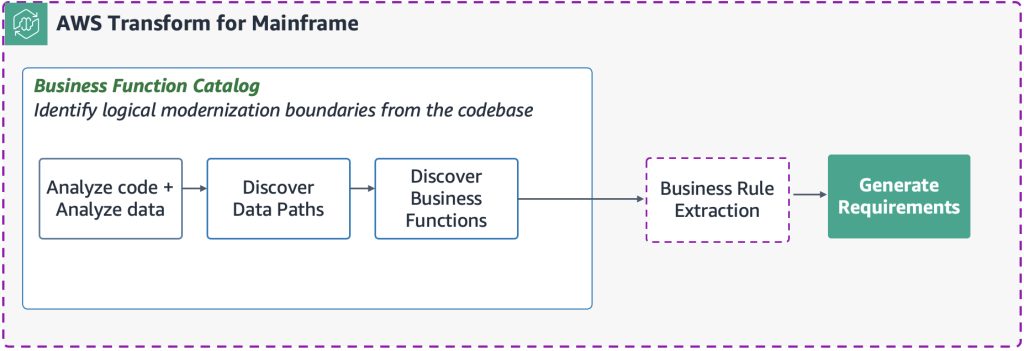
Figure 1: Assess and Reimagine – Capability flow
To get started, create a new job in AWS Transform for mainframe workspace and select “Assess and reimagine” as the objective.
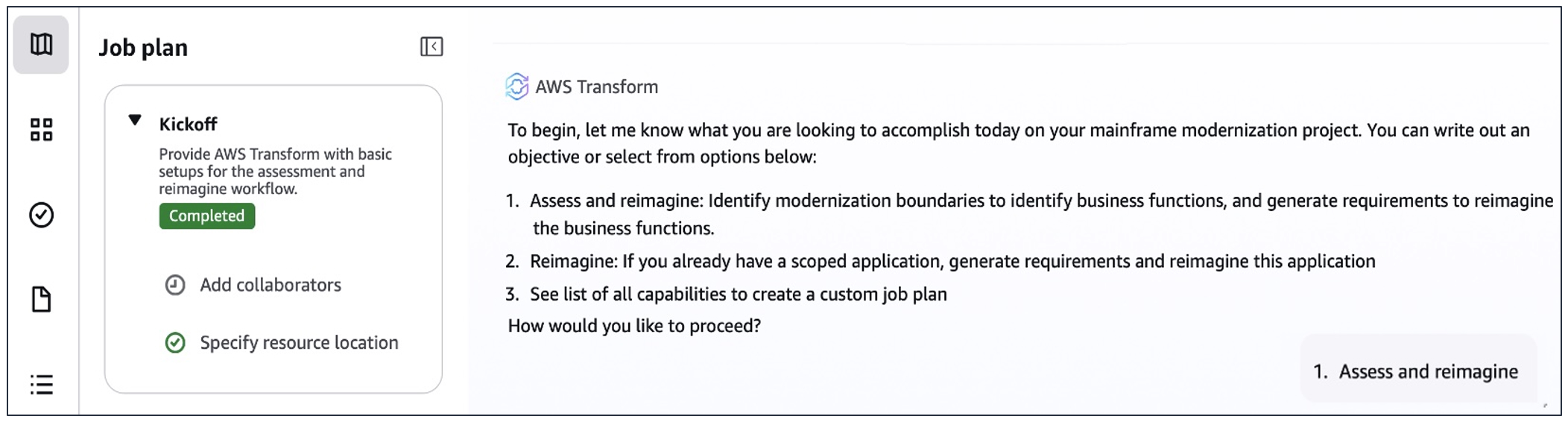
Figure 2: Create a job with objective – Assess and reimagine
Business Function Catalog
Code analysis is the foundation of the business function discovery process. AWS Transform for mainframe ingests the source code, classifies artifacts, builds dependency graphs across programs, entry points, data stores, and supporting artifacts, and measures code complexity. The service highlights potential missing files and files in unsupported languages that may impact downstream business function discovery. The service surfaces these gaps early so teams can resolve them before proceeding.
Data analysis maps Db2 tables and VSAM files in the portfolio and identifies which programs read, write, update, or delete them. Data lineage traces the flow of data across programs and JCL jobs, showing which components access each data store and the logical names used. Data dictionary catalogs field-level metadata for mainframe copybook structures and Db2 tables, including field names, types, byte offsets, and natural language descriptions. Together, these outputs provide the data foundation for tracing data paths.
Discover Data Paths
Next, AWS Transform identifies the distinct data paths present in your application. A data path captures the string of business logic executed from an entry point trigger through to a specific output. If an entry point executes a program that writes to one or more datastores, that’s one data path. If the same entry point follows different branches through the code to produce different outputs, each branch is its own data path.
Example: In the AWS CardDemo application, a user admin program, COUSR00C, can either create a user (COUSR00C → COUSR02C →USRSEC) or delete a user (COUSR00C → COUSR03C →USRSEC). Each forms a separate data path.
AWS Transform traces these paths deterministically across the codebase.
Discover business functions
Data path discovery in the previous step is deterministic: the same code produces the same paths every time. Business function grouping uses an LLM to name, describe, and group those paths into business functions (online, batch, or mixed). The output is a catalog organized by business process, not by program name or JCL job ID.
Beyond the catalog, the service maps dependencies between business functions by identifying shared data stores. This gives teams visibility into which functions are self-contained and which are connected, directly informing wave planning and migration sequencing. Self-contained functions can be prioritized for early waves while tightly coupled ones are planned to move together.
Customers can select multiple business functions for modernization using the chat interface. Once the business functions are selected, their programs and data paths are packaged for the reimagine stage of the pipeline.
Example: Initiate the Reimagine workflow for Business functions ‘Credit Card Account and Card Management’, ‘Transaction Processing and Interest Posting’, and ‘User Security Profile Management’.
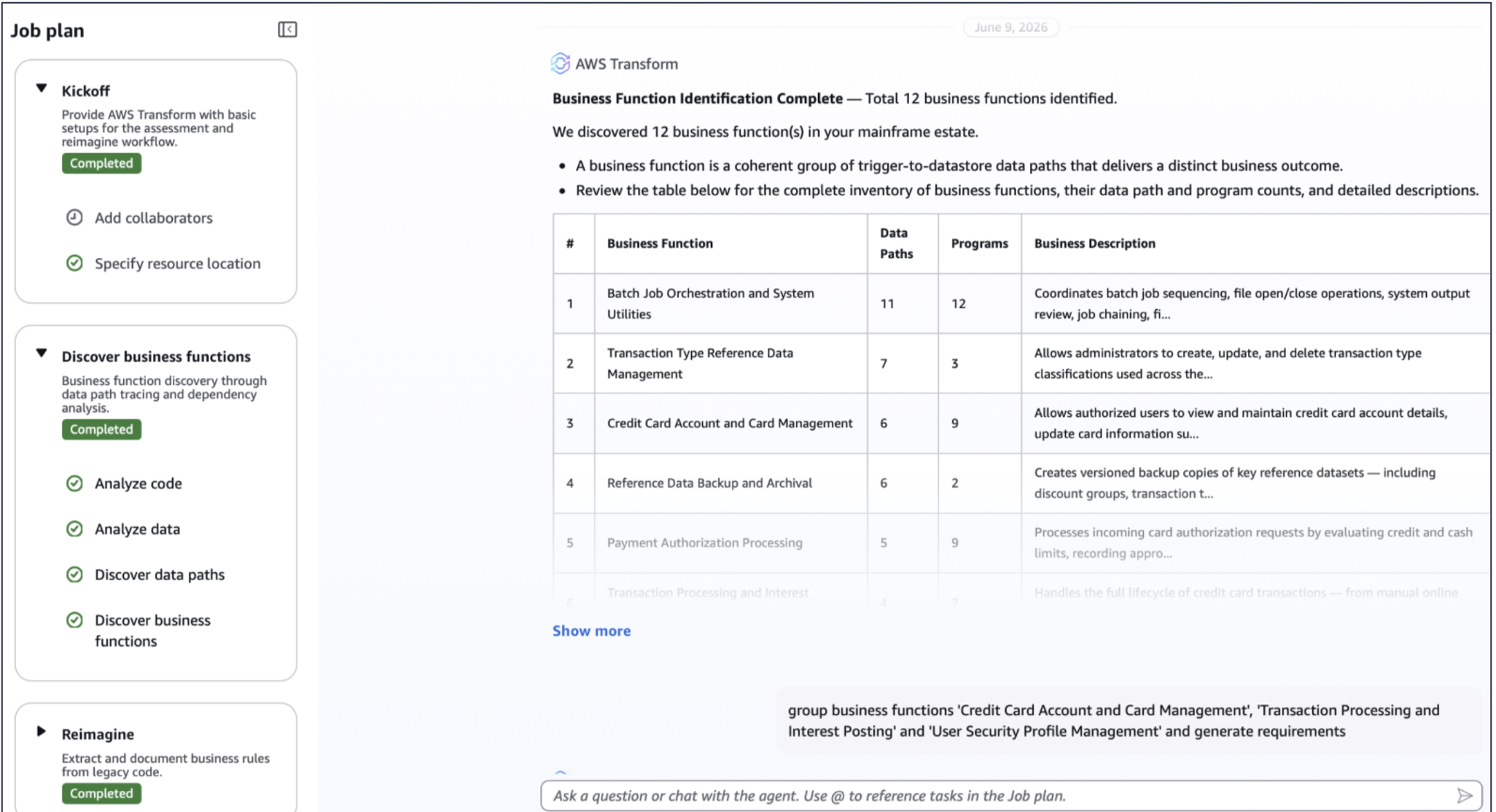
Figure 3: Generating requirements for business functions
Reimagine
After reviewing the assessment output, you select one or more business functions to reimagine. This triggers business logic extraction followed by requirement generation for selected business functions.
Business Rule Extraction
The business rules encoded in mainframe programs and batch jobs represent the intellectual property of mainframe applications. Extracting these rules with full traceability to source code is critical for any modernization effort.
AWS Transform performs deterministic static analysis on each program. The service slices the code at every business-significant operation (a file update, a screen display, a database update, a program call), traces backward through all data dependencies, and produces an evidence pack for each behavior. The service extracts business rules from the evidence packs, not from comments or naming conventions, but from the actual execution logic.
Each extracted rule carries a natural language description, structured acceptance criteria, and exact source line traceability back to the original code. Beyond rules, the service produces semantic enrichment that maps cryptic mainframe field names to business entity names and decodes domain values into their business meanings. The result is a complete representation of what each program does in a language that business and technical teams can read.
Generating Requirements
Requirements are the primary input for forward engineering, translating existing system understanding into a natural language description for what the modernized application must deliver. The service groups requirements by the reimagine path chosen and provides traceability from requirements to rules to the mainframe source code.
Each business function folder contains everything needed to reimagine and rewrite the application:
- Requirements contain user stories with structured business rules in EARS (Easy Approach to Requirements Syntax) format. Each rule is classified by behavior type (Event-driven, State-driven, Ubiquitous, or Complex) and includes data flows showing what the capability reads and writes. For example, a single capability produced 47 formal requirements organized under three user stories, each with testable acceptance criteria.
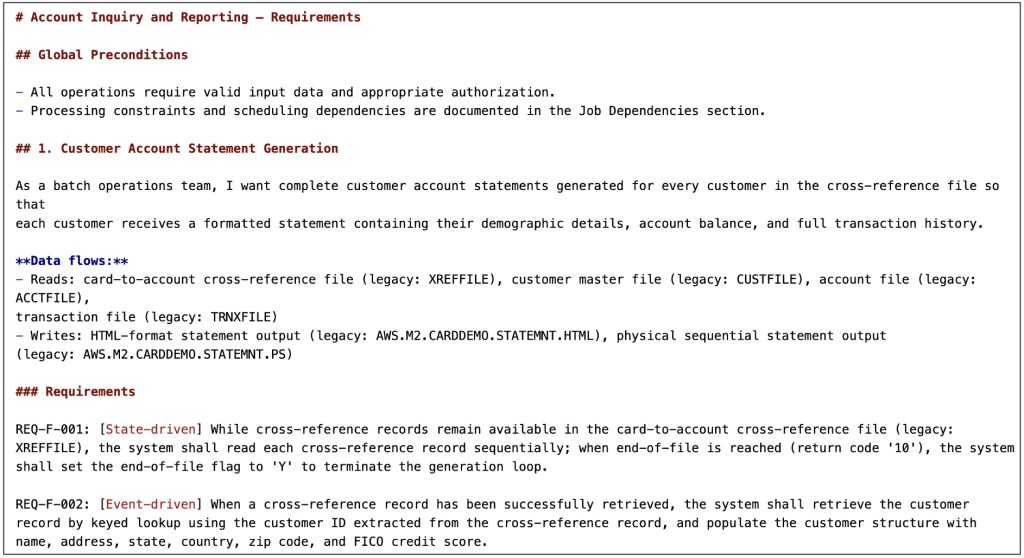
Figure 4: Example requirements.md output showing global preconditions, data flows, and formal requirements classified as State-driven and Event-driven
- Traceability maps every extracted business rule to a disposition: captured (implemented in this capability’s requirements), not applicable (platform-specific mechanics with no cloud equivalent), or delegated (handled by a shared module). Each entry traces back to exact source code lines. The key metric is “not accounted for = 0,” which proves that no business logic was lost during the translation from mainframe code to modernization requirements.
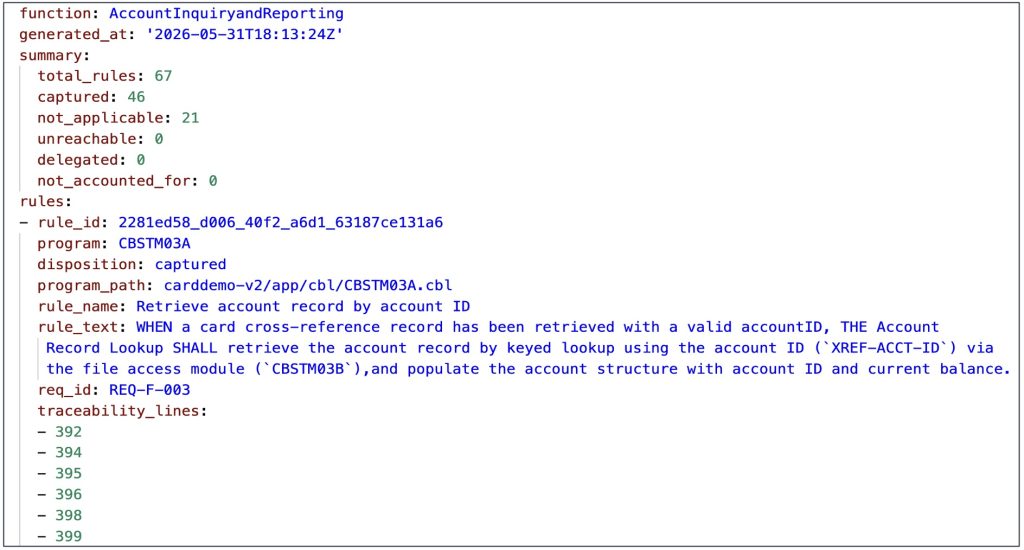
Figure 5: Example traceability output showing rule completeness summary and a captured rule mapped to its requirement ID and source code lines.
These artifacts feed directly into AI coding tools and IDEs, such as Kiro. A developer or coding agent picks up a capability folder and has everything needed to build the modern application: business logic, data schemas, traceability, and program metadata. Program metadata informs architecture decisions: online programs become APIs, batch programs become event-driven processors, subroutines become shared libraries. Each capability folder is self-contained and can be worked independently.
These requirements are ready for code generation in any modern IDE. Customers can connect Kiro IDE directly to AWS Transform through the AWS Transform Kiro Power to access generated artifacts and create jobs from within the IDE.
Conclusion
AWS Transform for mainframe delivers an automated, traceable pipeline from source code to implementation-ready requirements that development teams can act on immediately.
Whether the goal is understanding the full portfolio or identifying business functions to modernize, the Assess and Reimagine workflow provides a clear path from mainframe code to modern application requirements.
To get started with AWS Transform for mainframe, explore the following resources:
- Getting started with AWS Transform to launch a workspace and create your first Assess and Reimagine job.
- Watch the demo to see the end-to-end workflow in action.
- Learn more about AWS Transform for mainframe for detailed documentation on capabilities and configuration.