AWS Pioneers Project
European innovation, told by those who built it
Iktos uses AI and robotics to accelerate drug discovery
Founded in 2016, Iktos is one of a handful of firms that saw the early potential of AI in drug discovery.
“It was kind of a revolution in our minds, saying that maybe you can use AI to optimise molecules,” explains Nicolas Do Huu, co-founder and CTO of Iktos.
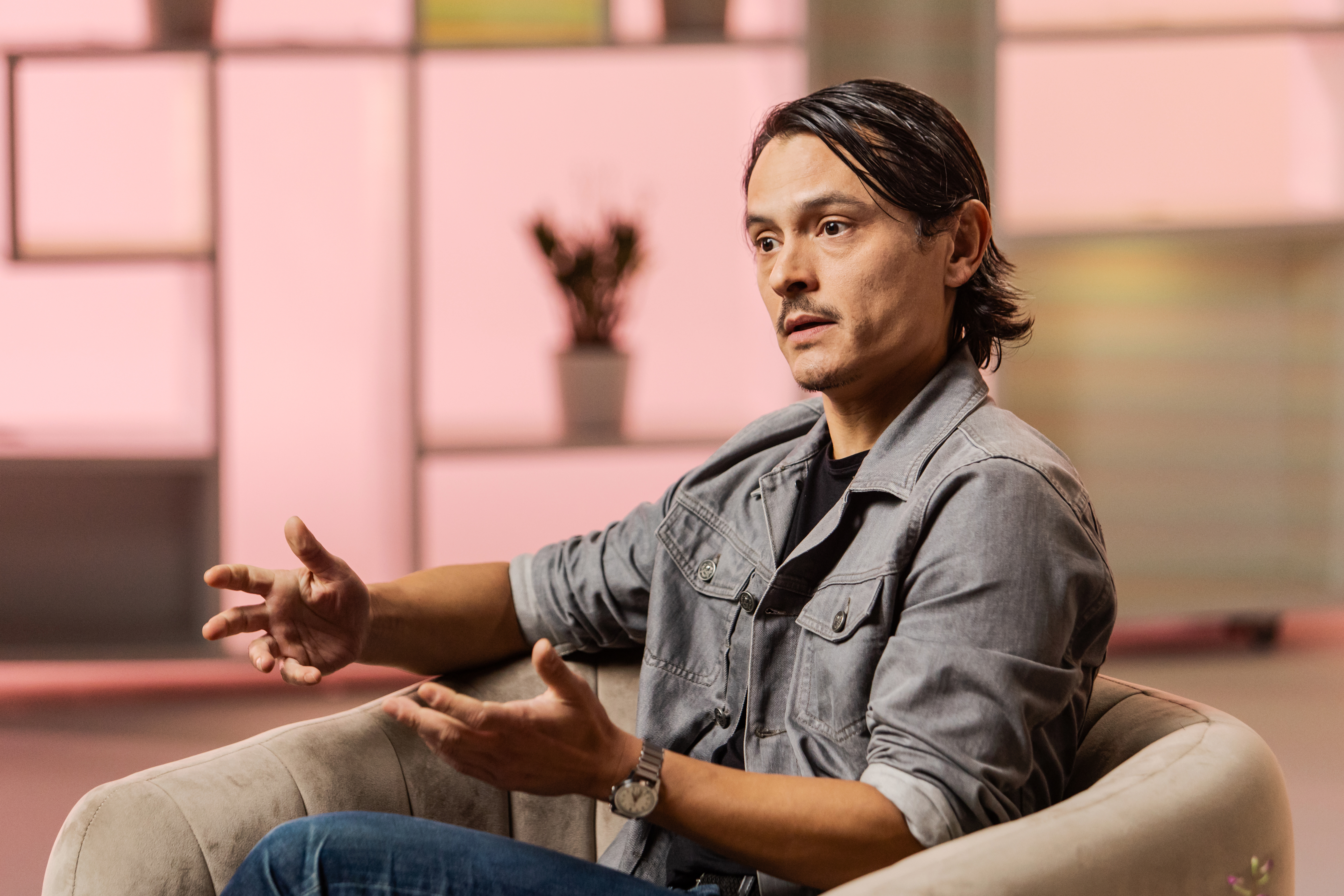
Meet Nicolas Do Huu
co-founder and CTO of Iktos
“It’s one thing to be able to create new structures, but it’s another thing to optimise them to end up with a potential drug candidate. We trained our first-generation AI and proved that it was able to create a molecular structure that was not available in the training data set,” he adds.
Dubbed Makya, this AI system was only the first stage.
“When you have a molecule, you need to know how to synthesise it and test it. So we moved into that area of research and created the first software available on the market to do that, called Spaya,” he explains.
Cutting development times to save lives faster
The third element of what the firm does is a robot that can create the molecules autonomously.
The robotic arm is around two metres in size, can do 100 tasks at the same time, and takes up a small space in the lab. “It is able to do the job of 30 chemists. That’s a huge improvement in the productivity of the lab,” says Do Huu.
Helping the robot along is another AI system called Ilaka.
“You need to select a good recipe for that molecule, and Ilaka is able to do this and to ask for orders from providers,” he says.
This combination of AI and robotics is unique in the healthcare industry, but the end-to-end chemistry it allows is crucial in a world where the potential number of molecules waiting to be explored is in orders of magnitude larger than the number of grains of sand on Earth.
Dealing in such mind-boggling numbers means it is no surprise that the current process is slow.
Bringing a new drug to market typically takes 10–15 years and costs an estimated US$2.5 billion when accounting for both successful and failed programs. The discovery phase alone can take 4–5 years and cost over $100 million before clinical trials even begin. The firm is on a mission to reduce this timeline, enabling faster patient access to life-saving treatments.
“Once you have an idea of what you want to treat, we are here to do good chemistry and provide a drug candidate. The process of medicinal chemistry can be reduced from five years to two or three years depending on the project,” says Do Huu.
So far, the firm has partnered with more than 60 pharma companies, including Merck and Pfizer, and has recently signed a strategic collaboration deal with Servier, with potential total value over €1 billion. In parallel, Iktos is advancing Iktos is advancing its own pipeline of drug candidates across multiple therapeutic areas, including oncology, obesity, and autoimmune diseases.
Moving to the cloud unlocks new possibilities
It has also secured a 2.5m euro grant from the European Innovation Council, and it will use the money to expand the tasks done by the robot—analysing and testing the molecules for things such as toxicity.
Initially, the firm used its own data centre.
“After four years, we decided to move to Amazon Web Services (AWS). It was a very big decision for us, but it was a good bet because now we are seeing previously unimaginable outcomes,” says Do Huu.
Although the robot is not directly connected into AWS, the software driving it is.
“We need to integrate different software from different vendors, and we can do that in a hybrid way, connecting it to AWS and securing it,” says Do Huu.
Now the firm is also looking at using AI agents.
“We discovered it was very complex to create software that needs to be configured by users who are medicinal chemists and may not know how AI should be configured. The solution we have proposed on Amazon Bedrock will be key to our integration of conversational AI into our product, to help the user understand what you should do in a specific context. Amazon Bedrock can help our teams innovate using Generative AI securely and cost effectively and helps them to rapidly prototype and deploy AI applications to accelerate project timelines.”
Beyond the tech, the firm has appreciated both the practical help—AWS Promotional Credit offered to manage costs for start-ups—and the advice AWS offers.
“It is not just technologically but also how they talk to customers and try to understand their needs; they are not driven by selling the tech but rather trying to solve the problem. I think that mindset is a blessing,” says Do Huu.
“It’s a great collaboration, and more indirectly, I was quite inspired by what AWS does to make a project a success. Things like thinking backwards, putting the customer first, and how to listen to solve problems.”
Embodied AI in drug discovery
Iktos predicts that the future of drug discovery might lie not in humans simulating chemical processes but with allowing AI to combine with robotics to come up with the answers.
“AI needs embodiment because if we want to use it to solve real problems, then you need AI to do its own experiments,” he says.
What robotics proves is that exhaustive simulation is not always the most efficient path. Biology is inherently complex and only partially captured by predictive models; as a result, rapidly synthesizing and testing molecules using automated robotics can outperform weeks of in silico optimisation.
In fact, he thinks the ultimate aim will be to create what he calls “a chemistry computer”, which will be a mix of AI, computer processing, and a micro-chemistry reactor.
That will, he believes, create a new era in personalised medicine.
“Take your DNA, see the proteins you have, and find the cure you need for your DNA. I think that maybe in a decade there will be very large investment in that space.”
Behind the scenes