AWS Pioneers Project
European innovation, told by those who built it
Mindflow and augmenting human intelligence with AI agents
Paul-Arthur Jonville, co-founder of Mindflow, knows the power of AI in a more personal way than many.
“I have a disability which means that I need to use voice-recognition software to do some of my work,” he explains.
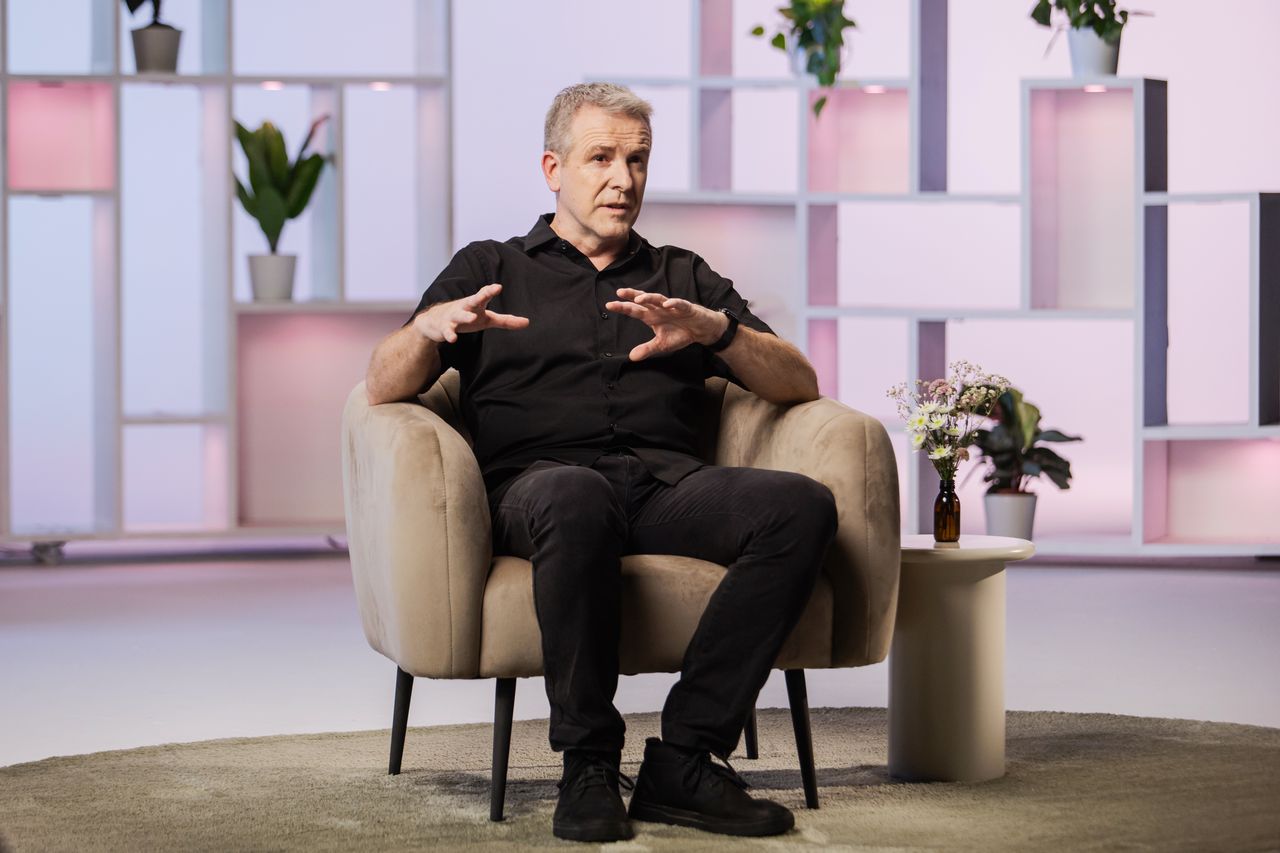
Meet Fabrice Delhoste
CEO/co-founder, Mindflow
It gave him what he describes as “an automation mindset”, which in turn meant he saw the potential for the tech in the wider corporate world.
“I wanted to bring automation at scale,” he explains.
When he met Fabrice Delhoste, who would become his co-founder and CTO, they began by looking at what was currently available.
“He tested all the competition and said: ‘We can do better than this’,” explains Jonville.
Using AI to fight hackers and protect companies
Mindflow, a French start-up, was born from this vision. The company helps large businesses create, deploy, and manage automation using no code and AI agents.
The type of tasks it can automate range from IT and cybersecurity operations to repetitive back-office processes across teams throughout the enterprise.
“Provisioning the tools and access a new employee needs can take days of back-and-forth, but with AI agents you can reduce many of those steps to minutes,” says Delhoste.
“Or let’s take the security operation centre. Those people are doing a lot of repetitive actions. They could have 40 tabs open in their browsers for different tools. But if you build some automation flows–AI agents–to do the repetitive tasks, then the human can focus on the real value they can bring.”
As the fight against hackers becomes ever more intense, it is hugely important that companies are equipped with the right AI tools, he adds.
“We are the good guys. AI is a way to protect companies against hackers. Hackers are using AI, so if you don’t use it too, you lose basically.”
Unlocking more time for strategic work
Mindflow estimates that, on average, between 20 to 40% of any corporate team’s job can be replaced with AI agents, freeing up their time for more valuable thinking.
“AI unlocks things that were impossible before,” says Delhoste.
The process is done using no-code, which offers pre-defined interfaces and templates for firms to choose the application that best suits them.
“It means that it’s visual and you can verify it. It’s completely auditable,” explains Delhoste.
“You as a human have a way to understand what has been generated because it is in a flowchart. And not like Python code, which is only understandable to programmers.”
The firm uses its own AI agent to scope the projects before they are implemented.
“We will suggest 20 to 50 use cases that make sense and decide with the client which will be the first one that will create a real impact. So we start with one team and they do around 20 use cases, and then in six months we are across five teams and they are doing 100 use cases,” says Jonville.
“And this is a pattern we see with all of our customers. It’s a journey, a transformational one, and the company needs to be ready,” he adds.
Augmenting human intelligence
With such quick transformation, the firm needed a technology provider which could also move fast.
“Amazon Web Services (AWS) works with us at the top level of innovation,” says Jonville, adding that it has allowed the firm to have “global reach”.
Delhoste adds: “From day one, AWS allowed us to build faster. Rather than reinventing the wheel, we used a lot of the serverless technologies in AWS so that we can focus all of our workforce on the value it delivers and not the technical stuff.”
Much of its AI is built on Amazon Bedrock.
“It allows us to speed up the availability of LLMs and integrate any kind of LLM. That matters for us because people want different models. So for us, it is a way to be completely agnostic and to have a competitive advantage,” he adds.
Agentic AI has been much hyped, and many are concerned that automating tasks will mean replacing the human in the process. Delhoste does not see it that way.
“In mission-crucial workflows, you need the human in the loop. You need control in the same way you ask your manager to check up on your work, so you will check up on the work of an agent.”
For Jonville, artificial intelligence will augment human intelligence as the two work more closely together.
“People will have more responsibility. Everyone will have to become managers of the AI fleets that work for them, and so they will need to be more strategic, think at a higher level of process, and they will reduce their personal tasks along the way,” he says.
Democratising coding with AI-powered tools
The rise of alternative ways of coding, either via no code or vibe coding —in which AI generates code from natural language prompts—has led to concerns that human coders will be out of jobs.
Delhoste doesn’t think we need to worry.
“I don’t believe that human developers are going to be out of the picture because even if you’re using vibe code, you need people that can read the code. You cannot just trust that.”
And it is actually a chance to democratise coding.
“When you want to run automation at scale, you start to understand some of the code logic. We have some individuals in our companies or even our clients that are not coders but are now able to deploy complex automation, so they have stepped up their skills.”
Mindflow currently works with around 100 enterprise partners and intends to grow.
“We are expanding towards the US, opening an office in New York so that we will be able to have international reach,” says Jonville.
But there is also much to do with existing clients as they automate more and more of their business processes.
“We are accelerating on AWS and making more than one billion in revenue through AWS would be an incredible milestone,” he adds.
But the real impact on businesses will be a human one.
“We give back time to people by transforming the way that companies are working,” he says.
Behind the scenes