AWS Pioneers Project
European innovation, told by those who built it
MLL: The German lab offering quick diagnoses for blood cancers
The World Health Organisation’s classification of leukaemia and lymphoma runs to 900 pages, with 60 different sub-types of leukaemia alone.
It is a tricky disease to pinpoint, but pioneering work at places such as the MLL Munich Leukemia Laboratory means it doesn’t have to be a death sentence for those diagnosed.
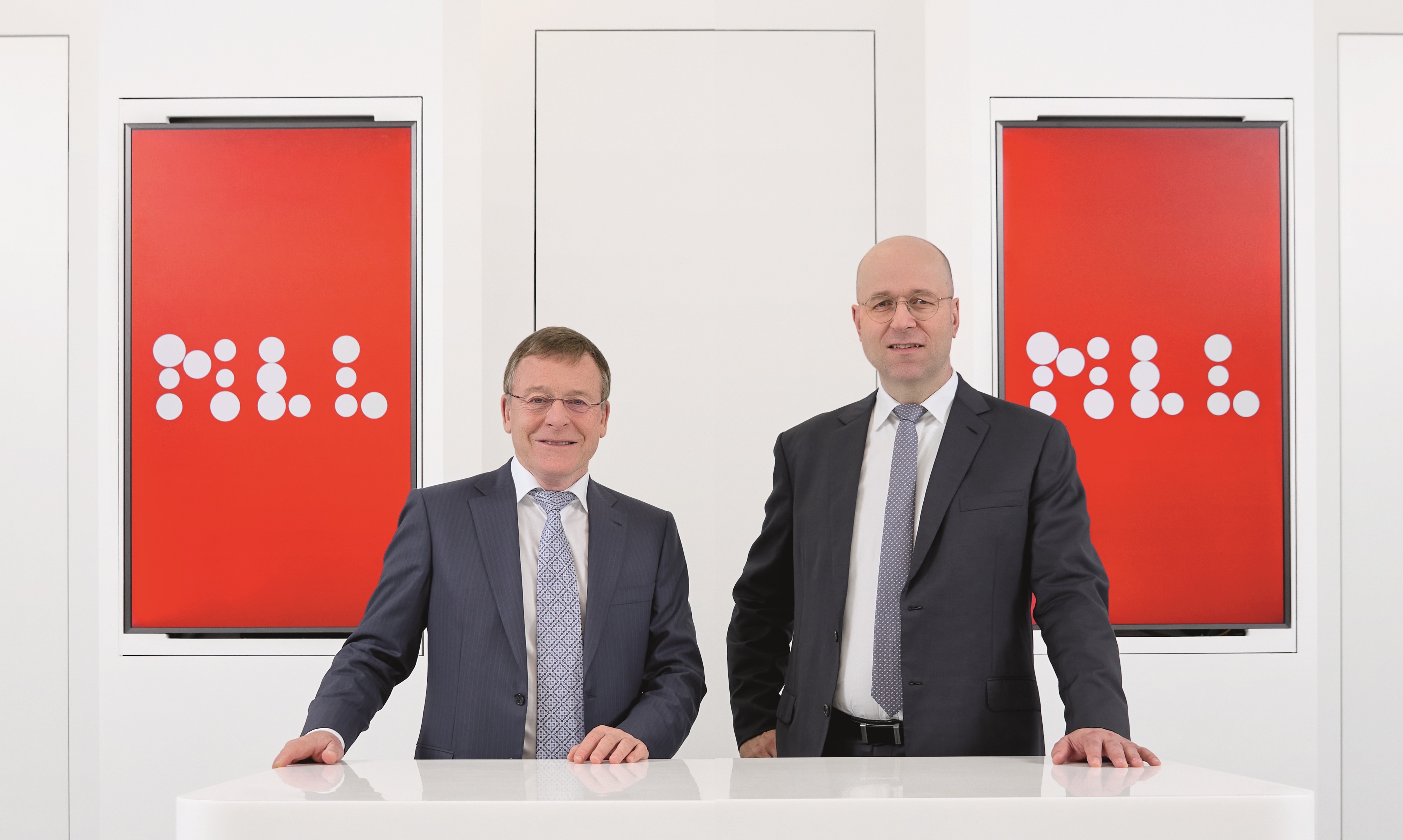
Meet Professor Torsten Haferlach and Professor Wolfgang Kern
Co-founders of MLL
Take Anna (not her real name), who went to her general practitioner with unexplained bleeding. Her doctor took blood samples and found her platelet count to be worryingly low, so she was sent to a haematologist, who took more samples of her blood and bone marrow. These samples were then sent to MLL.
“We diagnosed a very specific subtype of acute leukaemia. It’s rare—less than 5% of them—but we can diagnose it here within four hours. It needs a very specific treatment. If that starts the next day, the cure rate is 95%. But if the diagnosis and the treatments are wrong, the cure rate falls to 40%,” explains Professor Torsten Haferlach, who co-founded MLL with fellow doctor Professor Wolfgang Kern.
Anna’s story had a positive outcome, at least in part thanks to the pioneering work at MLL.
Diagnosing and treating patients with leukaemia
MLL has investigated more than 1.4 million cases over the last 20 years. While a lot of the work requires cutting-edge technology such as AI and genome sequencing, patients remain at the heart of it.
“We are doctors. We treat patients, and we diagnose patients. We have 145,000 samples per year at the lab, and every one of those is a person. The question that comes with the sample is, ‘Do I have a leukaemia or am I okay?’” says Professor Kern.
“Our view is always: What does the patient need? How can we serve the patient better?”
The process is relatively simple. A patient goes to the doctor with symptoms. If the doctor suspects leukaemia or lymphoma, the case is escalated to a haematologist who takes a blood sample or a bone marrow biopsy and sends it to the lab.
On the day we speak, the lab has received 738 samples, which is not unusual—it can range between 300 and 1,000 per day.
The team decides what the best testing method would be to find a solution.
MLL is unique in the world in having built up a team of many specialists who cover many different fields.
“We can answer many of the questions within the first 24 hours, and the longest-running methods will take a week,” says Professor Haferlach.
The conclusions range from the patient being fine and healthy, needing no treatment to needing to “go to the hospital this afternoon,” he adds.
Analysing 4.5 petabytes of data
The lab has been paperless for the last 20 years, which means it needs a lot of compute power.
“We have investigated 1.4 million cases with a median number of three methods. That means 4.2 million methods in one database,” says Professor Haferlach.
Eight years ago, the laboratory decided to add genomic data to its database. This amounted to 4.5 petabytes, the equivalent of running a high-definition TV show for 100 years.
“We had to decide whether to buy hardware in-house or look for a cloud infrastructure. We needed very big infrastructure,” explains Professor Kern.
Amazon Web Services (AWS) was the supplier of choice, not just because of the compute capacity available.
“You have to have very high security to protect your data. And that would have been quite some effort to do in-house,” he adds.
Revolutionising patient care with AI
The lab has its own AI team—which is now at the heart of what they do—from calculating the different variants of gene changes to using large language models to write reports.
As Professor Kern puts it: “There is not a single area in the laboratory where we don’t use AI, always in tandem with human in the loop.”
He gives an example of how this technology can free up time so the lab can focus on patient care.
“The majority of our samples are external, and we do not have all the data the treating physician has. We had a structured questionnaire that was filled in by hand, and we used to sit in front of them doing one sheet after the other and transferring it to the database. This is now done by AI-based algorithms.”
The future looks bright for the lab, and the founders have ambitious plans.
“We currently do up to 80 percent of the overall business in Germany, but samples also come from six countries outside Germany and that is from word of mouth. We didn’t go there and do any advertising; they asked us if they could send the samples.”
Expansion to North America and Asia is being considered, and the use of AWS will make this easier.
“Having additional hubs but one system by using the cloud would be an option,” says Professor Kern.
As for the future role AI will play in helping reduce the number of people dying of diseases such as leukaemia, both are optimistic.
“There’s a lot going on with AI in healthcare. It will not solve the problem of cancer in the next five years, but it will solve a lot of diagnostic and therapeutic needs and create new drugs in a quicker way that are more specific against cancer,” says Professor Haferlach.
Professor Kern adds: “AI is increasing exponentially, and at some point, you will not be able to really take care of your patient in the best way without it.”