AWS Pioneers Project
European innovation, told by those who built it
How Paebbl is making construction more sustainable
One early investor in Paebbl—a start-up which converts harmful CO2 gas into concrete—joked that they were paying a lot of money for what was essentially "fancy sand".
It may look like a boring grey powder, but what it represents is huge, explains co-founder Marta Sjögren.
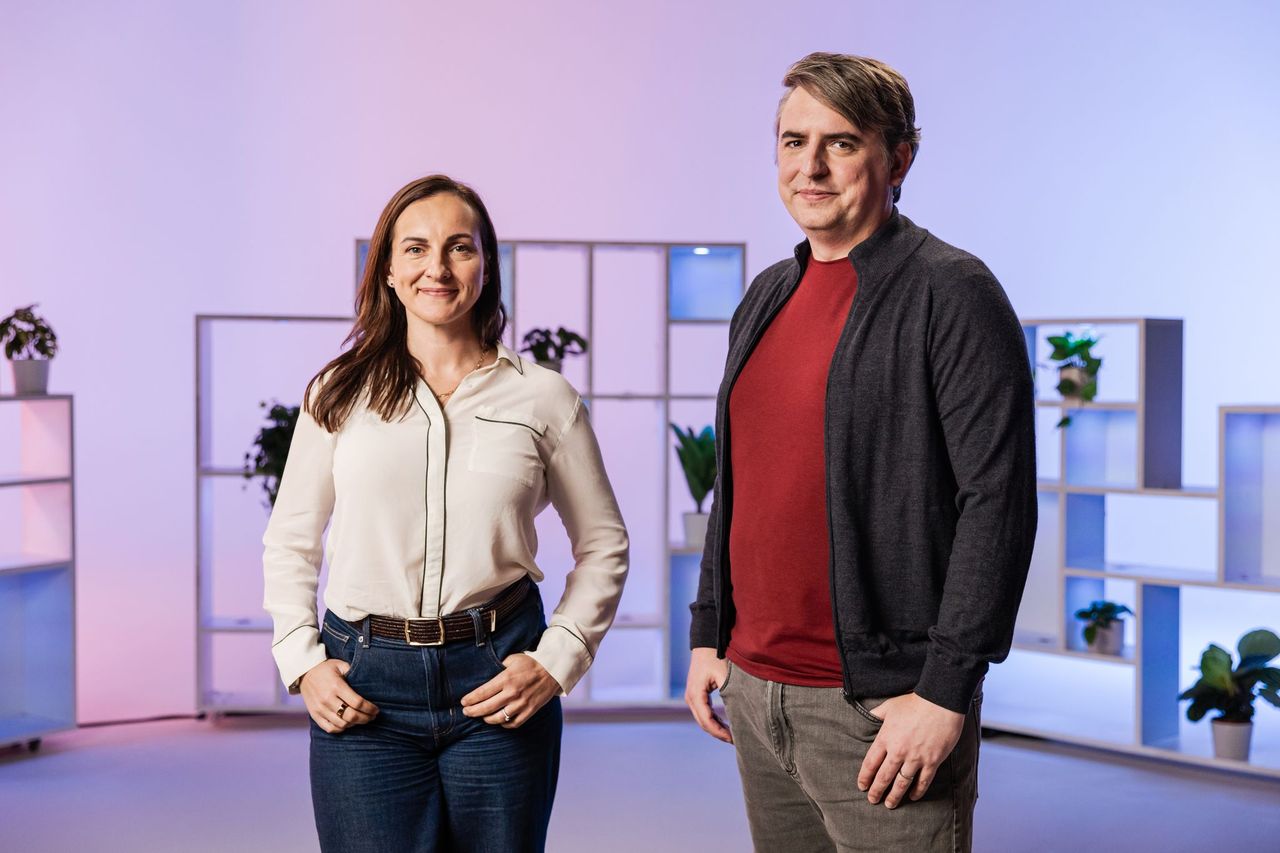
Meet Marta Sjögren and David Pugh
Co-CEO and VP Systems & Architecture, Paebbl
"I'll never forget the first time I held a jar of that fancy sand. Just knowing that what I was holding was once harmful CO2 that my kids were breathing was a true goosebumps moment."
Reshaping construction
Concrete is the backbone of our cities but remains one of the world's biggest polluters. Paebbl is on a mission to flip that narrative—and make the material part of the fight against climate change.
It does this by mimicking the natural process in which minerals absorb CO2. While this would traditionally happen over millions of years, Paebbl speeds it up to happen in under a couple of hours.
Each ton of Paebbl material stores around 220 kilos of CO₂ , locking away harmful gases and turning the world's most used man-made material into a huge carbon store.
It's an urgent mission. Every month, the world builds the equivalent of a city like New York, and concrete is the main building material.
Sjögren aims to get the first commercial plant running by 2027, producing a million tons of material annually within three years. Amazon Web Services (AWS) is key to her mission to reshape Europe's construction sector.
Scaling quickly
David Pugh is vice president of systems and architecture, and his focus is to scale the technology Paebbl has developed in the laboratory to real-world factories.
That involves a lot of computation, simulation, and modelling.
“We are scaling quickly. We’re very much focusing on how we can accelerate our learning as rapidly as possible and as efficiently as possible,” he explains.
Key to this is both the cloud infrastructure provided by AWS and the use of AI.
AWS’s systems offer a range of functions, including building models demonstrating how equipment might work and product life cycle analysis.
One of the key questions is about how the firm can accelerate its productivity, using the data that has been collated in labs and bringing it together with the data collected from pilot plants.
“When I started working at Paebbl, we were in the process of commissioning the Demo plant. We knew we wanted to get data from that and be able to work with it rapidly,” says Pugh.
“We’ve made significant use of the AWS IoT stack to enable us to get data from all of our reactors, our lab equipment, and put it into the cloud and make it available for analysis.
In previous jobs I’ve worked on, that’s taken 40-plus people over a year to do this, and there have been lots of challenges, but here we’ve been able to take pre-structured tools and systems, so it’s cheap and efficient.”
AI-powered innovation
Amazon Bedrock has allowed the firm to create a knowledge base from lab reports, analysis papers, engineering systems, and designs, with plans to build agents on top of this.
"One of the nice things with Amazon Bedrock is that it gives us the ability to quickly build and deploy on top of that," says Pugh.
Having this happen seamlessly in the background frees up the team from mundane grunt work. They can ask questions and use AI to help them move forward.
For Pugh, AI is allowing people to "engineer serendipity".
"All those great ideas people have; they can test and validate them. They can explore a million different scenarios rather than one."
AWS isn’t just playing a technology role. It was also Paebbl’s first commercial collaborator, using the firm’s concrete to help build a data centre in Spain and leading the push to make data centres greener.
“It’s the world’s first carbon-storing data centre,” says Sjögren. “I think that makes AWS a pioneer in its own right."
She hopes other data centres will follow suit.
“The more we scale in the AI age, the more this could be a win in terms of building these centres,” she says.
Concrete make-over
Both her parents were civil engineers and begged her not to go into the construction industry because it was so risk-averse, but the company already has dozens of customers and a large pipeline of more than 50 leads waiting for more materials, and Sjögren says the response from the industry has been positive.
“We are giving concrete a makeover and turning it from something that is stealing our future to be a climate hero. Those that are storing carbon in their buildings are like positive custodians of our future.”
One of the key takeaways from the AWS collaboration is how it has shaped Paebbl into being a digital-first company.
“The less we build in the physical environment, the better that is. The more we are able to simulate and model and de-risk in the digital environment, the less costly and environmentally damaging that is. We believe that in the age of AI, we can unlock a much bigger data set for the entire industry.”
Behind the scenes