Canada's AI Innovators
Creating breakthroughs in Canada and beyond
KOHO: How AI is opening doors for credit-invisible Canadians
Canada's credit system has a blind spot. It can't see the millions of people who have never borrowed before.

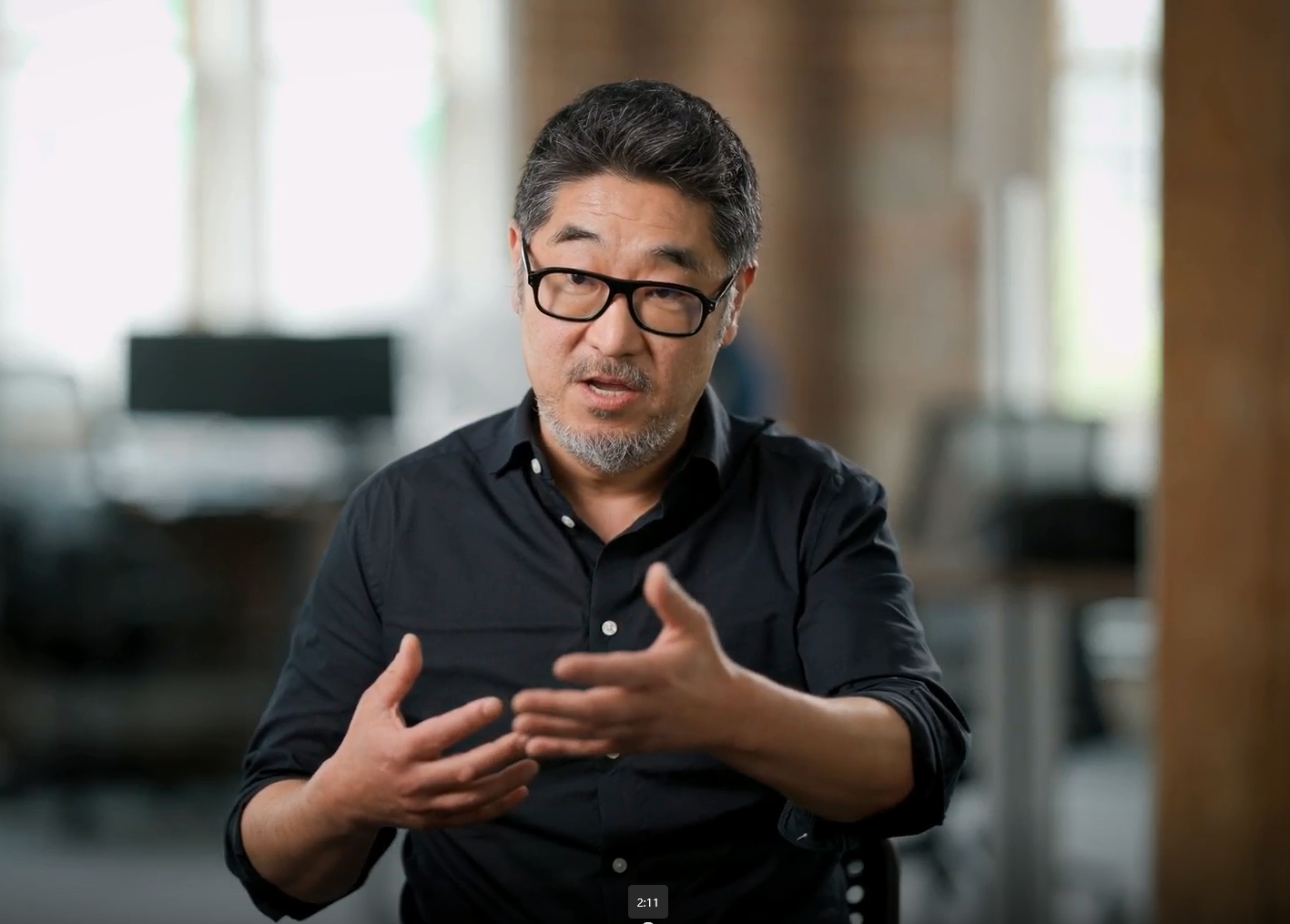
Meet Daniel Eberhard
CEO and founder, KOHO
They pay their rent on time, keep their phone bills current, and manage their money carefully. But because they’ve never had credit or a traditional loan, they have no credit score. They are credit invisible: locked out of the mortgages, car loans, and lines of credits that others take for granted. Not because they’re irresponsible, but because the system was never built to see them.
Newcomers to Canada. Young adults that are just starting out. People rebuilding after a financial setback. They all share the same problem: without a credit history, the doors to financial stability stay shut.
Daniel Eberhard, CEO and founder of KOHO, believes that’s fundamentally wrong.
"The traditional financial paths where you could pay for an education, come out with modest student debt that you repay in two to four years, and then get a car and a house are just not available to folks anymore," Eberhard explains. “The system was built on outdated assumptions about who should get credit and how to evaluate creditworthiness.”
He saw an opportunity to change that fundamentally.
A different way to measure trust
Founded in Toronto, KOHO is a fintech company with an audacious mission: to democratize financial access in Canada and put financial power back in the hands of ordinary Canadians. To do that, KOHO needed to rethink credit assessment from the ground up.
The traditional approach relied on credit scores—a limited measure that often penalized people for circumstances beyond their control. But Eberhard asked a different question: what if the proof that someone is financially responsible already exists in their life, just in places traditional lenders never look?
"We were really interested in new ways to understand whether or not people were going to repay," Eberhard explains.
KOHO began looking at behavioural data that painted a more complete picture: cell phone payments, rent records, utility bills. These weren't credit scores—they were patterns of financial responsibility hiding in plain sight. The insight was clear. The challenge was building infrastructure capable of turning that insight into action.
Connecting the dots, at scale
To build an underwriting model that could reliably assess credit worthiness from these sources, KOHO needed infrastructure that could consolidate heterogeneous data streams at scale, securely and in real time.
“We began working with AWS to help us rebuild the credit infrastructure in Canada,” Eberhard says.
AWS provided the foundation: the compute, storage and data integration services that allowed KOHO to connect previously siloed systems into a coherent picture of each customer’s financial bevahiour. What once was invisible to lenders—a year of on-time rent, consistent phone payments, steady utility bills—could now be read, scored and acted on.
"Our ability to consolidate all of those things and then underwrite to them has allowed us to keep costs low for Canadians," Eberhard notes.
AI as the engine of insight
Integrating data was only half of the challenge. Understanding what that data meant, at speed and scale, required a different kind of intelligence.
KOHO built Kortex AI, an internal intelligence platform powered by AWS’s generative AI platform, Amazon Bedrock, to extract behavioural insight from non-traditional data sources. It enables teams to work ten times more productively and makes transactions significantly safer.
"AI is helping everywhere, all across the organization," Eberhard explains. "In the context of risk, in the context of product, across our whole operation."
The results speak for themselves: KOHO lends to people at six times lower cost because their loss rates are six times lower. That dramatic difference comes directly from the superior insights their AI models generate by looking at behavioural data that traditional lenders ignore.
AI isn’t just making lending fairer—it makes it more profitable. The interests of the lender and the borrower finally align.
Protecting what matters
Beyond lending, AI serves another critical function: keeping customers safe.
KOHO's app uses screen detection technology powered by AI to identify account takeovers—moments when someone is impersonating a bank or relative to gain access to funds.
"That has cut our account takeovers by about 70%," Eberhard says.
In financial services, where money and trust are inseparable, this matters enormously.
"Where money lives and how that's protected is one of the most important financial relationships," Eberhard emphasizes. "We take that responsibility seriously."
The impact compounds
The numbers tell a story of compounding change. Hundreds of thousands of Canadians have improved their credit scores through KOHO—many becoming visible to the financial system for the first time. The company has lent hundreds of millions of dollars without driving people into debt problems or bankruptcies and saved its customers tens of millions in bank fees along the way.
Behind those figures is an operational model that looks very different from the traditional approach. KOHO moves ten times faster, maintains a significantly lower cost structure, and achieves higher productivity—all while serving those who were turned away.
Shifting expectations for a generation
But Eberhard’s ambition extends beyond KOHO's direct customers.
"We're building KOHO for the average Canadian," he says. "That's how you go from directly impacting a few million people to indirectly impacting the entire country. Because you've shifted Canadians' expectations of what a bank account can and should do for them."
The traditional financial paths may be closed to many Canadians. But KOHO is proving that a financial system can be simultaneously more profitable for the lender and more affordable for the borrower—built on better information.
And for millions of credit-invisible Canadians, that means the door in finally open.


Did you find what you were looking for today?
Let us know so we can improve the quality of the content on our pages