AWS Business Intelligence Blog
Amazon Quick user group explores agentic AI for productivity
On January 27, 2026, the Austin Amazon Quick User Group held its first meetup of the year. Despite icy conditions across the area, 155 attendees (80 in-person, 75 virtual) gathered to learn about the agentic AI capabilities of Amazon Quick through presentations, a hands-on workshop, and a customer case study.
In this post, we walk through the key insights from the Austin user group meetup, including hands-on workshops for building AI agents, a real customer case study showing 85% cost reduction, and resources to get started with Amazon Quick in your organization.
Why Amazon Quick user groups matter
The Austin Amazon Quick User Group is a local community of Amazon Quick users who come together quarterly to share knowledge, best practices, and experiences with the service. Quick user groups serve as collaborative forums where members can:
- Learn and Share – Exchange real-world insights about the capabilities of Quick, from building custom agents to using unified AI for research, business intelligence, and workflow automation. Members share what works, what doesn’t, and innovative approaches that drive results.
- Network – Connect with regional professionals who are solving similar use cases with Quick for enterprise AI applications, data analytics, and workplace productivity. Build relationships that extend beyond the meetup room.
- Problem-Solve – Tackle challenges collaboratively by discussing solutions and innovative use cases. Learn how others are applying the capabilities of Quick across different industries and business contexts, often discovering applications you haven’t considered.
- Stay Updated – Get firsthand knowledge about new features, updates, and emerging best practices directly from peers and experts who are implementing them in production environments.
- Build Community – Foster a local support network that complements the broader Quick ecosystem. When you need help, you will have trusted contacts who understand your regional business context.
User groups, like the Quick user group in Austin, help organizations get more out of Amazon Quick through peer-to-peer learning, shared expertise, and collaborative problem-solving. The geographic focus keeps discussions grounded in regional business challenges and industry-specific applications.
Event overview
David Wild, Business Intelligence Engineer, at Whole Foods Market and an organizer of the Austin user group, opened the event by welcoming attendees and reinforcing the community-driven nature of the meetup. He also recognized Ironside Group, a partner and member of the user group’s leadership team, for their support in bringing the community together. “This is all about us building a team together of Quick users. Meeting face-to-face is actually kind of rare these days, especially on a day like this,” David noted, encouraging attendees to treat the session as a collaborative classroom. The agenda included an introduction to Amazon Quick, a live product demo, a hands-on workshop, a customer story from Ironside Group, and a session on community learning resources.
Leadership team
- David Wild, Business Intelligence Engineer, Whole Foods Market
- Josh Angelchik, Sr. Data Scientist, Ironside Group
- Steven Kreytak, Account Executive, Ironside Group
- Debby Bond, Executive Vice President Marketing, Ironside Group
- Nathan Young, Associate Solutions Architect, AWS
- Rithika Lahari, Associate Solutions Architect, AWS
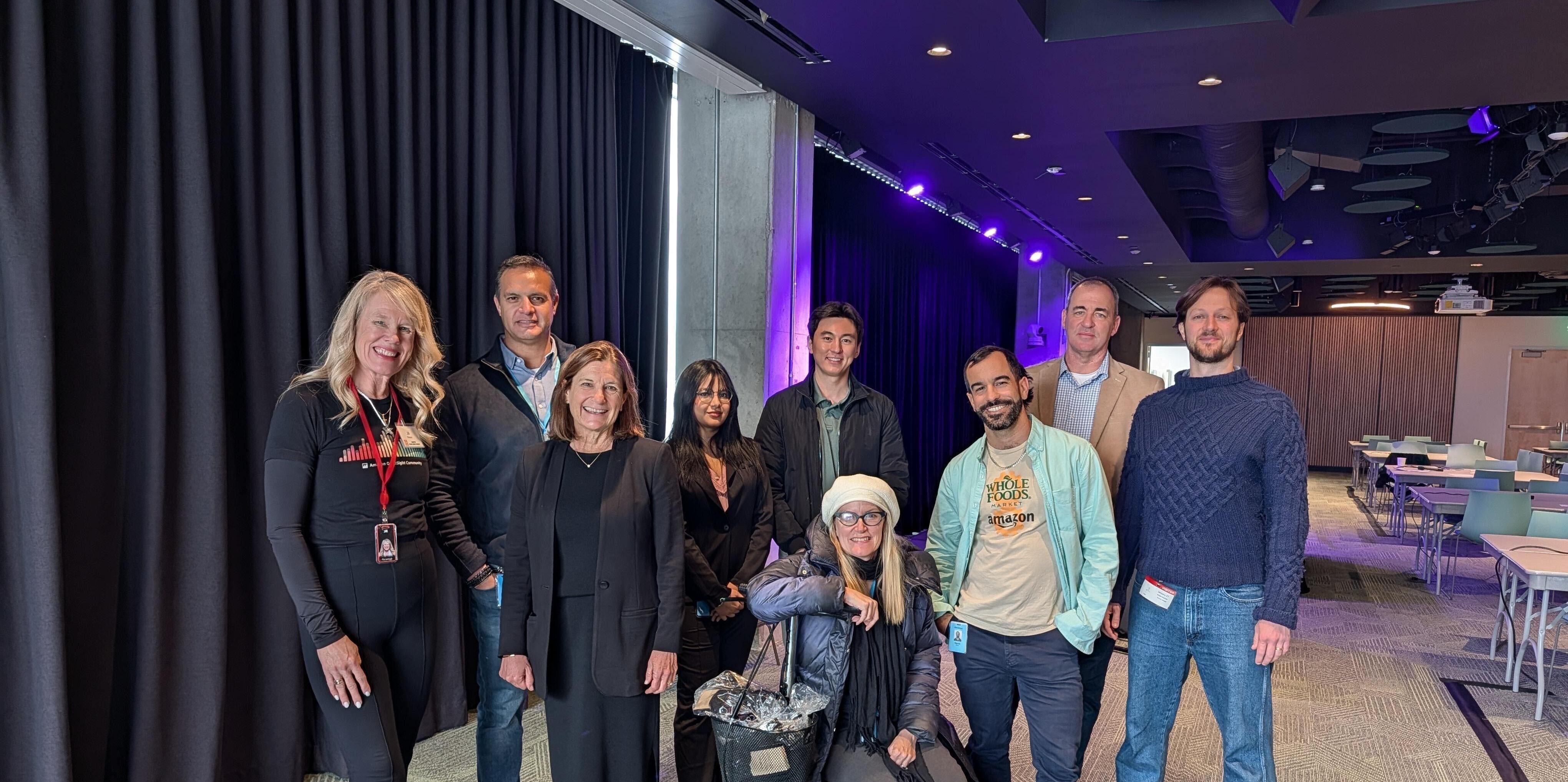
The Austin Quick User Group leadership, speakers, and launch team at the Amazon AUS20 office.
The case for transformation
Ricardo Arriaga, Global Lead for Amazon Quick Partners GTM, presented on workplace evolution and AI adoption trends. He opened with Charles Darwin’s observation: “It is not the strongest of the species that survives, nor the most intelligent that survives. It is the one that is most adaptable to change.”
Ricardo shared several industry projections: Gartner predicts that 15% of day-to-day work decisions will be made autonomously by AI agents by 2028. Capgemini forecasts that 33% of enterprise software applications will incorporate agentic AI by 2028, and 82% of organizations plan to integrate AI agents within one to three years.
“The question isn’t whether (AI) will change work. The question is, it already is,” Ricardo stated. He introduced Amazon Quick as a service that unifies AI agents for research, business insights, and automation with enterprise-grade security and governance. It includes the following capabilities:
- Quick Flows for automating repetitive tasks and workflows
- Quick Automate for enterprise-grade process automation
- Quick Sight for AI-embedded analytics and natural language dashboards
- Quick Research for deep analysis using internet and third-party data
- Quick Spaces as customizable knowledge hubs for teams
- Quick Chat Agents as specialized AI assistants configured with domain-specific knowledge and expertise
- Quick Connections for integrating with third-party applications and AWS services, users can take actions, access external data, and extend Quick into productivity tools like Slack, Teams, and Outlook
He anchored the service’s value in three principles: technology should augment human capabilities rather than replace them, data quality is the foundation for effective AI, and proper training is essential for successful adoption. He closed with a quote from AWS CTO Werner Vogels: “The most dangerous sentence in English is ‘we have always done it this way.'”
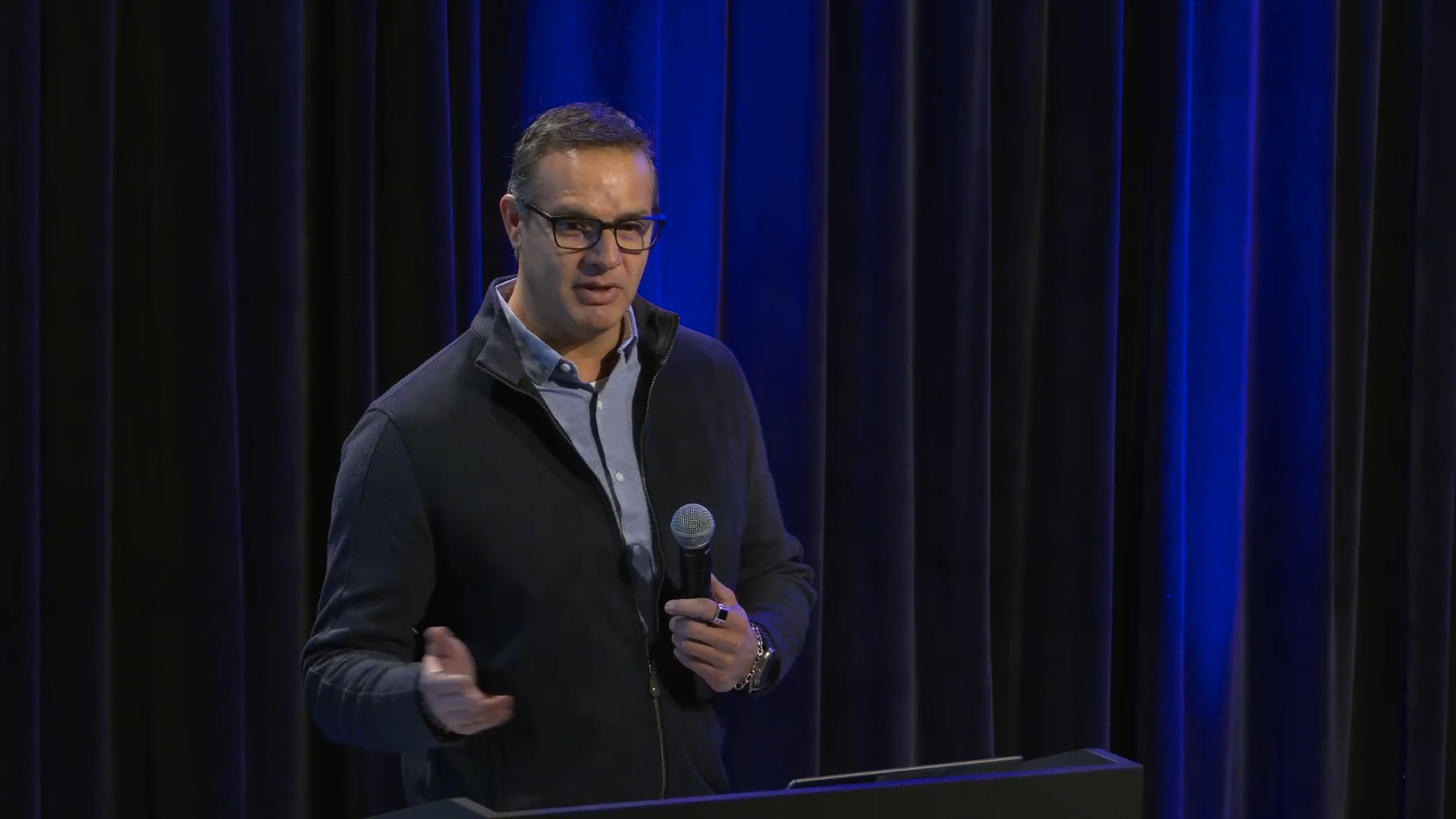
Ricardo Arriaga, Global Lead for Amazon Quick Partners GTM, takes the stage to challenge organizations to embrace the AI-driven future of work.
Live demo
Mo Naqvi, Sr. Worldwide Specialist for Generative AI at AWS, demonstrated the capabilities of Amazon Quick. The demo covered the following:
- Chat Agents connected to data spaces with customizable personas and instructions, Spaces as personal and team knowledge repositories.
- Flows that consolidate daily tasks such as emails and tickets into automated briefings.
- Research capabilities that synthesize information from multiple sources with built-in citations.
- Integration points across the AWS stack including Amazon Bedrock agents and third-party connectors.
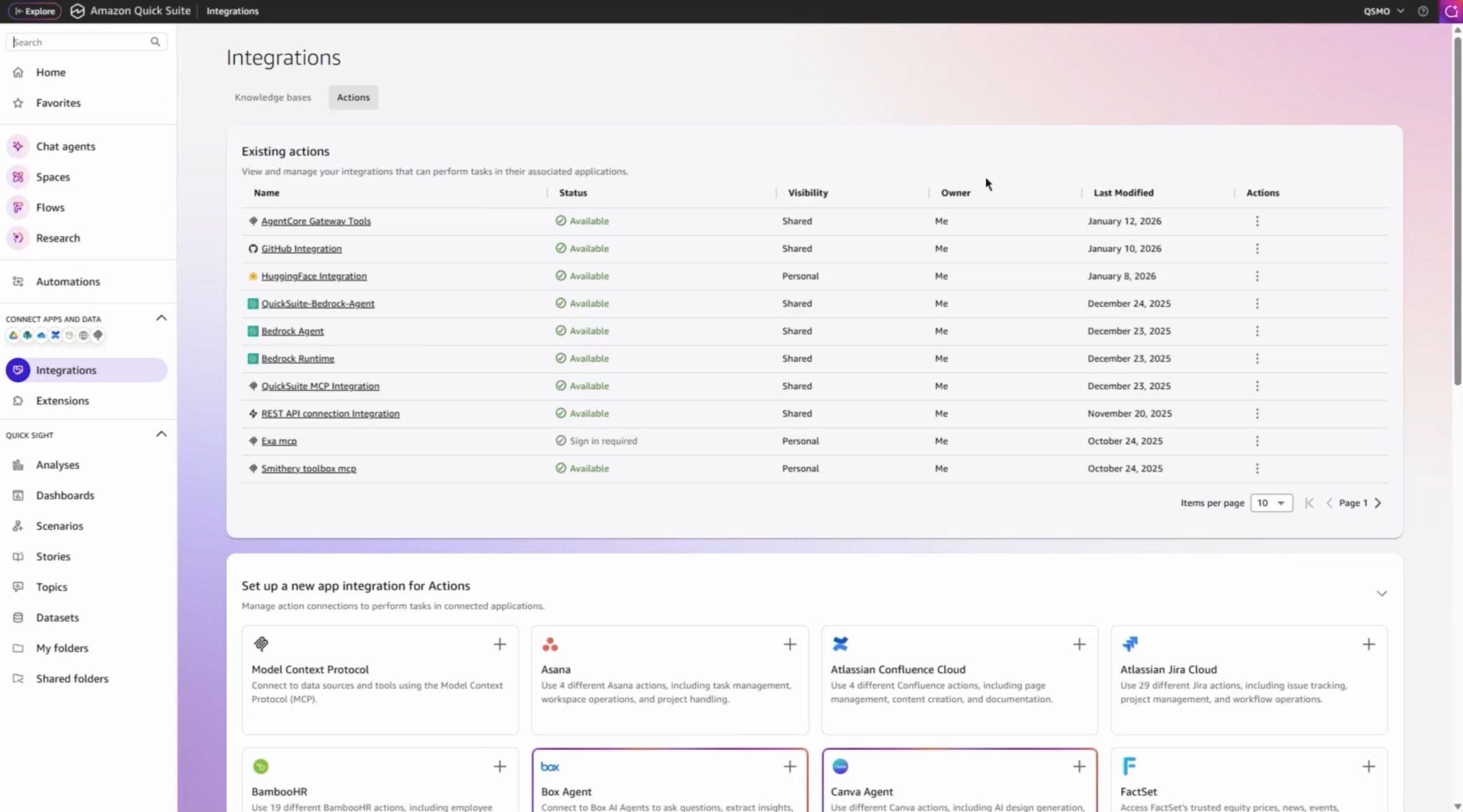
A screenshot from Mo Naqvi’s live demo showcasing Amazon Quick’s integrations across the AWS stack, including Amazon Bedrock agents and third-party connectors that bring agentic AI directly into existing tools and workflows.
Mo highlighted that Amazon Quick is a managed service that handles both structured and unstructured data. On the topic of data privacy, Mo was direct: “Your data stays as your data.” User data is not used to train models, and feedback mechanisms serve as telemetry for the development team rather than direct model training inputs. When asked about the safety of experimenting in the service, Mo reassured attendees: “You can’t hurt the model. It’s not made that way.”
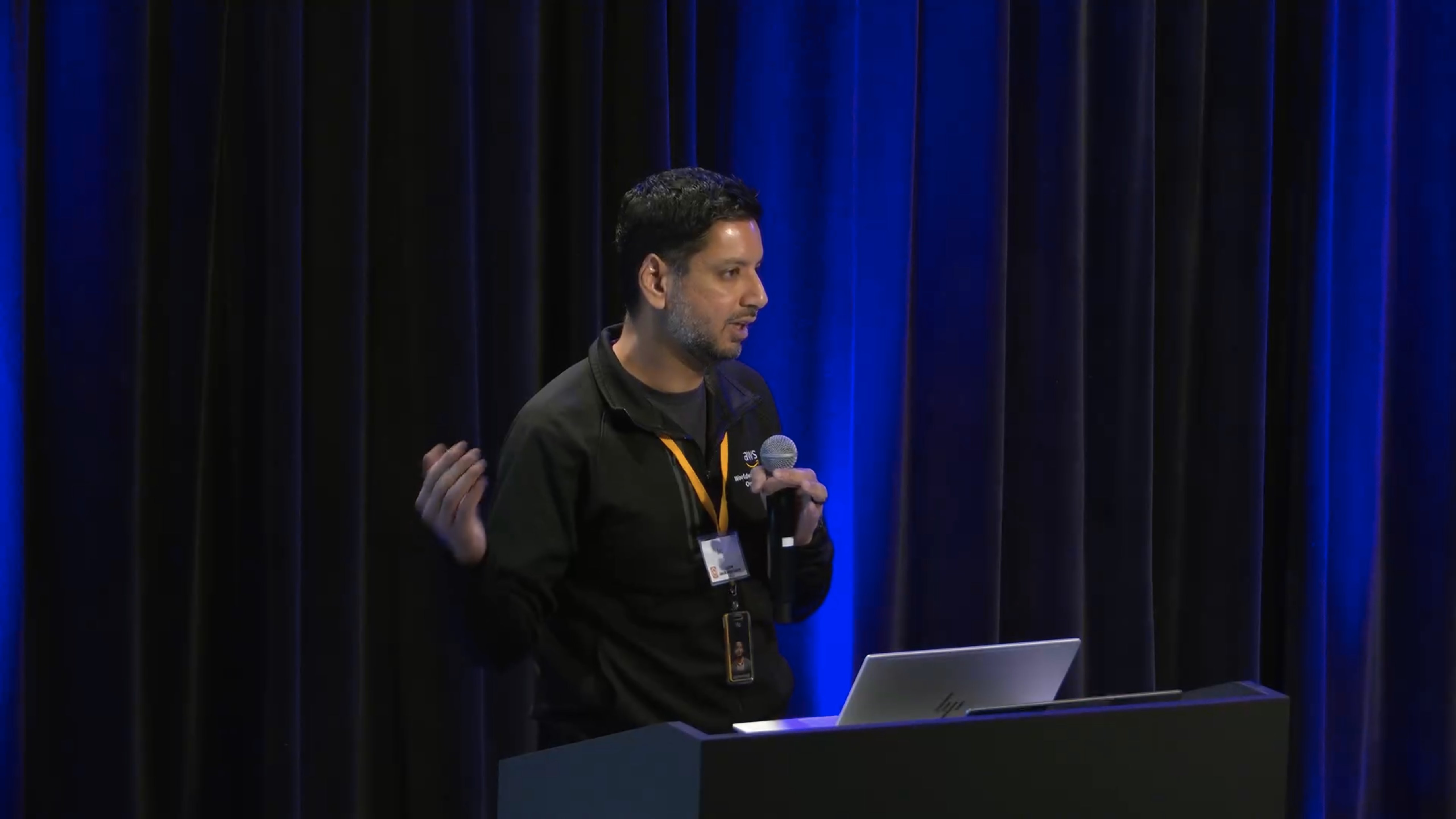
Mo Naqvi, Sr. Worldwide Specialist for Generative AI at AWS, walks attendees through a live demo of Amazon Quick’s agentic AI capabilities, from Chat Agents and automated Flows to Research tools with built-in citations.
Hands-on workshop
We led a 75-minute workshop where attendees built with Amazon Quick in provisioned sandbox accounts. The workshop used a fictitious HR scenario in which an HR professional needed to streamline employee access to policy information and reduce repetitive inquiries. Participants worked through four modules:
- Spaces. Attendees created two spaces (HR company policies and HR operations), and uploaded relevant documents including an employee handbook, leave policy, performance review guidelines, onboarding checklist, and employee feedback data. Spaces provide context for AI agents and enable layered security at both the space and user levels.
- Research Agent. Participants created a research project on best practices for remote work policies. They specified preferred data sources, excluded less reliable sources, and initiated research that compiled a cited report in 20–30 minutes. Reports include clickable citations, version history, and export options for PDF, Word, and custom summary formats.
- Flows. Attendees built an Employee Onboarding Q&A flow that accepts questions as input, searches HR documentation in connected spaces, and generates sourced answers automatically. Completed flows can be shared with colleagues.
- Custom Chat Agents. We demonstrated two approaches to creating an HR Policy Chat Assistant. The natural language method allows users to describe the agent in plain English and generate it in seconds without technical skills. Builder mode provides granular control over the agent’s identity, guardrails, communication style, and knowledge sources. Both methods produced a working agent that answered policy questions by pulling from connected spaces and citing its sources.
During peer discussions, attendees shared use cases including integrating Quick with existing dashboards at Whole Foods, building cross-team channels to share Quick discoveries, and applying the product to projects at other organizations.
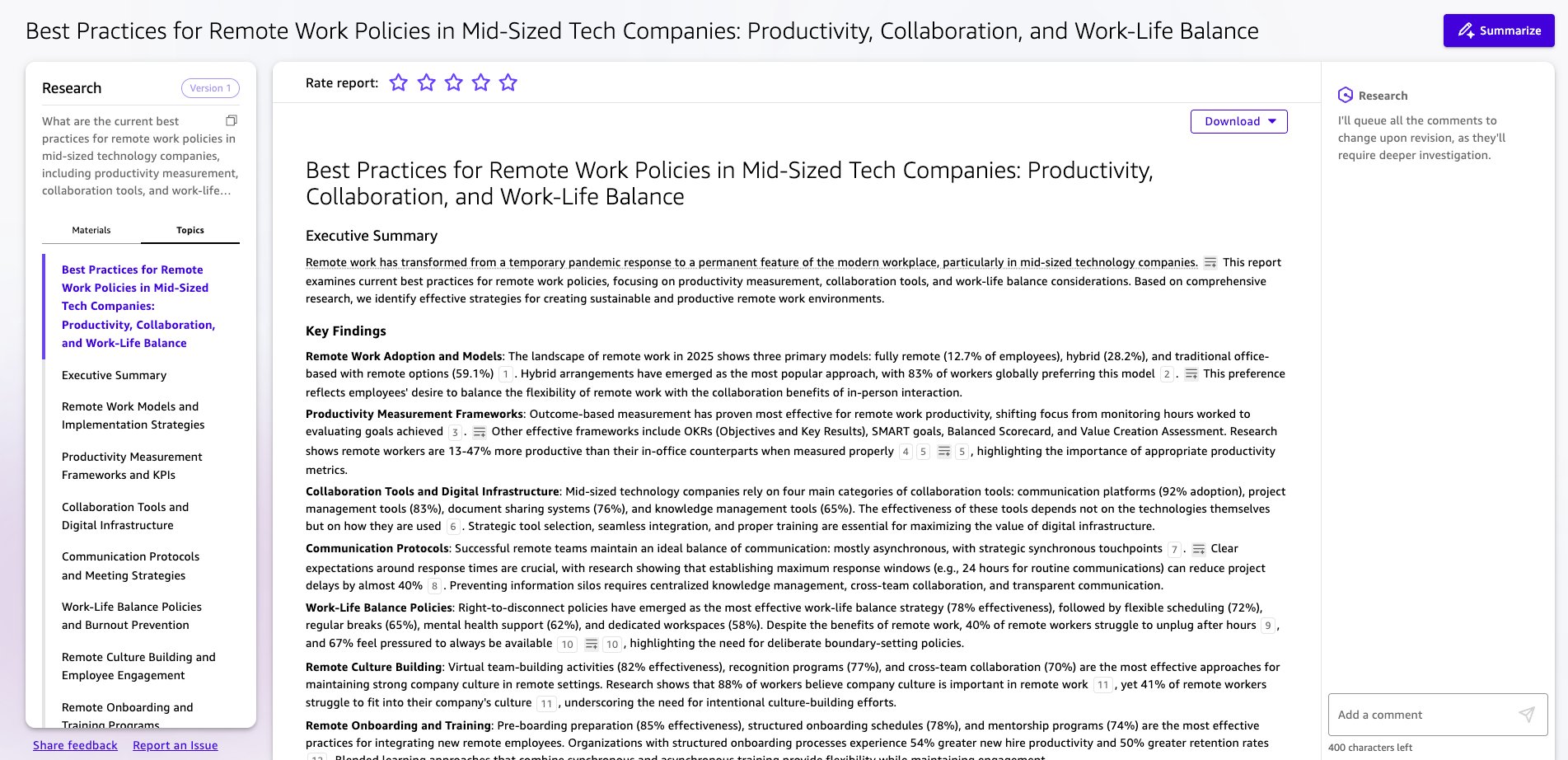
Quick Research report interface displaying comprehensive remote work best practices with data-driven findings, navigation menu, and interactive features including rating and download options.
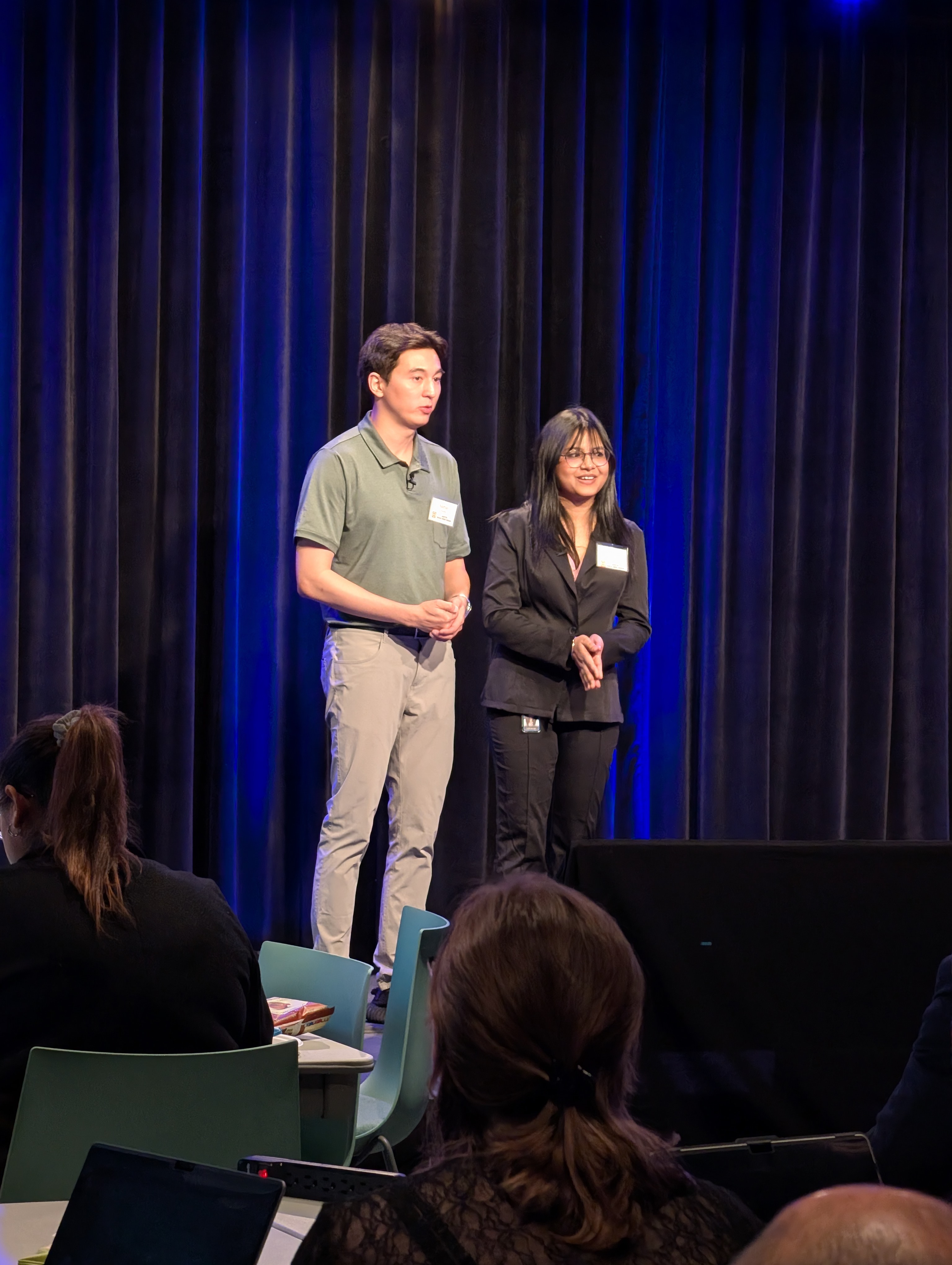
Nathan Young and Rithika Lahari, Associate Solutions Architects, take the stage to lead a 75-minute hands-on workshop where attendees built Spaces, Research Agents, Flows, and custom Chat Agents in Amazon Quick.
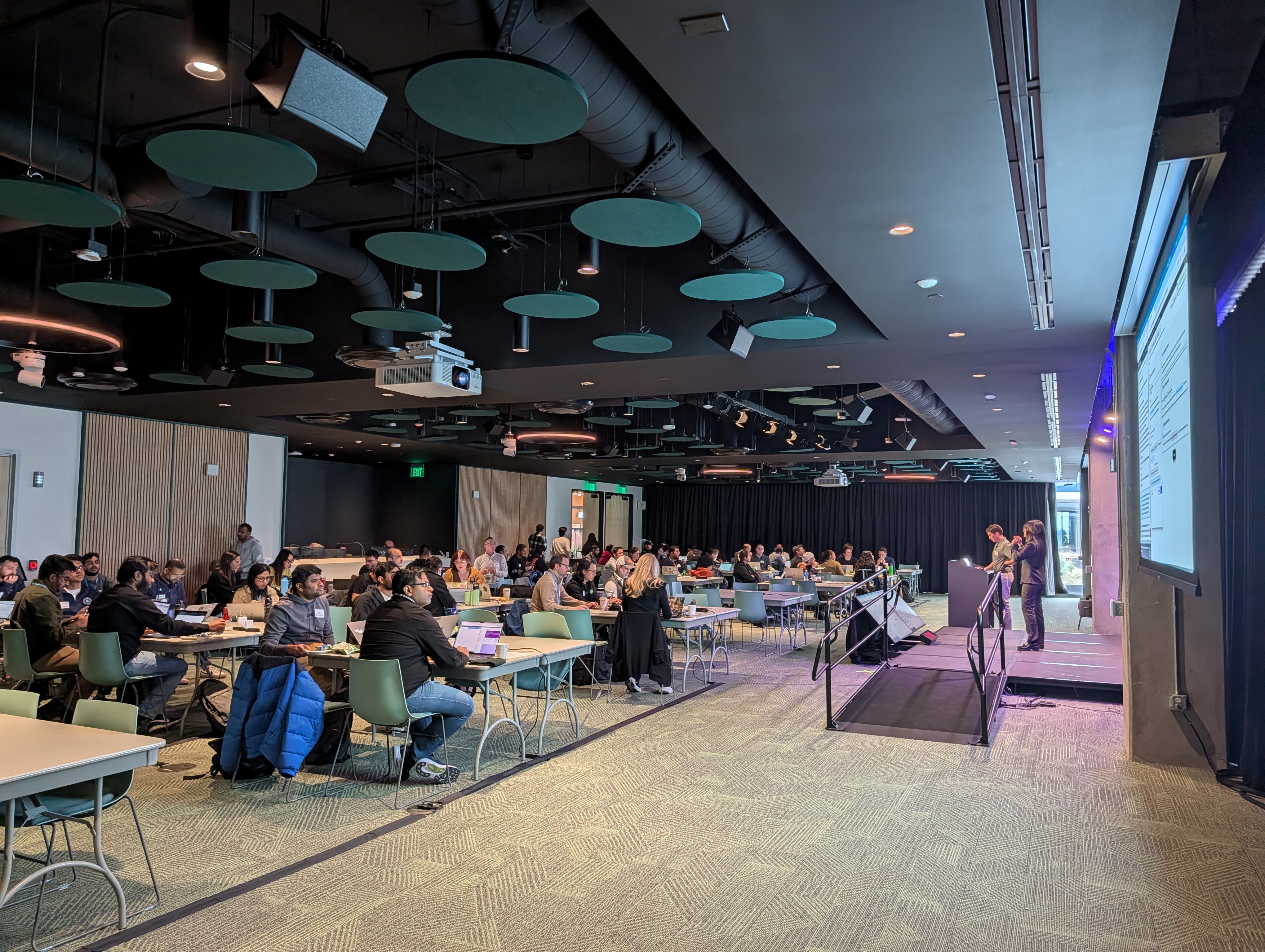
The Austin Amazon Quick community connects—exploring features, developing solutions, and sharing best practices.
Customer story: AI-powered mystery shopping review
Josh Angelchik, Sr. Data Scientist at Ironside Group, presented a case study on applying generative AI to mystery shopping data review for HS Brands Global, a mystery shop provider for Whole Foods.
The problem. HS Brands managed large volumes of unstructured survey data from mystery shoppers. The manual review process was time-consuming, inconsistent across reviewers, limited to approximately 50,000 shops reviewed annually out of millions needed, and costly.
The solution. Ironside built a solution combining Amazon Quick and Amazon Bedrock that automated survey review using large language models to detect inconsistencies, errors, and potential fraud. Application logs were exported to Quick for conversational monitoring of system health.
The results. Review time per batch dropped from days to seconds. Costs were reduced by approximately 85%. Annual review capacity scaled from roughly 50,000 shops to millions. Josh noted that “AIs are outperforming humans in terms of the inconsistencies that they’re able to pick up.”
The solution was designed as an augmented approach. As Josh described Ironside’s philosophy: “We’re here to help. We’re here to teach you how to fish as opposed to hold your hand permanently.”
Amazon Quick Community resources
The Amazon Quick Community website has tens of thousands of members, thousands of searchable questions and over 600 learning resources on accelerating your productivity with agentic AI and Amazon Quick.
Kristin Mandia, Sr. Community Manager at AWS says, “The Quick Community is about learning together and building connections. It’s where users at any skill level can find help, learn something new, and meet others. What I love most about the Quick Community is how genuinely helpful everyone is. It’s a place that reveals possibilities you wouldn’t have thought to explore on your own, where you stumble into people working on projects and use cases you’d never even think to ask about, and suddenly your world gets a whole lot bigger.”
Learning opportunities include approximately two free live online sessions per week, monthly feature update deep dives, advanced automation sessions, and 4-hour Immersion Day workshops. AWS Solutions Architects, Product Managers, and subject matter experts are active on the platform and available for direct messaging. Kristin continues, “People jump in to help solve tricky problems, share their clever workarounds, and experiment with new ways to use Quick together.”
Key takeaways
- Cross-industry attendance. Attendees included internal employees from Amazon and AWS, as well as major players in financial services (Capital One), healthcare (Optum), automotive (GM), and professional consulting (Deloitte). There was also significant representation of IT consulting firms and software companies serving enterprise clients.
- Strongest attendee interest: agentic AI workflows. Attendees were most interested in automating workflows using Amazon Quick’s agentic AI capabilities, particularly creating Spaces as knowledge hubs and using Quick Flows to streamline repetitive tasks. Based on that enthusiasm, our next meetup on April 23, 2026 will shift to a hands-on, use-case-driven format where participants can bring their own workflow challenges and build alongside AWS experts.
- Real-world impact validated. Participants sought to understand real-world applications through the Ironside Group case study. That case study demonstrated how combining Amazon Quick with Amazon Bedrock automated mystery shopping reviews while reducing costs by 85% and scaling capacity from 50,000 to millions of reviews annually.
Conclusion
The January 2026, the Austin Amazon Quick User Group meetup covered the breadth of Amazon Quick’s agentic AI capabilities, from service fundamentals to hands-on building to a real-world customer implementation. The workshop demonstrated that attendees with no prior Quick experience could build functional chat agents and automated flows within an hour. The Ironside case study illustrated how Amazon Quick and Amazon Bedrock can transform manual, costly processes into scalable, AI-augmented workflows. As the speakers reminded attendees at the close of the event, the workshop was an abbreviated version of what is normally a 4–5.5 hour deep dive. There is more to explore, and the Amazon Quick Community is the place to continue.
Jill Florant, Principal Customer Success Manager at AWS, closed the event with a message that captured the spirit of the day: “I hope that you all feel like you’re in a place where you belong. We really appreciate you. We love learning with you.”
Get involved
To learn more about Amazon Quick and connect with the community:
- Join the Austin Amazon Quick User Group on LinkedIn
- Join the Amazon Quick Community to learn agentic AI together and access over 600 learning resources and connect with AWS experts
- Explore Amazon Bedrock for additional generative AI capabilities
- Register for the next Austin Quick User Group meetup: Thursday, April 23, 2026
- Not in the Austin area? Attend a meetup in Phoenix, Chicago, Boston, Los Angeles, New York City, UK and Ireland, or Munich/DACH
- Complete the leadership interest form to start an Amazon Quick User Group in your city
For questions about the event or the Amazon Quick Community, contact Nathan Young at nmy@amazon.com or Rithika Lahari at rithikal@amazon.com.