AWS Compute Blog

Author: Eric Johnson
Eric Johnson is a Principal Developer Advocate for Serverless Applications at Amazon Web Services and is based in Northern Colorado. Eric is a fanatic about serverless and enjoys helping developers understand how serverless technologies introduces a major paradigm shift in how they approach building and running applications at massive scale with minimal administration overhead. Prior to this, Eric has worked as a developer, solutions architect and AWS Evangelist for an AWS partner company.

Architecture patterns for consuming private APIs cross-account
This blog written by Thomas Moore, Senior Solutions Architect and Josh Hart, Senior Solutions Architect. Amazon API Gateway allows developers to create private REST APIs that are only accessible from a virtual private cloud (VPC). Traffic to the private API uses secure connections and does not leave the AWS network, meaning AWS isolates it from […]

Reducing Java cold starts on AWS Lambda functions with SnapStart
At AWS re:Invent 2022, AWS announced SnapStart for AWS Lambda functions running on Java Corretto 11. This feature enables customers to achieve up to 10x faster function startup performance for Java functions, at no additional cost, and typically with minimal or no code changes.

Starting up faster with AWS Lambda SnapStart
This blog written by Tarun Rai Madan, Sr. Product Manager, AWS Lambda, Mike Danilov, Sr. Principal Engineer, AWS Lambda, and Colm MacCárthaigh, VP/Distinguished Engineer, EC2. AWS Lambda SnapStart is a new performance optimization developed by AWS that can significantly improve the startup time for applications. Announced at AWS re:Invent 2022, the first capability to feature […]

Better together: AWS SAM CLI and HashiCorp Terraform
This post is written by Suresh Poopandi, Senior Solutions Architect and Seb Kasprzak, Senior Solutions Architect. Today, AWS is announcing the public preview of AWS Serverless Application Model CLI (AWS SAM CLI) support for local development, testing, and debugging of serverless applications defined using HashiCorp Terraform configuration. AWS SAM and Terraform are open-source frameworks for […]

Propagating valid mTLS client certificate identity to downstream services using Amazon API Gateway
This blog written by Omkar Deshmane, Senior SA and Anton Aleksandrov, Principal SA, Serverless. This blog shows how to use Amazon API Gateway with a custom authorizer to process incoming requests, validate the mTLS client certificate, extract the client certificate subject, and propagate it to the downstream application in a base64 encoded HTTP header. This […]
Simplifying serverless permissions with AWS SAM Connectors
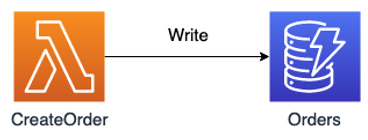
This post written by Kurt Tometich, Senior Solutions Architect, AWS. Developers have been using the AWS Serverless Application Model (AWS SAM) to streamline the development of serverless applications with AWS since late 2018. Besides making it easier to create, build, test, and deploy serverless applications, AWS SAM now further simplifies permission management between serverless components […]

Speeding up incremental changes with AWS SAM Accelerate and nested stacks
This blog written by Jeff Marcinko, Sr. Technical Account Manager, Health Care & Life Sciencesand Brian Zambrano, Sr. Specialist Solutions Architect, Serverless. Developers and operators have been using the AWS Serverless Application Model (AWS SAM) to author, build, test, and deploy serverless applications in AWS for over three years. Since its inception, the AWS SAM […]

Building resilient private APIs using Amazon API Gateway
This post written by Giedrius Praspaliauskas, Senior Solutions Architect, Serverless. Modern architectures meet recovery objectives (recovery time objective, RTO, and recovery point objective, RPO) by being resilient to routine and unexpected infrastructure disruptions. Depending on the recovery objectives and regulatory requirements, developers must choose the disaster recovery strategy. For more on disaster recovery strategies, see […]

Orchestrating Amazon S3 Glacier Deep Archive object retrieval using AWS Step Functions
This blog was written by Monica Cortes Sack, Solutions Architect, Oskar Neumann, Partner Solutions Architect, and Dhiraj Mahapatro, Principal Specialist SA, Serverless. AWS Step Functions now support over 220 services and over 10,000 AWS API actions. This enables you to use the AWS SDK integration directly instead of writing an AWS Lambda function as a proxy. One […]

Using organization IDs as principals in Lambda resource policies
This post is written by Rahul Popat, Specialist SA, Serverless and Dhiraj Mahapatro, Sr. Specialist SA, Serverless AWS Lambda is a serverless compute service that runs your code in response to events and automatically manages the underlying compute resources for you. These events may include changes in state or an update, such as a user […]