AWS Compute Blog

Author: Stefano Buliani
Stefano is a serverless specialist solutions architect at AWS. Stefano helps AWS customers develop, deploy, and scale their serverless applications. Stefano also maintains a number of open source projects such as Serverless Java Container, Lambda Go API, and Serverless SAM.
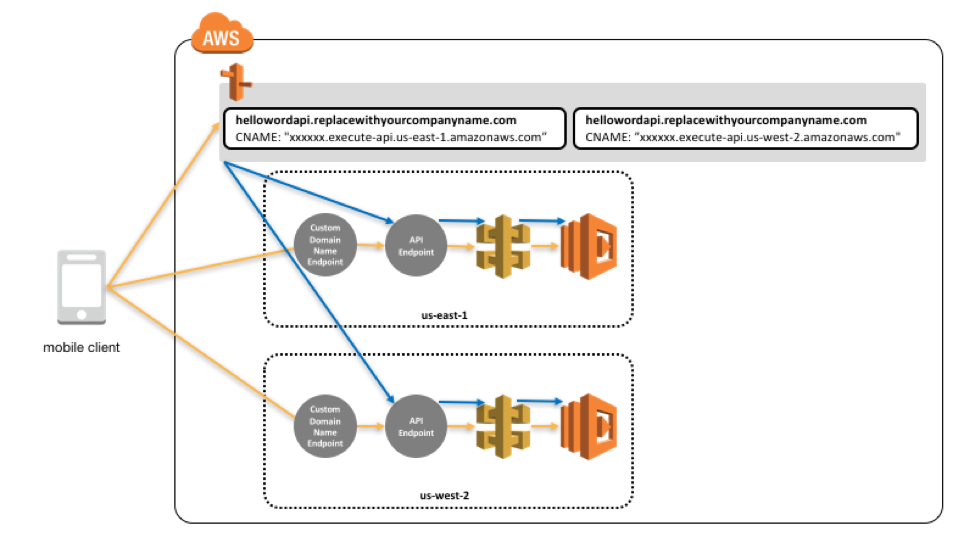
Building a Multi-region Serverless Application with Amazon API Gateway and AWS Lambda
This post written by: Magnus Bjorkman – Solutions Architect Many customers are looking to run their services at global scale, deploying their backend to multiple regions. In this post, we describe how to deploy a Serverless API into multiple regions and how to leverage Amazon Route 53 to route the traffic between regions. We use latency-based […]
Using Enhanced Request Authorizers in Amazon API Gateway
Recently, AWS introduced a new type of authorizer in Amazon API Gateway, enhanced request authorizers. Previously, custom authorizers received only the bearer token included in the request and the ARN of the API Gateway method being called. Enhanced request authorizers receive all of the headers, query string, and path parameters as well as the request […]
Real World AWS Scalability
This is a guest post from Linda Hedges, Principal SA, High Performance Computing. —– One question we often hear is, “How well will my application scale on AWS?” For high performance computing (HPC) workloads that cross multiple nodes, the cluster network is at the heart of scalability concerns. AWS uses advanced Ethernet networking technology, which, […]
Using API Gateway with VPC endpoints via AWS Lambda
To isolate critical parts of their app’s architecture, customers often rely on Virtual Private Cloud (VPC) and private subnets. Today, Amazon API Gateway cannot directly integrate with endpoints that live within a VPC without internet access. However, it is possible to proxy calls to your VPC endpoints using AWS Lambda functions. This post guides you […]
Amazon API Gateway mapping improvements
Yesterday we announced the new Swagger import API. You may have also noticed a new first time user experience in the API Gateway console that automatically creates a sample Pet Store API and guides you though API Gateway features. That is not all we’ve been doing: Over the past few weeks, we’ve made mapping requests and responses easier. […]
Using Amazon API Gateway as a proxy for DynamoDB
This post is written by Andrew Baird, AWS Solutions Architect. Amazon API Gateway has a feature that enables customers to create their own API definitions directly in front of an AWS service API. This tutorial will walk you through an example of doing so with Amazon DynamoDB. You can use the solution described here in […]
Introducing custom authorizers in Amazon API Gateway
Today Amazon API Gateway is launching custom request authorizers. With custom request authorizers, developers can authorize their APIs using bearer token authorization strategies, such as OAuth using an AWS Lambda function. For each incoming request, API Gateway verifies whether a custom authorizer is configured, and if so, API Gateway calls the Lambda function with the […]
Using API Gateway mapping templates to handle changes in your back-end APIs
Maitreya Ranganath, AWS Solutions Architect Changes to APIs are always risky, especially if changes are made in ways that are not backward compatible. In this blog post, we show you how to use Amazon API Gateway mapping templates to isolate your API consumers from API changes. This enables your API consumers to migrate to new […]
Using API Gateway stage variables to manage Lambda functions
Ed Lima, Cloud Support Engineer There’s a new feature on Amazon API Gateway called stage variables. Stage variables act like environment variables and can be used to change the behavior of your API Gateway methods for each deployment stage; for example, making it possible to reach a different back end depending on which stage the […]
Getting Started with JAWS on Amazon Web Services
Nick Corbett, AWS Professional Services, Big Data Consultant Amazon API Gateway and AWS Lambda empower developers to deliver a microservice architecture without managing infrastructure. Building scalable, secure, and durable applications has never been easier. However, managing the deployment of a large project is not always easy. A global app, deployed across multiple AWS regions in […]