AWS Compute Blog
Secure code execution for AI agents with AWS Lambda MicroVMs
Development teams building serverless applications with AI coding agents face the question of how to let those agents generate and execute code without losing control over governance. Agent-generated code needs a secure environment to execute, isolated from production systems and the developer’s local environment. Addressing this requires three things working together: a secure execution sandbox, domain expertise to build correctly, and governance over what agents are allowed to do. This post shows how you can use AWS Lambda MicroVMs, the Agent Toolkit for AWS, and Policy in Amazon Bedrock AgentCore to let AI coding agents build, test, and deploy serverless applications safely with granular governance controls.
Overview
AI coding agents like Claude Code, Kiro, and Cursor accelerate serverless development by generating code, installing dependencies, running tests, and deploying infrastructure on behalf of developers. But today, most of that work executes with whatever permissions and access the developer has. If the agent acts outside its intended scope, whether by mistake or through prompt manipulation, there is no boundary between the agent’s actions and the rest of the environment.
Moving from proof-of-concept (PoC) to production requires isolating agent-generated code into a contained environment where it can execute freely without affecting the host environment or other tenants. It requires embedded domain expertise so agents produce production-grade output rather than improvising from general training data. And it requires deterministic governance that controls what agents are allowed to do regardless of how they are prompted.
Each of these requirements maps to a specific layer in the stack. Lambda MicroVMs provide an isolated, ephemeral compute environment where agents write, build, test, and run code. The Agent Toolkit for AWS provides validated procedures and best practices that guide agents toward production-quality output. Policy in AgentCore enforces deterministic authorization over agent-to-tool interactions at the boundary.
Each layer solves a problem the other two cannot. Without expertise embedded in the workflow, agents running in isolation still produce code that fails in production. Without governance, even well-guided agents can overstep their boundaries. And without execution isolation, governance policies can be circumvented at the runtime level. The three layers work as a unit.
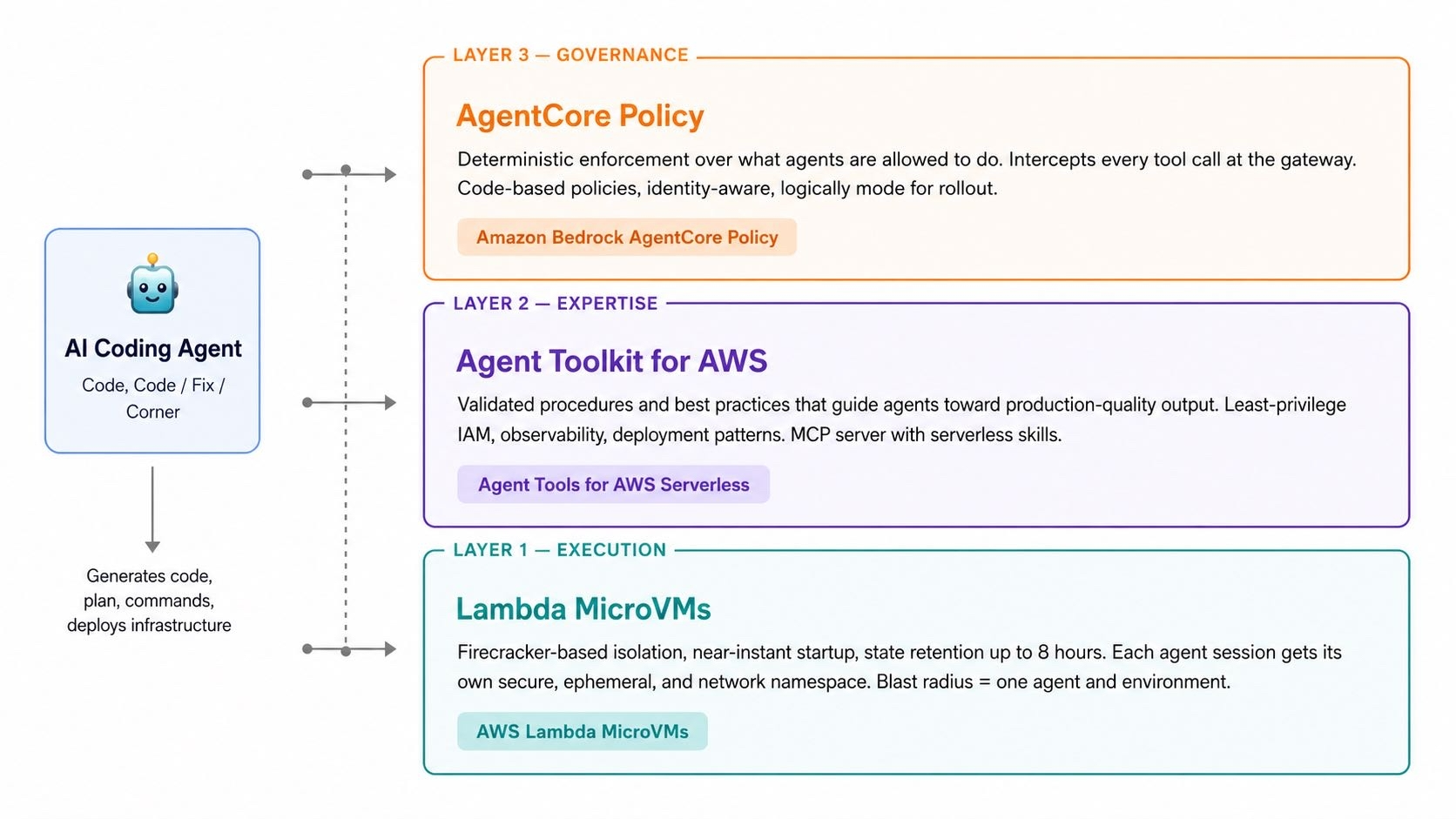
Figure 1 Three-layer stack for secure code execution for AI agents
Layer 1: Execution (Lambda MicroVMs)
Code generated by AI agents needs a secure environment to execute, isolated from production systems, other tenants, and the host environment. Lambda MicroVMs provide a Firecracker-based compute environment with its own kernel, its own filesystem, and its own network namespace. This is the same isolation foundation that has powered Lambda since 2018, now available as a standalone compute substrate. Inside a MicroVM, agents can perform the same operations a developer would on their local machine, such as installing packages, running shell commands, executing build toolchains, and running tests. The difference lies in containment. If the agent generates destructive code, whether through hallucination or prompt injection, the impact is limited to a single ephemeral environment.
Each MicroVM provides operating system access with configurable vCPU, memory, and disk. Agents can run user sessions for up to 8 hours, with configurable network access (public or virtual private cloud (VPC)-only). MicroVMs can be suspended and resumed with their state preserved, giving agents state retention across sessions without sacrificing isolation between tenants.
Layer 2: Expertise (Agent Toolkit for AWS)
Execution isolation alone is not enough. An agent that runs in a MicroVM but improvises from general training data is unlikely to produce production-grade output. For example, it might generate Lambda functions with overly broad IAM permissions, skip observability configuration, or deploy without safe rollback patterns. The Agent Toolkit for AWS gives coding agents validated, up-to-date procedures for AWS tasks. Instead of improvising, agents using the Agent Toolkit follow curated skills that encode how an experienced engineer actually builds on serverless. The toolkit encodes least-privilege IAM by default, observability wired in from the start, and deployment patterns that reflect production best practices.
For Claude Code and Cursor, the Agent Plugin for AWS Serverless packages these skills as a plugin. In Kiro and other tools that support agent skills, they are available directly. These skills dynamically load relevant guidance throughout the development lifecycle, from project initialization through deployment and troubleshooting. This includes a dedicated Lambda MicroVMs skill that gives agents the procedures to provision, configure, and use MicroVM environments directly.
Layer 3: Governance (Policy in AgentCore)
Expertise without governance can produce correct code with no boundaries on what actions the agent can perform. For example, an agent following best practices can still deploy to production, overwrite existing infrastructure, or access data outside its scope. Policy in AgentCore intercepts every tool call at the Amazon Bedrock AgentCore Gateway and evaluates it against Cedar policies before allowing execution. Cedar is an open-source authorization language purpose-built for fine-grained permissions. Its policies are human-readable, analyzable by machines, and evaluate deterministically regardless of how the agent was prompted. The gateway exposes the available tools to the agent. Cedar can inspect tool input parameters, the identity of the user the agent is acting on behalf of, and the specific tool being invoked. A policy can permit an agent to call a deploy tool but deny it when the environment parameter is production.
The enforcement operates entirely outside the agent’s reasoning loop, so policy decisions are not influenced by the model’s context or prompt. Actions that would always be denied are omitted from the agent’s tool list entirely, so the agent never even attempts them. A log-only mode supports incremental rollout, and every enforcement decision is logged to Amazon CloudWatch for audit.
The agentic serverless stack in action
The following walkthrough shows an AI coding agent building and deploying an order processing API using the three layers working together. The same approach applies to any serverless workload, whether it is an event pipeline, a data transform, or a webhook handler. The developer prompts the agent to build the API. The agent uses the Lambda MicroVMs skill to provision its execution environment, then works autonomously within it. It follows Agent Toolkit skills for production best practices, and invokes deployment tools through the AgentCore Gateway under a Cedar policy that controls what it is allowed to do.
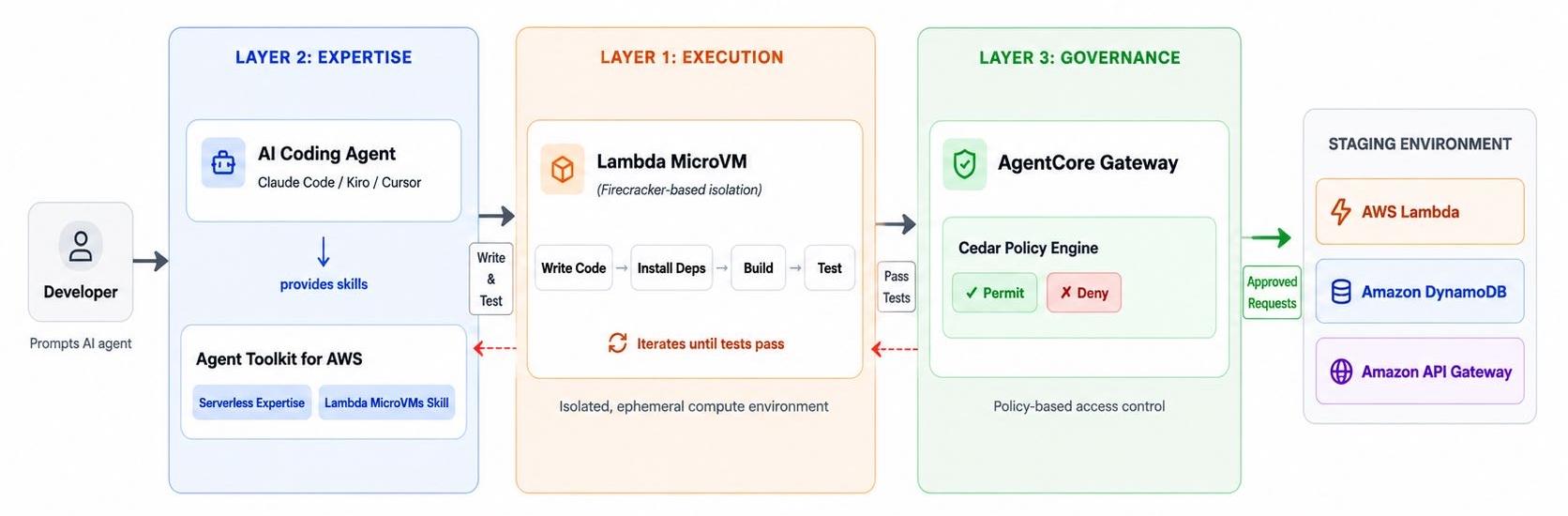
Figure 2 End-to-end workflow from developer prompt to governed deployment
Step 1: Write and test inside the MicroVM. The agent starts inside a MicroVM. It scaffolds the application, installs dependencies, and runs the test suite until all tests pass. The agent’s actions are contained to the MicroVM, with no impact to the host environment or any other tenant.
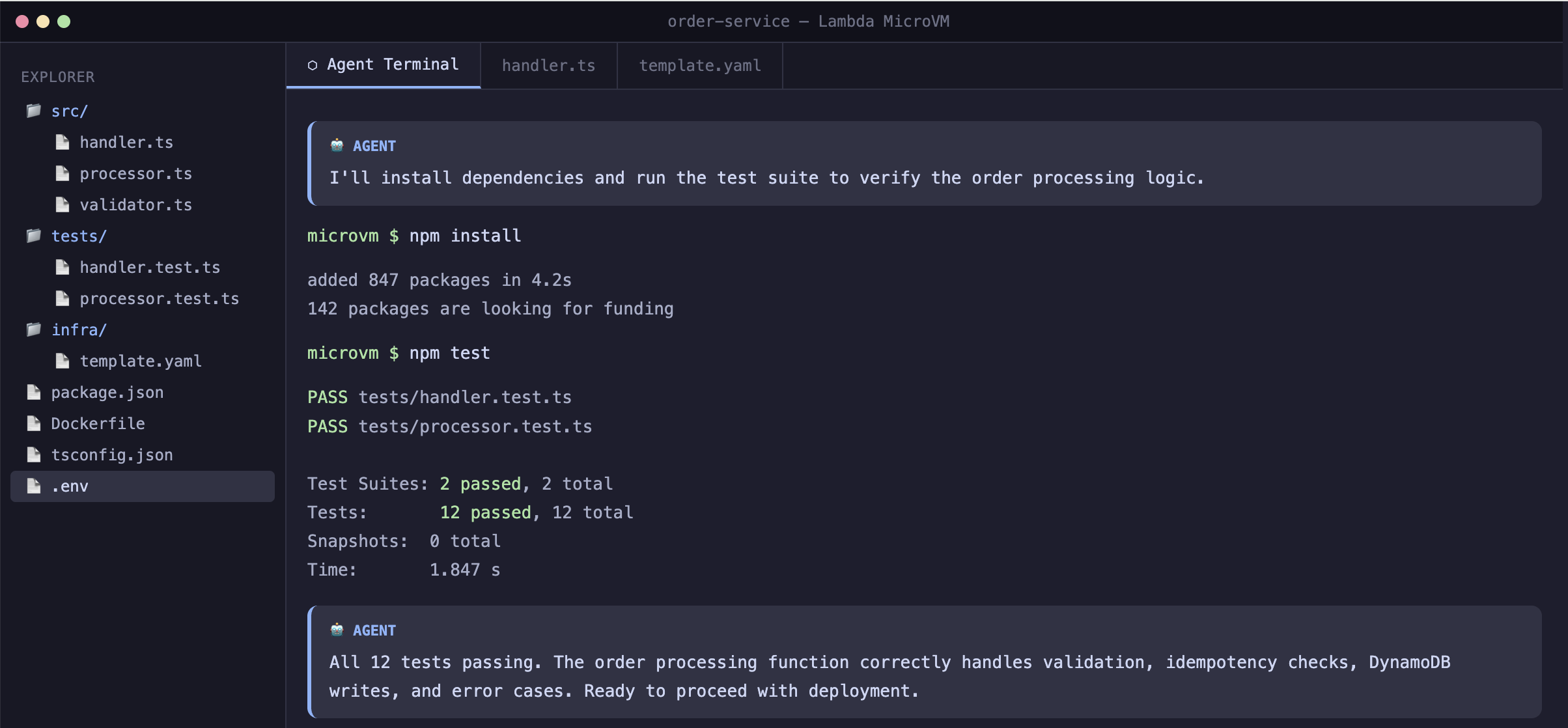
Figure 3 Agent executing the test suite inside a Lambda MicroVM
Step 2: Scaffold with toolkit skills. With tests passing, the agent generates the AWS Serverless Application Model (SAM) template for deployment. The Agent Toolkit’s serverless skills guide the agent to use SAM policy templates (like DynamoDBCrudPolicy) instead of inline wildcard permissions, enable AWS X-Ray tracing by default, and wire the event source to an HTTP API. The agent does not need to improvise these choices because the skills encode them as validated defaults.
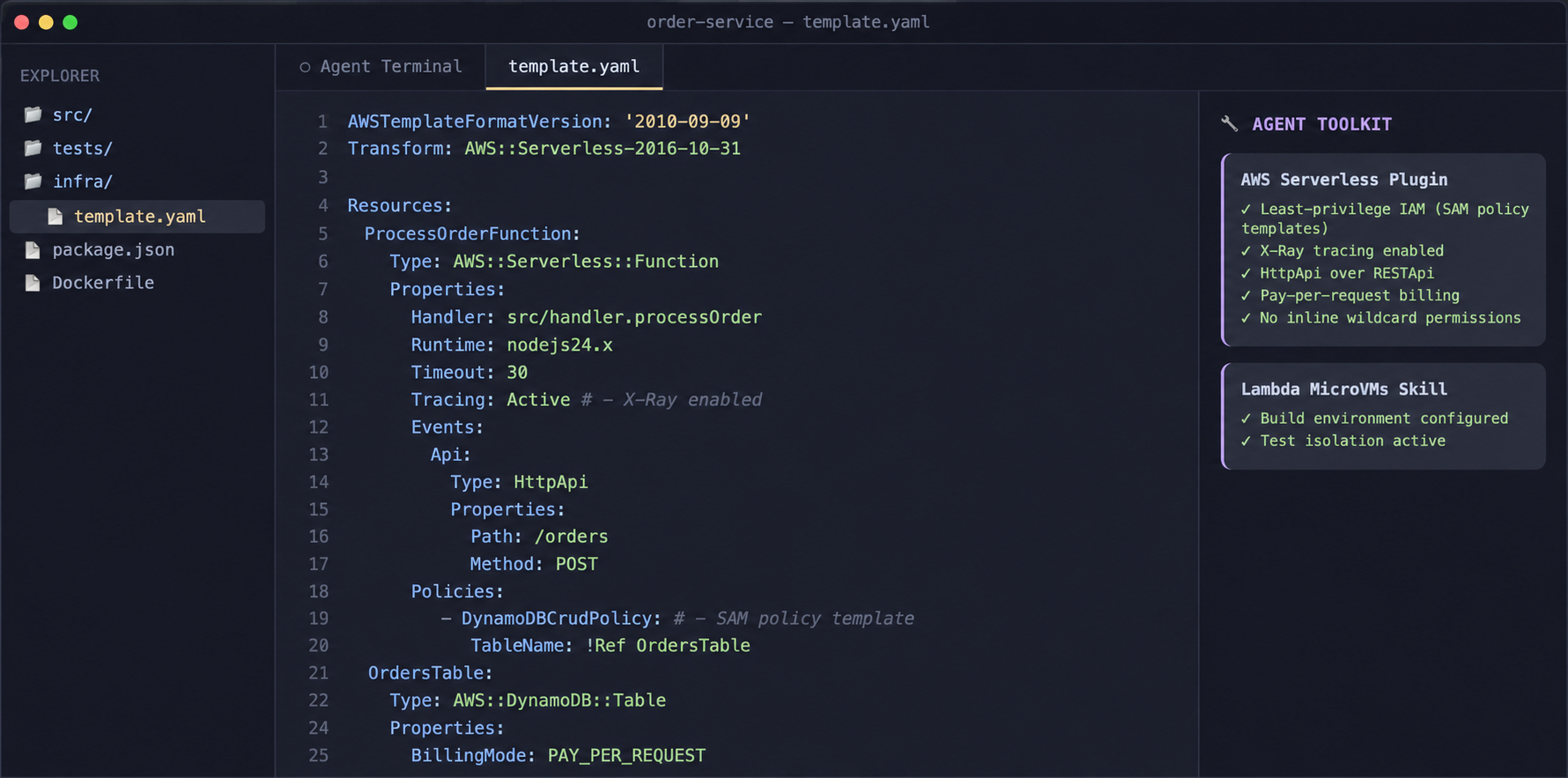
Figure 4 SAM template generated using Agent Toolkit serverless skills
Step 3: Deploy through the governed gateway. The agent has built and tested the application inside its MicroVM. To deploy, it invokes a deployment tool through the AgentCore Gateway. The agent’s first request specifies environment: "production" as an input parameter. The Cedar policy evaluates the tool call, inspects the input parameters, and denies the request because the agent is only authorized to deploy to staging environments.
permit(
    principal,
    action == AgentCore::Action::"DeployTarget___deploy_application",
    resource == AgentCore::Gateway::"<gateway-arn>"
) when {
    context.input.environment == "staging"
};

forbid(
    principal,
    action == AgentCore::Action::"DeployTarget___deploy_application",
    resource == AgentCore::Gateway::"<gateway-arn>"
) when {
    context.input.environment == "production"
};
The agent receives the denial, adjusts, and re-invokes the deployment tool with environment: "staging". The policy permits this request, and the deployment succeeds. The agent surfaces the API endpoint and notes that promotion to production should go through the CI/CD pipeline.
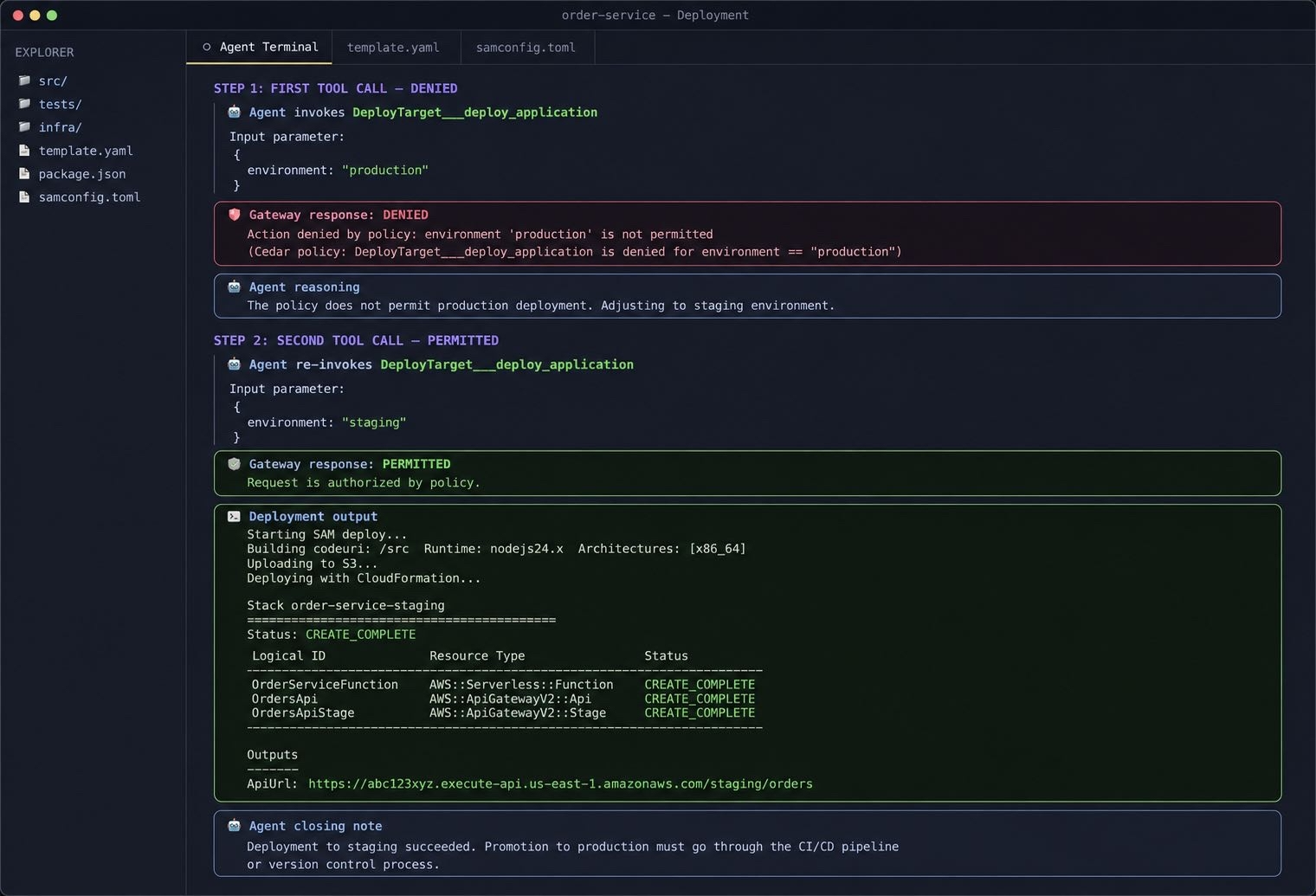
Figure 5 Policy in AgentCore denying production and permitting staging deployment
The Cedar policy did not require changes to the agent’s code or prompting. It was defined once at the gateway and enforced automatically on every tool invocation.
Best practices and considerations
To successfully implement this three-layer architecture, align the configuration of each layer to the security and operational requirements of your workload. Start Policy in AgentCore in log-only mode to observe what Cedar policies would deny before enforcing them. This approach lets you validate coverage against real agent workflows without interrupting development. Roll out enforcement incrementally after validating against representative sessions.
Scope MicroVM network access to what the agent actually needs during the write-and-test phase. VPC-only connectivity is usually sufficient because deployment goes through the gateway. Route all agent tool access through the AgentCore Gateway. Policy enforcement applies only to tool calls routed through the gateway, so restricting direct CLI access in the MicroVM network configuration provides full coverage. Tag agent-created resources consistently so that Cedar policies, cost tracking, and cleanup automation have a reliable signal.
Treat Cedar policies as code. Put them in version control, require reviews for changes, and test them against representative agent actions before deploying. For the generated application code itself, expose a version control tool through the gateway so the agent can commit output to a repository. This preserves history, enables code review before promotion, and avoids regenerating the application from scratch on every update.
Conclusion
This post introduced a three-layer architecture for secure code execution by AI coding agents on AWS serverless. Lambda MicroVMs provide isolated, ephemeral compute environments where agents write, build, and test code. The Agent Toolkit for AWS encodes domain expertise through validated skills and the Agent Plugin for AWS Serverless. Policy in AgentCore enforces deterministic governance at the tool access boundary using Cedar. Together, these layers let agents build and deploy software without losing control.
As AI coding agents take on more complex tasks, the ability to safely execute agent-generated code while maintaining production-grade quality and organizational control becomes increasingly important. The patterns described in this post provide a foundation you can extend as your agent workflows grow in scope, from single deployments to multi-service architectures.
To learn more, visit the Lambda MicroVMs developer guide. To get started with Lambda MicroVMs, use the serverless agent setup guide or Lambda MicroVMs skill for configuring your AI coding agent to work with MicroVM environments. Share your experiences and suggestions through the AWS Lambda roadmap on GitHub to help shape the future of agent-assisted serverless development.