AWS Database Blog

Author: Marvin Vinson

Archival solutions for Oracle database workloads in AWS: Part 1
This is a two-part series. In this post, we explain three archival solutions that allow you to archive Oracle data into Amazon Simple Storage Service (Amazon S3). In Part 2 of this series, we explain three archival solutions using native Oracle products and utilities. All of these options allow you to join current Oracle data with archived data.

Archival solutions for Oracle database workloads in AWS: Part 2
This post is a continuation of Archival solutions for Oracle database workloads in AWS: Part 1. Part 1 explains three archival solutions that allow you to archive Oracle data into Amazon Simple Storage Service (Amazon S3). In this post, we explain three archival solutions using native Oracle products and utilities.

Implement Oracle GoldenGate high availability in the AWS Cloud
The need to move data from one location to another in an asynchronous manner is a goal for many enterprises. Use cases might include migrating data to a reporting database, moving applications from on premises to the cloud, storing a redundant copy in another data center, configuring active/active databases across geographic locations, and performing heterogeneous […]
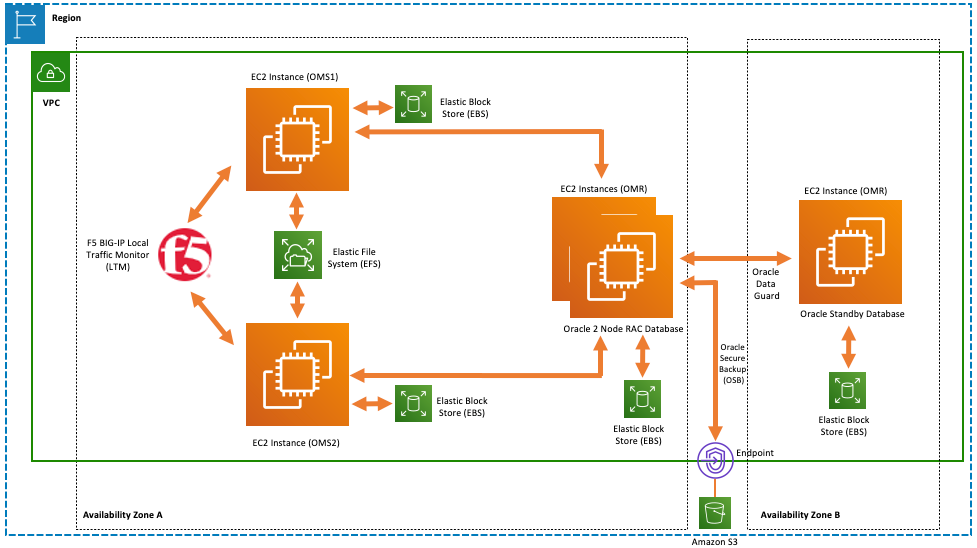
Implement high availability for Oracle Enterprise Manager in the AWS Cloud
As you migrate Oracle workloads to AWS, you may want to implement Oracle Enterprise Manager (OEM) Cloud Control in AWS. OEM is Oracle’s management platform, which provides a single pane of glass for managing Oracle environments. In this post, we provide two solutions to implement OEM high availability in AWS. The first solution is Oracle’s […]

Implement Oracle Database Resident Connection Pool with Amazon RDS for Oracle
This post describes how to configure Oracle Database Resident Connection Pool (DRCP) in an Amazon Relational Database Service (Amazon RDS) for Oracle environment. You can use DRCP with application servers that can’t do middle-tier connection pooling. You can also use DRCP to manage hundreds or thousands of database connections from clients spread across multiple application […]