Migration & Modernization
Migration at Scale: The Fanatics Commerce AWS Journey
This case study demonstrates how Fanatics Commerce successfully planned a large-scale migration of 1,800 servers across five data centers to AWS, achieving projected 48% infrastructure cost savings while maintaining global operational continuity. Fanatics Commerce (fanatics.com), the global leader in licensed sports merchandise, operates a tech-powered, omnichannel platform that creates exceptional fan experiences across retail channels. Fanatics leverages state-of-the-art fulfillment centers and data-driven personalization to connect fans with the teams and players they love. As their business expanded, they required infrastructure that could scale with their growth targets, prompting them to embark on a large-scale cloud migration. The AWS Migration Acceleration Program (MAP) provides the framework to evaluate this transformation, offering AWS investment, proven methodologies, and technical guidance through a three-phase approach: Assess, Mobilize, and Migrate & Modernize. Through this program, Fanatics decided to migrate to AWS and developed a cloud migration roadmap. The migration is underway, with completion set for December 2026.
Fanatics Commerce’s growth created a business need to modernize their technology foundation, requiring the migration of 1,800 Windows and Linux servers from five data centers across geographic locations. This undertaking represented more than a technology refresh—it became essential to supporting their expansion and operational excellence. Key factors drove the urgency:
- Aging infrastructure requiring capital investment for refreshes.
- Operational costs increasing across global data centers.
- Compliance and operational requirements across different regions.
- Applications need to be closer to corporate employees across the globe.
- Maintenance overhead of legacy systems.
While the business drivers were clear, executing a transformation of this magnitude presented Fanatics with technical and operational challenges. The team needed to navigate infrastructure dependencies, maintain business continuity, and ensure security compliance while minimizing disruption to their round-the-clock global retail operations.
Challenges
As Fanatics embarked on their journey to migrate servers from five global data centers to AWS, they encountered challenges:
- Scale and Complexity: Migrating 1,800 Windows and Linux servers across geographical locations presented logistical and technical hurdles. Each data center had its unique setup, requiring a tailored approach to migration.
- Microsoft/Oracle Workload Concerns: Fanatics’ Commerce DC team had reservations about moving their Microsoft SQL Server and Oracle database workloads to AWS. Key concerns included:
- Performance parity with on-premises infrastructure
- Licensing optimization in a cloud environment
- Maintaining compliance and security standards
- Ensuring business continuity during and after migration
- Global Operational Continuity: As a leader in licensed sports merchandise, Fanatics could not afford downtime or performance degradation, particularly during peak sports seasons. The migration strategy needed to account for operations across all time zones and markets.
- Cost Management: While cost savings were a primary driver, Fanatics needed assurance that the migration would result in annual savings without hidden or unexpected costs.
- Skills Gap: Transitioning from on-premises infrastructure to cloud-based services required a shift in skill sets for Fanatics’ IT teams. Bridging this knowledge gap was crucial for success.
- Edge Computing Requirements: Fanatics’ global presence demanded low-latency solutions in various markets. Implementing edge computing capabilities while migrating to the cloud added another layer of complexity to the project. These challenges required not just a technical solution, but a comprehensive approach that addressed Fanatics’ business needs, operational requirements, and future growth plans.
The AWS Approach: A Strategic Plan for Cloud Confidence and Migration Success
Phase 1: Building Team Confidence
The AWS team suggested executing a hands-on workshop—the Microsoft on AWS Adventure Game. This workshop strengthened the partnership between AWS and Fanatics Commerce, demonstrating AWS’s commitment to supporting clients throughout their cloud adoption journey. The IT team expressed confidence in using AWS, and the session addressed key questions related to running Microsoft workloads on the AWS platform.
“The Microsoft on AWS Adventure Game workshop is what our team needs. It provides practical insights into how our Windows-based applications will perform in AWS, and the hands-on experience builds confidence across our technical teams. This collaborative approach shows AWS’s commitment to getting it right from the start.” — Andrew Krug, Director Infrastructure Engineering
Phase 2: Creating the Business Case
Following this engagement, AWS conducted the Optimization and Licensing Assessment (OLA), an AWS-funded offering to analyze Fanatics’ existing on-premises environment, including storage infrastructure. This assessment analyzed current resources and uncovered cost-saving opportunities for migration to AWS cloud. The OLA provided a personalized report based on actual usage and licensing, guiding Fanatics’ cloud migration with confidence.
The assessment evaluated migration scenarios, including “like-for-like” and “rightsized” approaches under shared and mixed tenancy models.
Key findings included:
- Rightsizing optimized compute and memory usage and enabled licensing and storage optimization strategies.
- Power management—such as turning off non-production workloads during off- hours and running them on-demand only when needed—was identified as an additional optimization lever.
Through its partnership with AWS, Fanatics will achieve:
- Up to 48% infrastructure cost savings.
- Lower overall total cost of ownership (TCO).
- Efficiencies through workload scheduling and license consolidation.
- Delivery of services and content closer to end customers through AWS’s global infrastructure, reducing latency and enhancing performance worldwide.
Phase 3: Establishing the Foundation
To complement the OLA, AWS funded and delivered a Discovery Acceleration and Planning (DAP) assessment in collaboration with Trace3, an AWS Premier Tier Services Partner. This engagement enabled:
- Infrastructure and application discovery via an automated discovery tool.
- Directional R-Pattern (Rehost, Replatform, Refactor, Retire, Retain, Repurchase) recommendations based on AWS’s migration strategies and dependency mapping.
- Application complexity scoring.
- Prescriptive migration guidance for isolated applications.
- Migration guidance for isolated applications.
- Wave planning.
- Foundational data for the Mobilize phase of the AWS Migration Acceleration Program (MAP), including server inventories, databases, and architecture diagrams.
The DAP assessment enabled Fanatics to identify migration candidates and prioritize low-utilization, low-complexity applications or virtual machines (VMs) establishing a starting point for migration planning. It also delivered a migration plan with cost estimates and established a landing zone to transition into the Mobilize phase of the AWS Migration Acceleration Program (MAP).
While the OLA built the business case for change, the DAP assessment, in partnership with Trace3, provided the practical guidance needed to plan and initiate the migration to AWS.
Phase 4: Aligning Teams and Architecture
After completing the OLA and DAP, AWS hosted a migration Experience-Based Acceleration (EBA) event, executed by AWS and Trace3. This three-day workshop brought together stakeholders from Fanatics, AWS, and Trace3 to work through architectural decisions and team-building exercises.
The EBA focused on aligning, designing, and building foundational elements that would enable regions to communicate with Fanatics’ on-premises environment, setting the foundation for their migration journey. This approach enabled Fanatics to leverage the expertise of AWS and Trace3, ensuring a solution for their migration challenges at scale.
Accelerating Success: Leveraging MAP and Strategic Partnerships
With the foundational work established through the OLA, DAP, and EBA programs, Fanatics moved forward with their migration by leveraging the AWS Migration Acceleration Program (MAP) and deepening their partnership with Trace3.
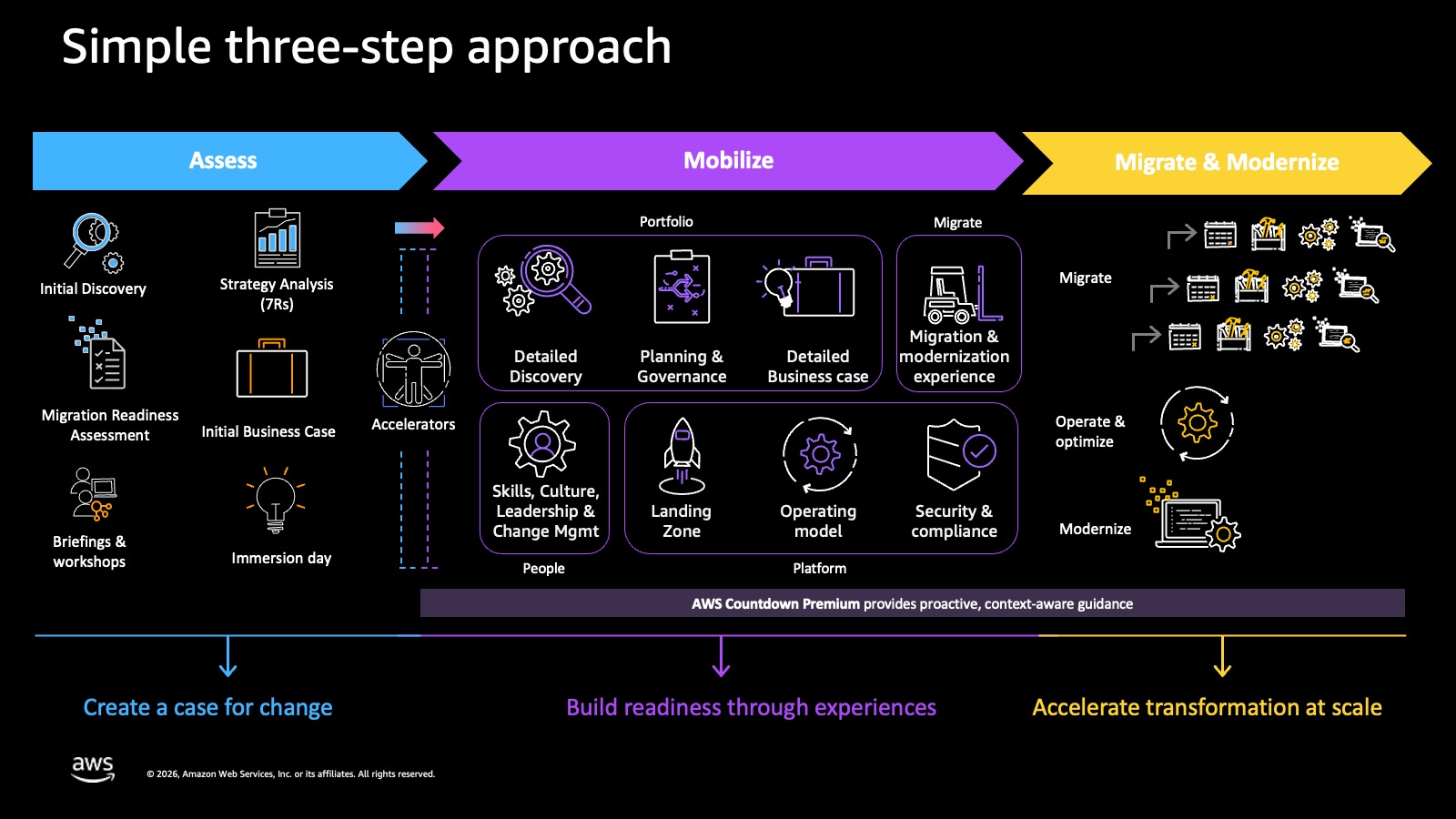
Figure 1: AWS Migration Assessment Framework
Building on the architectural decisions made during the EBA, Fanatics utilized the MAP framework to accelerate their cloud journey. This program provided:
- Financial incentives to offset migration costs.
- Access to proven migration methodologies and best practices.
- Technical guidance and tools to streamline the migration process.
- A comprehensive Migration Readiness Assessment (MRA) to identify and address potential gaps.
Partnership with Trace3: From planning to execution Following their collaboration during the EBA, Trace3 continued their integral role in Fanatics’ migration journey. Their expertise proved invaluable in several key areas:
- Technical Implementation: Providing specialized guidance for migrating Microsoft workloads to AWS, addressing the Commerce DC team’s initial concerns about cloud migration.
- Operational Continuity: Developing detailed migration plans that maintained business operations during the transition.
- Knowledge Transfer: Working alongside Fanatics’ IT teams to transfer critical cloud operations knowledge and establish best practices.• Compliance and Security: Ensuring operational compliance requirements were met across global regions.
- Documentation: Creating comprehensive documentation for migration procedures and new AWS environment management processes.
AWS’s MAP framework and Trace3’s migration expertise created a foundation for success. This approach positions Fanatics to execute their migration and establish operational capabilities for success in the cloud.
“AWS’s infrastructure and our migration expertise create a foundation for transformations like this. We’re mapping out a plan that will help Fanatics achieve their modernization goals while maintaining the business continuity of their global operations demand.” — Charlotte Anderson, Sr Architect at Trace3
Conclusion
Where We Are Today
Fanatics Commerce has completed the Assess and Mobilize phases of their AWS migration journey. Through the OLA, DAP, and EBA programs, the team has built a foundation validating the business case, mapping application dependencies, aligning stakeholders, and establishing the architectural framework needed to support their global operations. With this groundwork in place, Fanatics now executes the Migrate and Modernize phase, targeting completion by December 2026.
What We Have Learned So Far
The assessment and planning phases revealed insights that are guiding Fanatics’ migration execution:
- Rightsizing and power management strategies unlock cost savings beyond lift-and-shift migrations.
- Building team confidence early through hands-on workshops like the Microsoft on AWS Adventure Game reduces resistance and accelerates adoption.
- Partnering with experienced AWS Partners like Trace3 provides specialized expertise that complements AWS’s tools and frameworks.
- A phased, structured approach—Assess, Mobilize, Migrate and Modernize—reduces risk and ensures business continuity throughout the transformation.
Expected Outcomes
Based on the completed assessments and current migration progress, Fanatics is on track to achieve:
- Up to 48% infrastructure cost savings.
- Lower overall total cost of ownership (TCO).
- Improved global performance through reduced latency via AWS’s extensive infrastructure.
- Enhanced operational efficiency through workload scheduling and license consolidation.
- A scalable, modern foundation that supports continued business growth and innovation.
Applying This to Your Organization
Fanatics’ journey offers a blueprint for enterprises facing challenges of aging infrastructure, operational costs, compliance requirements, and the need to scale globally. AWS’s assessment tools (OLA and DAP), the Experience-Based Acceleration (EBA) program, and the Migration Acceleration Program (MAP), along with partner execution, create a framework that organizations of any size can follow.
Whether you manage hundreds or thousands of servers across data centers, the structured approach Fanatics employed demonstrates that large-scale cloud migrations are achievable with planning, partnerships, and commitment to execution.
“Our cloud transformation strategy is about building the foundation for Fanatics’ future growth. The collaborative approach between AWS and Trace3 gives us confidence in navigating the technical challenges ahead, while the projected cost savings and performance improvements make a compelling business case. This is how we’ll deliver better experiences for our customers and employees across the globe.” — Jason Kees, CISO/Infrastructure
Next Steps: Ready to Start Your Migration Journey?
If you are considering a large-scale migration to AWS, here is how to get started:
Evaluate Your Current State
Request an AWS Optimization and Licensing Assessment (OLA) to understand your potential savings and optimization opportunities. Follow this with a Discovery Acceleration and Planning (DAP) assessment to map your migration journey and identify initial migration candidates.
Build Your Migration Foundation
Participate in an Experience-Based Acceleration (EBA) workshop to establish your architectural framework and align key stakeholders. Explore the Microsoft on AWS Adventure Game to build team confidence around running Windows-based workloads on AWS.
Accelerate Your Journey
Learn more about the AWS Migration Acceleration Program (MAP) and its benefits, including financial incentives, proven methodologies, and technical guidance.
Connect with Expert Support
Partner with AWS Premier Tier Services Partners like Trace3 who can provide specialized expertise tailored to your specific migration needs.
Get Started Today
Contact your AWS account team or visit Migration and Modernization Partners to learn more about how AWS and our partners can help transform your infrastructure for the future.