AWS at KubeCon + CloudNativeCon North America, 2026
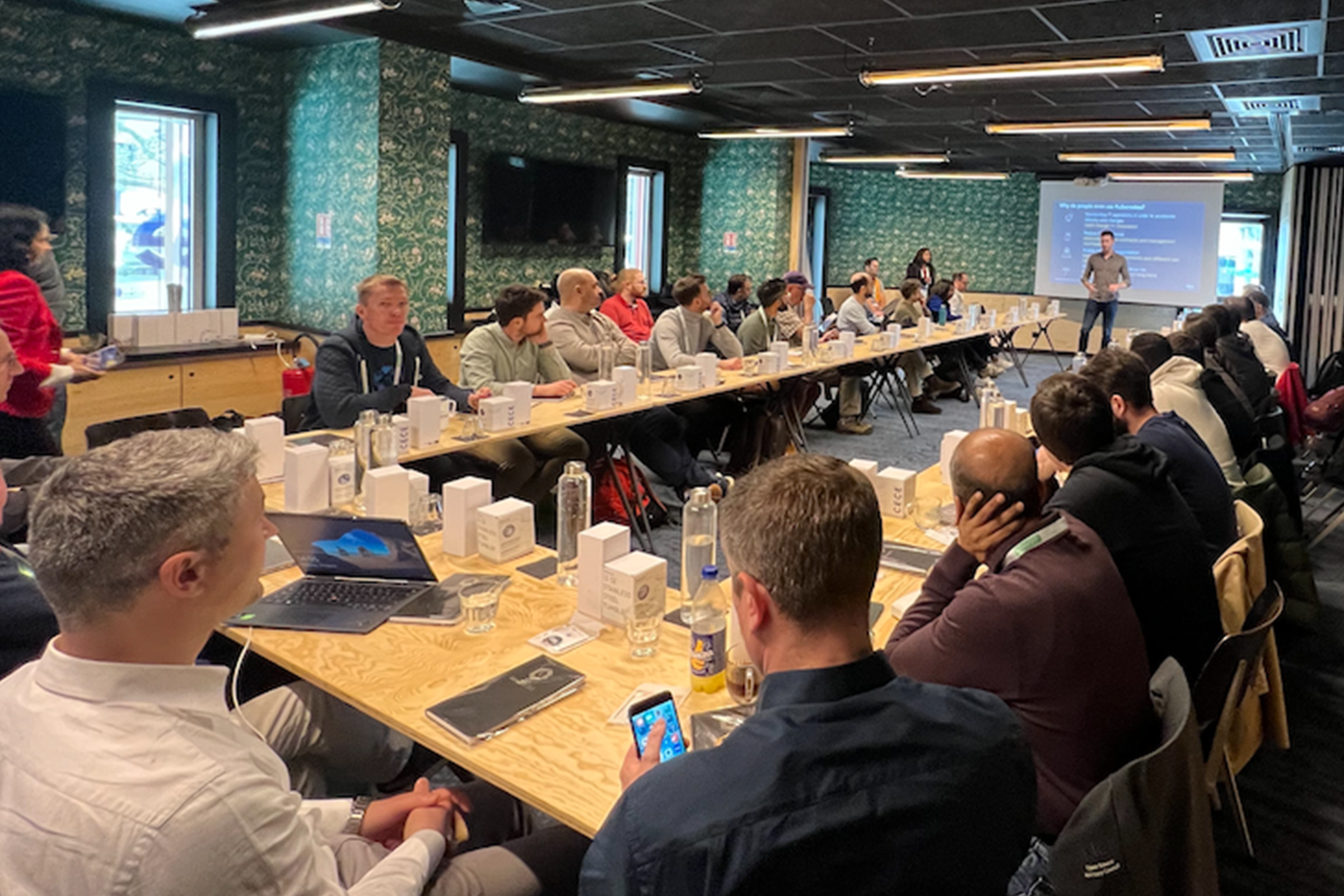
Free In Person Hands-on Workshop
Meet AWS Team at Booth #115
Join us at KubeCon Salt Lake City at Booth #115 to discover AWS’s latest innovations in cloud-native technologies and Kubernetes. Experience live product demonstrations covering ‘Agentic on Kubernetes’, ‘AI/ML on Kubernetes’, ‘GitOps and Platform Strategy’, and ‘Kubernetes Operations’. Attend 25-minute interactive mini-theater lightning talks featuring technical presentations, or visit our demo stations for hands-on exploration and detailed conversations with AWS subject matter experts. Connect with our team to discuss your specific use cases and discover how to optimize your EKS deployments for performance, security, and cost efficiency.
AWS Mainstage Keynote - “Engineering Kubernetes for the next era of Workloads”
Date and Time: Nov 10 | 9:35 AM to 9:40 AM
Location: Salt Palace | Level I | Hall DE
Speaker: Mike Stefaniak, Senior Manager of Product at AWS
AI changed what Kubernetes has to handle: container images in the tens of gigabytes, clusters approaching 100,000 nodes, and accelerators a device count can't describe. At AWS we hit those limits early, and when we do, we fix them upstream. This keynote covers three layers. In containerd, parallel layer unpack takes the long pole out of pulling large AI images. In the control plane, we removed lock contention in the API server watch cache and the Horizontal Pod Autoscaler and fixed a scheduler hot path, all in Kubernetes 1.37. For accelerators, Dynamic Resource Allocation lets a pod ask for a GPU and network adapter on the same PCIe root, and Karpenter can now provision for it, even for nodes that don't exist yet.
AWS Agentic Keynote - “Code Nobody Wrote: Running Agents You Can't Trust”
Date and Time: Nov 9 | 10:10 AM to 10:15 AM
Location: Salt Palace | Level 1 | Grand Ballroom ACE
Speaker: Todd Neal, Principal Software Developer, AWS
In 2026, it's become common to run code that nobody wrote. An agent generates a script, runs it, and moves on, and there is no human author to trust. For years, we've used VMs to handle the problem of running untrusted code. Agent pods on Kubernetes deserve the same boundary. This talk makes the case for moving trust from the code to the boundary.
Some Featured Lightning Talks | AWS Booth #115 | Nov 10 to Nov 12
Demos | Expert Consultations | Live Q&A | Networking | AWS Goodies (Visit AWS Booth #115 on Nov 10 for the full schedule)
|
Session
|
Description
|
|---|---|
|
Secure AI Agents on Amazon EKS
|
Nearly every AI agent can now generate and execute code autonomously spinning up processes, calling APIs, and writing to disk. Containers alone are not enough for these non-deterministic workloads. This session walks through the threat landscape and shows how to layer defenses on Amazon EKS with compute isolation, network governance, and identity scoping, including patterns where model providers handle orchestration while execution stays on your EKS infrastructure. |
|
Multi-Agent Service Desk on EKS with PII Guardrails
|
This demo runs a live multi-agent customer service desk on Amazon EKS. A triage agent classifies intent and routes to specialist sub-agents (billing, fraud, account services) running as isolated pods, with real-time PII tokenization via Amazon Comprehend before any data reaches the model. When sentiment drops below threshold, the agent auto-escalates to a human queue, all orchestrated by Bedrock AgentCore multi-agent collaboration with pod-level tenant isolation. |
|
Grading Your Cluster: An Agent-Run EKS Best-Practices Review Across Pillars
|
Using the AWS DevOps Agent's EKS operations-review skill, we grade a live cluster against best practices across nine pillars: Operations, Resilience, Security, Scalability, Performance, Observability, Networking, Cost, and Control Plane. The skill walks the full cluster object graph and grades each area with observed evidence behind every verdict. Output is a PASS/FAIL/N/A scorecard with prioritized remediations, published as standalone artifacts per pillar. |
|
Scaling LLM Inference on EKS with vLLM, KubeRay, and DRA
|
This session shows how EKS makes accelerated inference declarative: Dynamic Resource Allocation (DRA) allocates Trainium and EFA without hand-maintained plugins, while vLLM and KubeRay scale inference across nodes efficiently. We demo deploying an open-weights model to EKS, autoscaling it under load, and bin-packing accelerators for cost — production LLM inference using open-source tooling proven on real accelerated workloads. |
|
Going to Production: Improving Self-Hosted LLM Inference on Kubernetes
|
Default LLM deployments on Kubernetes waste 40–60% of inference capacity. This demo shows three production-ready optimizations using NVIDIA Dynamo on Amazon EKS: KV Cache-Aware Routing (24.6x TTFT improvement), Prefill/Decode Disaggregation (4.48x goodput improvement), and KVBM extending KV cache to CPU RAM and SSD (1.54x TTFT speedup). All techniques toggled live with before/after benchmarks on open-source stacks. |
|
Tokens per Dollar, Measured Honestly: A Reproducible LLM Inference Benchmark on EKS (Trainium vs GPU)
|
Cross-silicon benchmarks are almost never apples-to-apples. This demo fixes the method: we serve the same open-weights model on both Trainium2 and GPU on one EKS cluster, driven by an identical load generator on a real ShareGPT chat workload. A live two-column scoreboard fills in TTFT, TPOT, output tokens/sec, and cost per 1M tokens while Grafana shows accelerator utilization. You leave with a reproducible cross-silicon benchmarking framework |
|
Scaling AI/ML Workloads with Karpenter: Right-Sizing GPUs Without Wasting Them
|
GPU nodes are the most expensive and scarcest resource in any AI/ML cluster. This talk covers Karpenter patterns for AI/ML workloads: GPU-aware provisioning and bin-packing, instance-type flexibility to land the right accelerator per job, spot-plus-on-demand strategies for training vs. inference, and consolidation to reclaim idle GPUs. Every pattern is grounded in benchmark data from real enterprise EKS deployments. |
|
Self-Healing EKS: How Auto Mode Detects, Diagnoses, and Recovers from Node Failures Without Human Intervention
|
This demo triggers a live node failure on an EKS Auto Mode cluster and walks through the automated response: Auto Mode detects the unhealthy node, generates a diagnostic report, terminates the failed node, provisions a replacement with the optimal instance type, and reschedules workloads — all in under two minutes with zero human input. We contrast this with the manual workflow to make operational savings tangible. |
|
Seeing Your Traffic: EKS Network Observability
|
This demo replaces tcpdump and guesswork with EKS Container Network Observability — enhanced visibility into workload traffic with performance insights into flows inside the cluster and to external destinations. We light up pod-to-pod flow metrics, surface latency and drops per path, and trace traffic crossing the cluster boundary without deploying a service mesh. Live, we break a connection with a network policy, watch flow data pinpoint where packets stop, and fix it. |
|
Edge-to-Cloud Smart Factory: EKS Hybrid Nodes on Raspberry Pi
|
See EKS Hybrid Nodes running a smart factory on a Raspberry Pi. Factory machines and MQTT broker run on-premises while telemetry processors burst to cloud via EKS Auto Mode when demand spikes. KEDA scales processors based on real-time MQTT message rates, Auto Mode provisions cloud compute automatically, and Kyverno policies preserve hybrid pods during scale-down — all orchestrated from a single EKS control plane. |
|
Name the Flow: Network Cost & Latency Attribution on EKS
|
As container workloads grow more distributed, the network between them becomes the hardest thing to see — traffic sprawls across pods, nodes, and AZs, quietly driving up cost and latency. This demo shows how to close that gap with Container Network Observability, Network Flow Monitor, and OpenTelemetry-based Container Insights on Amazon EKS. Trace traffic across pods, nodes, and AZs, and attribute network cost and latency to the workloads driving them. |
|
Building Multi-Tenant SaaS Architecture with Amazon EKS Capabilities and Auto Mode
|
This demo showcases building production-ready multi-tenant platforms using EKS Capabilities for Argo CD, ACK, and kro, plus EKS Auto Mode. These integrated capabilities automate tenant onboarding in minutes, enforce namespace-level isolation, and orchestrate AWS infrastructure. Platform teams eliminate operational bottlenecks to scale across hundreds of tenants while developers ship faster with modern GitOps patterns. |
|
Ephemeral EKS Clusters as Code: Conformance Testing with kro and ACK at Airbnb
|
Platform teams need to validate cluster changes before production, but maintaining a static test fleet is slow and drifts from reality. This talk shows how to treat regression testing as a declarative platform capability: using kro to compose a high-level "test cluster" API on top of ACK, so a single custom resource provisions a fresh EKS cluster, runs conformance tests, queries the EKS Insights API for risks, publishes results, and tears everything down. |
|
Elevating EKS Security: Admin and Advanced Network Policies for Multi-Layer Protection
|
Amazon EKS Network Policies deliver security through two capabilities: Admin Network Policies enforce cluster-wide baseline rules that cannot be overridden, while Advanced Network Policies introduce Layer 7 controls with DNS-based access control using FQDNs instead of IP addresses. This demo showcases implementing default-deny architectures with Admin policies and securing external service access with DNS-based rules for defense-in-depth strategies. |
|
Accelerate declarative resource management with Amazon EKS
|
Platform teams struggle to deliver self-service infrastructure that is both fast and governed. This demo explores the latest Amazon EKS Capabilities features including kro Collections, Graph Revisions, and reactive watches for advanced declarative resource management. Then use Kiro to build an agentic workflow that accelerates migration from legacy IaC to Kubernetes-native resource definitions. |
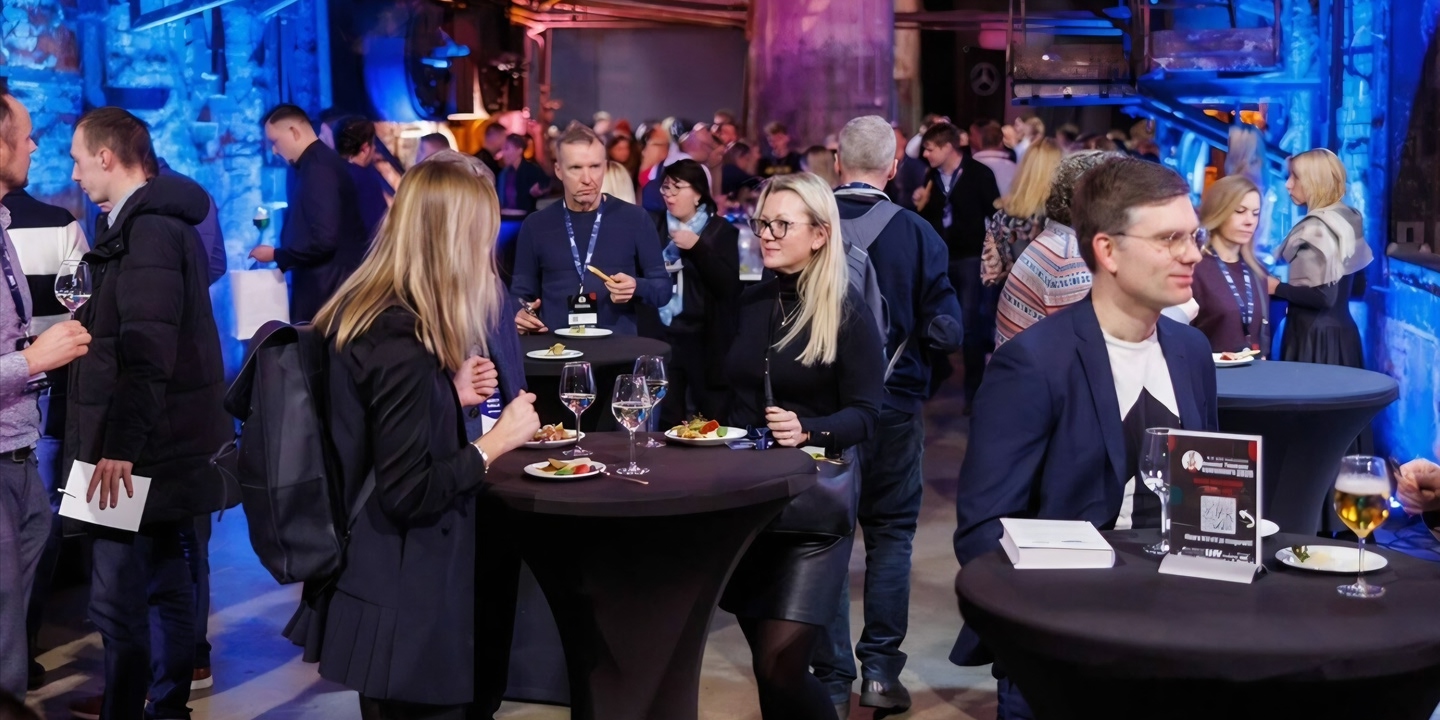
Fun Evening with AWS, Partners & Customers | Nov 11 | 6:00 PM
Agents After Hours | Hosted by AWS
Time: Wednesday, Nov 11, 6.00 PM MST to 8.00 PM MST
Location: : In-person - Le Méridien Salt Lake City Downtown, Salt Lake City, US
Kubernetes has become the default home for AI, yet only about 7% of organizations deploy models daily, so the scaling wave is just starting. AWS will host a conversation with leaders from NVIDIA, Solo.io, and Netflix on how Amazon EKS gives teams a practical foundation: pod isolation, scoped agent identity, and GPU-aware scheduling.
Come for the conversation, stay for the drinks, and leave with a grounded sense of what's real today and what's next.
Create It. Transform It. Take It. Come See what AWS is building
AI meets Amazon EKS in a whole new way.
See it. Touch it. Leave with something unforgettable.
Any guesses?

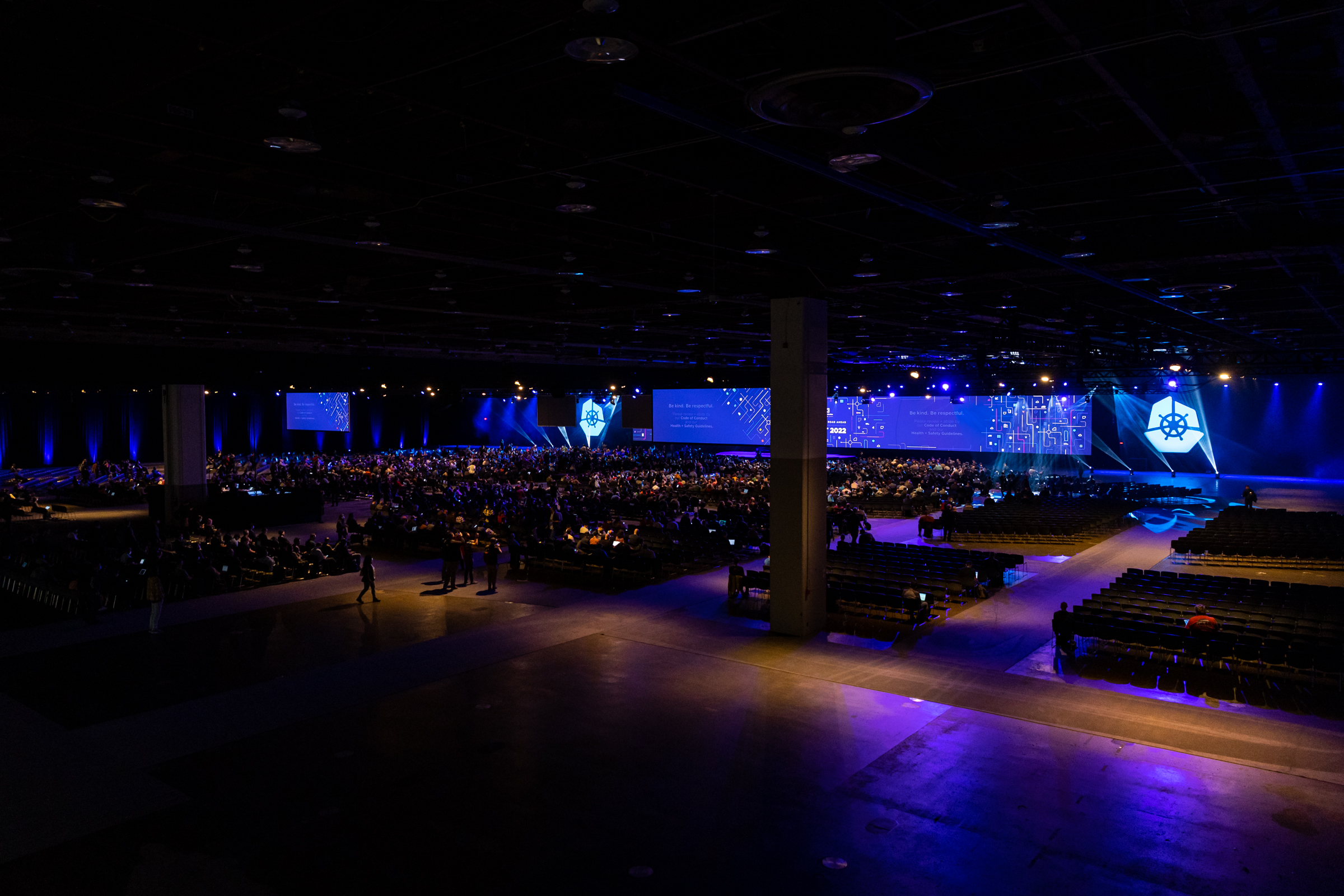
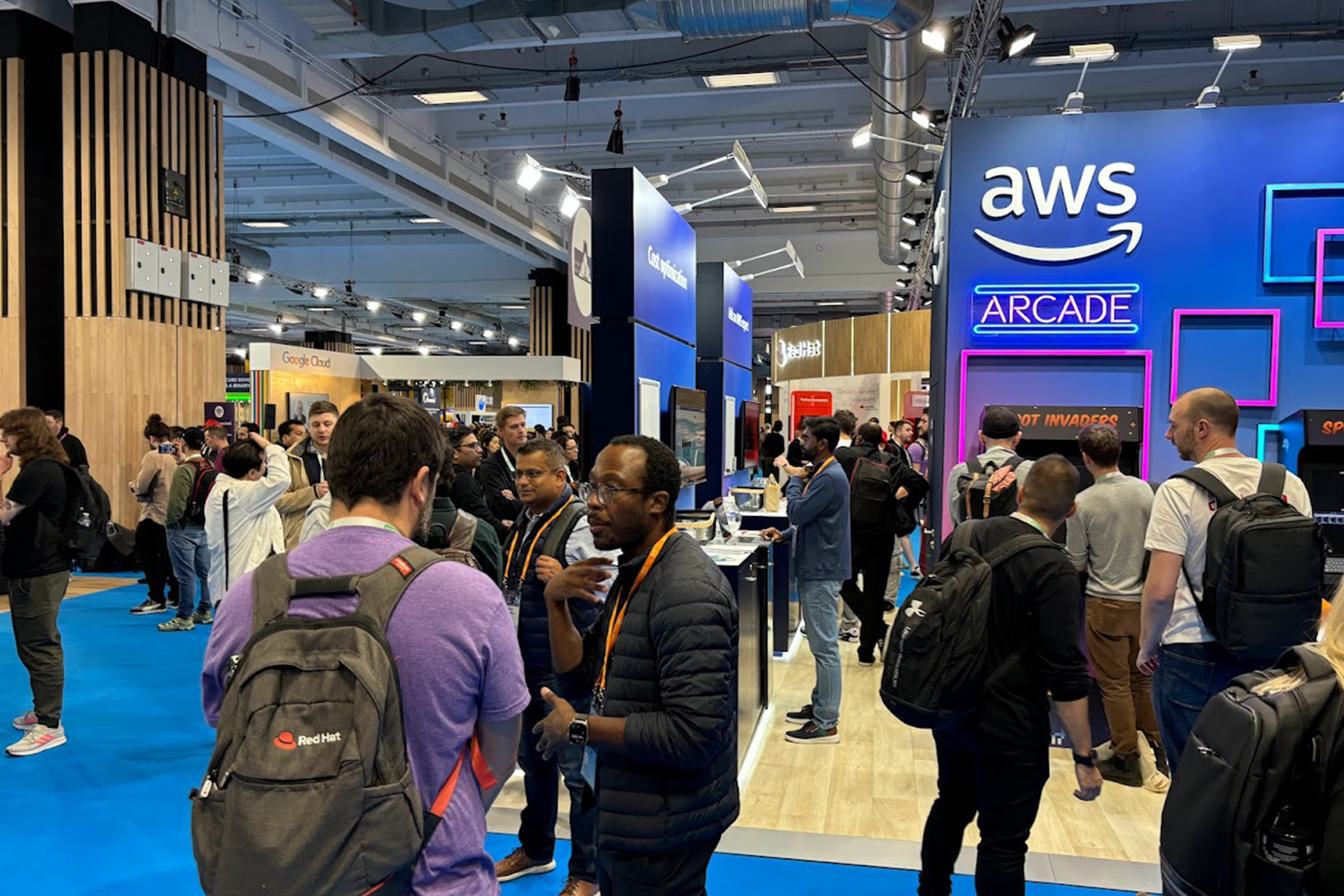
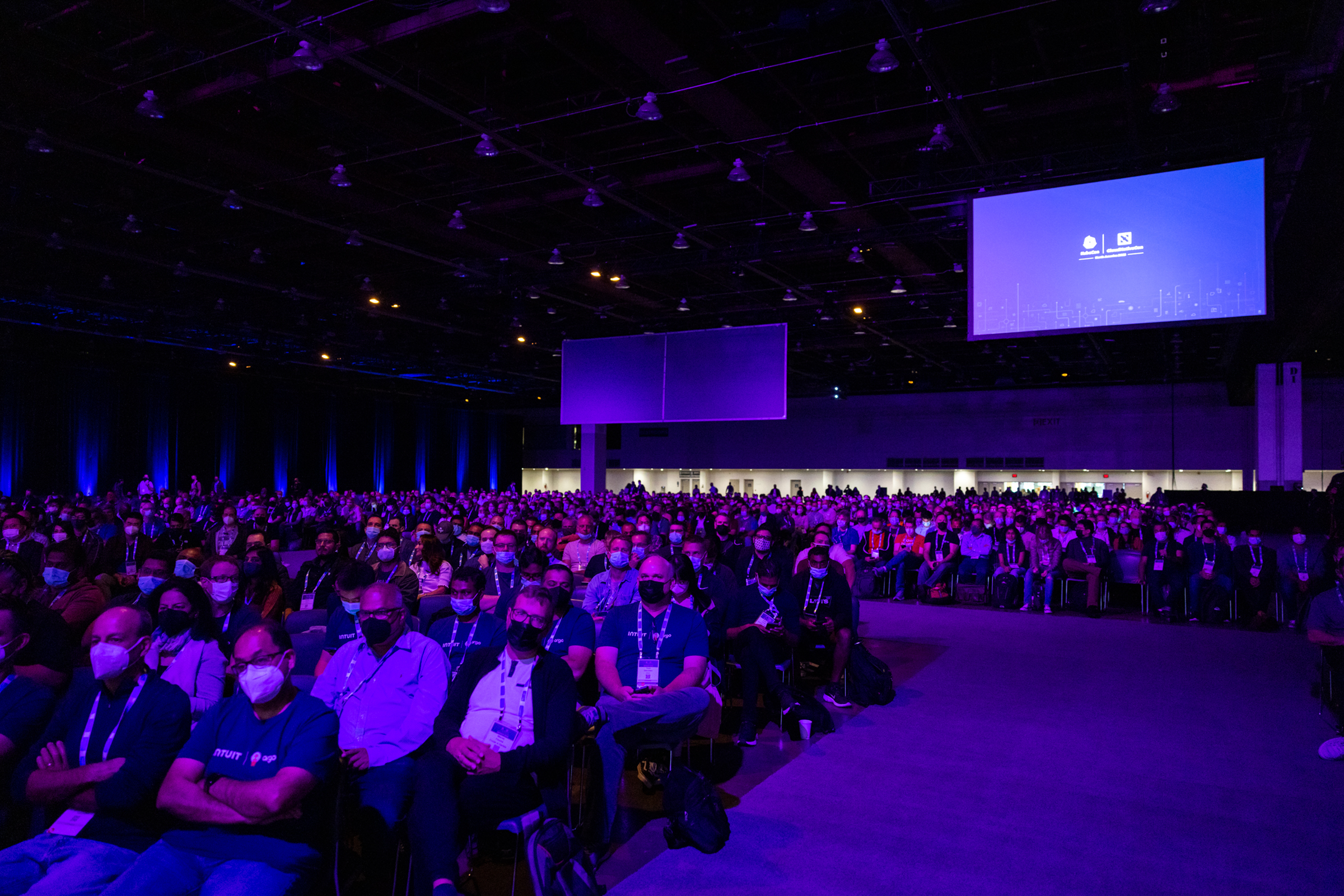
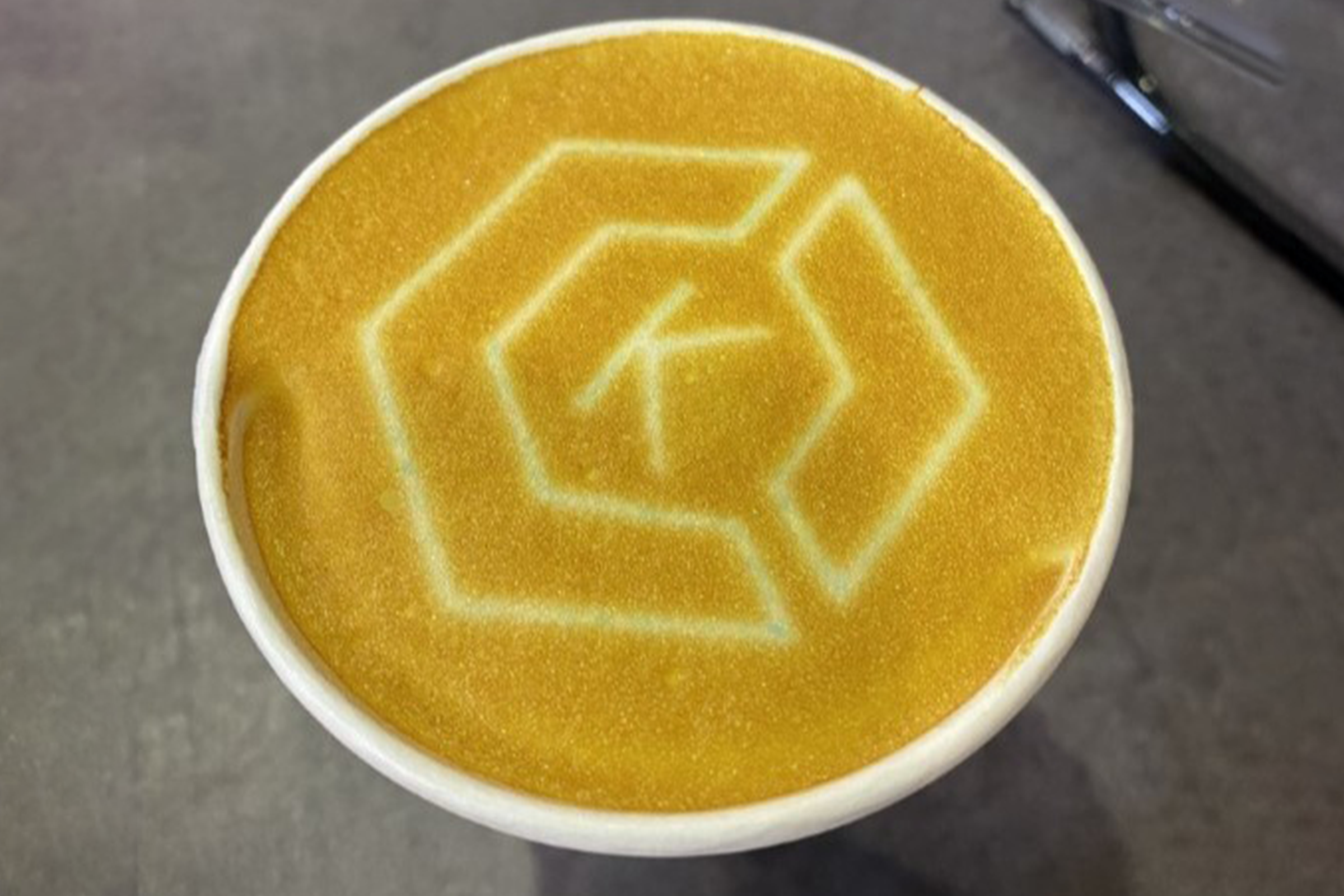
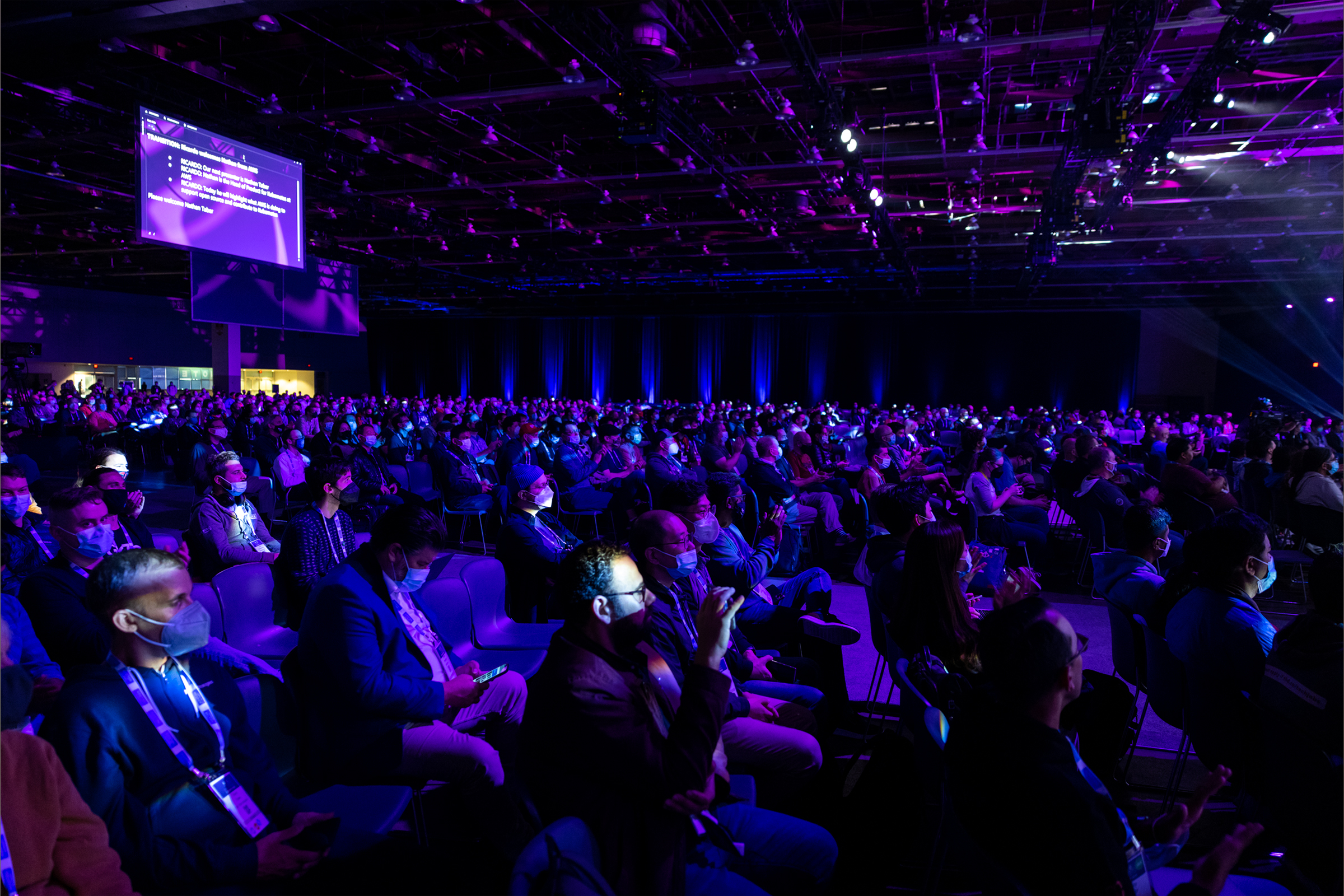
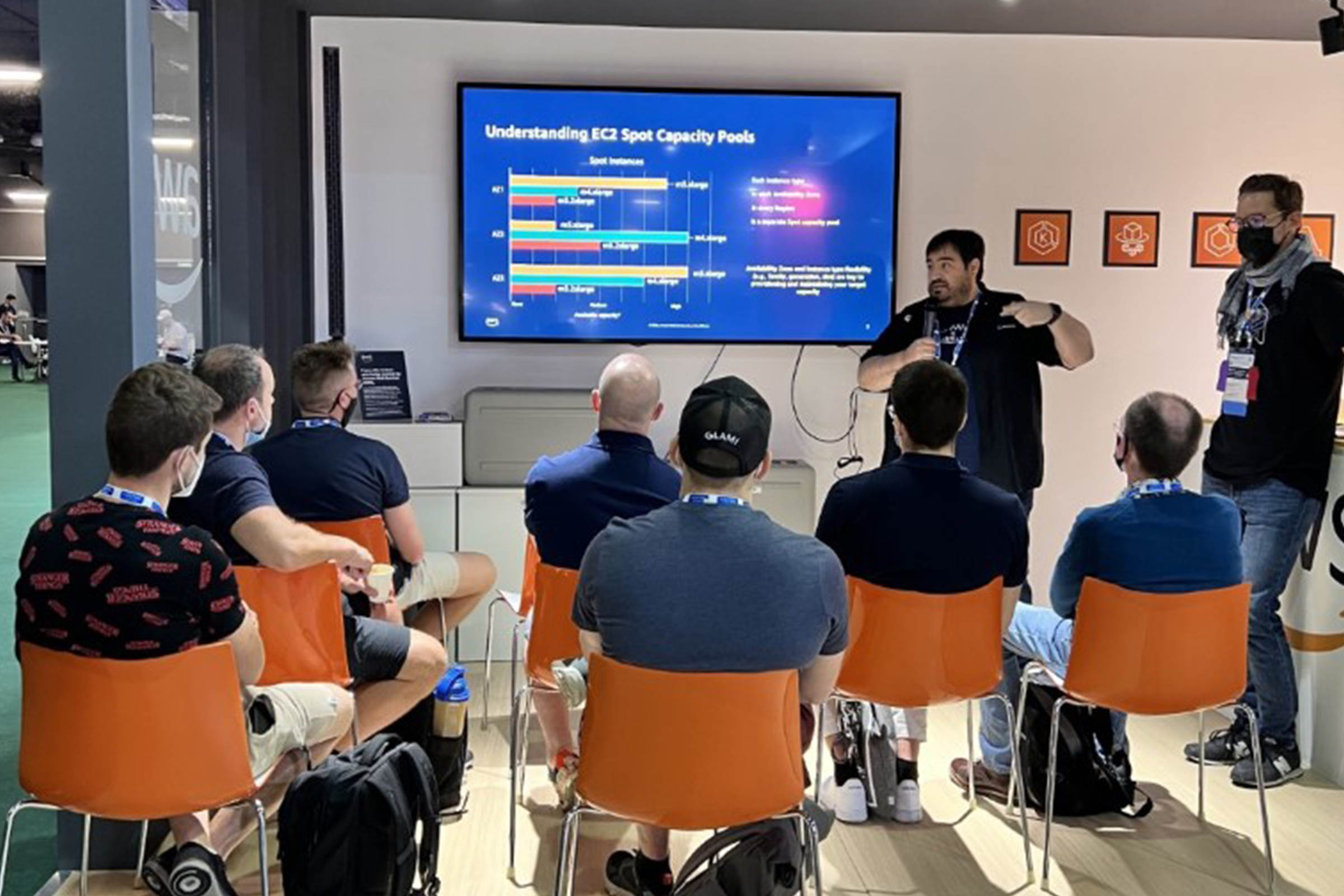
AWS Booth Experience at Previous KubeCons
At our AWS booth during previous KubeCons, we showcased cutting-edge solutions and innovations in Kubernetes and cloud-native technologies. Attendees had the opportunity to engage with experts, participate in hands-on demos.
Stay Connected With Us
Did you find what you were looking for today?
Let us know so we can improve the quality of the content on our pages