Canada's AI Innovators
Creating breakthroughs in Canada and beyond
AlayaCare: Helping deliver better patient outcomes with AI
The shift—from scrambling to prepared, from distracted to present—is what AlayaCare is building toward.
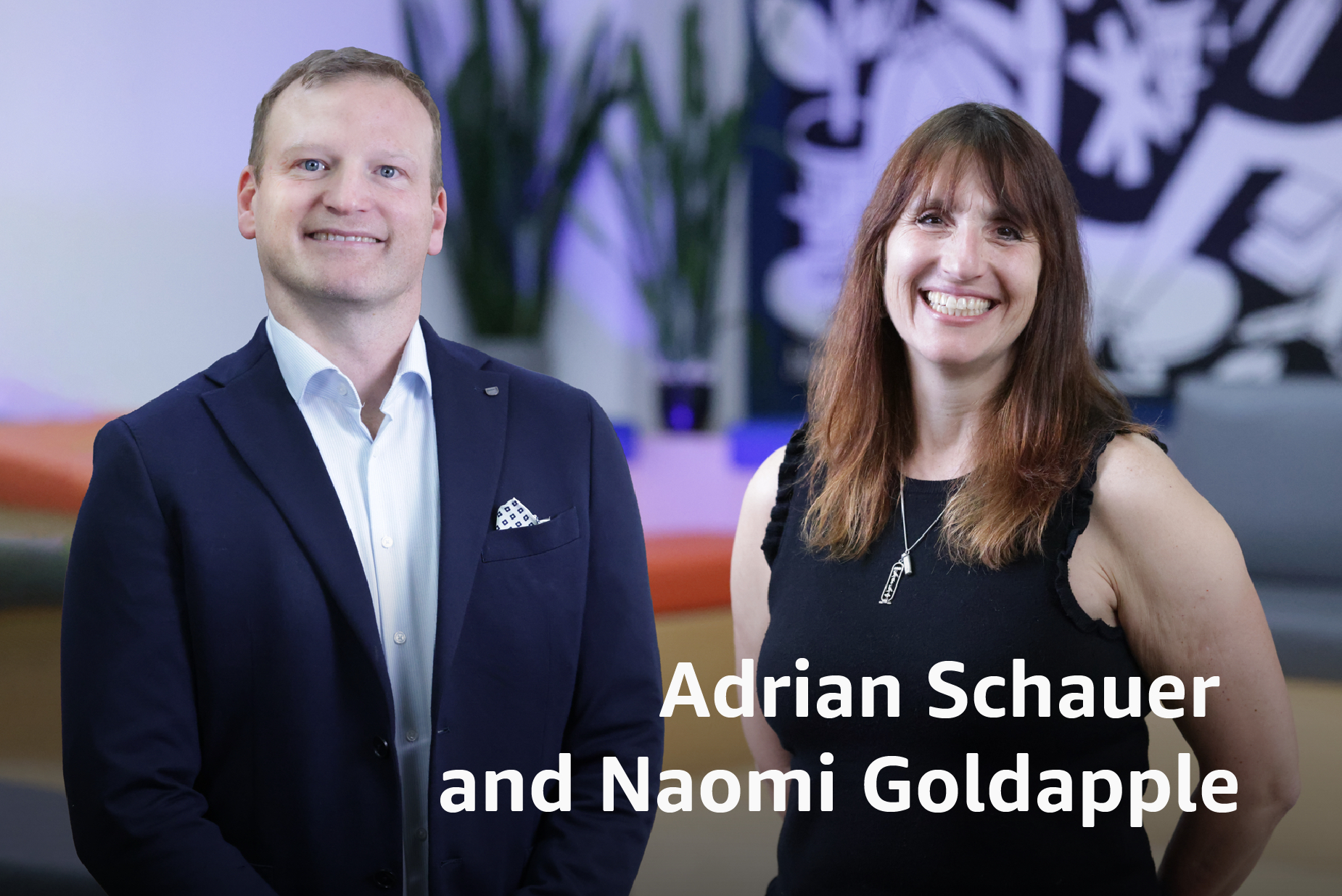
Meet Adrian Schauer and Naomi Goldapple
Founder/CEO and Senior VP, Data & Intelligence, AlayaCare
It's 6:45 a.m. in Toronto, and a home care nurse is sitting in her car, scrolling through a patient file on her phone. In twenty minutes, she'll walk into the home of an 82-year-old man recovering from a hip replacement. She needs to know his medication changes, his fall risk, and what her colleague noticed during yesterday's visit. A decade ago, she would have spent the first fifteen minutes of the appointment piecing that together. Today, it's summarized on her screen before she rings the doorbell.
That shift—from scrambling to prepared, from distracted to present—is what AlayaCare is building toward.
Founded in Montréal in 2014, AlayaCare develops AI-powered software that helps home care agencies deliver better patient outcomes by freeing caregivers to focus on care rather than administration. The company now operates across Canada, the United States, Australia, and New Zealand, serving an industry under extraordinary pressure.
A growing crisis in home care
The oldest baby boomers are now turning 80, and there is a growing push across the healthcare system to move patients out of hospitals and into home-based care, where they heal better and can maintain their independence longer. But the industry isn't prepared. There's a critical shortage of caregivers, high turnover rates, complex scheduling challenges, and last-minute cancellations that cascade through entire care networks. Meanwhile, clinicians are buried under administrative work that pulls them away from what they do best.
"There's huge demand on home care workers," explains Naomi Goldapple, Senior VP of Data & Intelligence at AlayaCare. "The most common problem we see is that caregivers spend less time with patients and more time on the road or doing paperwork. If we could free them from that burden, they could see more patients and deliver better care."
Adrian Schauer, the founder and CEO of AlayaCare, saw this unmet need a decade ago. "Home-based care providers were not well served with technology," he explains. "I saw an opportunity to help them do their job better."
But the company's measure of success isn't features or adoption—it's lives impacted.
"Everything we do is oriented around delivering better patient care in the home," Schauer emphasizes. "Technology is just an enabler to that."
The solution: AI at the point of care and back office
AlayaCare approached the problem from two angles: empowering caregivers at the bedside and automating the administrative work that consumes their time.
At the point of care, the company developed Layla, an AI assistant built on AWS’s comprehensive generative AI platform, Amazon Bedrock, that gives caregivers real-time summaries of patient conditions, risks, and recent colleague notes before they walk through the door. The result is a caregiver who arrives informed, ready to listen, and be present rather than scrambling to catch up.
"For decades, the way a home care visit typically started was a nurse going into the home, doing a head-to-toe assessment and typing it all into a laptop," Goldapple explains. "What we're able to do today is have the nurse go into the home, look the patient in the eye, and discuss their condition. Our AI scribe creates the assessment based on that conversation, and our AI agent suggests a care plan. It enables a much more human type of care.
Because Layla handles sensitive personal health information, AlayaCare runs it on AWS with strict data residency controls. Using separate instances per region ensures that no patient data is shared outside each client’s environment.
In the back office, AlayaCare built AlayaFlow, a workflow engine powered by agentic AI through Amazon Bedrock that handles scheduling, visit verification, care-plan generation, and more.
“When a caregiver calls off a visit at the last minute, instead of a coordinator making dozens of phone calls to find a replacement, the agent automatically finds qualified candidates, sends offers, gets approvals, and updates all stakeholders—in minutes, not hours,” Goldapple says.
"We've been using Amazon Bedrock to access different models and fuel all of our AI products and agentic AI offerings," Goldapple continues. "It allows us to move quickly and choose the right model for each use case."
AI-powered predictive analytics
Beyond immediate care delivery, AlayaCare uses predictive analytics and risk stratification to prevent hospitalizations—one of the costliest and most preventable outcomes in home care.
The company's AI models ingest visit data, clinical notes, and medical history to identify patients at the highest risk of re-hospitalization. When a risk flag appears, such as a fall or a medication change appears, supervisors can reprioritize visits, scheduling an extra check-in to mitigate risk and keep patients at home.
AlayaCare also developed an LLM-powered tool that reads through the clinical notes generated each day and shares actionable items directly to clinical supervisors. What would take hours to go through by hand can now be summarized in seconds leading to better care coordination and improved patient outcomes.
Scaling globally without compromising on trust
AWS's global infrastructure underpins AlayaCare's expansion across Canada, the United States, and Australia—ensuring 24/7 uptime and data sovereignty as the company scales.
"AWS is our platform where everything is hosted securely across our three geographic regions," Goldapple explains. "It lets us grow into new markets knowing the compliance and security foundations are already in place."
For a company handling personal health information across multiple regulatory environments, that foundation is non-negotiable. "We have even more scrutiny for safeguarding data because we have personal health data," Goldapple notes. "AWS gives us all the tools to comply with regulations across our three regions. No data can be shared between clients."
What better home care looks like
The impact is tangible: caregivers spend more time with patients and less time on the road or buried in paperwork. Clinical supervisors can intervene before crises happen. Patients stay in their homes, where they heal better. And it helps ease the financial strain on healthcare systems.
"Being able to have these agents automate a lot of repetitive tasks allows the back office as well as the caregivers to really focus on what's important," Schauer says. "Things like this eliminate tedious tasks. And it makes a huge difference."
AlayaCare is investing in more predictive models, deeper integration and agentic AI across care workflows, and expanding into new markets, all built on AWS infrastructure that scales with them.
The vision is a homecare system where technology amplifies human judgement rather than replacing it. Where a nurse’s first instinct is to look at her patients in the eye, not open a laptop. Where the system catches what humans miss, and humans provide what no system can.
"Everything we do is about delivering better care in the home," Schauer reflects. "We measure our success on the basis of lives impacted, and technology allows us to do that at scale."

Did you find what you were looking for today?
Let us know so we can improve the quality of the content on our pages