AWS Compute Blog

Author: Talia Nassi
Talia Nassi is a Senior Developer Advocate for AWS Serverless based in Los Angeles, CA.
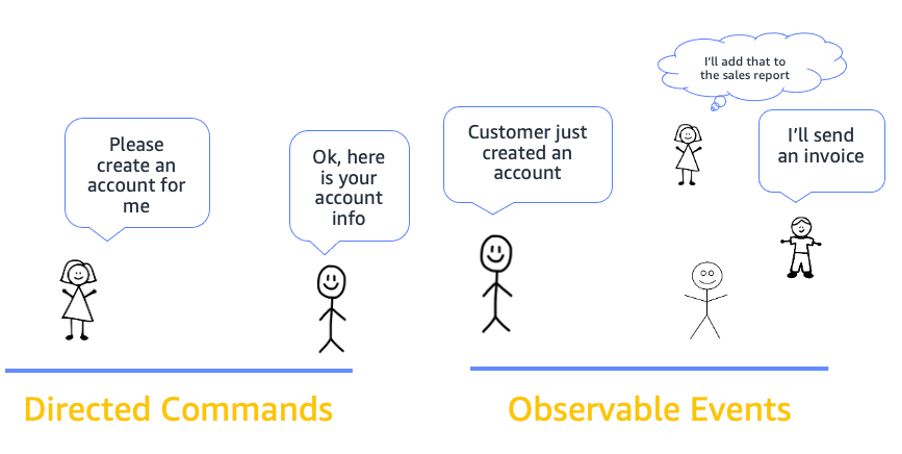
Benefits of migrating to event-driven architecture
Two common options when building applications are request-response and event-driven architecture. In request-response architecture, an application’s components communicate via API calls. The client sends a request and expects a response before performing the next task. In event-driven architecture, the client generates an event and can immediately move on to its next task. Different parts of […]

Working with events and the Amazon EventBridge schema registry
Event-driven architecture, at its core, is driven by producers creating events and subscribers being made aware of those events and acting upon them. An event is a data representation of something that happened elsewhere in the application or from an outside producer. When building event-driven applications, it is critical to determine what events exist in […]
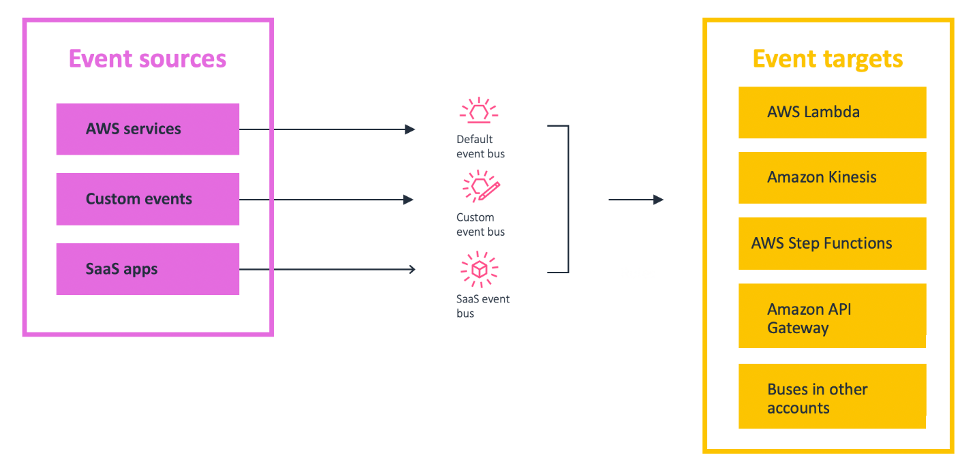
Building an event-driven application with Amazon EventBridge
In event-driven architecture, services interact with each other through events. An event is something that happened in your application (for example, an item was put into a cart, a new order was placed). Events are JSON objects that tell you information about something that happened in your application. In event-driven architecture, each component of the […]
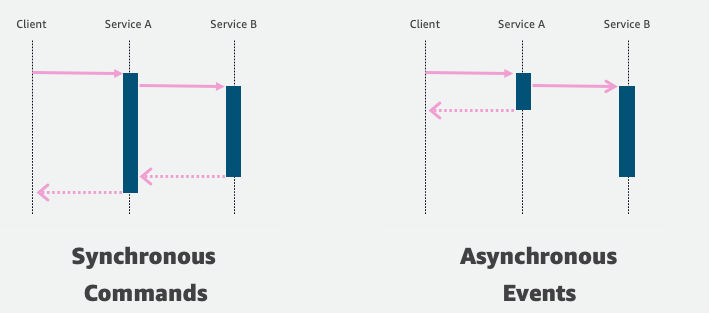
Getting started with event-driven architecture
In modern application development, event-driven architecture is becoming more prominent because it can make building applications in the cloud easier. Event-driven architecture can allow you to decouple your services, which increases developer velocity, and can make it easier for you to debug applications. It also can help remove the bottleneck that occurs when features expand […]

Publishing messages in batch to Amazon SNS topics
This post is written by Heeki Park (Principal Solutions Architect, Serverless Specialist), Marc Pinaud (Senior Product Manager, Amazon SNS), Amir Eldesoky (Software Development Engineer, Amazon SNS), Jack Li (Software Development Engineer, Amazon SNS), and William Nguyen (Software Development Engineer, Amazon SNS). Today, we are announcing the ability for AWS customers to publish messages in batch […]

Token-based authentication for iOS applications with Amazon SNS
This post is co-written by Karen Hong, Software Development Engineer, AWS Messaging. To use Amazon SNS to send mobile push notifications, you must provide a set of credentials for connecting to the supported push notification service (see prerequisites for push). For the Apple Push Notification service (APNs), SNS now supports using token-based authentication (.p8), in […]

Getting started with testing serverless applications
Testing is an essential step in the software development lifecycle. Through the different types of tests, you validate user experience, performance, and detect bugs in your code. Features should not be considered done until all of the corresponding tests are written. The distributed nature of serverless architectures separates your application logic from other concerns like […]
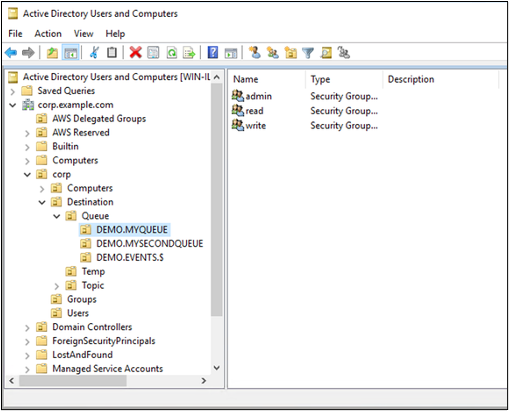
Authenticating and authorizing Amazon MQ users with Lightweight Directory Access Protocol
This post is written by Dominic Gagné and Mithun Mallick. Amazon MQ is a managed message broker service for Apache ActiveMQ and RabbitMQ that simplifies setting up and operating message brokers in the AWS Cloud. Integrating an Amazon MQ broker with a Lightweight Directory Access Protocol (LDAP) server allows you to manage credentials and permissions for […]

Using Amazon MQ for RabbitMQ as an event source for Lambda
Amazon MQ for RabbitMQ is an AWS managed version of RabbitMQ. The service manages the provisioning, setup, and maintenance of RabbitMQ, reducing operational overhead for companies. Now, with Amazon MQ for RabbitMQ as an event source for AWS Lambda, you can process messages from the service. This allows you to integrate Amazon MQ for RabbitMQ […]

Exploring serverless patterns for Amazon DynamoDB
Amazon DynamoDB is a fully managed, serverless NoSQL database. In this post, you learn about the different DynamoDB patterns used in serverless applications, and use the recently launched Serverless Patterns Collection to configure DynamoDB as an event source for AWS Lambda. Benefits of using DynamoDB as a serverless developer DynamoDB is a serverless service that automatically […]