Containers

Automatically deploying your container application with AWS Copilot
Taking an application from idea to working implementation that people can interact with is a multistep process. Once the design is locked in and the code is written, the next challenge is how to deploy and deliver the application to users. One way to do this is using a Docker container and a tool like […]

ICYMI: AWS Cloud Containers Conference
On July 9th, the AWS Containers team hosted the first AWS Cloud Containers Conference (C3). The full day, virtual conference covered deep dives, launches, and demos on Amazon EKS, Amazon ECS, AWS Fargate, Amazon ECR, and AWS App Mesh. As well as, a keynote from GM of Kubernetes, Bob Wise, and closing remarks from Chief […]
Introducing the AWS Controllers for Kubernetes (ACK)
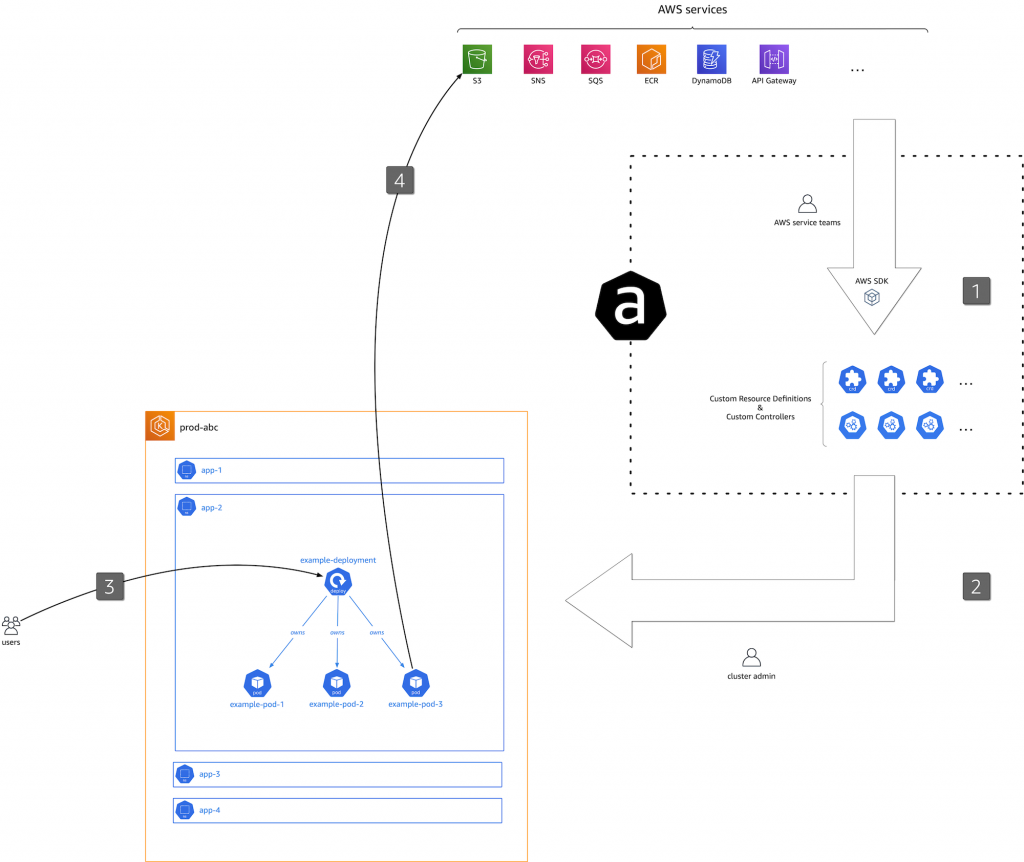
AWS Controllers for Kubernetes (ACK) is a new tool that lets you directly manage AWS services from Kubernetes. ACK makes it simple to build scalable and highly-available Kubernetes applications that utilize AWS services. Today, ACK is available as a developer preview on GitHub. In this post we will give you a brief introduction to the […]
Load balancing Amazon ECS services with a Kubernetes Ingress Controller style approach
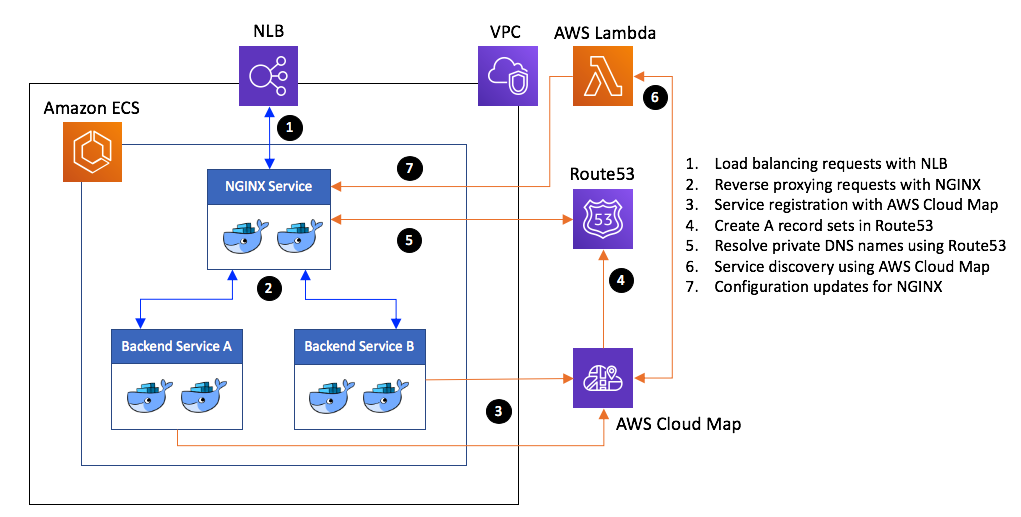
Introduction A common approach to traffic routing in a Kubernetes cluster is to employ an Ingress Controller. The Ingress Controller is an application that runs in a cluster in conjunction with a load balancer and routes incoming HTTP/HTTPS/TCP requests to proxied servers according to routing rules specified in Ingress resources. When deploying to either a […]

Amazon EKS on AWS Graviton2 generally available: considerations on multi-architecture apps
Today, Amazon EKS on AWS Graviton2 is generally available and with this post we want to give you some background on what this means for you and how it works in practice. We had first-generation AWS Graviton from early 2019 on in preview and many of you participated in the AWS Graviton2 preview program launched […]

Introducing launch template and custom AMI support in Amazon EKS Managed Node Groups
Amazon Elastic Kubernetes Service (EKS) now supports EC2 Launch Templates and custom AMIs for managed node groups. When combined, these new features provide flexible configuration and customization options for Amazon EC2 instances which are managed as Kubernetes nodes by EKS. This enables you to leverage the simplicity of managed node provisioning and lifecycle management features […]

CI/CD pipeline for testing containers on AWS Fargate with scaling to zero
Development teams are running manual and automated tests several times a day for their feature branches. Running tests locally is only one part of the process. To test workloads against other systems as well as give access to QA engineers, it requires deploying code to dedicated environments. These servers/VMs spend hours idling because new test […]

AWS Copilot: an application-first CLI for containers on AWS
On July 9, 2020, we introduced AWS Copilot, a new command line interface (CLI) to build, release, and operate production ready containerized applications on Amazon Elastic Container Service (Amazon ECS) and AWS Fargate. In this post, I walk you through the design tenets of the CLI, why we chose them, how they map to Copilot […]

Container DevSecOps with AWS CodePipeline using Hadolint and Anchore Engine
Many organizations are or are considering migrating their applications and/or software to containers over traditional virtual machines given that they are incredibly fast, easy to maintain, have simpler deployment lifecycles, and are much easier to spin up and down. This can greatly reduce the cost and increase efficiency. For a secure container life cycle management, […]

Saving money a pod at a time with EKS, Fargate, and AWS Compute Savings Plans
At re:Invent 2019, we announced the ability to deploy Kubernetes pods on AWS Fargate via Amazon Elastic Kubernetes Service (Amazon EKS). Since then we’ve seen customers rapidly adopt the Kubernetes API to deploy pods onto Fargate, the AWS serverless infrastructure for running containers. This allows them to get rid of a lot of the undifferentiated […]