AWS Database Blog

Author: Kelvin Lawrence
Principal Graph Architect at AWS focused on Amazon Neptune and all things graph. Apache TinkerPop committer and PMC member. Author of Practical Gremlin.
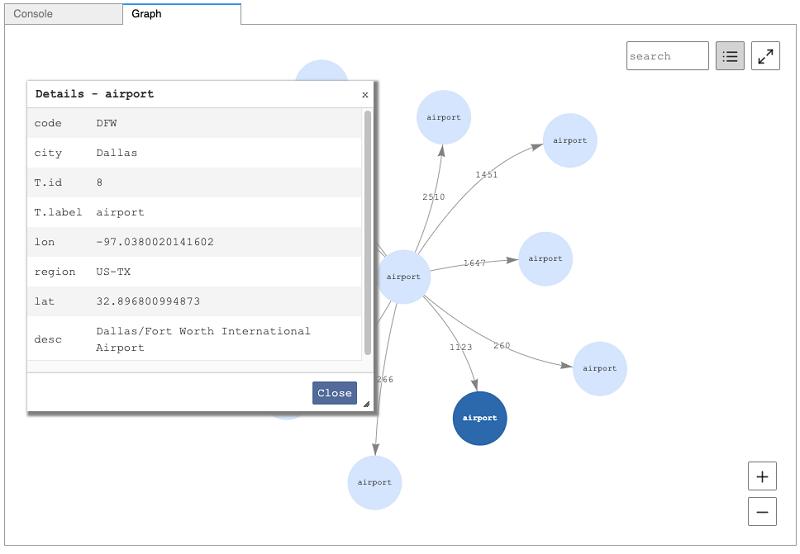
Visualize query results using the Amazon Neptune workbench
In this post, we look at the new visualization features recently added to the Amazon Neptune workbench and released on August 12, 2020. These additional capabilities allow you to produce an interactive graph diagram representing the results of your Gremlin and SPARQL queries. We look at some Gremlin-specific features and then do the same for SPARQL. Finally, we look at some of the more advanced ways you can modify the visualizations. As a sidenote, this entire post was produced using the workbench.

Amazon Neptune now supports TinkerPop 3.4 features
Amazon Neptune now supports the Apache TinkerPop 3.4.1 release. In this post, you will find examples of new features in the Gremlin query and traversal language such as text predicates, changes to valueMap, nested repeat steps, named repeat steps, non-numerical comparisons, and changes to the order step. It is worth pointing out that TinkerPop 3.4 […]

Introducing Gremlin query hints for Amazon Neptune
Amazon Neptune is a fast, reliable, fully managed graph database, optimized for storing and querying highly connected data. It is ideal for online applications that rely on navigating and leveraging connections in their data. Amazon Neptune supports W3C RDF graphs that can be queried using the SPARQL query language. It also supports Apache TinkerPop property […]
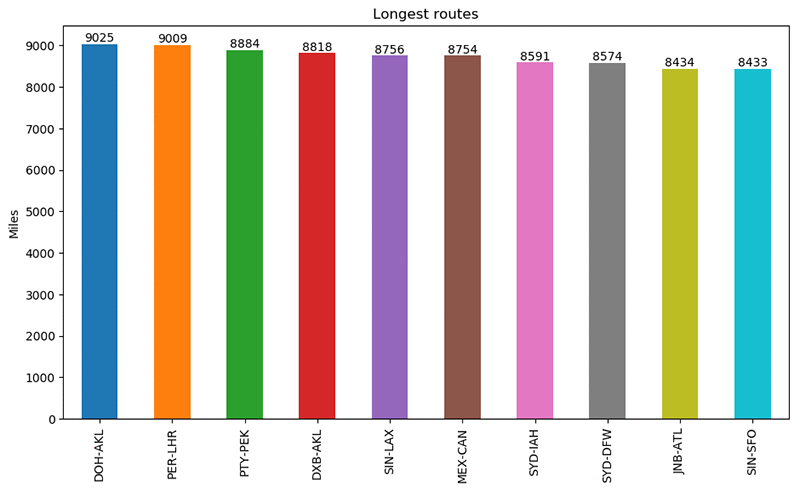
Let Me Graph That For You – Part 1 – Air Routes
December 2022: Neptune Notebooks now include an air-routes tutorial. We’re pleased to announce the start of a multi-part series of posts for Amazon Neptune in which we explore graph application datasets and queries drawn from many different domains and problem spaces. Amazon Neptune is a fast and reliable, fully-managed graph database, optimized for storing and […]