IBM & Red Hat on AWS
Deploy MuleSoft Runtime Fabric on ROSA for hybrid cloud integration
As organizations embrace cloud-native architectures, the need for agile and scalable integration solutions grows. To grow and innovate at speed, customers need flexible integration solutions with built-in security. MuleSoft, an enterprise integration platform from Salesforce, helps organizations with digital transformation. By deploying MuleSoft on Red Hat OpenShift Service on AWS (ROSA), organizations can achieve this balance, using a fully managed, turnkey application platform that simplifies cluster lifecycle management. Focus on the strategic development and maintenance of integration flows and APIs with MuleSoft, while Red Hat and AWS handle the underlying infrastructure complexities.
In this blog post, we cover on a high level how MuleSoft works, and talk about the different supported ROSA architectures for running MuleSoft workloads. We will also guide you through the benefits of running MuleSoft workloads on ROSA.
How MuleSoft Runtime Fabric works?
The marquee product within MuleSoft’s portfolio, Anypoint Platform, a solution for businesses to integrate disparate systems, automate workflows, and facilitate data exchange across on-premises and cloud environments. This connectivity helps companies build scalable and flexible IT architectures, enhance operational efficiency, and drive innovation. MuleSoft provides security and governance capabilities for data management and compliance.
MuleSoft offers flexible deployment options for these solutions in order to facilitate diverse industry requirements with regard to flexibility, governance and security. They offer a fully managed deployment platform in the form of CloudHub 2.0, but the focus of this article concerns Runtime Fabric (RTF). RTF allows a hybrid approach, enabling deployment on-premises, in private clouds, or public clouds using Kubernetes container technology for flexibility and scalability. RTF provides consistent management, greater control over infrastructure, and supports high availability and disaster recovery– making it ideal for organizations with specific compliance or security requirements. Importantly, RTF gives organizations the option to separate the runtime plane from MuleSoft’s holistic integration offering, Anypoint Platform, allowing them to flexibly deploy to external environments such as ROSA, while maintaining a single control plane. This solution helps abstract away some of the complexity involved with container management– without it, customers would be required to deploy separate control planes to each solution.
With MuleSoft Anypoint Runtime Fabric and ROSA, customers can create modern containerized solutions with flexible deployments on-premise or in any cloud, streamlining operations across the enterprise.
ROSA, built on enterprise Kubernetes technology, evolves with your business needs by consolidating the infrastructure control plane and enhancing the data plane with scalable, robust architecture–extends into this collaboration with a collection of pre-built assets from Anypoint Exchange, a community of expert operators, and MuleSoft Accelerators to expedite common industry use cases. It modernizes application development using containers, DevOps, and API-led integration, reducing operational costs and complexity with a single management framework for Kubernetes applications.
MuleSoft also offers Universal API management–providing a single console to secure and govern APIs across the enterprise, ensuring workload portability across any supported cloud provider or on-premise environment. Automated security throughout the API lifecycle, integration capabilities to connect any application, data, or device, and the ability to compose new products and services with reusable building blocks make MuleSoft on ROSA a comprehensive solution that supports hybrid cloud deployments, consolidates management of software versions and container orchestration.
With a global network of certified MuleSoft and Red Hat OpenShift experts, and support for the leading open source Kubernetes platform, MuleSoft on ROSA is enterprise-ready.

Figure 1. MuleSoft Anypoint Platform Deployment Architecture
ROSA architectures for MuleSoft workloads
Red Hat OpenShift Service on AWS (ROSA) is a fully managed, turnkey application platform that allows you to focus on deploying applications and accelerate innovation by off-loading the cluster lifecycle management to Red Hat and AWS. ROSA is jointly developed and jointly supported by AWS and Red Hat. It is native in the AWS console and integrates with other commonly used AWS services.
In the recommended ROSA Hosted Control Plane (HCP) architecture the control plane is hosted within a service team account, while the worker nodes run in the customer’s AWS account. ROSA HCP offers significant advantages for running workloads like MuleSoft. ROSA HCP provides a more cost-effective solution to create managed ROSA clusters with a focus on efficiency, high availability, security, and scalability. With the control plane components hosted in a Red Hat-owned AWS account, this considerably cuts down cluster creation time to
ROSA Hosted Control Plane Architecture:
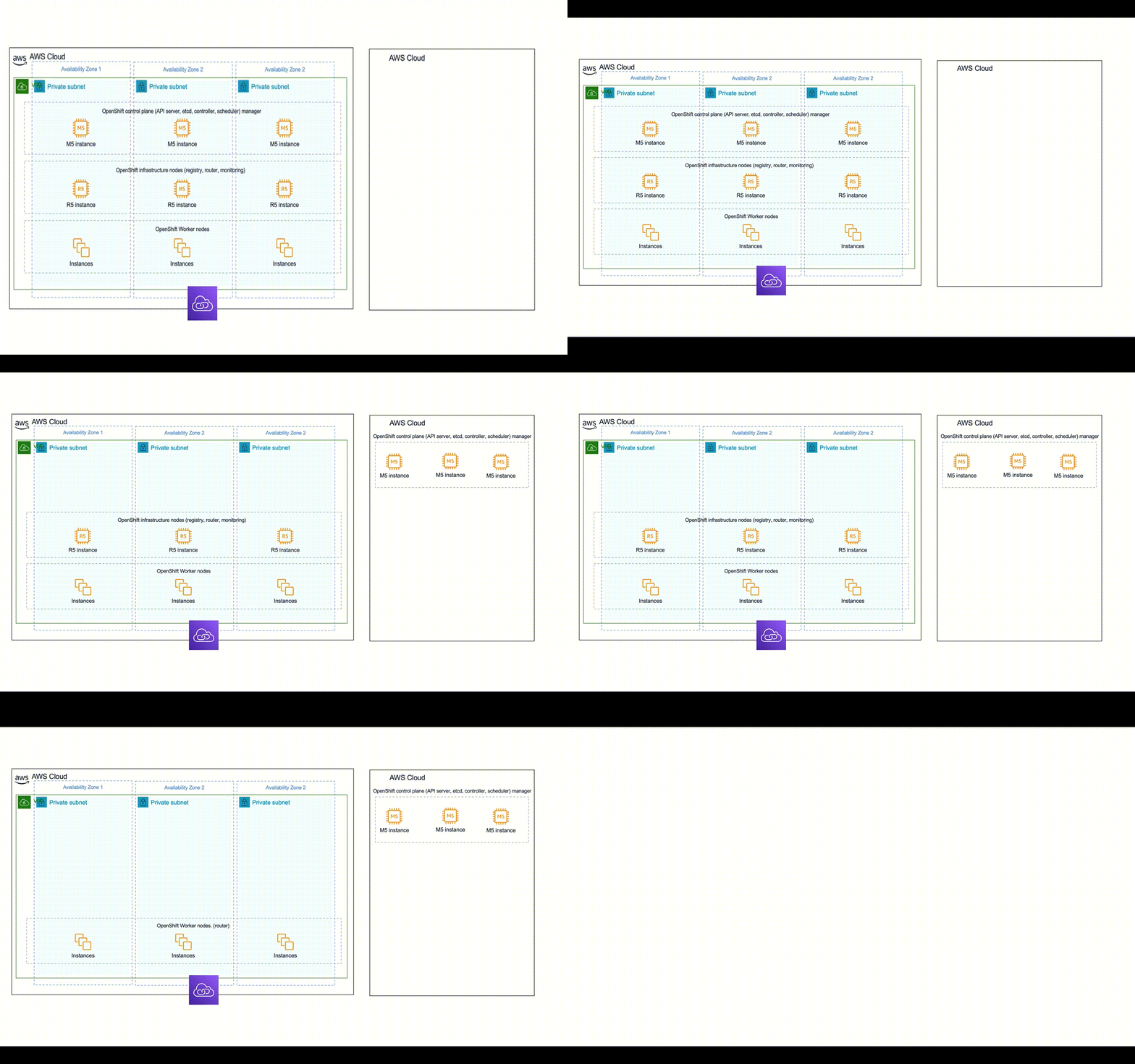
Running MuleSoft on ROSA HCP is a modern approach to deploying and managing MuleSoft’s integration applications on a scalable and managed turn-key application platform. This is critical for MuleSoft workloads that handle high-volume API traffic and need highly available and resilient platforms.
Benefits of Running MuleSoft on AWS (Powered by ROSA HCP)
There are many advantages of running MuleSoft workloads on ROSA HCP, and we will be highlighting a few of them below.
- Reduced Operational Overhead: Each ROSA HCP cluster comes with a 24-hour Site Reliability Engineer (SRE) support for cluster management backed by an up-time service level agreement (SLA) of 99.95%. Red Hat SRE team also supports cluster creation, upgrades, patching, and maintenance. This reduces the complexity of managing a kubernetes platform, and MuleSoft workloads teams can focus purely on developing and maintaining MuleSoft flows and integration tasks while Red Hat and AWS manage the complexity of cluster operations.
- High Availability of workloads as ROSA HCP gives you the ability of deploying control plane and worker nodes across multiple AWS Availability Zones (AZ) within a region. In a disaster scenario where one AZ is affected, your cluster will still be available and resilient to the data center failure. This ensures MuleSoft RTF APIs and integrations remain available. With ROSA HCP, customers can upgrade the control plane and worker nodes separately, which means the cluster doesn’t have to be completely shut down during upgrades.
- Reduce Operational costs: ROSA HCP offers a reduced-cost solution to create Managed OpenShift clusters with a focus on efficient resource utilization. With the control plane nodes hosted outside of the customer’s Virtual Private Network (VPC), this considerably reduces infrastructure requirements and lowers cost as only the worker nodes are hosted in the customer’s account.
Summary
MuleSoft Runtime Fabric (RTF) is available as a Red Hat OpenShift Certified Operator to streamline deployments across hybrid and multi cloud environments. In addition, MuleSoft on ROSA HCP can also provide a more cost friendly option, and a powerful combination for building and managing cloud-native integrations. This architecture is ideal for enterprises looking to manage complex integrations, improve resource management, and modernize their API strategies.
If you’re interested in deploying MuleSoft on ROSA, you’ll need to have an active Anypoint Platform subscription from MuleSoft. Take a look at the different packages available. As part of the process, you’ll need to highlight that Runtime Fabric is the deployment avenue you’re interested in. Once setup, you’ll be able to download and containerize the MuleSoft runtime components, which can be pushed to the images on your container registry. The Kubernetes deployment configurations can then be deployed to your ROSA cluster.
Further Content
Get started with ROSA: Free ROSA Hands-on Experience
Getting Started with MuleSoft Runtime Fabric on Red Hat OpenShift
Diving into Red Hat OpenShift Service on AWS (ROSA) with Hosted Control Planes (HCP)
Watch this youtube playlist to understand more about Red Hat OpenShift Service on AWS (ROSA)