AWS for Industries
Building healthcare AI agents with open-source AWS HealthLake MCP server
It can be challenging to build a real-time agentic AI applications that interacts with AWS HealthLake datastores. This requires deep knowledge of fast healthcare interoperability resources (FHIR) operations and Amazon Web Services (AWS) SDK implementations.
We’re excited to share an open-source Model Context Protocol (MCP) server. It streamlines healthcare data operations by providing natural language interfaces to AWS HealthLake FHIR resources. AWS HealthLake is a HIPAA-eligible service for storing, transforming, and transacting healthcare data at scale using FHIR.
Through the HealthLake MCP Server developers and data analysts can interact with AWS HealthLake using conversational AI, dramatically reducing the complexity of healthcare data management. HealthLake MCP Server establishes a high-performance, petabyte-scale AI data infrastructure.
Organizations can build real-time agentic AI applications that power care coordination, streamline operational workflows, and unlock actionable information from vast healthcare datasets. This translates to faster time-to-value, reduced development costs, and improved patient care.
What is an MCP Server?
First, let’s understand what an MCP is. MCP is an open protocol that standardizes connecting an AI agent to the external world, including content repositories, data sources, business tools, and development environments.
At its core, MCP follows a client-server architecture where a host application can connect to multiple servers, such as:
- MCP hosts and clients: AI-powered applications such as Kiro CLI, Cursor, or Claude that need access to external data or tools.
- Other MCP servers: Lightweight servers that expose specific functionalities through tools, connecting to local or remote data sources.
- Data sources: Databases, files, or services that contain the information your AI agents need.
Amazon Bedrock AgentCore is an agentic platform for building, deploying, and operating highly effective agents securely at scale using any framework and foundation model. With AgentCore, you can enable agents to take actions across tools and data with the right permissions and governance. It can run agents securely at scale and monitor agent performance and quality in production—all without any infrastructure management. AgentCore services work together or independently with any open-source framework and with any foundation model, so you don’t have to choose between open-source flexibility and enterprise-grade security and reliability.
For enterprise healthcare environments requiring integration with multiple clinical systems, Amazon Bedrock AgentCore Gateway serves as a unified connectivity layer that transforms existing healthcare APIs and services into MCP-compatible tools. Healthcare agents can access HealthLake data and also electronic health records, medical imaging systems and other clinical tools through a single, standardized interface.
The following diagram explains how AWS HealthLake MCP Server enables large language model (LLM) agents to access and perform tasks on the structured data stored in AWS HealthLake stores.
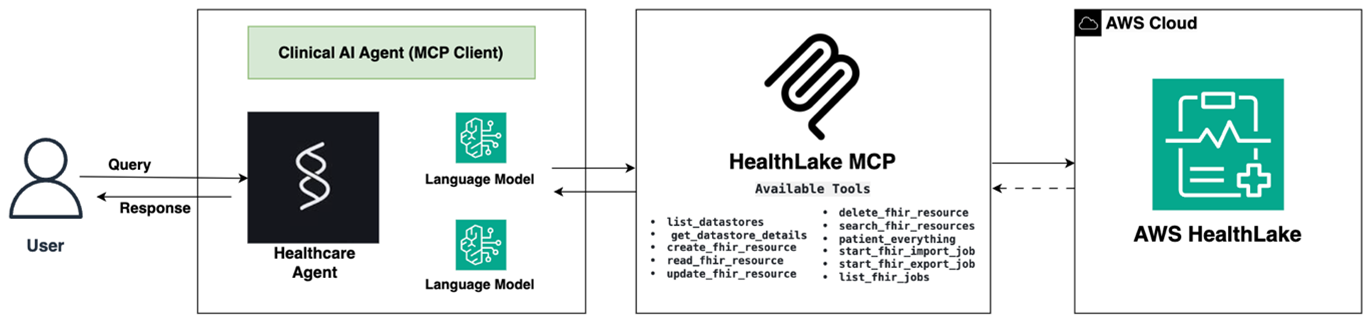
Figure 1 – Healthcare agent architecture
AWS HealthLake MCP Server provides specialized tools for managing FHIR resources in AWS HealthLake. Built on the MCP framework, it enables AI assistants (like Kiro CLI) to perform complex healthcare data operations through natural language conversations.
The AWS HealthLake MCP Server provides a robust set of capabilities designed to streamline FHIR data interactions, while maintaining enterprise-grade security and compliance standards.
These capabilities include:
- Comprehensive FHIR operations: The server provides complete create, read, update, delete, and search (CRUDS) functionality for FHIR resources, along with advanced search capabilities. These capabilities support chained parameters (
such as _include and _revinclude) and FHIR-compliant modifiers. - Automatic datastore discovery: Unlike traditional approaches that require manual datastore configuration, the MCP server automatically discovers available AWS HealthLake datastores. It exposes them as MCP resources, eliminating configuration overhead.
- Security-first design: The server includes a read-only mode that blocks all mutating operations while preserving read access. This is ideal for production environments, auditing scenarios, and compliance requirements where data modifications need strict controls.
- Seamless AWS integration: Built-in support for AWS Signature Version 4 (SigV4) authentication with automatic credential handling across multiple authentication methods (including IAM roles, AWS profiles, and environment variables).
- Advanced healthcare workflows: Specialized tools for patient-everything operations, FHIR job management (import and export), and complex search queries that would typically require extensive FHIR expertise to implement.
Real-world use cases
The AWS HealthLake MCP Server enables healthcare organizations to build AI-powered applications that address common clinical and administrative challenges. The following examples illustrate how this capability can transform patient care workflows and reduce operational overhead.
Patient summarization
One of the most impactful use cases involves transforming how physicians access and review patient information. Emergency department physicians, for example, often encounter patients with complex medical histories, but have limited time to review extensive records.
A healthcare application with data stored in AWS HealthLake can use AWS HealthLake MCP Server to summarize patient information for physicians using natural language. A physician could ask, “Can you summarize the most important facts about this patient that I need to know.”

Figure 2 – Patient summarization interaction
The AI agent can intelligently parse through years of medical history, laboratory results, imaging studies, and clinical notes to present the most relevant information on a single interface. This eliminates the current challenge where physicians must search through multiple systems and screens to gather critical patient information.
The AI agent can provide:
- Specialty-specific summarization: The AI agent recognizes different medical specialties require different information priorities. For example, a cardiologist reviewing a patient would receive a summary focused on cardiovascular history, medications, and relevant risk factors, while a pediatric oncologist would see treatment protocols, growth parameters, and disease progression markers.
- Real-time clinical context: Instead of static reports, the HealthLake MCP Server can provide dynamic summaries that adapt based on the current clinical scenario—whether it’s a routine follow-up, emergency presentation, or pre-operative assessment.
Prior authorization automation
Healthcare organizations face significant administrative burdens in managing prior authorizations and revenue cycle operations. AWS HealthLake MCP Server streamlines this so healthcare developers can build intelligent automation of these processes through natural language interfaces.
When a patient appointment is scheduled, the system can automatically determine authorization requirements by analyzing:
- Historical approval patterns for similar services
- Current payor policies and requirements
- Patient-specific coverage details
- Provider network status
Natural language policy queries: Through the AWS HealthLake MCP Server, staff can ask questions using natural language in a healthcare application with data stored in AWS HealthLake. For example, a staff member could ask, “What documentation is required for hip replacement prior authorization for Medicare Advantage patients?”

Figure 3 – Prior-Authorization Interaction
The AI agent can automatically generate prior authorization packets tailored to specific payor requirements, reducing manual work and improving approval rates.
Security and compliance considerations
Healthcare data requires stringent security measures. AWS HealthLake MCP Server addresses this through:
- Granular access controls: Read-only mode prevents accidental data modifications, while maintaining full query capabilities for analysis and reporting.
- AWS native security: Leverages AWS Identity and Access Management (IAM) for authentication and authorization, confirming healthcare data access follows established AWS security patterns.
- Audit trail integration: AWS HealthLake integrates with AWS CloudTrail for comprehensive audit logging, essential for healthcare compliance requirements.
Conclusion
The combination of scalable healthcare data infrastructure that AWS HealthLake provides with the intuitive natural language interface of HealthLake MCP Server opens new possibilities for healthcare innovation. By reducing the technical barriers to working with FHIR resources, we’re providing healthcare professionals and developers with a way to focus on what matters most: Improving patient care and advancing healthcare delivery.
Visit the AWS HealthLake MCP Server documentation to get started, and join the growing community of healthcare innovators leveraging AI-powered interfaces for healthcare data management. Or contact an AWS Representative to know how we can help accelerate your business.
Further reading
- Building health care agents using Amazon Bedrock AgentCore
- 150 Models and Counting: Your Guide to Generative AI Models for Healthcare and Life Sciences
- AI-powered patient profiles using AWS HealthLake and Amazon Bedrock
- Breaking down healthcare’s walls with agentic AI
- Evaluate healthcare generative AI applications using LLM-as-a-judge on AWS