AWS Global Infrastructure and Sustainability Blog
Advancing Water Stewardship at AWS: New Water Withdrawals Data Now Available in the AWS Sustainability Console
Advancing Water Stewardship at AWS: New Water Withdrawals Data Now Available in the AWS Sustainability Console
At Amazon, we know that water is a precious resource. In 2022, AWS announced the commitment to being water positive by 2030. That means we’ll return more water to communities and the environment than we use in our data center operations. Our data centers are 7 times more water-efficient than the industry average, and in 2025 we reached 75% of our water positive goal through reducing water use, sourcing reclaimed water, and investing in replenishment projects around the world.
AWS is also committed to helping customers measure and reduce the environmental footprint of their own workloads by giving them visibility into carbon emissions and water withdrawal data associated with their AWS workloads. In March 2026, we launched the AWS Sustainability console — a standalone service that consolidates AWS sustainability reporting into one place, giving sustainability teams independent access to Scope 1, 2, and 3 carbon emissions data without requiring billing permissions. Today, we are taking the next step in transparency by adding annual water withdrawals data associated with your AWS workloads to the AWS Sustainability console. It appears in the Water allocation section alongside Carbon emissions on the left panel.
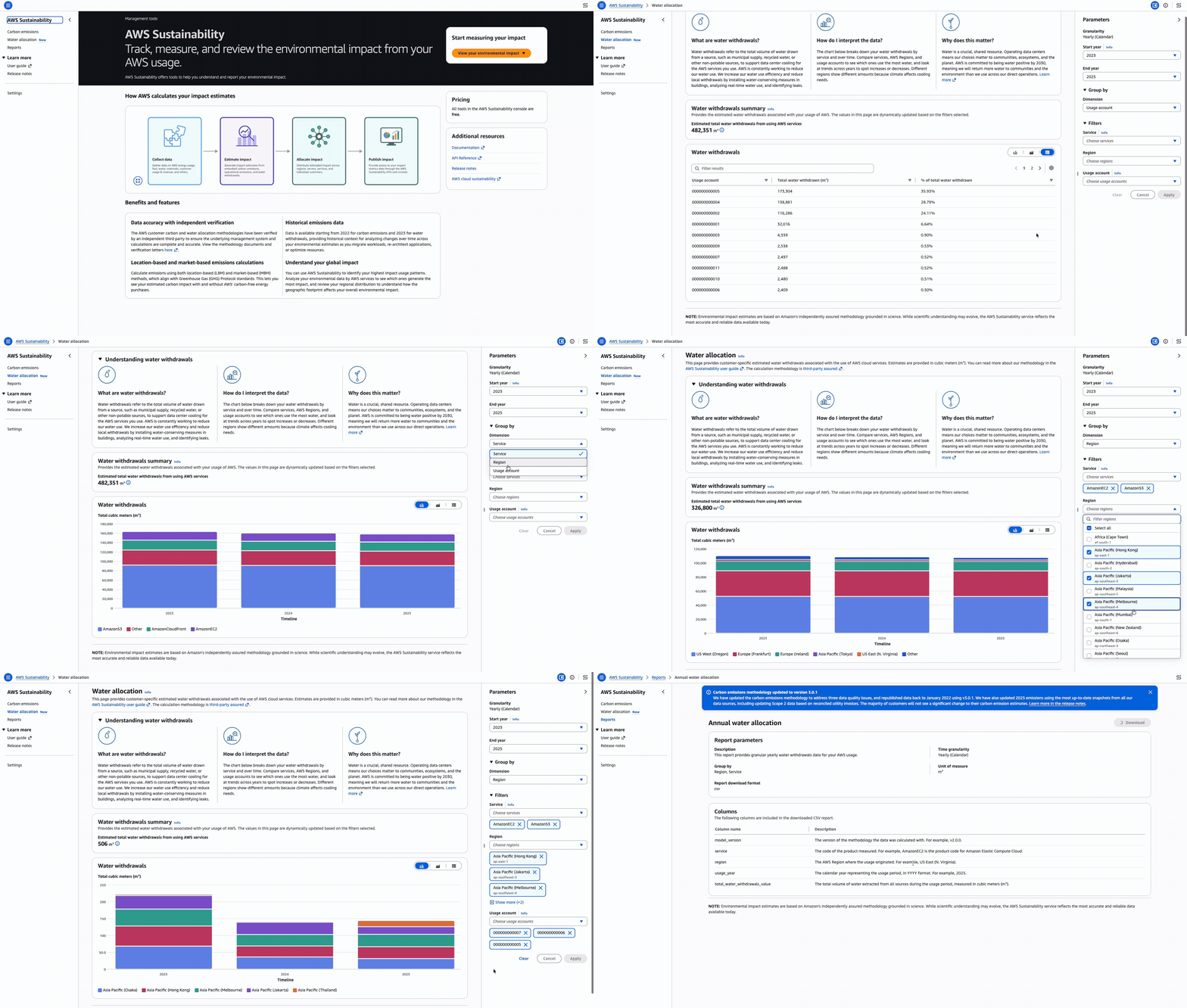
Water withdrawals data in the AWS Sustainability Console
Note: water withdrawals (total volume drawn from sources like municipal supplies or groundwater), water discharged (water returned to the environment after use), and water consumed (the difference — water withdrawn but not returned, typically lost through evaporation). The data presented in this post reflects water withdrawals.
AWS customers can now view water withdrawals associated with their workloads by AWS Region, service, and AWS account on an annual basis. The water withdrawal data is calculated using our AWS Customer Water Withdrawal Methodology, which has been independently reviewed. See the third-party assurance statement. This is the same allocation approach we use for carbon, adapted for water. By incorporating water withdrawal data into the console, we are extending the same principles that guide our carbon reporting — granular visibility into sustainability related data by AWS Region, service, and AWS account, configurable csv exports, programmatic access, and independent permissions to water stewardship, enabling organizations to automate reporting and simplify compliance as sustainability disclosure requirements expand.
“We are expanding our environmental monitoring to include the water footprint of our cloud services,” said Céline Lescop, Global Digital Sustainability Executive Lead, AXA Group Operations. “It completes our existing measurements of GHG emissions and energy consumption, giving us a full picture of our environmental impact and allows us to identify and prevent negative trade-offs, ensuring we create holistic solutions rather than shifting problems from one resource to another.”
How AWS is Reducing Water Consumption
Our Water Positive Methodology governs how we implement our water positive goals by employing three pillars: reduce, reuse, and replenish. Our first two pillars focus on minimizing freshwater demands from our facilities, while the third involves investing in replenishment projects that improve the quantity or quality of water available to communities and the environment. We prioritize minimizing freshwater demands within our own facilities before pursuing replenishment.
Reducing Water Use Through Efficiency: AWS water efficiency gains are the result of years of investment in custom cooling technology, smarter systems, and a commitment to minimize water use wherever possible. In water-stressed regions such as South Africa, the Middle East, and Phoenix, we don’t use water for cooling. Across the rest of our locations, about 90% of the time our data centers use free air cooling. Only during the hottest hours of the hottest days do we turn to evaporative cooling with water, which also avoids putting additional strain on the electrical grid when communities need power most. We’ve also steadily raised the temperature thresholds our servers can tolerate, further reducing water needs. The result: our data centers are over 7 times more water-efficient than the industry average. To learn more, visit our recent story on AWS data center water usage.
Reusing Water Through Reclaimed Sources: Reclaimed water is municipal wastewater that has been treated and repurposed for beneficial uses like data center cooling, preserving valuable drinking water for communities. AWS currently uses reclaimed water at 26 data centers worldwide, and we are expanding this to more than 130 locations across nine jurisdictions. AWS partners with local utilities and stakeholders to source reclaimed water through dedicated infrastructure, often called “purple pipe” systems, and use it to cool data centers instead of freshwater. This model delivers mutual benefits: Utilities find a productive use for treated wastewater while AWS reduces dependence on local drinking water supplies.
Replenishing Water Through Community Projects: Water replenishment is the third pillar of AWS’s water-positive strategy. We invest in projects that increase water access, availability, and quality by restoring watersheds, improving infrastructure, and bringing clean water services to water-stressed communities. AWS currently supports more than 50 Water Replenishment Projects across the globe, expected to return over 21 billion liters of water annually to local communities once complete. These projects span diverse geographies and contexts, from watershed restoration in the United States to agricultural efficiency programs in India, Brazil, and Chile.
Water is finite and saving it is everyone’s responsibility
Amazon is using our scale and innovation-focused approach to support our aim of being responsible water stewards everywhere we operate. That’s why we’re sharing water allocation data with our customers, and why we continue to invest in reduce, reuse, and replenishment projects around the world. We encourage every organization to look for opportunities to be more water-efficient whether through optimizing cloud workloads, adopting water-smart building technologies, or supporting community water initiatives. The addition of water withdrawal data in the sustainability console helps our customers measure, track and reduce the use of water associated with AWS usage.
The AWS Sustainability console including the water withdrawals data is available today at no additional cost. You can access it from the AWS Management Console. Historical data is available going back to January 2022, so you can start exploring your emissions trends right away. If you want to learn more about the AWS commitment to sustainability, visit the AWS Sustainability page and visit Amazon’s Spotlight on Water to learn more about our approach towards protecting water resources.