AWS Global Infrastructure and Sustainability Blog
Sta’O’Nuk: How a new transpacific subsea cable will reshape cloud connectivity between North America and Japan
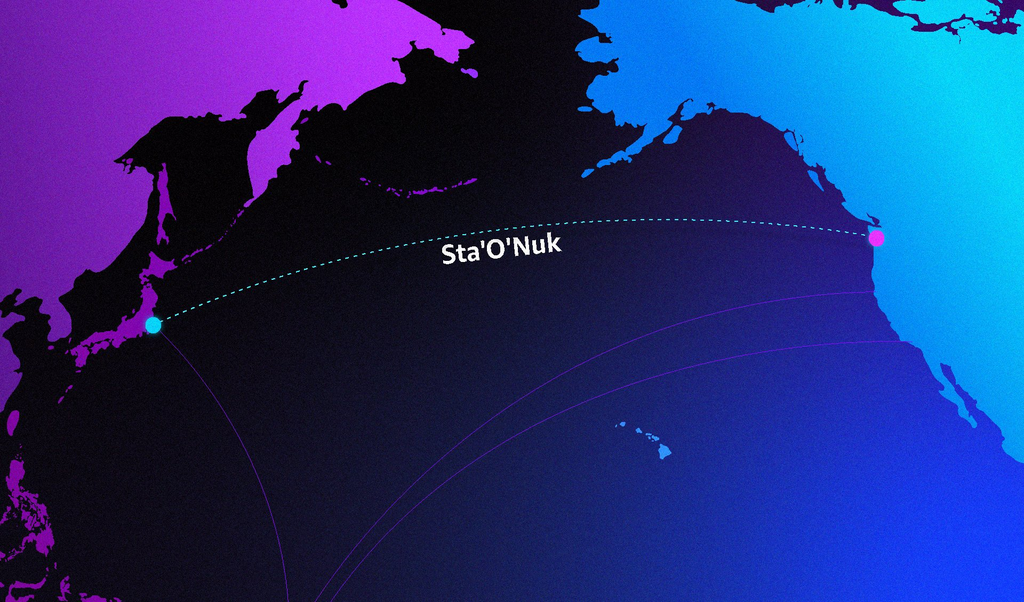
Subsea cables are the unseen circulatory system of the modern internet. Thinner than a garden hose yet carrying 99% of all international data, these fiber optic lines crisscross ocean floors connecting continents, economies, and people.To meet ever-increasing demands for bandwidth, Amazon Web Services (AWS) is developing Sta’O’Nuk, a new low latency, high-capacity subsea fiber optic cable between the United States and Japan, designed to add 420 terabits per second (Tbps) of transpacific capacity to the AWS Global Network. Expected to be operational in 2029, Sta’O’Nuk represents a transformative investment in the infrastructure that underpins cloud computing and the latency-sensitive applications our customers depend on every day.
Why a new transpacific route matters
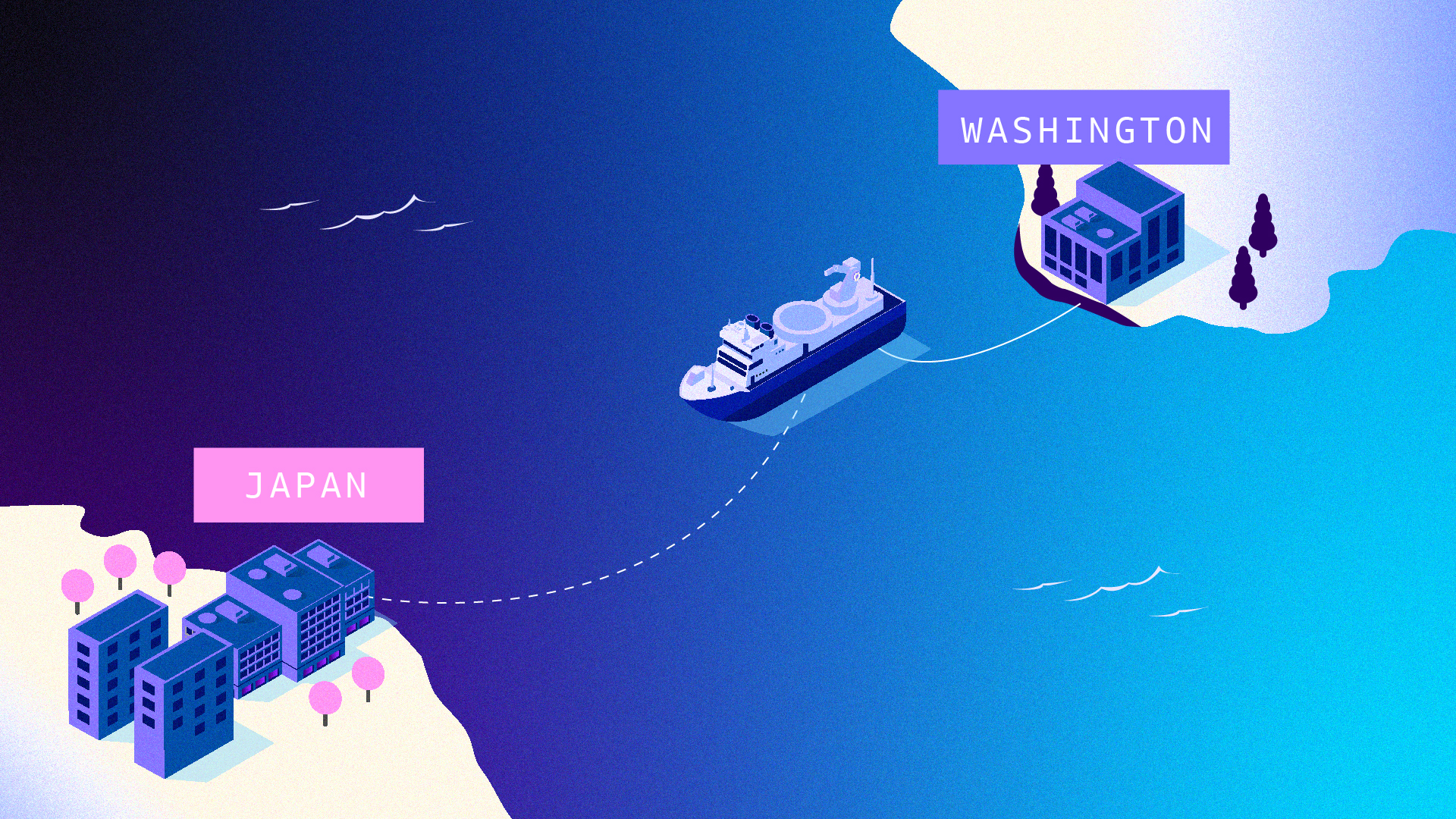
The existing network of over 30 transpacific subsea cables almost all fall within well-established corridors. Between the US and Japan, most land in concentrated gateway hubs along the coasts of California and Oregon and, in Japan, at Shima and the Chiba Peninsula. This concentration made sense decades ago when these routes were first established, but concentration creates vulnerability.When cables cluster in the same geographic areas, they share exposure to the same risks: earthquakes, anchoring damage from ships, fishing operations, and geopolitical tensions. Every year around 200 cuts take place globally, mostly from fishing activity and dragged anchors. Repairing severed fiber optic cables can be a slow, labor-intensive, expensive shipboard process of splicing and fusing new cable strands. Sta’O’Nuk takes a fundamentally different approach. Rather than adding another cable to an already congested corridor, AWS is utilizing an entirely new landing point in Washington state and a diverse landing point in Japan. This will make Sta’O’Nuk the first international subsea cable system to land in Washington state in almost 30 years, creating an independent network path that strengthens global telecommunications resilience.
The technology behind 420 Tbps

Sta’O’Nuk will deliver its capacity across 20 fiber pairs using the latest generation of subsea transmission equipment and the most advanced optical technology available today. To put 420 Tbps in perspective: that’s enough bandwidth to stream approximately 13 million HD films simultaneously.Beyond capacity, Sta’O’Nuk will incorporate future flexibility for alternate connection points that would allow AWS to expand capacity or extend connectivity to additional locations as demand grows over time. This scalable design means the infrastructure AWS builds today can adapt to workload demands we can’t yet imagine.
Sta’O’Nuk will integrate into the AWS Global Network, which spans more than 20 million kilometers of fiber optic cabling across 39 Regions, 124 Availability Zones, 46 Local Zones, and over 750 Points of Presence worldwide.
Designed with failure in mind
At AWS, infrastructure is built on a core principle: design with failure in mind. Sta’O’Nuk embodies this philosophy through geographic diversity and intelligent traffic management.Because Sta’O’Nuk will land in locations deliberately separated from existing AWS cable corridors and landing points, it will create a truly independent path across the Pacific. If cable corridors are damaged or disrupted, whether by natural disaster, human activity, or equipment failure, AWS’s centralized traffic management system detects the issue in real time and automatically reroutes customer traffic via multiple independent paths across Regions, with the vast majority of network events resolved automatically without human intervention.
Additionally, the system monitors billions of data points continuously, blocking 124,000 malicious domains daily and mitigating over 7 billion unauthorized scanning attempts.
Security from seabed to application layer
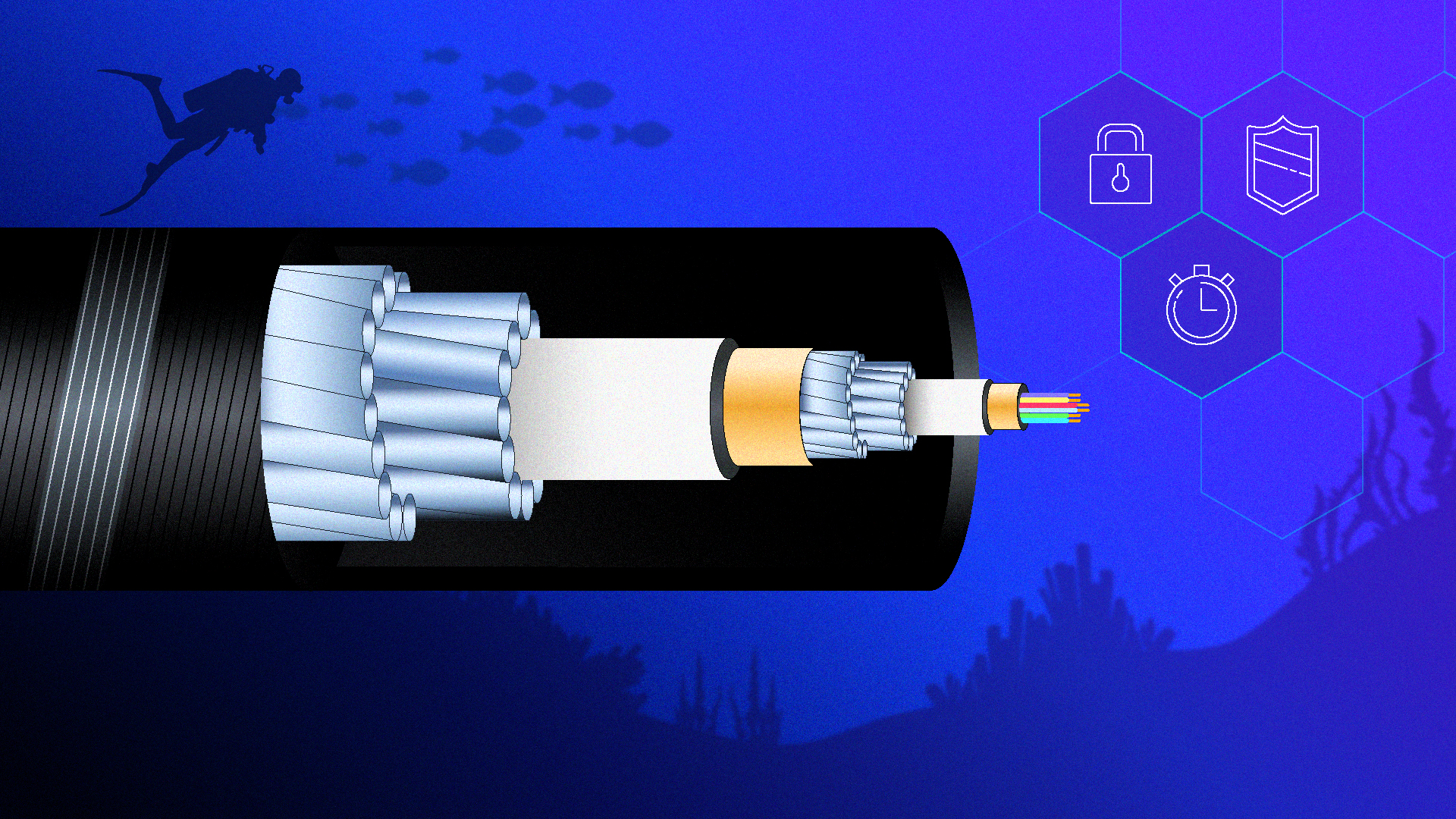
Data traveling through Sta’O’Nuk will be protected by multiple layers of encryption that secure traffic from the moment it enters the cable to the moment it arrives at its destination. This multi-layer approach includes quantum-safe optical encryption at Layer 1, MACsec encryption at Layer 2, and TLS/SSL or QUIC protocols at Layer 4. VPC cross-Region peering adds anonymization to prevent traffic attribution.Physical security is equally rigorous. The cable will be armored and buried at water depths up to 1,500 meters to protect against physical damage. Horizontal directional drilling (HDD) will be used at the landing zones to install the cable beneath beaches, dunes, and shallow seabeds to minimize surface disturbance. The HDD also protects the inshore environment, limits interference with fishing activities, and protects the cable itself from potential damage. Landing facilities will restrict access to authorized personnel only. And the cable corridor’s physical layer will be comprised of multiple paths, which significantly reduces single-point-of-failure risk.
Powering the next generation of workloads
The timing of Sta’O’Nuk is no coincidence. Customers increasingly need high-throughput, low-latency connections between North America and Asia-Pacific both to accommodate higher capacity needs as well as to provide greater network resilience. Sta’O’Nuk will provide the intercontinental backbone these applications require. Whether customers are running real-time financial transactions, deploying applications and instances at the edge, streaming video content, or training large language models across distributed infrastructure, Sta’O’Nuk will deliver the performance they need on a single, versatile cable path.
Building with communities, not around them
Infrastructure of this scale doesn’t exist in isolation. AWS is committed to responsible development that benefits the communities where we operate. For Sta’O’Nuk, this means deep collaboration with local stakeholders, including the Quinault Indian Nation, whose ancestral lands and waters are integral to the project’s coastal environment in Washington state. The Nation provided the name Toptana for their indigenous-owned subsea fiber-optic cable landing station and network venture, using the Quinault word for “beach” or “coastline.” The name Sta’O’Nuk, which means “lightning serpent,” comes from the Quinault language and reflects the cultural heritage of the Quinault Indian Nation. The Nation granted AWS permission to use the name for the cable system while preserving its cultural and linguistic significance.
The Quinault Indian Nation has been a key partner throughout the project’s development, and AWS is working closely with Toptana, the only indigenous-owned cable landing station and backhaul network provider on the West Coast of the United States. Assured Communications serves as Toptana’s strategic partner, program manager, and operations service provider, supporting the planning, development, construction, and long-term operation of the cable landing station.This relationship reflects AWS’s commitment to respecting tribal interests and contributing meaningfully to community benefits. And this isn’t a top-down approach: AWS engages with local organizations, nonprofits, and residents to understand community priorities and identify opportunities for meaningful contribution.
The project’s environmental stewardship is equally thorough. The United Nations Environment Programme confirms that subsea cables have minimal to no environmental impact. AWS planned Sta’O’Nuk’s route to avoid all known marine protected areas. Marine Mammal Observers will be deployed during installation to protect wildlife. Comprehensive outreach with fishing communities, environmental regulators, and local organizations takes place throughout the project lifecycle. Cable burial techniques are designed to minimize impacts to natural shoreline landscapes and existing maritime operations.
Looking ahead
Sta’O’Nuk is more than a cable. It’s an investment in the connective tissue of the global digital economy, infrastructure engineered to serve customers for the next 25 years while respecting the communities and environments it touches. When it becomes operational in 2029, Sta’O’Nuk will reinforce what AWS customers already know: their most critical workloads run on the most secure, resilient, and highest-performing global cloud network available.
Learn more about the AWS Global Network at https://aws.amazon.com/about-aws/global-infrastructure/
This blog post contains forward-looking statements regarding planned infrastructure capabilities, timelines, and features. Actual results may differ based on engineering, regulatory, environmental, and other factors. Statements about performance, capacity, and availability relate to the planned design and are not guarantees of future performance.