AWS Public Sector Blog

Author: Maysam Ali
Maysam Ali is senior program manager for international education at Amazon Web Services (AWS), based in Washington, DC. Previously, she was global content lead for the AWS Institute.

Cloud powers faster, greener, and more collaborative research, according to new IDC report
According to a new IDC report, the cloud is helping researchers conduct research faster than ever before by reducing data analysis and processing times, and is allowing researchers around the world to collaborate on solving universal problems. In addition to the positive impact on research, IDC also forecasts that continued adoption of cloud computing globally could prevent environmental emission of more than 1 billion metric tons of CO2 from 2021 through 2024, almost equivalent to removing the 2020 CO2 emissions of Germany and the U.K. combined.

Trends in the new world of education: Download the new eBook
Educational institutions are responding to challenges that have become more complicated since the start of the pandemic. New learning models, declining enrollments, rising health and safety costs, and cuts in public funding are forcing education leaders to rethink ways to deliver quality education in a more cost-effective, agile, and scalable way. Despite these challenges, educators report that technology has made it easier—and faster—to innovate, and to meet students’ evolving needs. In this recently released paper, learn the seven trends in the new world of education that most commonly arise during our interactions with customers and education leaders, and how the cloud can help.

International government leaders join three-day learning program at re:Invent
This year’s AWS Government Delegation Day at re:Invent in Las Vegas had a similar look and feel to last year’s inaugural program – but with a more global and expansive twist. The 2019 program welcomed a diverse crowd of international government executives from 40 countries, including from Europe, Asia, Latin America, Canada, and the Middle East. Over 300 government officials made the trip to Las Vegas for this customized talent development initiative focused on these key themes.

Vision + data: Five lessons in ending homelessness
Since 2015, 11 communities in the United States have reached “functional zero” – effectively ending chronic or veteran homelessness and demonstrating that although homelessness is a complex challenge, it is solvable. By reaching this milestone, communities in Built for Zero, a national initiative comprised of more than 70 U.S. communities, have shown that real-time, personal-level data can empower organizations to respond to the homelessness challenge. These communities measurably ended homelessness when they followed these best practices.
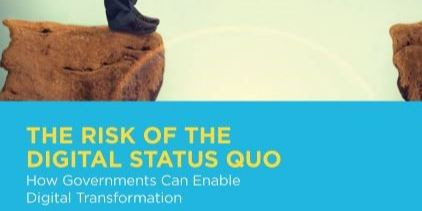
Why resisting digital transformation is riskier than embracing it, and how to mitigate risk
When considering digital transformation, governments tend to focus on the potential drawbacks instead of focusing on the risks of failing to adopt new technologies. A newly released report by Ottawa-based Public Policy Forum and the Amazon Web Services (AWS) Institute, “The Risk of the Digital Status Quo,” outlines four risks of forgoing digital modernization in Canada and offers strategies to address those risks.

Visualizing an end to homelessness with new HUD data tool
More than 400 regional and local organizations working to address homelessness in the United States are using a new tool by the U.S. Department of Housing and Urban Development (HUD) to better understand and address the homelessness challenge. Those agencies, also known as “Continuums of Care (CoCs),” can use the tool to visualize the situation they are helping address and optimize their responses.