AWS Security Blog

Move Over JSON – Policy Summaries Make Understanding IAM Policies Easier
Today, we added policy summaries to the IAM console, making it easier for you to understand the permissions in your AWS Identity and Access Management (IAM) policies. Instead of reading JSON policy documents, you can scan a table that summarizes services, actions, resources, and conditions for each policy. You can find this summary on the […]

How to Help Protect Dynamic Web Applications Against DDoS Attacks by Using Amazon CloudFront and Amazon Route 53
Using a content delivery network (CDN) such as Amazon CloudFront to cache and serve static text and images or downloadable objects such as media files and documents is a common strategy to improve webpage load times, reduce network bandwidth costs, lessen the load on web servers, and mitigate distributed denial of service (DDoS) attacks. AWS […]

Updated CJIS Workbook Now Available by Request
April 27, 2021: The information in this blog post has been deprecated. For the latest information on CJIS, visit Using AWS for Criminal Justice Information Solutions. The need for guidance when implementing Criminal Justice Information Services (CJIS)–compliant solutions has become of paramount importance as more law enforcement customers and technology partners move to store and […]

How to Access the AWS Management Console Using AWS Microsoft AD and Your On-Premises Credentials
AWS Directory Service for Microsoft Active Directory, also known as AWS Microsoft AD, is a managed Microsoft Active Directory (AD) hosted in the AWS Cloud. Now, AWS Microsoft AD makes it easy for you to give your users permission to manage AWS resources by using on-premises AD administrative tools. With AWS Microsoft AD, you can […]
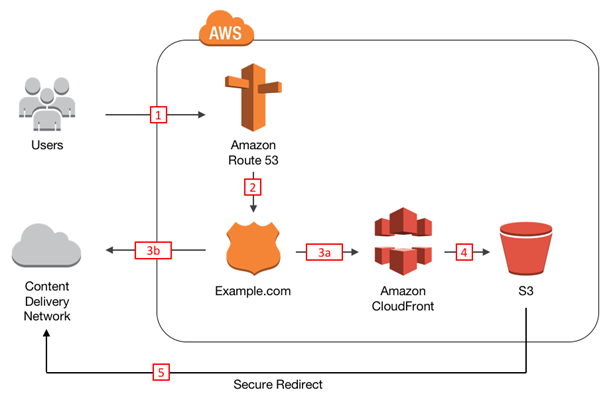
How to Protect Your Web Application Against DDoS Attacks by Using Amazon Route 53 and an External Content Delivery Network
Distributed Denial of Service (DDoS) attacks are attempts by a malicious actor to flood a network, system, or application with more traffic, connections, or requests than it is able to handle. To protect your web application against DDoS attacks, you can use AWS Shield, a DDoS protection service that AWS provides automatically to all AWS […]

Easily Replace or Attach an IAM Role to an Existing EC2 Instance by Using the EC2 Console
April 13, 2022: This blog is out of date. Please refer to this documentation for updated info: Amazon Elastic Compute Cloud User Guide AWS Identity and Access Management (IAM) roles enable your applications running on Amazon EC2 to use temporary security credentials. IAM roles for EC2 make it easier for your applications to make API […]

How to Audit Your AWS Resources for Security Compliance by Using Custom AWS Config Rules
AWS Config Rules enables you to implement security policies as code for your organization and evaluate configuration changes to AWS resources against these policies. You can use Config rules to audit your use of AWS resources for compliance with external compliance frameworks such as CIS AWS Foundations Benchmark and with your internal security policies related […]

AWS Announces CISPE Membership and Compliance with First-Ever Code of Conduct for Data Protection in the Cloud
September 7, 2023: We updated the CISPE Code of Conduct link. Please refer to this page for the updated info: CISPE Code of Conduct I have two exciting announcements today, both showing AWS’s continued commitment to ensuring that customers can comply with EU Data Protection requirements when using our services. AWS and CISPE First, I’m […]

How to Enable Multi-Factor Authentication for AWS Services by Using AWS Microsoft AD and On-Premises Credentials
You can now enable multi-factor authentication (MFA) for users of AWS services such as Amazon WorkSpaces and Amazon QuickSight and their on-premises credentials by using your AWS Directory Service for Microsoft Active Directory directory, also known as AWS Microsoft AD. MFA adds an extra layer of protection to a user name and password (the first “factor”) […]

How to Easily Log On to AWS Services by Using Your On-Premises Active Directory
AWS Directory Service for Microsoft Active Directory (Enterprise Edition), also known as Microsoft AD, now enables your users to log on with just their on-premises Active Directory (AD) user name—no domain name is required. This new domainless logon feature makes it easier to set up connections to your on-premises AD for use with applications such […]