AWS Security Blog
Category: AWS Identity and Access Management (IAM)

Ease of use and secure defaults in the new AWS experience
Starting on Amazon Web Services (AWS) is now more straightforward and more secure by default than it’s ever been. Over the past several months, we rolled out a new AWS experience that changes how you start building. It brings together a set of sensible, secure defaults, and taken one at a time, it’s easy to […]
Simplify cross-partition access with AWS IAM outbound identity federation
You can now use tokens from AWS Identity and Access Management (IAM) outbound federation to assume roles in other Amazon Web Services (AWS) partitions. When your workloads run across AWS partitions such as Commercial, China, GovCloud (US), and European Sovereign Cloud, a workload in one partition might need to access resources or communicate with AWS […]

Introducing AWS account access manager: IAM role flexibility with centralized workforce access
AWS Identity and Access Management (IAM) is introducing account access manager, a flexible new way to manage workforce access to your Amazon Web Services (AWS) accounts. This combines the IAM role flexibility your teams already rely on, delivered through the centralized federation of AWS IAM Identity Center, with user-level visibility built-in. Account access manager streamlines […]
Best practices for integrating IAM Roles Anywhere with your PKI
Using temporary credentials is a security best practice to reduce the risk from credentials getting compromised. With AWS IAM Roles Anywhere, now your workloads outside of Amazon Web Services (AWS) will be able to access AWS resources by obtaining temporary security credentials in AWS Identity and Access Management (IAM). IAM Roles Anywhere relies on public […]
Quantum-resistant signing on AWS, Part 2: Enforce your ML-DSA algorithm policy with SCPs and IAM
You want to set a cryptographic algorithm policy and stop non-compliant choices from being made in your Amazon Web Services (AWS) environment. This post shows you how. As you adopt post-quantum cryptography, one of the first decisions you face is which algorithms and parameter sets fit your business needs, balancing security against signature size, key […]
Quantum-resistant signing on AWS, Part 1: Build a software supply chain with ML-DSA
Software supply chain attacks have grown in both frequency and sophistication. Recent high-profile compromises of build systems and open source dependencies demonstrate that attackers increasingly target the trust mechanisms that verify software integrity. Those trust mechanisms rely on digital signature algorithms, and today many use traditional algorithms such as Rivest-Shamir-Adleman (RSA) and the Elliptic Curve […]

Operationalizing least privilege: Automate IAM remediation through your CI/CD pipeline
The principle of least privilege is straightforward to articulate but challenging to maintain at scale. When teams first deploy applications to AWS, they often grant broader permissions than strictly necessary; it’s faster to get things working, and the plan is always to tighten permissions later. But later rarely comes. Permissions accumulate, AWS Identity and Access […]
Updates to your AWS Sign-In experience
Amazon Web Services (AWS) is gradually introducing updates to the AWS Sign-In and sign-up experience to a limited number of customers. We’re sharing these changes so you will know what to expect as we gradually make the updated experience available to more customers. These updates include new options for creating and accessing AWS accounts. To […]
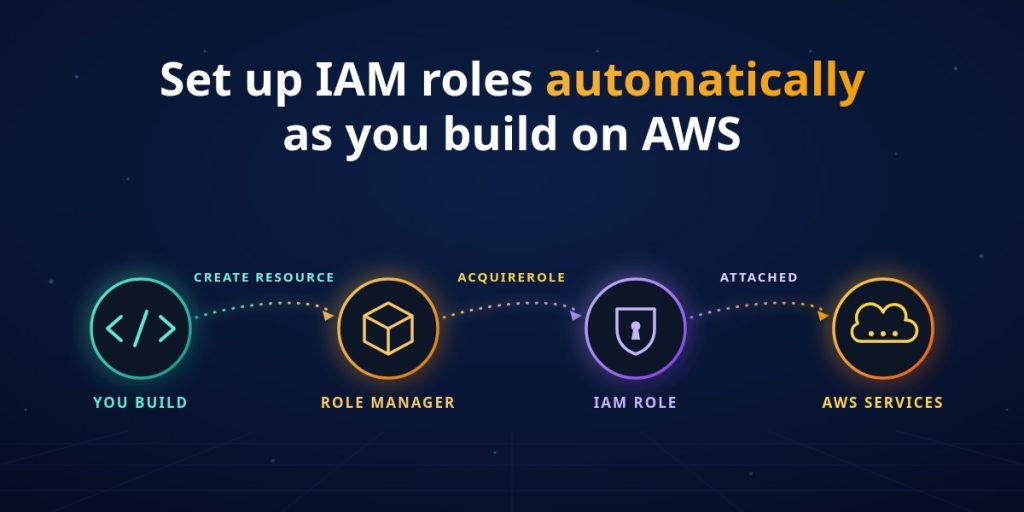
How AWS IAM role manager rethinks the starting point for IAM roles
When you build a new application or capability on Amazon Web Services (AWS), you want to focus on what you’re building. Getting a service running almost always begins with AWS Identity and Access Management (IAM). Many AWS services that act on your behalf need an IAM role, an identity the service assumes to access your […]
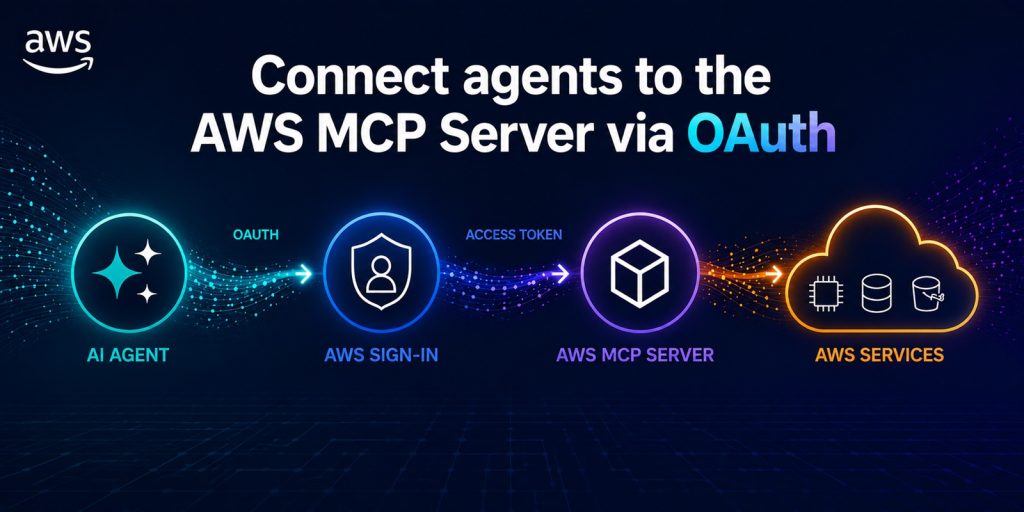
Introducing OAuth Support for AWS MCP Server
You can now connect your agents to the AWS MCP Server using the same credentials and sign-in methods that you already use for connecting to the AWS Management Console or AWS Command Line Interface (AWS CLI) through a familiar browser-based experience powered by industry-standard OAuth. This new sign-in path supports AWS Identity and Access Management […]