Containers

Author: Re Alvarez-Parmar
In his role as Containers Specialist Solutions Architect at Amazon Web Services, Re advises engineering teams with modernizing and building distributed services in the cloud. Prior to joining AWS, he spent more than 15 years as Enterprise and Software Architect. He is based out of Seattle. Connect on LinkedIn at: linkedin.com/in/realvarez/
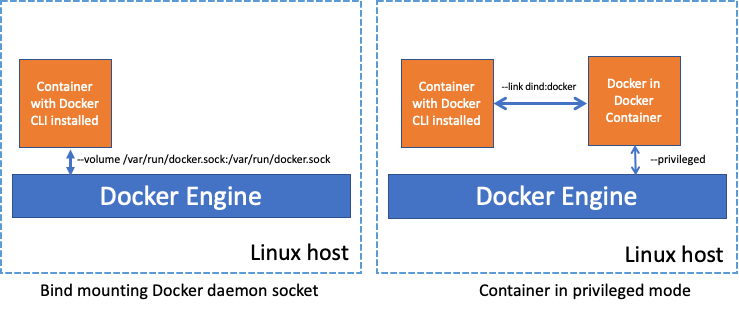
Building container images on Amazon ECS on AWS Fargate
Note: The Kaniko project has been archived and is not actively maintained. Building container images is the process of packaging an application’s code, libraries, and dependencies into reusable file systems. Developers create a Dockerfile alongside their code that contains all the commands to assemble a container image. This Dockerfile is then used to produce a […]

How to build container images with Amazon EKS on Fargate
Note: The Kaniko project has been archived and is not actively maintained. This post was contributed by Re Alvarez Parmar and Olly Pomeroy Containers help developers simplify the way they package, distribute, and deploy their applications. Developers package their code into a container image that includes the application code, libraries, and any other dependencies. This […]

Running Airflow on AWS Fargate
Apache Airflow is an open-source distributed workflow management platform that allows you to schedule, orchestrate, and monitor workflows. Airflow helps you automate and orchestrate complex data pipelines that can be multistep with inter-dependencies. This post presents a reference architecture where Airflow runs entirely on AWS Fargate with Amazon Elastic Container Service (ECS) as the orchestrator, […]

Running stateful workloads with Amazon EKS on AWS Fargate using Amazon EFS
With Amazon Elastic Kubernetes Service (EKS), you have the choice to run Kubernetes pods on EC2 instances or AWS Fargate. AWS Fargate, a serverless compute engine for containers, allows you to run Kubernetes workloads without creating and managing servers, scaling your data plane, right-sizing EC2 instances, or dealing with worker nodes upgrades. Fargate, thus far, […]

Operating a multi-regional stateless application using Amazon EKS
This post was contributed by Re Alvarez Parmar, Sr Solutions Architect, and Avi Harari, Technical Account Manager. One of the key benefits of operating on AWS is how easily customers can use AWS’s global footprint to run their workloads in multiple regions. Whether you need a multi-region architecture to support disaster recovery or bring your […]

Analyze Kubernetes container logs using Amazon S3 and Amazon Athena
Logs are crucial when understanding any system’s behavior and performance. For postmortem analysis of software, along with traces and metrics, logs can be the closest thing to having a time machine. A dilemma many developers have traditionally faced is: what to log and what not to? This predicament has led to too many logs or […]

AWS Fargate now supports UDP load balancing with Network Load Balancer
From machine learning inference to gaming, from web hosting to batch processing, customers are using AWS Fargate to innovate faster and build products without maintaining servers. Many of you told us how important it is for you to run UDP-based applications in Fargate in AWS containers roadmap issue #445. User Datagram Protocol, more popularly known […]

How to track costs in multi-tenant Amazon EKS clusters using Kubecost
Many AWS customers use Amazon Elastic Kubernetes Service (Amazon EKS) to operate multi-tenant Kubernetes clusters where workloads that belong to different teams or projects run in a shared cluster. Customers like that Kubernetes offers centralized management of workloads, enabling administrators to create, update, scale, and secure workloads using a single API. In this post we […]
Getting started with AWS App Mesh and Amazon EKS
NOTICE: October 04, 2024 – This post no longer reflects the best guidance for configuring a service mesh with Amazon EKS and its examples no longer work as shown. Please refer to newer content on Amazon VPC Lattice. ——– In this blog post we explain service mesh usage in containerized microservices and walk you through […]

How to capture application logs when using Amazon EKS on AWS Fargate
Update 12/05/20: EKS on Fargate now supports capturing applications logs natively. Please see this blog post for details. Amazon Elastic Kubernetes Service (Amazon EKS) now allows you to run your applications on AWS Fargate. You can run Kubernetes pods without having to provision and manage EC2 instances. Because Fargate runs every pod in VM-isolated environment, […]