AWS Security Blog

How to Control Access to Your Amazon Elasticsearch Service Domain
September 9, 2021: Amazon Elasticsearch Service has been renamed to Amazon OpenSearch Service. See details. With the recent release of Amazon Elasticsearch Service (Amazon ES), you now can build applications without setting up and maintaining your own search cluster on Amazon EC2. One of the key benefits of using Amazon ES is that you can […]

How to Optimize and Visualize Your Security Groups
September 9, 2021: Amazon Elasticsearch Service has been renamed to Amazon OpenSearch Service. See details. May 3, 2017: We published a related blog post also written by Guy Denney, How to Visualize and Refine Your Network’s Security by Adding Security Group IDs to Your VPC Flow Logs. Many organizations start their journey with AWS by experimenting […]

How to Import IP Address Reputation Lists to Automatically Update AWS WAF IP Blacklists
Note from July 3, 2017: The solution in this post has been integrated into AWS WAF Security Automations, and AWS maintains up-to-date solution code in the companion GitHub repository. You can use AWS WAF (a web application firewall) to help protect your web applications from exploits that originate from groups of IP addresses that are known […]
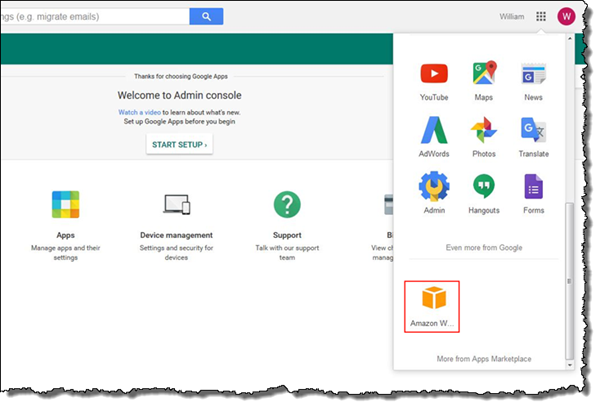
How to Set Up Federated Single Sign-On to AWS Using Google Apps
March 10, 2020: This blog post is out of date. Please refer to this post for updated info: How to set up federated single sign-on to AWS using Google Workspace The AWS Security Blog has covered a variety of solutions for federating single sign-on (SSO) to the AWS Management Console. For example, How to Connect […]

Amazon Cognito Now Provides Sign-Up and Sign-In Functionality for Your Apps (Beta)
Today, Amazon Cognito launched the beta of a new feature that makes it easy for developers to add sign-up and sign-in functionality to mobile and web apps. With this new feature, you get a simple, fully managed service you can use to create and maintain your user pool that can scale to hundreds of millions […]

Now Generally Available: Amazon Inspector
Yesterday, AWS announced that Amazon Inspector, an automated security assessment service, is now available to all customers. Inspector helps you improve the security and compliance of your applications running on Amazon Elastic Compute Cloud (Amazon EC2) by identifying potential security issues, vulnerabilities, or deviations from security standards. You pay only for the assessments you run, with […]

Frequently Asked Questions About HIPAA Compliance in the AWS Cloud
Today, we continue a series of AWS cloud compliance FAQs by focusing on the Health Insurance Portability and Accountability Act (HIPAA) and protected health information (PHI). AWS’s Healthcare and Life Science customers are doing important things for their customers in the AWS cloud, and we are excited to work with our partners to help tackle […]

How to Enable Windows Integrated Authentication for RDS for SQL Server Using On-Premises Active Directory
On March 23, 2016, AWS announced that Amazon Relational Database Service for SQL Server (RDS for SQL Server) now supports authentication to AWS Directory Service for Microsoft Active Directory (Enterprise Edition), also known as Microsoft AD. On April 7, 2016, AWS launched a new console feature for Microsoft AD that makes it easy for you […]

Now Available: Simplified Configuration of Trust Relationships in the AWS Directory Service Console
Today, we made it easier for you to configure trust relationships between AWS Directory Service for Microsoft Active Directory (Enterprise Edition), also referred to as Microsoft AD, and your on-premises Microsoft Active Directory. Establishing trust relationships requires conditional forwarders, which resolve Domain Name System (DNS) queries between the domain names of trusting directories. Now, by […]

Frequently Asked Questions About Compliance in the AWS Cloud
May 22, 2019 update: We’ve removed a reference to the IT-Grundschutz Certification Workbook. AWS now recommends that customers refer to the Cloud Computing Compliance Controls Catalog (C5) instead. Learn more about C5 here: https://aws.amazon.com/compliance/bsi-c5/ Every month, AWS Compliance fields thousands of questions about how to achieve and maintain compliance in the cloud. Among other things, […]