AWS Compute Blog
Category: Amazon EC2

Reduce your Microsoft licensing costs by upgrading to 4th generation AMD processors
This post is written by Jeremy Girven, Solutions Architect at AWS and Chase Lindeman, Senior Specialist Solutions Architect at AWS. Amazon Web Services (AWS) and AMD have collaborated since 2018 to deliver cost effective performance for a broad variety of Microsoft workloads, such as Microsoft SQL Server, Microsoft Exchange Server, Microsoft SharePoint Server, Microsoft Systems […]

Retaining Optimize CPUs configuration during Amazon EC2 scaling to save on licensing costs
This post is written by Rafet Ducic, Senior Solutions Architect at Amazon Web Services (AWS) Introduction Amazon Elastic Compute Cloud (Amazon EC2) now lets you modify CPU configurations after an instance has launched. With this new feature, users can change instance CPU settings either by directly modifying the CPU configuration, or when changing instance size […]

New: Zone Groups for Availability Zones in AWS Regions
This blog post is written by Pranav Chachra, Principal Product Manager, AWS. In 2019, AWS introduced Zone Groups for AWS Local Zones. Today, we’re announcing that we are working on extending the Zone Group construct to Availability Zones (AZs). Zone Groups were launched to help users of AWS Local Zones identify related groups of Local […]

Enabling high availability of Amazon EC2 instances on AWS Outposts servers (Part 2)
This blog post was written by Brianna Rosentrater – Hybrid Edge Specialist SA and Jessica Win – Software Development Engineer This post is Part 2 of the two-part series ‘Enabling high availability of Amazon EC2 instances on AWS Outposts servers’, providing you with code samples and considerations for implementing custom logic to automate Amazon Elastic […]

Enabling high availability of Amazon EC2 instances on AWS Outposts servers (Part 1)
This blog post is written by Brianna Rosentrater – Hybrid Edge Specialist SA and Jessica Win – Software Development Engineer. This post is part 1 of the two-part series ‘Enabling high availability of Amazon EC2 instances on AWS Outposts servers’, providing you with code samples and considerations for implementing custom logic to automate Amazon Elastic […]

Using Amazon APerf to go from 50% below to 36% above performance target
This post is written by Tyler Jones, Senior Solutions Architect – Graviton, AWS. Performance tuning the Renaissance Finagle-http benchmark Sometimes software doesn’t perform the way it’s expected to across different systems. This can be due to a configuration error, code bug, or differences in hardware performance. Amazon APerf is a powerful tool designed to help […]

Implementing network traffic inspection on AWS Outposts rack
This blog post is written by Brian Daugherty, Principal Solutions Architect. Enrico Liguori, Solution Architect, Networking. Sedji Gaouaou, Senior Solution Architect, Hybrid Cloud. Network traffic inspection on AWS Outposts rack is a crucial aspect of making sure of security and compliance within your on-premises environment. With network traffic inspection, you can gain visibility into the […]

Architecting for Disaster Recovery on AWS Outposts Racks with AWS Elastic Disaster Recovery
This blog post is written by Brianna Rosentrater, Hybrid Edge Specialist SA. AWS Elastic Disaster Recovery Service (AWS DRS) now supports disaster recovery (DR) architectures that include on-premises Windows and Linux workloads running on AWS Outposts. AWS DRS minimizes downtime and data loss with fast, reliable recovery of on-premises and cloud-based applications using affordable storage, […]
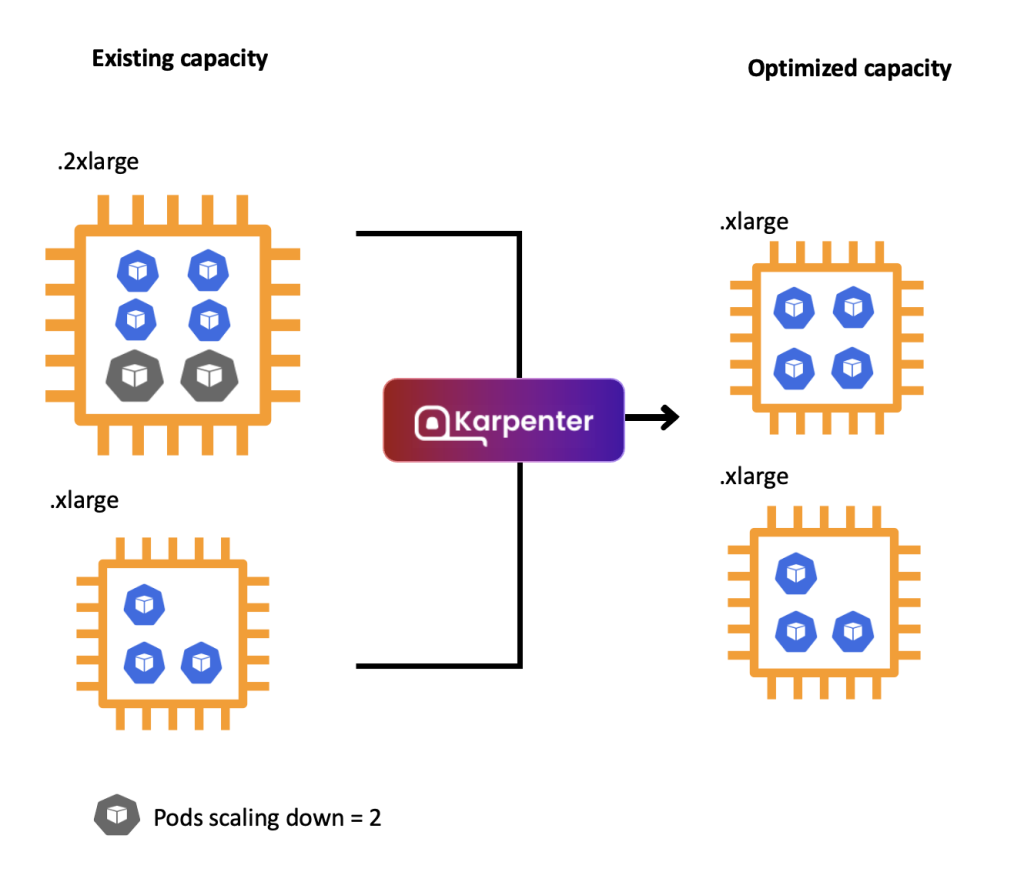
Applying Spot-to-Spot consolidation best practices with Karpenter
This post is written by Robert Northard – AWS Container Specialist Solutions Architect, and Carlos Manzanedo Rueda – AWS WW SA Leader for Efficient Compute Karpenter is an open source node lifecycle management project built for Kubernetes. In this post, you will learn how to use the new Spot-to-Spot consolidation functionality released in Karpenter v0.34.0, […]

Optimizing video encoding with FFmpeg using NVIDIA GPU-based Amazon EC2 instances
This post is written by Alejandro Gil, Solutions Architect and Joseba Echevarría, Solutions Architect. Introduction The purpose of this blog post is to compare video encoding performance between CPUs and Nvidia GPUs to determine the price/performance ratio in different scenarios while highlighting where it would be best to use a GPU. Video encoding plays a […]