Amazon Logistics Automates Electric Vehicle Design Reviews on AWS
Learn how Amazon Logistics uses Automated Reasoning checks to cut review time and deliver verified compliance validations.
Overview
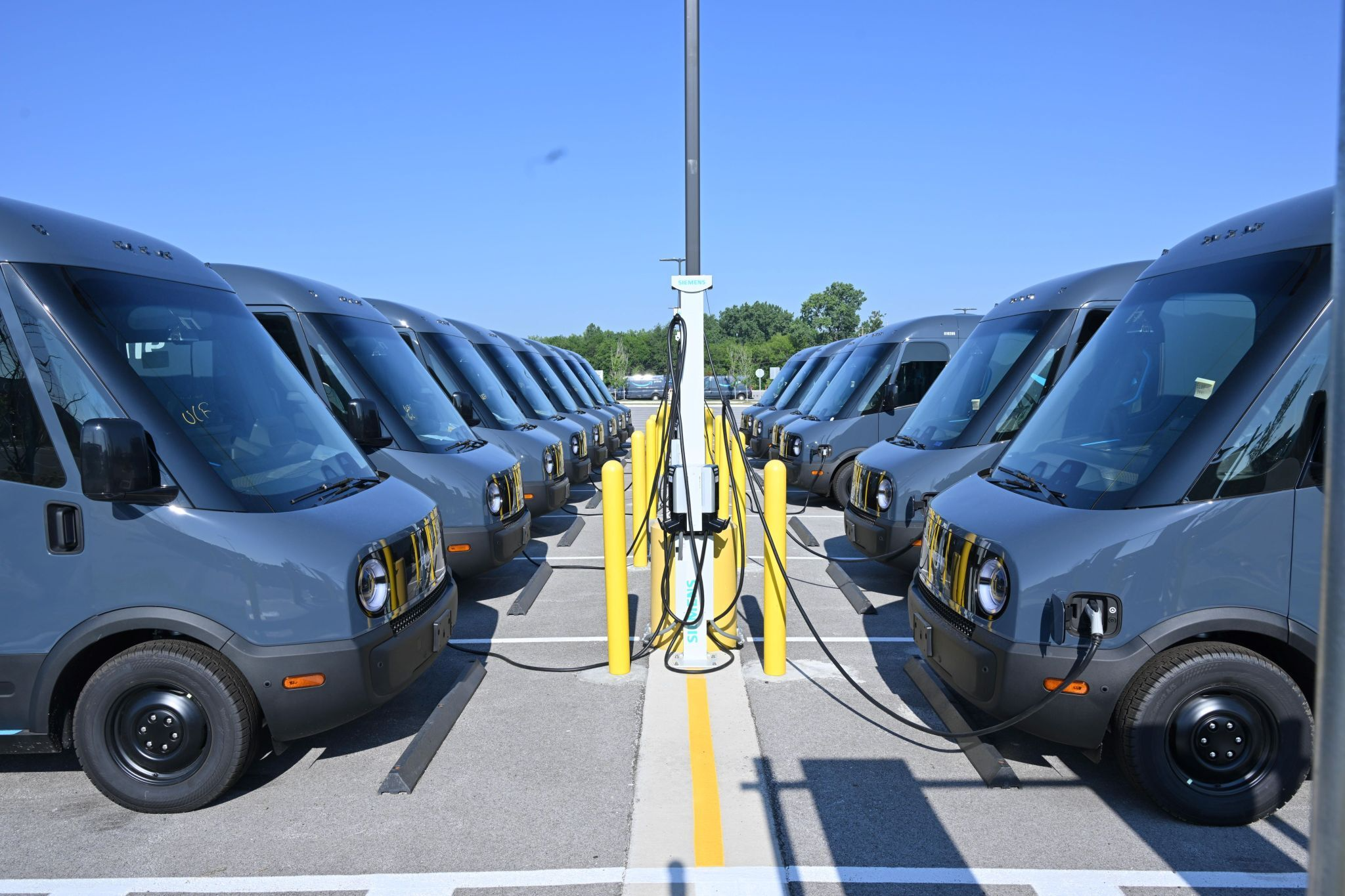
Amazon Logistics is the last-mile delivery arm of Amazon, responsible for getting packages to customers' doorsteps. As part of Amazon's commitment to sustainability, the Sustainability Engineering team leads the end-to-end deployment of Electric Vehicle Charging Points (EVCPs) across its delivery station network, owning the electrical standards and design reviews for every installation.
When Amazon Logistics set out to scale that program, the bottleneck wasn't technology; it was time. Every EVCP installation required a sustainability engineer to spend approximately 8 hours manually cross-referencing engineering parameters against region-specific regulations and technical specifications. With dozens of sites in the pipeline, the manual process was becoming unsustainable.
About Amazon Logistics
Amazon Logistics is Amazon’s last-mile delivery network, operating delivery stations worldwide to fulfill customer orders. The Sustainability Engineering team at Amazon Logistics leads initiatives to reduce the environmental impact of delivery operations. As the recognized experts in electrical infrastructure, the team owns the electrical standards and design reviews for all Electric Vehicle charging installations. They lead the end-to-end deployment of electric vehicle charging infrastructure, from design through installation, enabling Amazon's transition to electric vehicle fleets and reducing the environmental impact of last-mile delivery.
Opportunity | Replacing manual analysis with formally verifiable automation
The Sustainability team at Amazon Logistics is responsible for EVCP installation for each delivery station site. Every proposal must comply with a comprehensive set of region-specific external regulations and internal technical specifications that govern safety, electrical standards, and operational requirements. With dozens of sites in the pipeline, the volume of reviews is growing rapidly.
Each review required a dedicated subject matter expert to spend approximately 8 hours manually cross-referencing each proposal against the technical specification: checking that cable sizing, protection ratings, load calculations, and dozens of other parameters met the required thresholds. This was compounded by the fact that proposals do not follow a standardized template, meaning every proposal required the expert to analyze information presented in different formats, with different structures and varying degrees of detail in the content.
The team explored how generative AI could help. What Amazon Logistics required was a solution that combined the advanced language understanding capabilities of foundation models with the rigor of formal verification, one that could automate the tedious extraction and cross-referencing work while giving the Sustainability Engineering team full transparency and control into how every compliance determination was made.
Amazon Logistics partnered with AWS to explore how Automated Reasoning checks in Amazon Bedrock Guardrails could address two challenges simultaneously: using foundation models to handle the language understanding needed to convert standards into formal policies and to analyze heterogeneous proposal formats, while using formal mathematical verification to provide the compliance guarantees that probabilistic AI alone could not deliver. This combination offered the potential to automate the tedious extraction and cross-referencing work without compromising the rigor the Sustainability Engineering team required.
Solution | A design review portal that combines generative AI understanding with formal verification
Working with AWS, the Sustainability Engineering team at Amazon Logistics built a design review portal. This tool transforms how EVCP installation proposals are evaluated while keeping the subject matter experts at the center of every decision. Technical specifications become verifiable compliance policies and proposals are evaluated against them in a single workspace that provides formal certainty and precise, logically grounded explanations of each decision.
Amazon Sustainability Engineering used a variety of AWS services:
- At the core of the solution is Automated Reasoning checks in Amazon Bedrock Guardrails. The design review portal uses Bedrock to translate their requirements specifications into a set of Automated Reasoning policies, a knowledge encoding of precise logical rules with explicitly defined variables, types, and conditions. Automated Reasoning checks validates engineering variables extracted from EVCP installation proposals against Automated Reasoning policies, using mathematical reasoning to identify policy violations and produce verifiable explanations of the proposal's compliance.
- Claude by Anthropic in Amazon Bedrock powers the document intelligence layer. Claude extracts metadata, identifies chapters, and breaks specifications into self-contained policy areas — such as cable protection requirements, load balancing rules, or earthing specifications. When evaluating engineering proposals against a set of Automated Reasoning policies, Claude Opus 4.6 reads unstructured documents and resolves the associated engineering variables and provides grounding details.
- AWS Step Functions orchestrates the multi-step processing and policy creation workflows, coordinating parallel chapter extraction and managing the asynchronous policy build lifecycle. AWS Lambda functions handle the REST API logic, Amazon S3 stores specification and proposal documents, Amazon DynamoDB stores and tracks jobs and policy metadata, and Amazon CloudFront serves the web interface through Amazon API Gateway. The entire architecture is serverless, deployed with AWS CDK. This means Amazon Logistics pays only for actual usage with no idle infrastructure costs, an important consideration for a tool with variable workloads as new sites enter the review pipeline.
Outcome | From hours to minutes, with confidence
Using this solution experts at Amazon Logistics Sustainability Engineering team:
- Reduce approximately 8 hours of manual cross-referencing to minutes without sacrificing the rigor the process demands. Every review provides compliance verification, full transparency into how conclusions are reached, and a complete audit trail.
- Provide formal verification on every compliance determination. No black boxes, no probabilistic uncertainty and observability and auditability built in at all stages of the process.
- Keep experts focused on engineering judgment, reviewing edge cases and site-specific considerations rather than tedious parameter matching.
- Iterate rapidly. They now re-evaluate proposals with corrected variables or updated specifications without restarting the review.
- Scale with the EV deployment program. The serverless architecture handles growing review volumes without proportional cost increases.
The EVCP design review portal is designed to be reusable. The Sustainability Engineering team is now identifying other engineering processes where the portal can support experts and other areas where Automated Reasoning can deliver formal verification.
Architecture Diagram

The gen AI-powered design review tool supports our technical experts during design reviews, drastically reducing their workload while maintaining full human control at every stage. Our experts remain the decision-makers, with complete visibility into how the tool operates and the confidence that every recommendation can be traced, verified, and validated.
Paula García Carrasco
Sr. Sustainability EngineerAWS Services Used
Did you find what you were looking for today?
Let us know so we can improve the quality of the content on our pages