- Customer Stories›
- ASKUL Case Study
ASKUL transitions to AWS when upgrading to SAP S/4HANA,
migrating one of Japan’s largest collections of data and creating a platform for innovation with AI and data.
Overview
ASKUL upgraded the core SAP S/4HANA system driving its various e-commerce businesses. Amazon Elastic Compute Cloud (Amazon EC2) high-memory instances empowered the company to move one of the largest collections of data in Japan to a new environment with 21 hours of downtime while maintaining 24/365 operation of e-commerce sites. The resulting platform will spur the use of AI and data.
About ASKUL
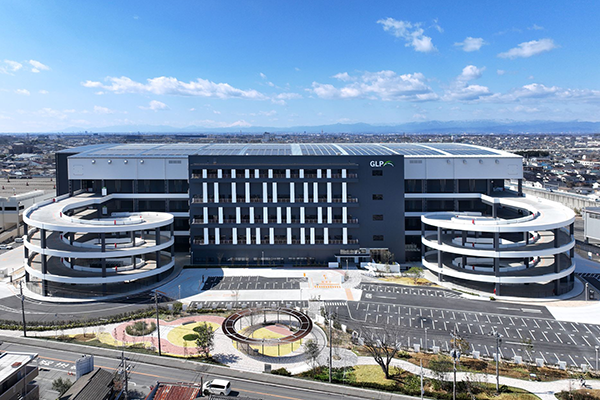
Known for its next-day-delivery service, ASKUL is an e-commerce and logistics company providing office supplies, daily necessities, medical goods, and nursing products to corporations and individuals through its B2B ASKUL and B2C LOHACO services. Leveraging its unique strength of an in-house logistics system and delivery capabilities, it systematizes all business processes and makes continuous data-based improvements. The enterprise supports the daily operations of businesses and the lives of individuals.
Opportunity | A large-scale migration without interrupting e-commerce sites
Established in 1993, ASKUL is continually growing through its B2B 'ASKUL' and B2C 'LOHACO’ e-commerce sites. Its defining traits include an in-house logistics system and delivery capabilities, with work processes systemized across the company. “Our strength is that we digitalize all processes and run them in-house, which facilitates a cycle of improvement in which we can apply unfiltered improvement insights,” says Kazuyuki Ikeda, Chief Digital Transformation Officer of the Technology Unit.
Since 2019, ASKUL has been gradually transitioning key systems to cloud-native environments. The company had been examining a transition of its core SAP ERP (ECC6.0) system to SAP S/4HANA since 2022 ahead of support for the older solution ending and discussing a migration of cloud services to Amazon Web Services (AWS).
According to the Kazuhiro Kodama, manager of the migration project, “From the planning phase, we proceeded on the premise of migrating system infrastructure to AWS while focusing on convenience and integration with front-end systems already running on AWS.” Manabu Komori, manager of the Big Data Section adds, “AWS is stable and many engineers understand it, which makes it great in terms of post-deployment improvement.”
The biggest challenge to upgrading the system was the continuity of e-commerce businesses which operate 24 hours a day, 365 days a year. Platform stability is vital for e-commerce companies: If the system stops, orders aren’t received, sales are lost, and operations stop. “Our priority was to keep our customer promise of next-day-delivery—from which our company name is derived,” says Ikeda.
With years of accumulated data, over 100 custom functions, and complex business processes, the scale of the migration was one of the most technically demanding and largest of its kind in Japan. With typical migrations of core systems often requiring several days of downtime, ASKUL's demand for complete migration within 24 hours was extremely tough.
Solution | Minimize risks with high-memory instances and a thorough migration strategy
“The AWS environment is officially supported as SAP-certified infrastructure, and the long-standing strategic partnership between AWS and SAP provides great comfort,” explains Kodama. ASKUL’s foremost technical requirement was instances capable of handling a massive amount of accumulated data. The company therefore adopted 12TB Amazon EC2 high-memory instances. “We needed fast throughput and low latency, so high-performance storage was a critical criterion,” says Komori.
To prepare for the colossal migration, ASKUL began reducing its volume of data. “To achieve a sub-24-hour downtime, we reduced the 20TB of data in our ECC environment to 5TB just before migrating,” says Order Management Manager Kazuki Harao.
The careful preparation included four migration rehearsals to achieve the targeted downtime. “The first rehearsal used data only; the second used data and infrastructure; the third used the same 12TB instances as the production environment; and the final one simulated the production environment, including the actual system,” explains Harao. “We verified the procedures and time taken at each rehearsal to increase our confidence.”
According to Masato Shiino, a Logistics and Finance worker, the stability of the migration environment raised the quality of the tests: “The ability to test frequently enabled us to work smoothly and quickly, for which we’re deeply grateful. The latter evaluation tests enabled us to eliminate remaining issues in the final processes, so we were confident we could migrate real data quickly.”
ASKUL also had an AWS Enterprise Support contract which provided a full support system for the day of the migration, with 24/365 expert support and ongoing technical help. “We worked closely with AWS representatives beforehand, requesting their presence at key points and establishing a 24-hour point of contact,” says Komori. “As a result, migration day went without a hitch.”
Outcome | Achieving stable operation and an innovative service platform through AI and data use
ASKUL completed the migration without any major issues in August 2025. Downtime was kept to 21 hours, comfortably under the 24-hour target.
Although the system temporarily slowed the day after the migration, the company resolved the issue that day and the system has run solidly ever since. “We’ve had to make various adjustments on the application side, but the stability of AWS infrastructure and our platform enables us to deal with other problems confidently,” says Harao. “We've had zero faults with CPU and memory,” adds Komori. “The infrastructural stability delivers an overall sense of security.”
“Switching over within our initial target of 24 hours through careful preparation was a fantastic result,” says Ikeda.
Innovating service with data and AI is one of the most important initiatives in ASKUL’s future. “Our medium-term business plan includes a policy of promoting service innovation using AI over the next three years,” continues Ikeda. “The core system we’ve built on AWS makes it extremely easy to elevate our use of AI and data. We’ve established a platform for automating customer services and internal processes.” Kodama adds, “We’ll make full use of AI and analytics functions to transforming on-site business and work processes, which will maximize value for customers.”
On the technical side, the company has started trialing data analysis using natural language with Amazon Q in QuickSight. “We’ve already started a proof of concept,” says Komori. “We’re very appreciative of AWS’ extensive lineup of solutions.”
Meanwhile, initiatives to strengthen disaster countermeasures continue. “The AWS platform supports disaster recovery, so we can continue providing reliable services to customers if a disaster strikes,” concludes Ikeda as he considers service stability and providing further value.

The core system we’ve built on AWS makes it extremely easy to elevate our use of AI and data. We’ve established a platform for automating customer services and internal processes.
Kazuyuki Ikeda
Chief Digital Transformation Officer, Technology Unit, ASKULBenefits
- Stable migration — Smooth migration of one of Japan’s largest SAP workloads
- 21 hours — Sub-24-hour downtime target achieved comfortably
- Advanced data expansion and AI use — High memory instances unlock future possibilities
- Greater platform stability — Migration to AWS dramatically enhances stability
Team
Kazuyuki Ikeda

Kazuhiro Kodama

Manabu Komori
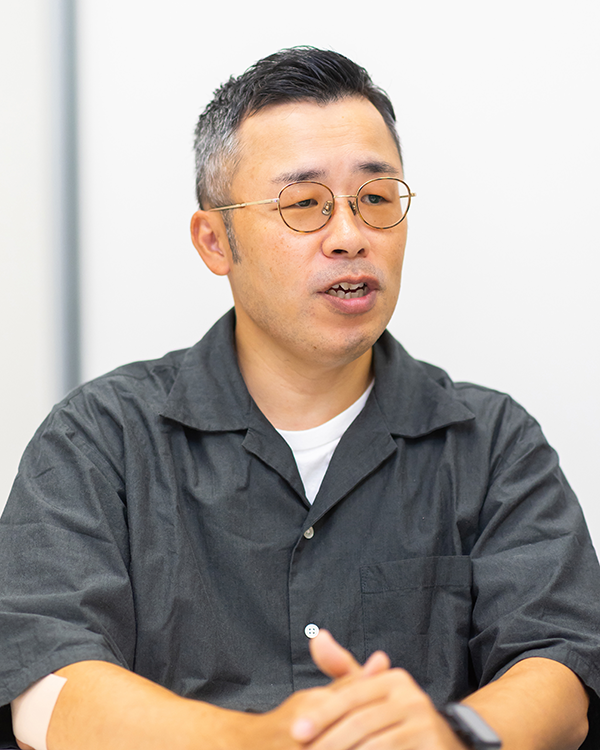
Kazuki Harao

Masato Shiino

AWS Services Used
Get Started
Organizations of all sizes across all industries are transforming their businesses and delivering on their missions every day using AWS. Contact our experts and start your own AWS journey today.