Benefits
Overview
When Notorious Studios (Notorious) launched its debut online fantasy adventure, Legacy: Steel & Sorcery, the small team faced a big challenge. The company needed to keep gameplay smooth for thousands of players while lowering its largest expense, game server costs.
By using Amazon Web Services (AWS), Notorious achieved this balance in less than 4 weeks with no downtime or code overhauls. The move cut server costs by 33 percent, reduced energy usage, and gave the studio room to scale more efficiently, freeing up resources for delivering an even better player experience.
About Notorious Studios
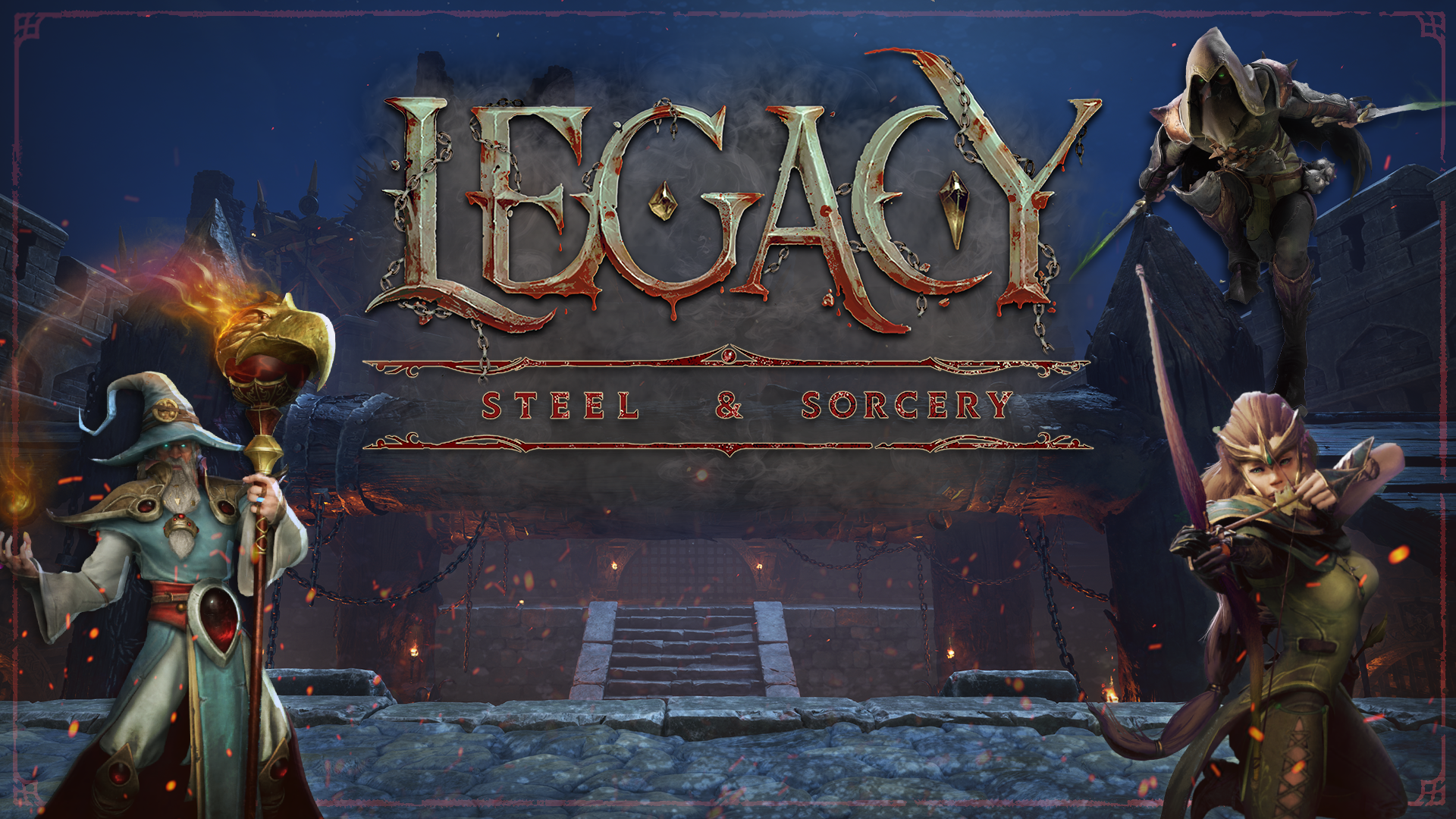
Notorious Studios is an independent game studio that was founded in 2021 by former developers from Blizzard Entertainment who produced titles like World of Warcraft. Earlier this year, it released its first game, Legacy: Steel & Sorcery.
Opportunity | Boosting price performance using Graviton-based instances with Notorious Studios
After its founding in 2021 by veteran Blizzard Entertainment developers—who worked on seminal titles like World of Warcraft—Notorious set out to create its first online multiplayer title. Combining decades of game-creation expertise with deep player insights from its analytics pipeline, the small team aimed to deliver a seamless, large-scale fantasy experience.
Before the early-access launch of Legacy: Steel & Sorcery, Notorious ran its game servers on traditional x86 processors. The team saw a clear opportunity to reduce server costs, boost instance availability, and improve efficiency. After weighing options, Notorious migrated to AWS Graviton Processors (Graviton), a family of processors designed to deliver the best price performance for cloud workloads. “The runtime cost of Graviton versus any x86 family instance available in AWS was a huge opportunity that we wanted to capitalize on,” says Cody Wilson, staff platform operations engineer at Notorious Studios.
For a smaller, independent studio, the savings and the improved availability resulting from its migration to Graviton are especially valuable. “One of the key drivers for a startup game studio doing an ambitious online multiplayer game like ours is being able to develop and then operate with flexible costing capabilities,” says Wilson.
Solution | Cutting game server costs by 33 percent
Shortly after releasing Legacy: Steel & Sorcery in early access, Notorious migrated from M5 and C5 instance families to M7g and C7g Graviton-powered instances to maximize performance and cost savings. The fantasy game was built on Unreal Engine 5, which Notorious wanted to run as efficiently as possible in the cloud. With Graviton’s ARM64 architecture—supported in Unreal Engine—Notorious could compile lightweight, optimized server builds that use fewer compute resources per player session. That helps increase player density per instance and lower overall cloud costs.
The studio also runs its game servers on Amazon EC2 Spot Instances, which help companies run fault-tolerant workloads for up to 90 percent off, while achieving higher availability and reducing energy usage. The migration required no rearchitecting or infrastructure redesign and was completed in 3–4 weeks without any service disruption. Notorious tested the new setup, compiled its Unreal Engine–based code, and went live without downtime—achieving perfect timing for its new season launch.
Amazon GameLift Servers, a fully managed service that helps operate and scale game servers, handled the heavy lifting throughout the process. Amazon GameLift Servers helped orchestrate fleets, autoscale capacity, and run latency tests. It also made it simple for the small team to retarget servers from x86 to ARM, run canary tests, and test specific regions. “Amazon GameLift Servers is one of the reasons we’ve been able to make this game with as small a team as we have,” says Wilson. “One of the best things about Amazon GameLift Servers’ autoscaling and ephemeral infrastructure is how easy it is to retarget fleets.” AWS support was available when needed, and the fully managed service freed up developers to focus on gameplay instead of backend complexity.
The results of the migration to Graviton have been significant. Game server costs, the studio’s largest infrastructure cost, were reduced by 33 percent, all while handling record peaks in the numbers of concurrent users. Graviton’s efficiency also means up to 60 percent lower energy consumption compared with x86 processors, supporting Notorious’s cost-saving goals while aligning with broader sustainability targets.
Outcome | Consolidating fleets for greater efficiency
Not only did Notorious cut costs and increase architectural flexibility but the company also managed to explore new optimizations. With Graviton’s efficient compute performance, the same workloads now run with fewer resources, opening the door to fleet consolidation through efficient performance optimization and instance rightsizing. That potentially reduces the need for infrastructure even further by running multiple game server instances on a single Graviton-powered EC2 instance. “We’re trying to figure out a way to run multiple game server instances per machine,” says Wilson. “By making use of the shared memory features of the Unreal Engine server, we’d need only one additional RAM allocation for each player’s state, so we could probably consolidate our fleets down to a third of their current size.”
With Amazon GameLift Servers’ managed orchestration and a Graviton-powered backend, Notorious Studios is well-positioned for scalable, cost-efficient growth and ready to push its ambitious fantasy worlds to more players.
The runtime cost of Graviton versus any x86 family instance available in AWS was a huge opportunity that we wanted to capitalize on.
Cody Wilson
Staff Platform Operations EngineerAWS Services Used
Did you find what you were looking for today?
Let us know so we can improve the quality of the content on our pages