Benefits
Overview
The University of Sydney (USYD) is advancing Australia's space research ambitions through its CubeSat missions, CUAVA-2 and Waratah Seed. In collaboration with government and industry, the satellites support a growing community of researchers and startups. These teams test experimental payloads to develop new capabilities in space communications, navigation, and signal processing.
As its space program expanded to support more research and commercial missions, the university needed to improve bi-directional satellite communication (uplink and downlink). USYD turned to Amazon Web Services (AWS) to enhance these operations and ensure payload teams could access and transmit their data quickly and consistently.
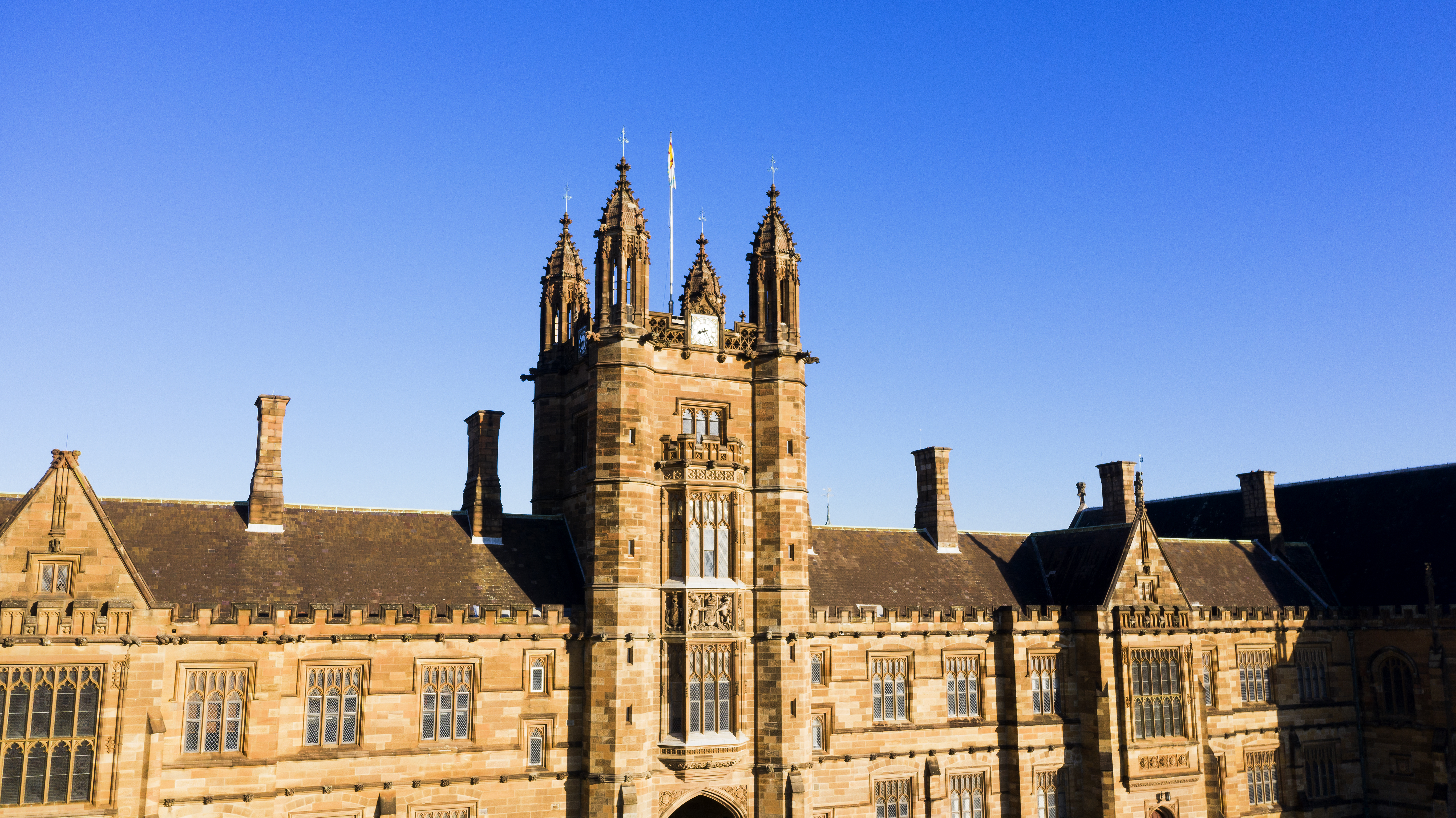
About the University of Sydney
The University of Sydney (USYD) is one of Australia's leading public research universities. It operates the CUAVA-2 and Waratah Seed satellites to support academic and commercial teams testing experimental payloads and accessing space-based data.
Opportunity | Using AWS Ground Station to improve satellite communications for USYD
USYD previously communicated with its satellites using a single rooftop antenna on its electrical engineering building, operated manually by students. This setup limited contact windows to when satellites passed directly overhead and introduced operational risks. In one instance, a power misconfiguration led to a loss in communications and data.
As the university expanded its missions to include both commercial and academic payloads, it needed to strengthen its satellite uplink and downlink. USYD set out to achieve higher bandwidth data transfers while maintaining compliance with Australia's regulatory requirements. At the same time, USYD wanted to avoid the time, cost, and complexity of building and operating a custom ground station.
Solution | Accelerating satellite data access and processing on AWS
The new architecture improved mission resilience and supported faster access to satellite data. This helped payload teams test onboard technologies for both research and commercial applications.
With support from AWS Professional Services, the university deployed its communications system in just 2 months, down from an estimated 6 to 12 months. In addition, USYD avoided between 100,000 and 300,000 AUD in infrastructure costs. The university began collecting mission data within weeks of satellite launch and achieved 1,000-times faster data transfer as compared to its previous setup, giving stakeholders timely insights to advance research and attract investment.
To establish stable satellite communications, USYD uses AWS Ground Station, a fully managed service that delivers on-demand access to a global network of ground stations. This eliminates the need to build and manage physical infrastructure. USYD connects to its satellites using S-band from the AWS Ground Station facility in Dubbo, Australia. As a result, the university gains low-latency access to AWS services within the region, along with reliable satellite coverage.
Satellite data is demodulated and decoded on Amazon Elastic Compute Cloud (Amazon EC2), which offers secure, resizable compute capacity that runs only during satellite passes—reducing costs by processing data just before and after each communication contact. The output is stored in Amazon Simple Storage Service (Amazon S3), an object storage service built to store and retrieve any amount of data from anywhere. With this, research teams and commercial partners can securely access the processed data to test payload performance and monitor satellite health.
USYD also maintains a dual-system approach for operational resilience. It uses a UHF/VHF radio system for satellite control commands, while AWS Ground Station handles high-volume data downloads. The AWS team worked closely with the university to navigate Australia's complex radio licensing requirements, helping USYD meet local standards for satellite communications.
Outcome | Laying the groundwork for scalable, inclusive access to space data
“Fast, reliable access to mission data is critical to advancing space research. AWS removed the infrastructure barrier so we could focus on supporting innovation across the sector,” said Professor Iver Cairns, Director, CUAVA and the Waratah Seed project, University of Sydney.
The Waratah Seed mission delivered strong operational results, with 8 of 9 payloads performing successfully in orbit. In 2025, the mission was named Small Satellite of the Year by the American Institute for Aeronautics and Astronautics.
USYD aims to make satellite data more widely available through public datasets and industry partnerships. Future missions, including Waratah Seed 2, are being developed to expand access to space-based research. Plans include evolving Waratah into a rideshare program, offering regular launch opportunities for researchers and startups to test and validate new technologies.

Fast, reliable access to mission data is critical to advancing space research. AWS removed the infrastructure barrier so we could focus on supporting innovation across the sector.
Professor Iver Cairns
Director of CUAVA and the Waratah Seed project, University of SydneyAWS Services Used
Did you find what you were looking for today?
Let us know so we can improve the quality of the content on our pages