AWS Compute Blog
Category: Uncategorized
Scaling AWS Outposts rack deployments with ACE racks
This blog post is written by Eric Vasquez, Specialist Hybrid Edge Solutions Architect, and Paul Scherer, Senior Network Service Tech. Overview AWS Outposts brings managed, monitored AWS infrastructure, compute, and storage to your on-premises environment. It provides the same AWS APIs, and console experience you would get within the AWS Region to which the Outpost […]
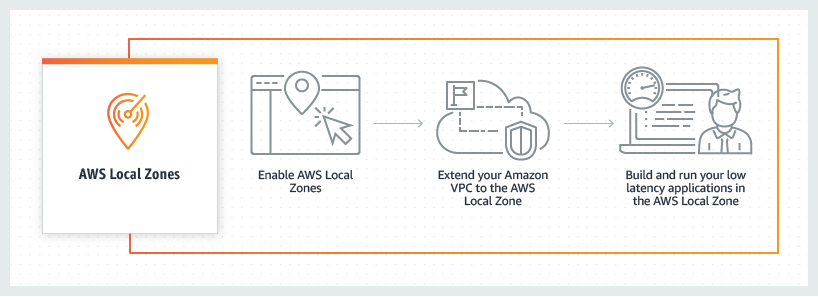
AWS Local Zones and AWS Outposts, choosing the right technology for your edge workload
This blog post is written by Joe Sacco, Senior Technical Account Manager. The AWS Global Cloud Infrastructure includes 30 Launched Regions, 96 Availability Zones (AZs), 410+ Points of Presence with 400+ Edge Locations, and 13 Regional Edge Caches. With over 200 AWS services, most customer workloads can run in the AWS Regions. However, for some […]

Reducing Java cold starts on AWS Lambda functions with SnapStart
At AWS re:Invent 2022, AWS announced SnapStart for AWS Lambda functions running on Java Corretto 11. This feature enables customers to achieve up to 10x faster function startup performance for Java functions, at no additional cost, and typically with minimal or no code changes.

Starting up faster with AWS Lambda SnapStart
This blog written by Tarun Rai Madan, Sr. Product Manager, AWS Lambda, Mike Danilov, Sr. Principal Engineer, AWS Lambda, and Colm MacCárthaigh, VP/Distinguished Engineer, EC2. AWS Lambda SnapStart is a new performance optimization developed by AWS that can significantly improve the startup time for applications. Announced at AWS re:Invent 2022, the first capability to feature […]

Monitoring shared AWS Outposts rack capacity
This post is written by Adam Imeson, Sr. Hybrid Edge Specialist Solutions Architect. AWS Outposts rack is a fully-managed service that offers the same AWS infrastructure, APIs, tools, and a subset of AWS services to any data center, colocation space, or on-premises facility for a consistent hybrid experience. Outposts rack is ideal for workloads that […]

Our guide to AWS Compute at re:Invent 2022
This blog post is written by Shruti Koparkar, Senior Product Marketing Manager, Amazon EC2. AWS re:Invent is the most transformative event in cloud computing and it is starting on November 28, 2022. AWS Compute team has many exciting sessions planned for you covering everything from foundational content, to technology deep dives, customer stories, and even […]
Introducing the price-capacity-optimized allocation strategy for EC2 Spot Instances
This blog post is written by Jagdeep Phoolkumar, Senior Specialist Solution Architect, Flexible Compute and Peter Manastyrny, Senior Product Manager Tech, EC2 Core. Amazon EC2 Spot Instances are unused Amazon Elastic Compute Cloud (Amazon EC2) capacity in the AWS Cloud available at up to a 90% discount compared to On-Demand prices. One of the best […]

Better together: AWS SAM CLI and HashiCorp Terraform
This post is written by Suresh Poopandi, Senior Solutions Architect and Seb Kasprzak, Senior Solutions Architect. Today, AWS is announcing the public preview of AWS Serverless Application Model CLI (AWS SAM CLI) support for local development, testing, and debugging of serverless applications defined using HashiCorp Terraform configuration. AWS SAM and Terraform are open-source frameworks for […]
Simplifying Amazon EC2 instance type flexibility with new attribute-based instance type selection features
This blog is written by Rajesh Kesaraju, Sr. Solution Architect, EC2-Flexible Compute and Peter Manastyrny, Sr. Product Manager, EC2. Today AWS is adding two new attributes for the attribute-based instance type selection (ABS) feature to make it even easier to create and manage instance type flexible configurations on Amazon EC2. The new network bandwidth attribute […]

Building highly resilient applications with on-premises interdependencies using AWS Local Zones
This blog post is written by Rachel Rui Liu, Senior Solutions Architect. AWS Local Zones are a type of infrastructure deployment that places compute, storage, database, and other select AWS services close to large population and industry centers. Following the successful launch of the AWS Local Zones in 16 US cities since 2019, in Feb 2022, AWS […]