Containers
Tag: Containers
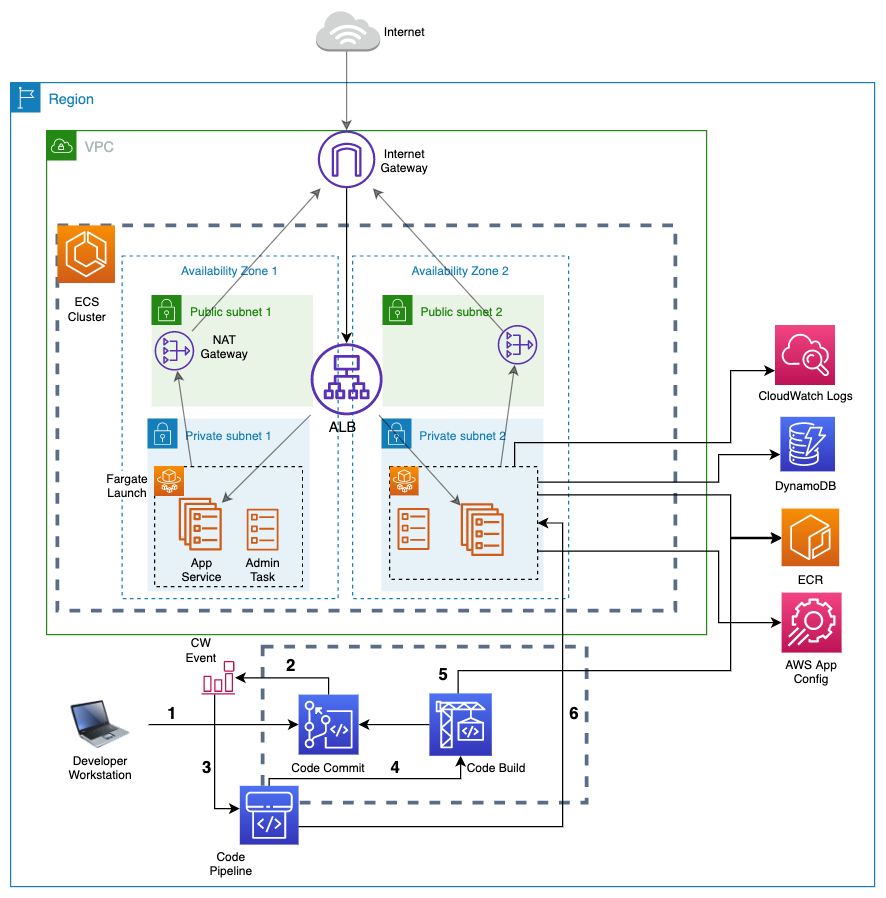
Developing Twelve-Factor Apps using Amazon ECS and AWS Fargate
Sushanth Mangalore and Chance Lee, AWS Solutions Architects, SMB Introduction The twelve-factor methodology helps you build modern, scalable, and maintainable software-as-a-service apps. The methodology is technology agnostic and has become a widely-adopted approach to developing cloud-native applications. There are a few different ways to develop twelve-factor applications on AWS. Solutions based on containers technology are a […]

Advertising click-prediction modeling on Amazon EKS
In digital advertising, the ad click-through rate (CTR) model predicts the probability of a click given the ads and context x (for example, shopping query, time of the day, device). The output of a CTR model can be seen as a conditional probability p(y = click|x). A precise estimation of this probability influences our ability […]

Connecting to an interactive shell on your containers running in AWS Fargate using AWS Copilot
Since AWS Fargate launched in 2017 many developers have adopted the serverless compute model for containers. Instead of managing EC2 instances to run their containers, these developers are able to think of scaling in terms of container size and container count. Over time AWS Fargate has gained more and more features that make it capable […]

New look for Amazon ECS in the AWS Management Console
Recently we launched a new look and experience for Amazon ECS in the AWS Management Console. Since its launch in 2014, Amazon Elastic Container Service (Amazon ECS) has served as a simple way for customers to run production grade container workloads on AWS. Customers such as Disney+, Vanguard, Okta, Fidelity, and UbiSoft trust Amazon ECS […]

Using Windows Authentication with Linux Containers on Amazon ECS
This post shows how to configure a Linux container running on Amazon Elastic Container Service (Amazon ECS) to connect to a SQL Server database using Windows (or Integrated) Authentication. Windows Authentication is the recommended mechanism to connect to SQL Server databases, but using it can be challenging when running containerized workloads.
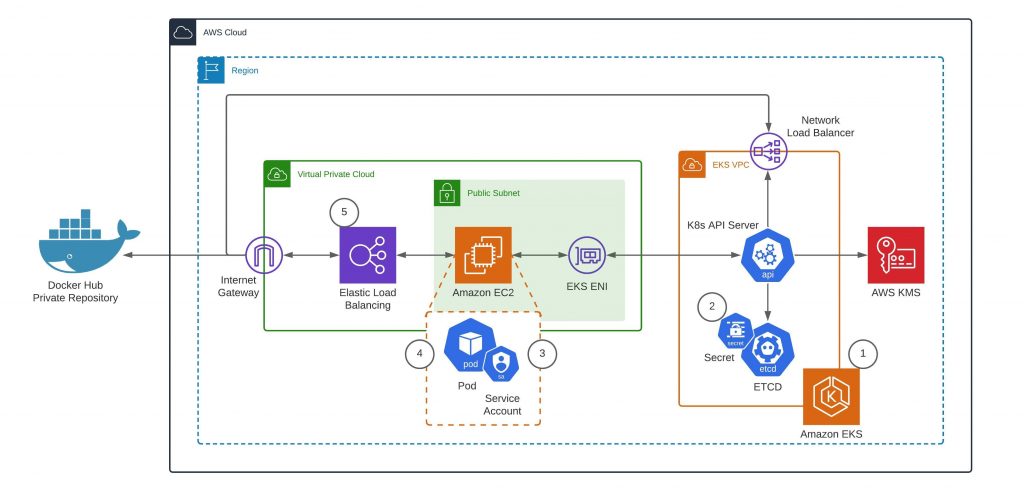
Authenticating with Docker Hub for AWS Container Services
Docker Hub has recently updated its terms of service to introduce rate limits for container image pulls. While these limits don’t apply to accounts under a Pro or Team plan, anonymous users are limited to 100 pulls per 6 hours per IP address, and authenticated free accounts are limited to 200 pulls per 6 hours. […]

Using EBS Snapshots for persistent storage with your EKS cluster
Originally, containers were a great fit for stateless applications. However, for many use cases there is a need for persistent storage, without which stateful workloads are not possible. Kubernetes first introduced support for stateful workloads with in-tree volume plugins, meaning that the plugin code was part of the core Kubernetes code and shipped with the […]

Cross region replication in Amazon ECR has landed
Michael Brown and Michael Hausenblas Replicating container images across regions in Amazon Elastic Container Registry (ECR) automatically has been one of the most asked features and we’re glad to be able to share the good news with you: it has landed. Where previously you had to implement the replication yourself you can now leave the […]

Ship and visualize your Istio virtual service traces with AWS X-Ray
AWS X-Ray is a managed distributed tracing system that helps customers gain end-to-end visibility of requests and provides rich visualization of connected services. This post will show how customers can integrate AWS X-Ray as a backend for Zipkin traces generated from services in a Istio service mesh.

Introducing AWS Step Functions integration with Amazon EKS
This is my first post on AWS Container Blog since I joined AWS and I could not be more excited to talk about two technologies now working together: Serverless and Kubernetes, or more specifically AWS Step Functions and Amazon Elastic Kubernetes Service. In my previous role, I envisioned to build a web application that would […]