AWS Database Blog
How Woot uses Amazon DocumentDB (with MongoDB compatibility) to scale deals
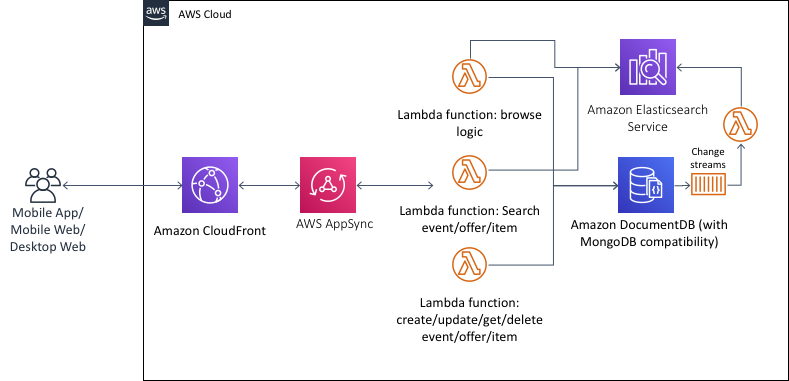
Woot! is the original daily deals site, founded in 2004 and snatched up by Amazon in 2010. Originally, Woot offered just one product per day until it sold out. Today, Woot offers special daily deals and other limited-time offers across seven categories. At Woot, my team is responsible for the Retail Catalog service, which provides […]

Understanding autovacuum in Amazon RDS for PostgreSQL environments
August 2025: This post was reviewed and updated for accuracy. PostgreSQL has become the preferred open-source relational database for many enterprise developers and startups, and powers leading business and mobile applications. Amazon Web Services (AWS) offers Amazon Relational Database Service (Amazon RDS) and Amazon Aurora as fully managed relational database services. Amazon RDS for PostgreSQL […]

Building and querying the AWS COVID-19 knowledge graph
This blog post details how to recreate the AWS COVID-19 knowledge graph (CKG) using AWS CloudFormation and Amazon Neptune, and query the graph using Jupyter notebooks hosted on Amazon SageMaker in your AWS account. The CKG aids in the exploration and analysis of the COVID-19 Open Research Dataset (CORD-19), hosted in the AWS COVID-19 data […]

Improving application availability with Amazon RDS Proxy
One of the benefits of Amazon RDS Proxy is that it can improve application recovery time after database failovers. While RDS Proxy supports both MySQL as well as PostgreSQL engines, in this post, we will use a MySQL test workload to demonstrate how RDS Proxy reduces client recovery time after failover by up to 79% […]

Optimizing for cost with Amazon DocumentDB (with MongoDB compatibility)
This blog post was last reviewed and updated February, 2022. Amazon DocumentDB (with MongoDB compatibility) is a fast, scalable, highly available, and fully managed document database service that supports MongoDB workloads. You can use the same MongoDB 3.6, 4.0 or 5.0 application code, drivers, and tools to run, manage, and scale workloads on Amazon DocumentDB […]

Moving to the cloud: Migrating Blazegraph to Amazon Neptune
During the lifespan of a graph database application, the applications themselves tend to only have basic requirements, namely a functioning W3C standard SPARQL endpoint. However, as graph databases become embedded in critical business applications, both businesses and operations require much more. Critical business infrastructure is required not only to function, but also to be highly […]

Introducing the Amazon Database Migration Accelerator
Today, we announce the launch of Amazon Database Migration Accelerator (DMA). Amazon DMA brings together AWS Database Migration Service (DMS), AWS Schema Conversion Tool (SCT), and AWS database migration experts to help customers migrate away from traditional commercial databases at fixed prices. At launch, we offer Amazon DMA to customers migrating from Oracle and SQL […]

Change data capture from Neo4j to Amazon Neptune using Amazon Managed Streaming for Apache Kafka
After you perform a point-in-time data migration from Neo4j to Amazon Neptune, you may want to capture and replicate ongoing updates in real time. For more information about automating point-in-time graph data migration from Neo4j to Neptune, see Migrating a Neo4j graph database to Amazon Neptune with a fully automated utility. This post walks you […]

Building globally distributed MySQL applications using write forwarding in Amazon Aurora Global Database
AWS released Amazon Aurora Global Database in 2018. Aurora Global Database enables two primary use cases. The first use case is supporting a disaster recovery solution that can handle a full regional failure with a low recovery point objective (RPO) and a low recovery time objective (RTO), while minimizing performance impact to the database cluster […]

How Waves runs user queries and recommendations at scale with Amazon Neptune
This is a guest post by Pavel Vasilyev, Director of Solutions Architecture at ClearScale, an APN Premier Consulting Partner that provides a full range of cloud professional services. When executive management from Waves, a Y Combinator-backed mobile dating app, realized they were outgrowing their existing IT architecture on Google Cloud, they knew it was time […]