Desktop and Application Streaming
Cross-Region Amazon WorkSpaces Migration at Scale – How Wolters Kluwer Migrated 3,000 Desktops Without Disruption
A customer case study on migrating Amazon WorkSpaces from Asia Pacific (Singapore) to Asia Pacific (Mumbai)
Introduction
When organizations first adopt Amazon WorkSpaces, they provision virtual desktops in the nearest available AWS Region. Over time, user demographics shift and AWS expands its regional footprint. Eventually, teams migrate their entire WorkSpaces fleet to a closer Region to improve user experience.
This post shares how Wolters Kluwer (WK) executed a blue-green migration strategy to move approximately 3,000 WorkSpaces from Asia Pacific (Singapore) to Asia Pacific (Mumbai) with automated provisioning and phased rollout. The migration reduced end-user latency by 82% and improved real-time collaboration on Microsoft Teams — all without disrupting a single workday.
WK is a global leader in professional information and software solutions for healthcare, tax and accounting, governance, risk and compliance, and legal sectors. The company operates in over 180 countries with approximately 21,100 employees and €6.1 billion in annual revenues. WK delivers expert solutions that combine deep domain knowledge with technology.
Background: Why WK needed to migrate
Wolters Kluwer deployed Amazon WorkSpaces in the Asia Pacific (Singapore) region in 2019 to serve their predominantly India-based workforce. Singapore was the nearest available WorkSpaces Region to their user base at the time and served the organization for several years. As the workforce grew to approximately 3,000 knowledge workers, real-time collaboration tools became central to daily operations. Users experienced performance challenges driven by geographic distance:
- Microsoft Teams calls with audio and video synchronization issues
- Noticeably laggy screen sharing during collaborative meetings
- Sluggish general application responsiveness
- Users developing adjusted behaviors (disabling video, avoiding screen share) that reduced collaboration quality
The root cause was network latency. Routing streaming traffic from India through Singapore introduced round-trip delays that, while tolerable for asynchronous work, created noticeable degradation for real-time collaboration.
The Catalyst: Microsoft Teams Optimization + Regional Proximity
WorkSpaces has been available in the Asia Pacific (Mumbai) Region since 2021. The Region offers geographic proximity to Wolters Kluwer’s India-based workforce. While the team recognized Mumbai’s latency advantages, the effort of migrating 3,000 WorkSpaces needed a strong catalyst. That catalyst arrived in early 2026:
- Microsoft Teams Optimization for Amazon WorkSpaces reached general availability (February 2026) — This feature offloads media processing to the local client device rather than processing within the virtual desktop. Combined with the reduced latency of the Mumbai Region, Teams calls would become dramatically more natural and responsive. This was the tipping point that made the business case undeniable.
- The proximity advantage of Mumbai region became actionable — With Teams Optimization handling media processing locally, the remaining performance bottleneck was network latency. Mumbai region’s geographic proximity to the India-based workforce meant that relocating WorkSpaces there would eliminate the round-trip delays causing collaboration issues.
Before committing to a full migration, Wolters Kluwer provisioned a small set of WorkSpaces in Mumbai. The team used Liquidware’s Stratusphere UX to capture objective performance benchmarks.
Original Architecture: Amazon WorkSpaces in Asia Pacific (Singapore)
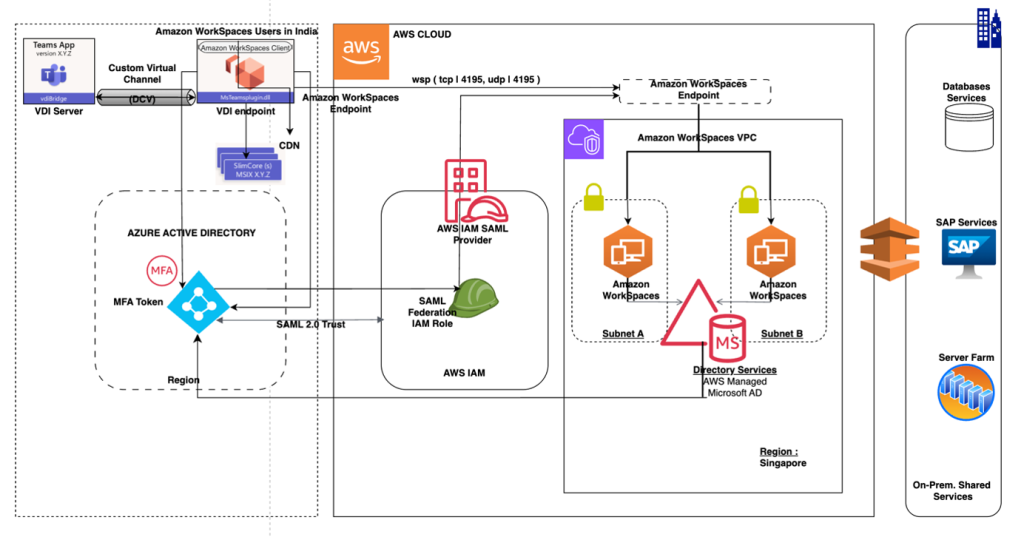
Figure 1: Original Architecture of Amazon WorkSpaces in Asia Pacific (Singapore) Region
WorkSpaces uses a region-based architecture where each Region maintains its own directory services, custom bundles, and user data. This design is intentional — it provides strong security isolation, data residency controls, and operational independence. However, it means that a cross-Region migration is a reprovisioning exercise rather than a simple relocation. This gave the WK team an opportunity to design a thoughtful, automated approach.
Each WorkSpace represents a complete working environment: installed applications, user configurations, saved files, browser bookmarks, and desktop customizations. Asking 3,000 users to reconfigure their environments manually was not an option. The team saw reprovisioning as an opportunity to deliver a fully automated, low-touch deployment.
New Architecture: Amazon WorkSpaces in Asia Pacific (Mumbai)
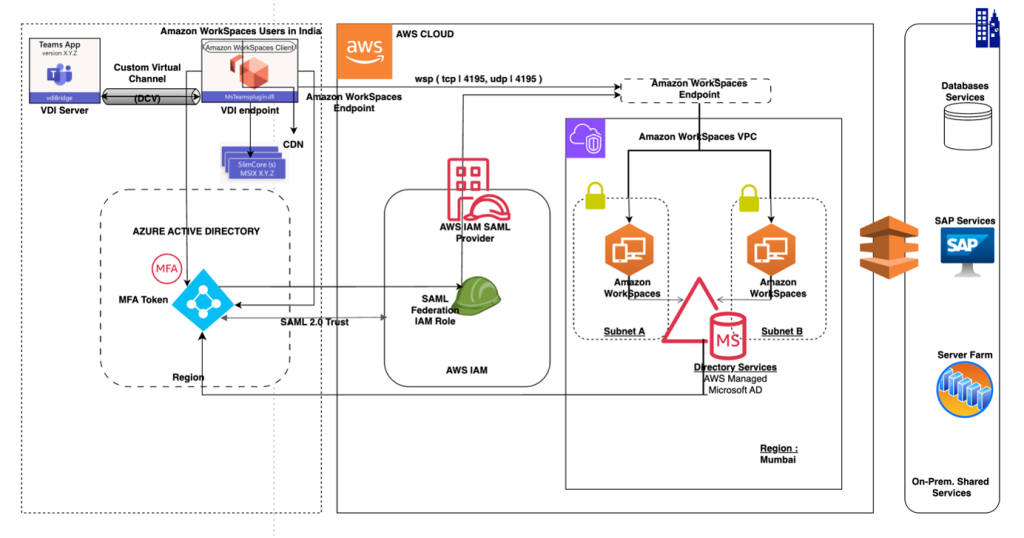
Figure 2: New Architecture of Amazon WorkSpaces in Asia Pacific (Mumbai) Region
In the new architecture, the Region moved to Mumbai — placing WorkSpaces closer to users with local data residency. How users access their desktops remained unchanged. Round-trip latency dropped from ~270 ms to ~49 ms, delivering immediate performance gains across all collaboration and productivity workloads.
Solution: Design Considerations for Low-Touch Migration
Wolters Kluwer designed the migration as a low-touch deployment. The guiding objective: a user logs off from their Singapore WorkSpace on Friday evening and logs into a fully configured Mumbai WorkSpace on Monday morning. Applications install from standardized package templates. Files are accessible via OneDrive, with only minimal application-level configuration required. The following design considerations shaped the approach:
- Comprehensive application inventory — The team used SCCM/MEM (Microsoft Endpoint Manager), the organization’s global standard for endpoint management. They generated a complete inventory of installed applications, mapped dependencies, and documented user-specific configurations for each WorkSpace. This inventory served as the blueprint for each new environment.
- Golden image with bundled OS upgrade — The team combined the Region migration with a Windows 11 25H2 upgrade into a single golden image. This avoided two separate disruptive events and delivered performance improvements and OS modernization simultaneously.
- Automated application deployment via SCCM/MAM and Liquidware FlexApp — SCCM/MAM automatically queued and installed standard applications based on the source inventory. For complex application layering, Liquidware FlexApp delivered specialized software as virtual disks that attach seamlessly to the WorkSpace.
- User data migration — Most WorkSpaces users stored files in Microsoft OneDrive. Their files synchronized automatically to the new Mumbai WorkSpaces without additional migration effort. For users with large local (D: drive) storage, the team kept the original Singapore WorkSpace accessible for two weeks. Users copied data at their own pace via OneDrive sync or network drive mapping.
- Blue-green parallel running for rollback safety — Both Singapore and Mumbai WorkSpaces ran simultaneously during each wave. This provided users time to validate and ensured rollback capability if issues arose.
Execution: Blue-Green Deployment in Waves
Rather than a single all-at-once migration, Wolters Kluwer adopted a parallel deployment strategy executed in carefully planned waves:
- Pilot wave: A small group of power users including a director-level stakeholder who volunteered to test first. This validated the process end-to-end and created internal advocates.
- Parallel running: Both Singapore and Mumbai WorkSpaces ran simultaneously for 1–2 weeks per wave, giving users time to verify functionality and report missing configurations.
- Staged waves: Subsequent waves were sized for efficiency. Only after user confirmation did the team decommission the original Singapore WorkSpace.
- Organic advocacy: When pilot users experienced dramatically improved performance, word spread organically. The pilot director requested their entire team be migrated within the following week.
Results
The migration delivered measurable improvements across every metric tracked:
- Latency reduction: Round-trip times dropped from ~270 ms (Singapore) to ~49 ms (Mumbai) — an 82% reduction that transformed real-time collaboration from frustrating to seamless.
- Teams’ collaboration restored: Video calls became natural, screen sharing was responsive, and audio-video synchronization issues disappeared entirely. Users who had adopted adjusted behaviors — disabling video, avoiding screen share — returned to full collaborative workflows, improving overall team productivity.
- 40% reduction in performance-related service desk calls: Fewer recurring performance tickets and engineering escalations enabled the team to shift focus to proactive platform improvements. Support teams gained higher confidence in first-contact resolution, no longer treating latency as a recurring root cause.
- Lower change-management friction: The low-touch migration approach minimized user setup effort, reduced post-cutover support needs, and strengthened business confidence in future large-scale VDI changes.
- Organic demand: The pilot director’s immediate request to migrate their entire team was the strongest signal of success. Word spread organically, and subsequent waves saw users eager to transition.
Key Takeaways
- Measure before you migrate. Provision a small set of WorkSpaces in the target Region and run objective benchmarks. Data builds the business case and creates confidence.
- Automate everything. At scale, expecting users to self-service creates unacceptable support burden. Invest in automation for inventory, application deployment, and data migration upfront.
- Plan for parallel environments. Running both regions simultaneously provides rollback safety and builds user confidence. Plan the overlap period into your project timeline to ensure a smooth, risk-free transition.
- Bundle improvements. Combining Region migration with a Windows 11 upgrade reduced total disruptive events from two to one. Look for opportunities to combine migrations.
- Let success sell itself. Start with enthusiastic power users who create organic advocacy. When peers see colleagues thriving, resistance to change transforms into eagerness.
Conclusion
Migrating a large Amazon WorkSpaces fleet across AWS Regions requires careful planning, robust automation, and a focus on user experience. The region-based architecture provides strong security and data residency benefits. It supports phased, orchestrated migrations well. The resulting improvements in performance, collaboration, and user satisfaction make the investment worthwhile.
Wolters Kluwer treated this migration as a product experience, not an infrastructure project. This approach turned a major change into a trust-building moment between IT and the business. The playbook — measure, automate, deploy in waves, let users validate — is repeatable for any organization facing a similar cross-Region WorkSpaces migration.
Related AWS Resources
- Amazon WorkSpaces
- Amazon WorkSpaces documentation
- AWS Regions and Availability Zones
- Microsoft Teams Optimization for Amazon WorkSpaces — GA Announcement
Ready to optimize your WorkSpaces deployment? Consider a cross-region migration to improve virtual desktop performance. Contact your AWS account team or visit the Amazon WorkSpaces product page to get started.
About the authors
 Krishna Pramod is a Senior Solutions Architect at AWS. He works as a trusted advisor for customers, guiding them through innovation with modern technologies and development of well-architected applications in the AWS cloud. Outside of work, Krishna enjoys reading, music and exploring new destinations.
 Yagya Vir Singh is a Senior Technical Account Manager at AWS based in Nashville, Tennessee. He is passionate about monitoring and observability, cloud governance, cloud financial management, and generative AI. Yagya collaborates with enterprise customers to design and architect cloud workloads for scale and resilience.
 Igor Model is a Manager, IT in Remote Workplace Technology at Wolters Kluwer, where he leads virtual desktop infrastructure for the organization’s global workforce.
 Ashish Prakash is a Senior Technical cloud architect at Wolters Kluwer. He is based in India. He is passionate about EUC, Data Engineering, cloud monitoring and generative AI. Ashish collaborates with different teams in the organization to design and deploy cloud workloads for scale and resilience.
 Ashutosh N B is a Cloud Engineer at Wolters Kluwer based in Pune, India. He is passionate about serverless technologies, cloud-based virtual desktops, and artificial intelligence. Ashuthosh collaborates across teams to architect and engineer scalable cloud and virtual desktop solutions. He is also actively involved in enabling AI solutions and helping teams identify and implement AI use cases to improve productivity and drive innovation.