AWS for Industries
Agentic AI on Connect Health: An end-to-end telehealth visit
How one platform reshapes patient experience and health system operations
Healthcare organizations are being asked to widen access, protect increasingly thin margins, and keep clinicians from burning out. Telehealth is one of the most effective levers on all three, and it’s no longer a pandemic stopgap: 71.4 percent of physicians now use it weekly, nearly triple the pre-pandemic rate, and 72 percent of hospitals offer at least one telemedicine service (AMA, 2024). Adoption varies widely by specialty, from 68 percent of psychiatrists conducting more than a fifth of visits virtually to under 5 percent for surgical specialties, and behavioral health accounts for roughly two-thirds of telehealth claims nationally (FAIR Health, 2024), with primary care and chronic disease management as the next growth frontier. But telehealth’s promise is undercut by a growing burden: documentation is now the leading driver of clinician burnout, and that’s where agentic AI demonstrates its value.
These capabilities are usually acquired one product at a time, requiring most health systems to assemble the experience from separate vendors for scheduling, ambient scribing, and coding. Each arrives with its own sign-in, its own data store, and its own integration bill. The result is a patchwork that adds cost and complexity faster than it adds value. There’s a less complicated path: a modern agentic telehealth experience can run end to end on one platform that supports the administrative, operational, and clinical documentation workflow from first patient contact to final claim submission, with clinician review at each step. It’s built on Amazon Connect Health.
The telehealth journey, reimagined
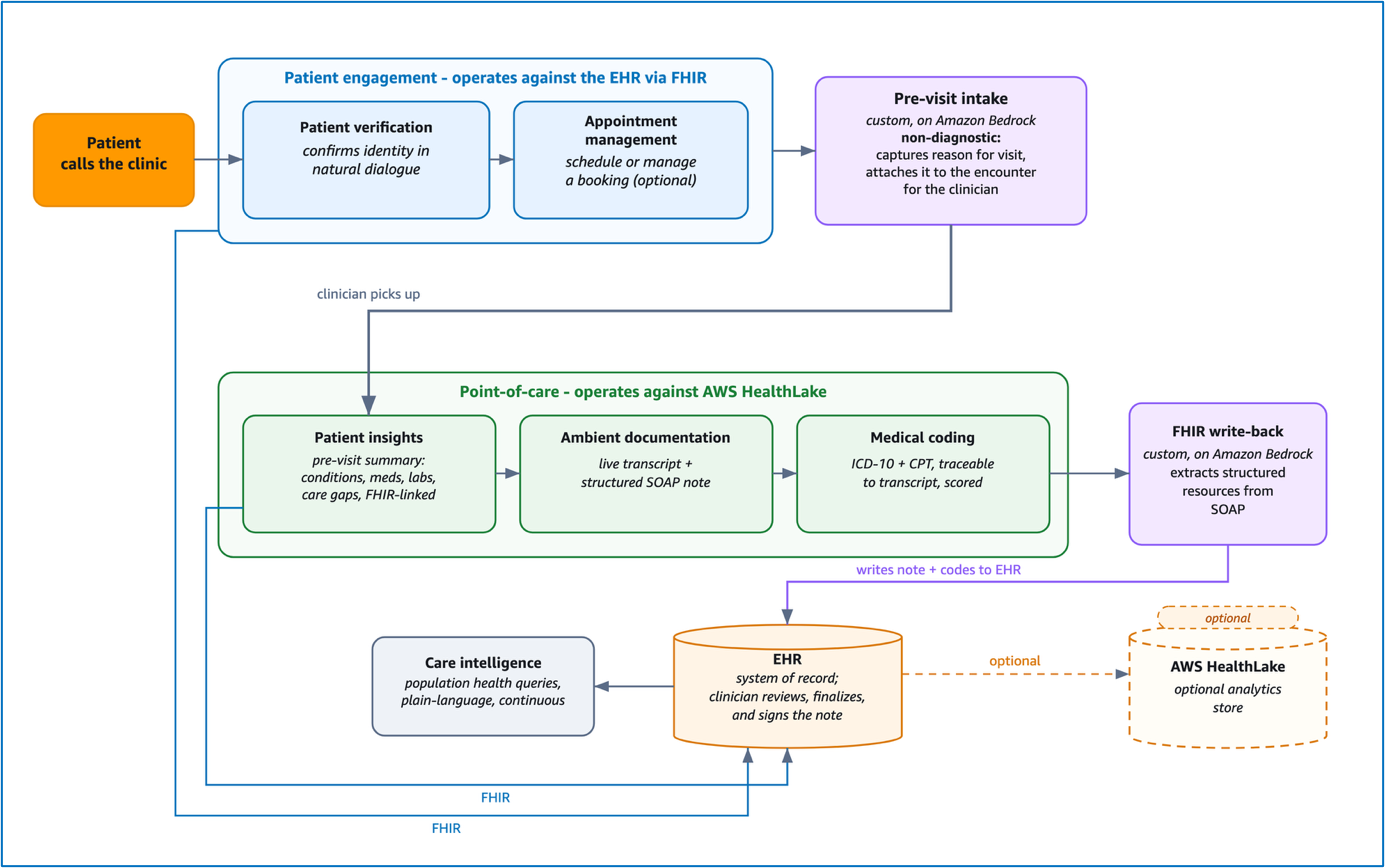
Figure 1: Image of the solution workflow, which is described in the text.
Amazon Connect Health provides five configurable capabilities across two domains within the same Amazon Connect instance. Patient engagement agents (verification, appointment management) operate against the electronic health record (EHR) through Fast Healthcare Interoperability Resources (FHIR) interfaces. Point-of-care agents (patient insights, ambient documentation, and medical coding) optionally use AWS HealthLake, a Health Insurance Portability and Accountability Act (HIPAA)-eligible service that stores, transforms, and queries health data gathering or persisting context-rich data, to keep intensive analytical queries off the primary EHR.
- A patient calls the clinic. The Patient Verification Agent confirms identity through natural conversational dialogue, executing a live query against the EHR. The Appointment Management Agent queries the provider schedule and writes a confirmed booking. By the time the appointment reaches the calendar, the health system already knows that basic verification to schedule the appointment has been addressed. This initial interaction might only be to schedule or manage the appointment. During the televisit itself, a returning patient with an existing appointment can move directly from verification into the televisit session, bypassing the Appointment Management Agent.
- Between the confirmed appointment and the visit itself, a Pre-visit Intake Agent speaks with the patient in the same conversational flow. It confirms the reason for the visit and documents anything the patient says they want their clinician to see. It doesn’t assess symptoms clinically, give advice, or make a care decision. By the time the patient reaches a clinician, a short summary of why the patient called is already attached to the encounter, so the clinician opens the chart already knowing the patient’s stated reason for the visit. We built this as a custom agent on the platform, showing how a health system can extend the experience with agents of its own.
- By the time the clinician joins the call or the patient is waiting in the virtual waiting room, the Patient Insights Agent has already assembled a concise summary for the clinician that’s grounded in the patient’s longitudinal record in HealthLake: conditions on file, current medications, recent lab results, and potential care gaps for clinician review, with every statement linked to its source FHIR resource.
- During the conversation, the Ambient Documentation Agent captures the call audio and generates a real-time transcript and drafts a structured note in subjective, objective, assessment, and plan (SOAP) or other formats for the physician to review, customizable to each physician’s preference. The physician stays focused on the patient, not the keyboard.
- At the end of the visit, a custom agent on Amazon Bedrock then converts the note into structured FHIR resources and stages them for clinician review and approval before writing to HealthLake. The documentation loop from encounter to structured record closes before the next call starts. The Medical Coding Agent suggests International Classification of Diseases, 10th Revision (ICD-10) diagnosis codes and Current Procedural Terminology (CPT) procedure codes for coder review, each linked to the supporting phrase in the note, along with confidence scores.
- At every step, the healthcare provider remains the decision maker: each agent surfaces its output with source citations for human review before it touches the patient record.
One service, not a stack of point solutions
Running the entire experience on Amazon Connect Health removes the seams between separate vendors. Verification, patient insights, ambient documentation, and medical coding share the same domain model, the same access controls, and the same audit trail. The data each encounter produces is written once to a FHIR data store (HealthLake, or the customer’s own FHIR-capable EHR) and is immediately available to every other part of the business without the need for complex and time consuming exports, or a separate copy of the record.
Because every encounter writes structured data to HealthLake at write time, an operations or analytics team can query the patient population in plain language the same afternoon—either against HealthLake, or the customer’s FHIR-enabled EHR where HealthLake isn’t used. For a healthcare leader, this changes the underlying economics: fewer vendors mean lower total cost of ownership, one service means faster time to value, and a single data foundation means the organization can continue building on it rather than starting over each time a new need arises. The visit summary and the clinician’s note can be written back to EHR through an orchestration layer or a third-party EHR integration connector, avoiding the need for a custom, one-off integration for each EHR. This enables the clinician to sign and document the note in their EHR.
Teams already using a video or telephony platform might ask what this adds. Video handles the conversation—one step in a journey that also spans identity verification, appointment management, pre-visit intake, pre-visit summaries, ambient documentation, medical coding, and structured write-back to EHR. Bolting those onto a video tool means stitching together separate vendors, the exact multi-integration patchwork this avoids. Amazon Connect Health serves as the orchestration layer for the entire encounter, not only the call, so the data each step produces flows forward without a seam. Because the experience runs on Amazon Connect Health, it also fits existing Epic workflows: through Epic’s Toolbox, staff can place and receive patient calls from within Epic itself, without switching to a separate softphone or console.
The business edge
Ambient AI reduces documentation time by 20–40 percent. In a KLAS-referenced study across three large health systems (over 500 beds each), documentation time fell 21 percent, after-hours note completion fell 65 percent, and providers reported roughly $2,600 per month in additional revenue. Pre-visit summaries also support more thorough documentation and coding.
Try it yourself
A sample implementation of this workflow, including the custom Pre-visit Intake Agent that shows how to extend the platform, is published on GitHub. To run the full experience, note that Patient Verification and Appointment Management require EHR integration, and some capabilities such as Medical Coding require account enablement. Availability of individual agents evolves over time; contact your AWS account team for current status and access.