AWS for Industries
AWS empowers energy companies to accelerate sustainable biofuel supply chains
Cloud technology enables sustainable energy pioneers to accelerate their transition to sustainable fuels, while maintaining operational excellence and their competitive advantage in an evolving energy landscape.
We will explore how energy companies are leveraging Amazon Web Services (AWS) to revolutionize their supply chain for sustainable fuel and in particular hydrotreated vegetable oil (HVO).
Energy companies can achieve dual critical objectives:
- Compliance with industry certifications and regulations such as REDCert, Roundtable on Sustainable Biomaterials (RBS), International Sustainability and Carbon Certification (ISCC) and California Low Carbon Fuel Standard (LCFS).
- Optimization across their renewable fuel supply chain.
This can be achieved by implementing a comprehensive range of technologies from AWS including:
- Geospatial artificial intelligence and machine learning (AI/ML) capabilities.
- Internet of things (IoT) solutions.
- Advanced data governance.
- Data analytics.
Introduction to biofuel
Biofuel is a fuel that is produced from biomass such as plants and biodegradable waste from agriculture, households or industry. In general, biofuels combustion produces fewer greenhouse gas (GHG) emissions with respect to fossil fuels. Biofuel includes HVO, a second-generation biofuel produced from biomass including renewable waste materials. HVO is particularly valuable for its functional similarity to fossil diesel, allowing for direct replacement in various applications without infrastructure modifications.
Compared to conventional diesel, HVO offers significant environmental benefits (decarbonization):
- 2%–25% reduction in NOx emissions.
- 50%–80% reduction in particulate matter emissions.
- 60%–95% reduction in GHG emissions across the entire value chain.
Despite its numerous advantages, biofuel production sets some challenges throughout the supply chain.
Biofuel supply chain
It is possible to simplify the biofuel supply chain in few key stages. Farmers grow crops and ship them to aggregators. Aggregators in turn supply pre-treatment facilities with feedstock. Intermediate product from pre-treatment plants, such as vegetable oil in the case of HVO, is stocked and shipped to biofuel refineries. Biorefineries produce biofuel, ready to be distributed to fueling stations.

Figure 1: Simplified biofuel production process overview
It is important to note that some biofuels do not rely, fully or in part, from conventional agriculture. For instance, HVO’s source feedstock also includes waste oils and animal fats that are handled by specialized collectors and processors.
While it is rare that energy companies own the complete supply chain, they need to ensure visibility and tracking trough it for regulatory compliance and efficiency.
Challenges
Let’s now discuss the key challenges impacting the biofuel supply chain and HVO in particular. These challenges need to be addressed to improve sustainable fuels business efficiency.
Manual land assessment
Certification schemas and regulations set constraints on the types of lands that can be used to produce feedstock for biofuels. These are often in developing countries, owned by smallholders in remote regions lacking datasets. Manual assessment is expensive, time-consuming, and unscalable, requiring agronomists for soil sampling, lab analysis, and acquiring documentation from local authorities (when available).
Track and trace based on paper and disjointed data systems
Certification schemas and regulations require tracking products through processing. Manual processes and disjointed systems can create visibility gaps, errors, counterfeiting, and violations. Tracking uncontrolled portions of the supply chain may require tracing feedstock to field level and farmer data collection.
Data locked in silos
Energy companies need to access industrial sites operational data remotely to maximize production, ensure quality, and improve performance. However, data can be trapped in siloed, at-the-edge systems, such as historian and industrial equipment.
Inefficient supply chain
Supply chain challenges include lack of visibility and insufficient integration. Energy companies need complete tracking despite not owning the full chain. Also, feedstock and intermediate products are subject to degradation, requiring to monitor quality through the process along with delivery times and delay-causing events.
AWS architecture
The architecture guidance provides the required capabilities to address challenges mentioned in the prior section.
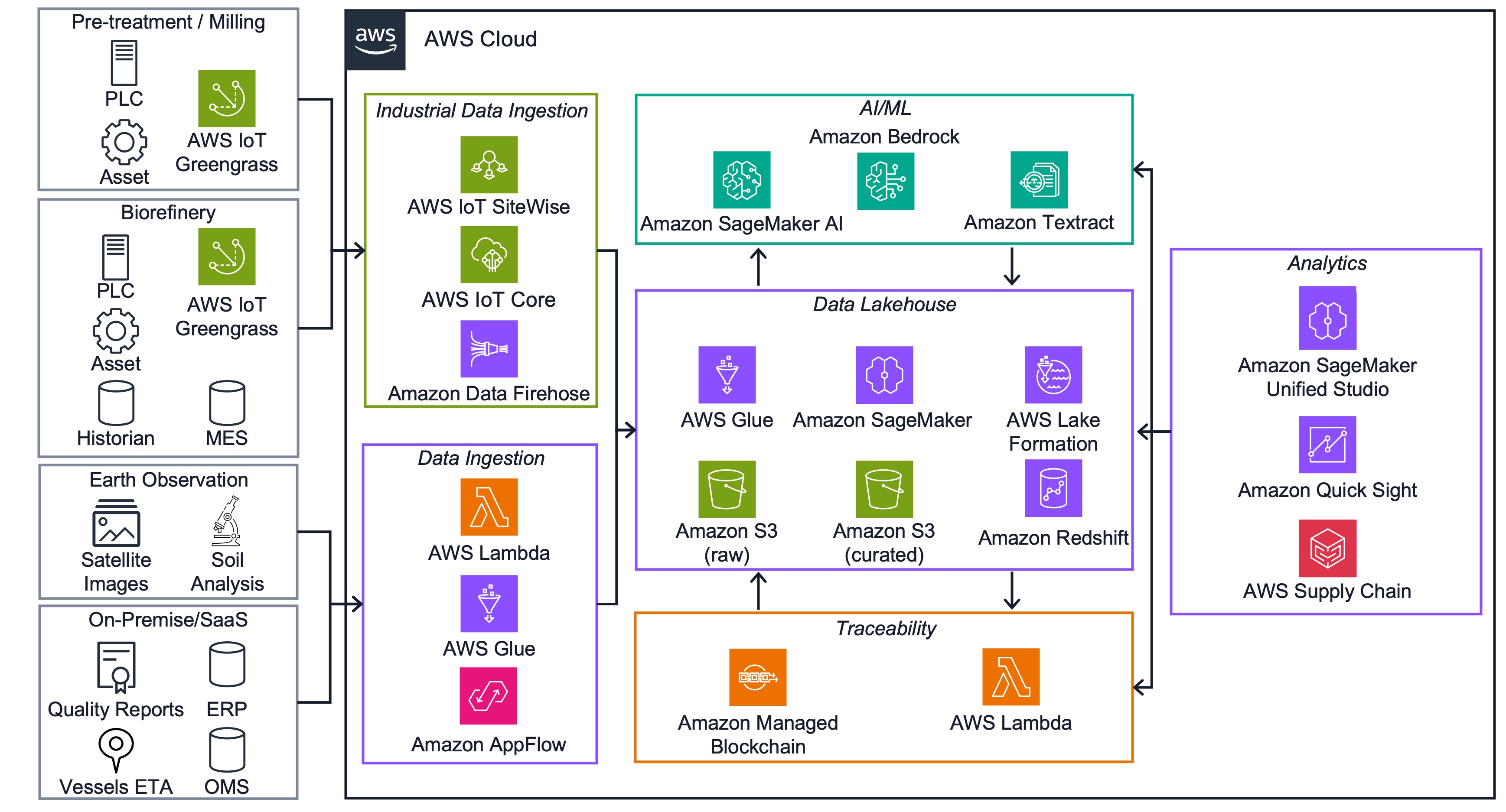
Figure 2: High-level architecture guidance
Following is an overview of key AWS services and technologies of the architecture.
Amazon SageMaker AI: Enables building, training, and deploying custom AI/ML models that use geospatial data and satellite images. Geospatial AI/ML drive scalability of land assessment activities through automation.
AI/ML models can be used for some key use cases such as:
- Abandoned land detection.
- Low sodium, carbon, and erosion land detection.
- Polygon detection.
- Crop and Intercropping detection.
- Crop classification.
- Vegetation indexes.
One of the criteria for detecting abandoned land is analysis of vegetation using satellite images (for example, NDVI and SIPI indexes). Severely eroded lands can be detected using many open models such as RUSLE, SIMWE and USPED.
In addition to that, Amazon Textract can be used to extract information from reports (feedstock quality and soil analysis), Amazon Bedrock provides large language model (LLM) access and agentic workflows to assist knowledge workers.
AWS IoT SiteWise: Delivers a unified repository of live and historical operational data from pre-treatment facility and biorefinery equipment, machines, and legacy systems. It collects, organizes, and analyzes at scale industrial data. It provides insights that can be implemented for production optimization and predictive quality, in addition to industrial asset condition monitoring and predictive maintenance. AWS IoT SiteWise, along with AWS IoT Core and AWS IoT Greengrass, are the foundation for populating the data repository with industrial data.
Amazon Managed Blockchain: Supports traceability by providing an immutable, decentralized ledger for recording every step of a product’s journey. It offers features such as smart contracts for automating processes, near real-time tracking, and integration with IoT devices and other AWS services. It confirms data security, scalability, and interoperability, while supporting multiple participants in the supply chain network.
By leveraging these technologies, companies can create a transparent and efficient system for tracking products from feedstock to biofuel—verifying compliance to certification requirements.
Data Lakehouse: The heart of the architecture is a data lakehouse that is a centralized repository that stores all structured and unstructured data at scale.
The core components are:
- Amazon SageMaker for unifying data access with lakehouse architecture.
- AWS Lake Formation for data governance.
- AWS Glue for data engineering.
- Amazon Simple Storage Service (Amazon S3) for data storage.
- Amazon Redshift for structured data storage and analytics.
The data lakehouse manages:
- Industrial data from AWS IoT SiteWise.
- Earth observation data (such as GeoJSON/GeoParquet produced by geospatial ML and soil samples analysis).
- Feedstock quality analysis.
- Enterprise applications data such as enterprise resource planning (ERP).
The data lakehouse provides a single source to run analytics across data—facilitating further analytic insights from interconnected data.
Amazon SageMaker Unified Studio: Provides a single development environment to build with all data, and tools for analytics and AI. It provides unified access to all your data, offering a way to securely discover, govern, and collaborate on data and AI. It enables collaboration for building faster while using familiar AWS tools for model development in Amazon SageMaker AI. Development of processing job, SQL analytics and AI/ML is accelerated by Amazon Q Developer, a generative AI assistant for software development.
AWS Supply Chain: Provides complete visibility, reduces noise and coordinates actions by connecting data across systems, and harmonizing it into a unified view. AWS Supply Chain also provides AI-powered insights and risk alerts with recommendations to mitigate issues.
Benefits
Following are the many benefits energy companies can obtain by adopting AWS to accelerate their investments in sustainable fuels.
Land assessment: From months to weeks
Usually, companies approach land evaluation on a country basis (mainly for regulations and policy reasons) identifying potential areas of interest consisting of hundreds of thousands of hectares. Leveraging geospatial AI/ML can reduce the time required for an initial assessment—quickly and accurately narrowing down the potential area of interest.
Land assessment: Cost reduction
By leveraging geospatial AI/ML to assess degraded lands, companies can accurately select areas that are candidates to join the production chain. This would reduce the number of soil sample analyses (required to assess soil properties) from many thousand to a few hundred for each region resulting in cost savings. Companies can also utilize field expert agronomists more selectively, thus further reducing costs.
Compliance: From months to days
With the support of computer vision and geospatial AI/ML companies can automate the computation of sustainability KPIs. These indicators are needed to assess regulation compliance and produce reports that can be directly consumed by auditors. In addition to reducing the time required for compliance, using AI/ML can increase accuracy and reduce uncertainty.
Production: Optimization
By leveraging AI/ML models, energy companies can optimize industrial processes to maximize the production of both intermediate products and biofuels.
Traceability reporting: From months to days
Transition from time-consuming and less accurate tracking mechanisms (such as the mass-balance approach) to self-auditing. With self-auditing energy companies can demonstrate regulatory compliance, maintain transparency for transaction logs, detect potential issues and confirm optimal operations with minimal effort.
Conclusion
Energy companies involved in sustainable fuel production should evaluate their current supply chain processes and identify optimization opportunities. By leveraging AWS services companies can build digital platforms that can integrate data across systems, enabling real-time decision-making and regulatory compliance.
Whether energy companies manage the complete supply chain or just a subset of it, they can utilize AWS Cloud technology to advance sustainable energy production by transforming their sustainable fuel supply chain.
Contact an AWS Representative for more information about how we can help accelerate your business.
Further reading
- Map Earth’s vegetation in under 20 minutes with Amazon SageMaker
- Revolutionizing earth observation with geospatial foundation models on AWS
- Mitigating operational risks with AWS Supply Chain Work Order Insights
- bpx energy Transforms Production Operations Through AWS Energy Industry Solutions
- Harnessing the power of plants to decarbonise our data centres