AWS for Industries
Category: Automotive

Digital supply management using advanced analytics and serverless architecture on AWS
The BMW Group is headquartered in Munich, Germany, where the company oversees 149,000 employees worldwide and manufactures cars and motorcycles in over 30 production sites across 15 countries. This multinational production strategy follows an even more international and extensive supplier network. Supply chain volatility has significantly increased in the past years: first, driven by the semiconductor crisis, and subsequently by disruptions that affect […]

Simulating Automotive E/E Architectures in AWS Part 2: Solution in Action
This is the second blog post in our 2-part series that provides guidance on how to simulate automotive Electrical/Electronic (E/E) architectures in AWS. In part 1, we discussed the trends in automotive E/E architectures and the general concepts and challenges facing automakers around simulation of Electronic Control Unit (ECU) software utilizing the cloud. In this […]
Simulating Automotive E/E Architectures in AWS – Part 1: Accelerating the V-Model
Over the last 15 years, the complexity of automotive Electrical/Electronic (E/E) architectures which include Electronic Control Units (ECUs), related sensors, actuators, and wiring inside vehicles has grown. Rather than continuing to add new hardware components to E/E architectures, automakers are shifting towards consolidating smaller, fixed-function ECUs into a larger High Performance Computer (HPC) while retaining […]
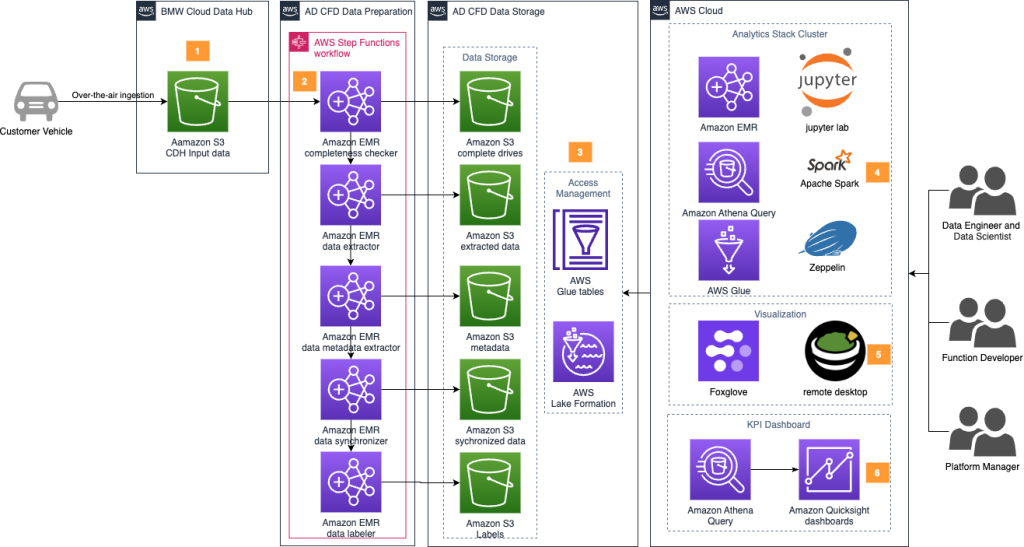
Scaling Automated Driving data processing and data management with BMW Group on AWS
Autonomous driving (AD) and highly automated driving are key technologies in the automotive industry. Fully realized, they have the potential to fundamentally transform the automotive and mobility industries through improved comfort and safety and new business models for automobile manufacturers. The BMW Group is one of the leading OEMs in the automotive industry. This year, […]

Develop and test automotive software at scale using AWS
The traditional hardware-centric approach of developing and testing automotive software using Hardware-in-the-loop (HiL), is slow and limited in scale. The physical Electronic Control Units (ECUs) are not readily available during the software development phase, thus limiting the development team’s ability to scale. Consumer demand and expectations highlight the need for vehicles to be more connected, […]

Learning From the IBM PC: How an open hardware platform for automotive applications can help transform the industry
Drawing a parallel to the story of the IBM PC, this blog post shows how the introduction of an open hardware platform for automotive applications might create a similar environment driving innovation, disruption, and transformation for the automotive industry. This blog post also discusses the potential advantages for the first automotive company to release such […]
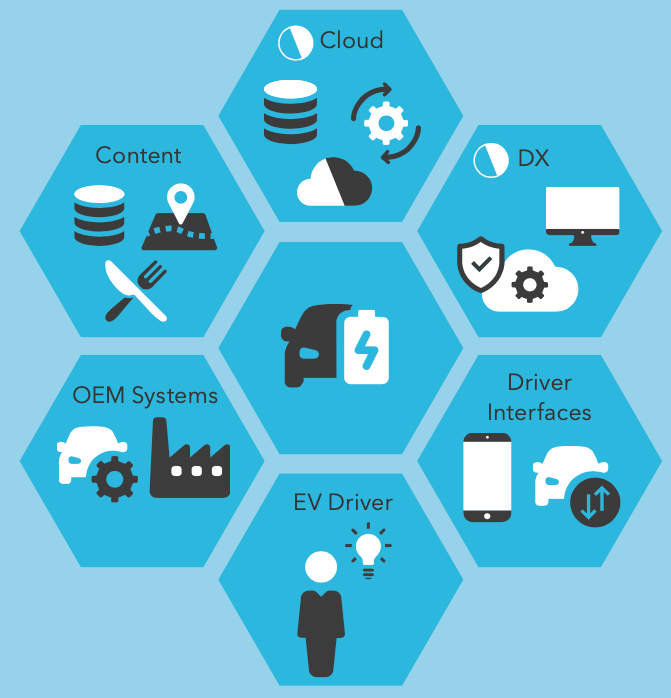
Smart EV Routing for optimized EV travel by WirelessCar on AWS
WirelessCar has over twenty years of experience in developing, delivering, and operating secure digital solutions and products for connected cars. WirelessCar offers Smart EV Routing which is a SaaS API product designed for any automaker who wants to offer their electric vehicle (EV) customers a state-of-the-art route planner. Accurate and reliable EV route planning addresses […]

BlackBerry QNX on AWS workshop is released! – Get started with QNX OS deployment and development on AWS in two hours.
We are pleased to announce the release of the BlackBerry QNX on AWS workshop to help AWS customers easily get started with embedded software development on AWS Cloud. This workshop provides a hands-on lab experience to help AWS customers quickly grasp embedded software development with QNX® OS on AWS. In January 2023, BlackBerry Limited announced […]

Working backwards to design a new user experience for Virtual Engineering Workbenches on AWS
Introduction This blog post walks you through the synergies between the Amazon Working Backwards mechanism and User Experience (UX) design that we used to accelerate the adoption of Software developers, Software integrators and Software testers using the Virtual Engineering Workbench (VEW) through improving their onboarding experience. VEW is a cloud-based development environment allowing its users […]

Improving Reliability and Performance for Teleoperations for Autonomous Driving Vehicles on AWS
The rapid advancement of autonomous driving technology is transforming the automotive industry, leading to improved safety, efficiency, and convenience. As self-driving vehicles evolve, automakers must address several challenges to ensure their widespread adoption. Among these challenges, reliable, secure, and low-latency communication between vehicles and teleoperation centers is critical for real-time responsiveness and decision-making in complex […]