AWS for Industries
Enhancing Bank Performance with AI-Powered Competitive Intelligence on AWS
The U.S. banking industry is entering one of its most transformative periods. Rapid shifts in interest rates are reshaping margins, commercial real estate (CRE) exposures demand sharper insights, and regulators are raising the bar for speed and transparency. For banking leaders, these dynamics represent not just challenges to navigate, but opportunities to differentiate. In this environment, it’s no longer enough to monitor performance in isolation—success requires near real-time visibility into how your institution compares with peers.
In the U.S., these insights often depend on reliable public datasets such as FDIC Call Reports, OCC bulletins, Federal Reserve H.8, Federal Reserve H.15 data releases, SEC/EDGAR filings, and FFIEC uniform bank performance reports (UBPR). Without such benchmarking capabilities, many strategic decisions are delayed or made with incomplete information.
Traditionally, competitive benchmarking meant weeks of manual effort combing through 10-Ks, 10-Qs, and earnings call transcripts. By the time reports were ready, market dynamics had already shifted. This delay creates blind spots in areas such as liquidity management, capital adequacy, and customer profitability.
In this post, we discuss BankIQ+, an open-source solution that modernizes peer benchmarking and financial intelligence using an agent-powered architecture on AWS. BankIQ+ combines Amazon Bedrock, Amazon Bedrock AgentCore, Retrieval Augmented Generation (RAG)-based knowledge search, and secure AWS data services to help institutions benchmark peers, analyze performance trends, and assess compliance posture using the latest public financial data. By turning hours of manual effort into insights delivered in just a few clicks, BankIQ+ demonstrates how AWS generative AI and agentic orchestration transform static regulatory filings into actionable intelligence.
Why Benchmarking and Regulatory Analysis Need Modernization:
In today’s dynamic banking environment, institutions face rapidly evolving interest rates, shifting credit risks, and increasing regulatory scrutiny. Traditional approaches to benchmarking and regulatory analysis—relying on quarterly financial releases, manually compiled datasets, and fragmented internal processes—struggle to keep pace. Analysts spend significant time reconciling metrics across FDIC Call Reports, SEC filings, OCC bulletins, FFIEC UBPR reports, and internal performance data. By the time insights are compiled, the information may already be outdated, limiting timely strategic decisions on capital allocation, liquidity management, and risk mitigation. Furthermore, manual workflows increase the potential for errors, inconsistencies, and compliance gaps, while static reporting makes it difficult to model “what-if” scenarios or generate forward-looking intelligence that aligns with business strategy.
These constraints manifest in several challenges:
- Data fragmentation across FDIC, SEC, and internal reporting repositories
- Latency caused by quarterly disclosures and compliance cycles
- Manual effort in calculating ratios and reconciling metrics
- Difficulty comparing peers, especially across institutions with varied scale and business models
- Static reporting, limiting scenario analysis and forward-looking insights
Cloud-native generative AI offers the opportunity to streamline these processes. However, institutions need an architecture that preserves data boundaries, ensures traceability, and meets regulatory expectations. BankIQ+ addresses these requirements, providing a simple, intuitive interface for analysts, risk teams, and business leaders.
Introducing BankIQ+, Powered by Amazon Bedrock & Amazon Bedrock Agent Core
BankIQ+ application is organized into three key modules, each designed to address specific aspects of benchmarking, performance analysis, and regulatory oversight
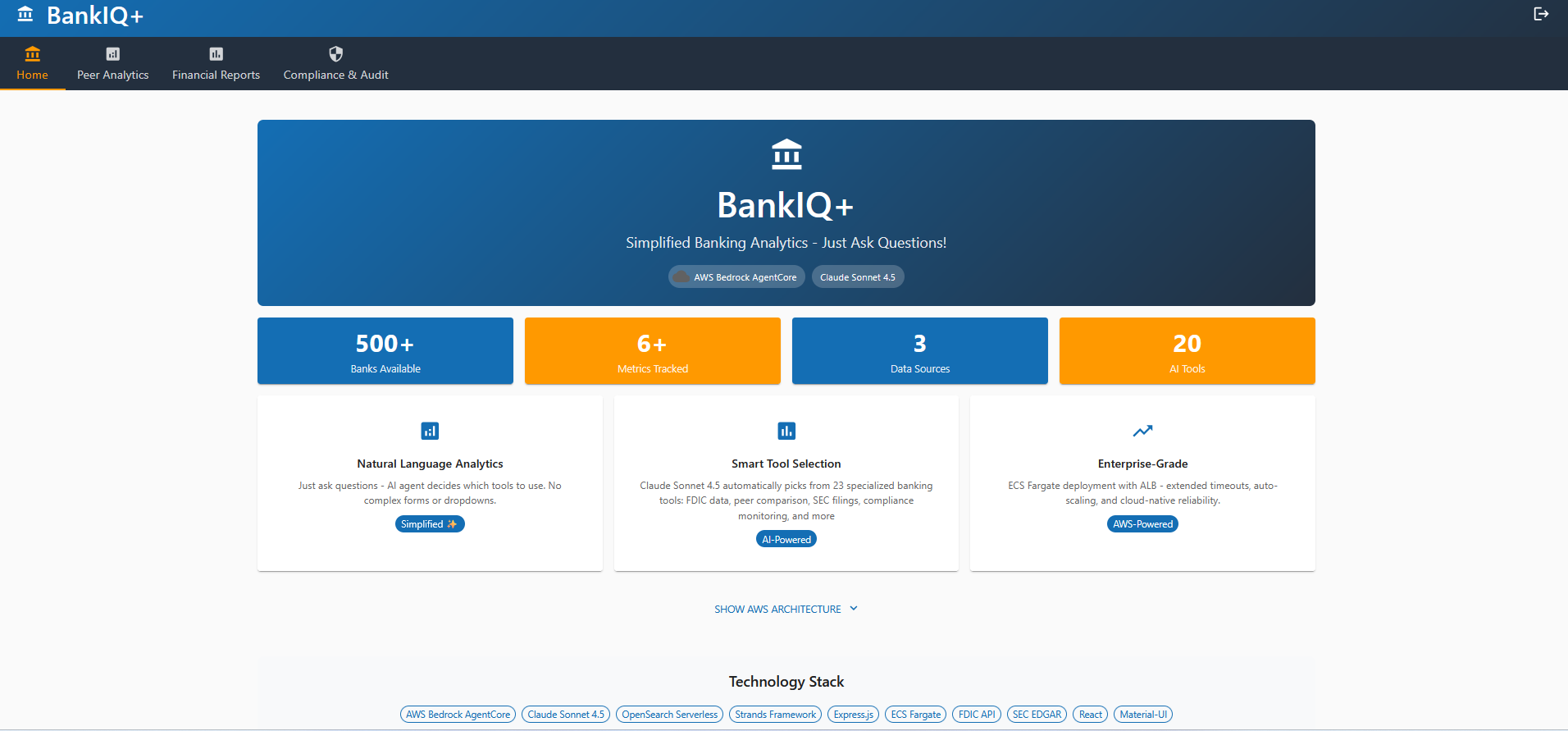 Figure 1: BankIQ+ Application Home
1) Peer Bank Analytics
This module enables institutions to benchmark their performance against peers using the most recent public financial data. Analysts can select a base bank, choose peer institutions, and focus on metrics such as net interest margin (NIM), return on assets (ROA), return on equity (ROE), loan-to-deposit ratio (LDR), CRE concentration, net charge-offs (NCOs), and delinquency rates. BankIQ+ automatically retrieves and processes two years of historical data, generating performance summaries and trend charts that provide actionable insights within seconds.
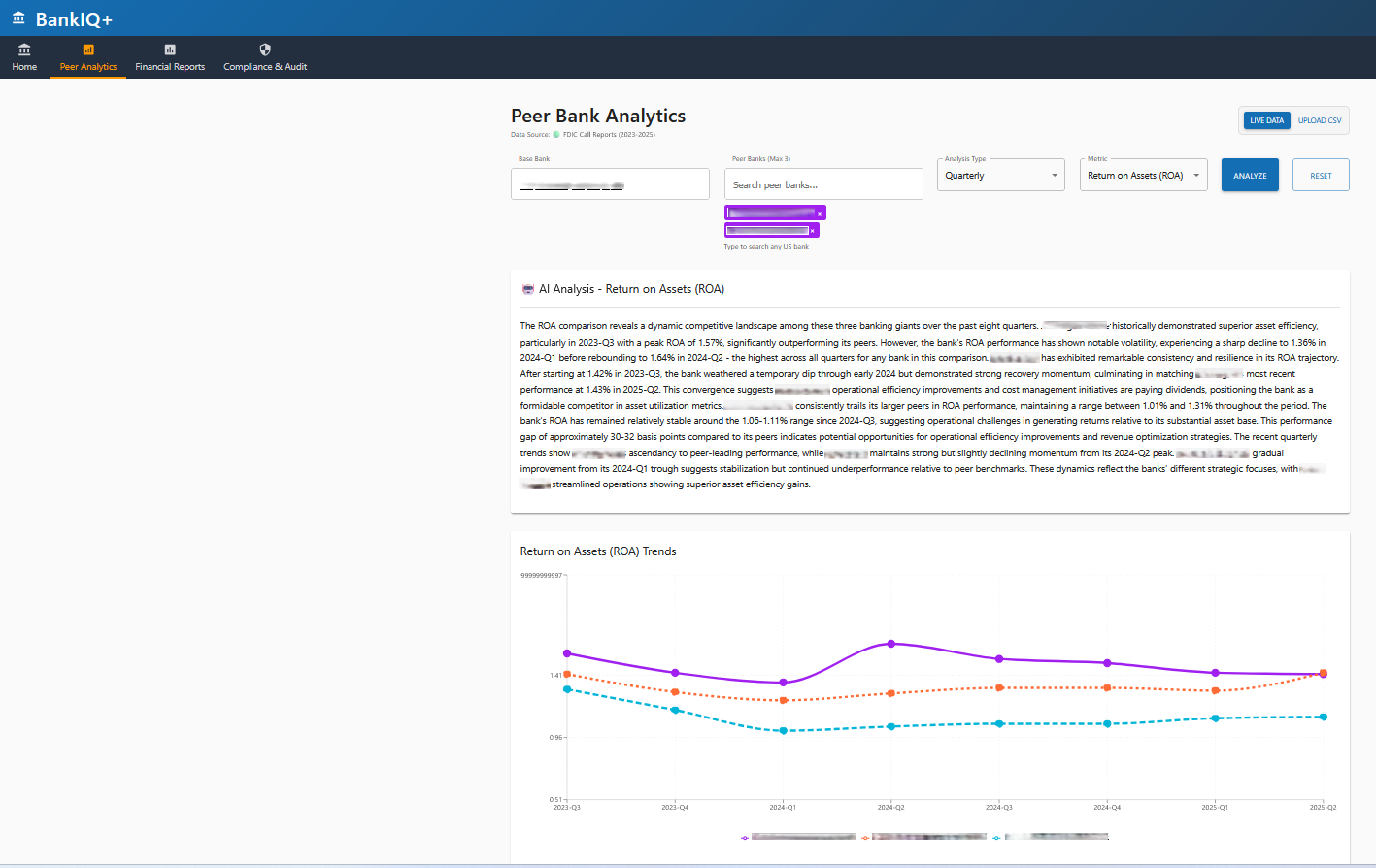 Figure 2: Peer Bank Analytics – ROA Comparison
For banks with proprietary datasets, the Local CSV Upload mode allows users to incorporate internal data seamlessly, maintaining the same workflow and delivering consistent, comparative analysis.
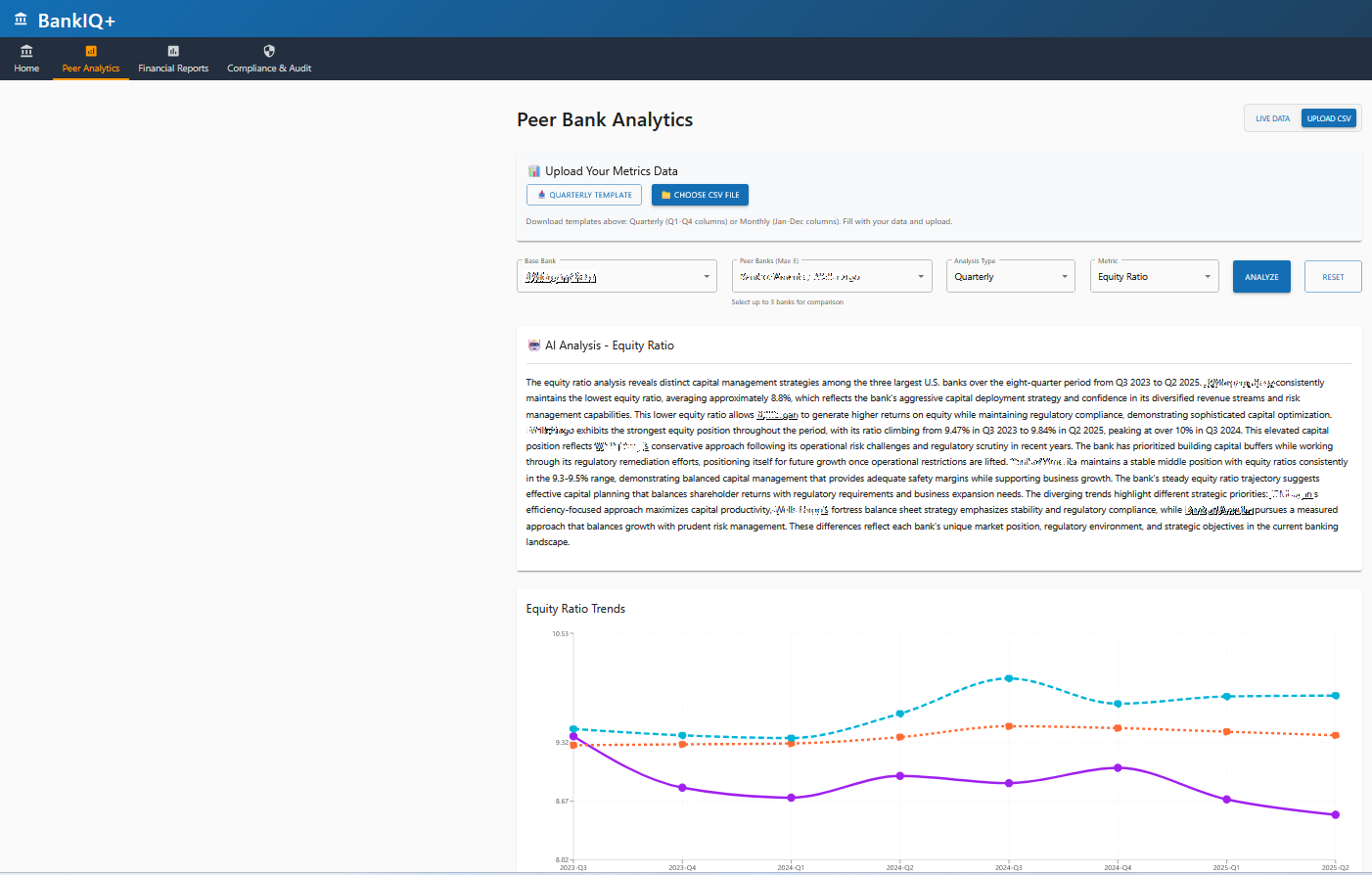
Figure 3: Peer Bank Analytics – Equity Ratio Analysis
2) Financial Reports Analysis
This module allows users to interactively explore regulatory filings such as 10-K and 10-Q reports. Leveraging RAG-based knowledge search and agent-powered AI, analysts can ask natural-language questions to extract insights across multiple banks or time periods. Users can work in Live Mode to pull filings from EDGAR, Local Mode to analyze uploaded PDFs, or RAG Mode to query pre-indexed knowledge bases.
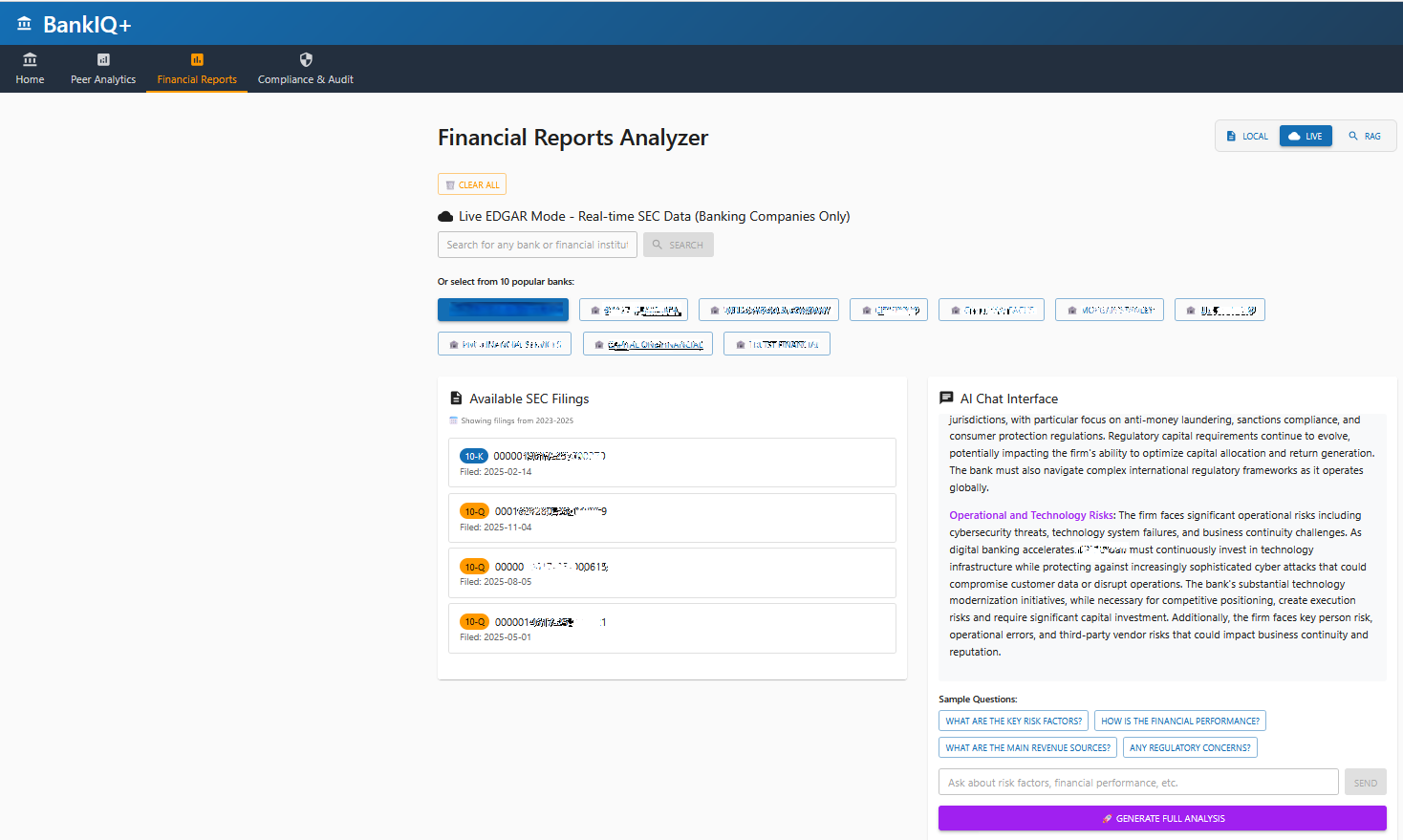 Figure 4: Financial Reports Analyzer – SEC EDGAR Integration
The application provides AI-generated summaries, highlights trends in key metrics, and contextualizes financial disclosures, reducing the manual effort required for report review and comparison.
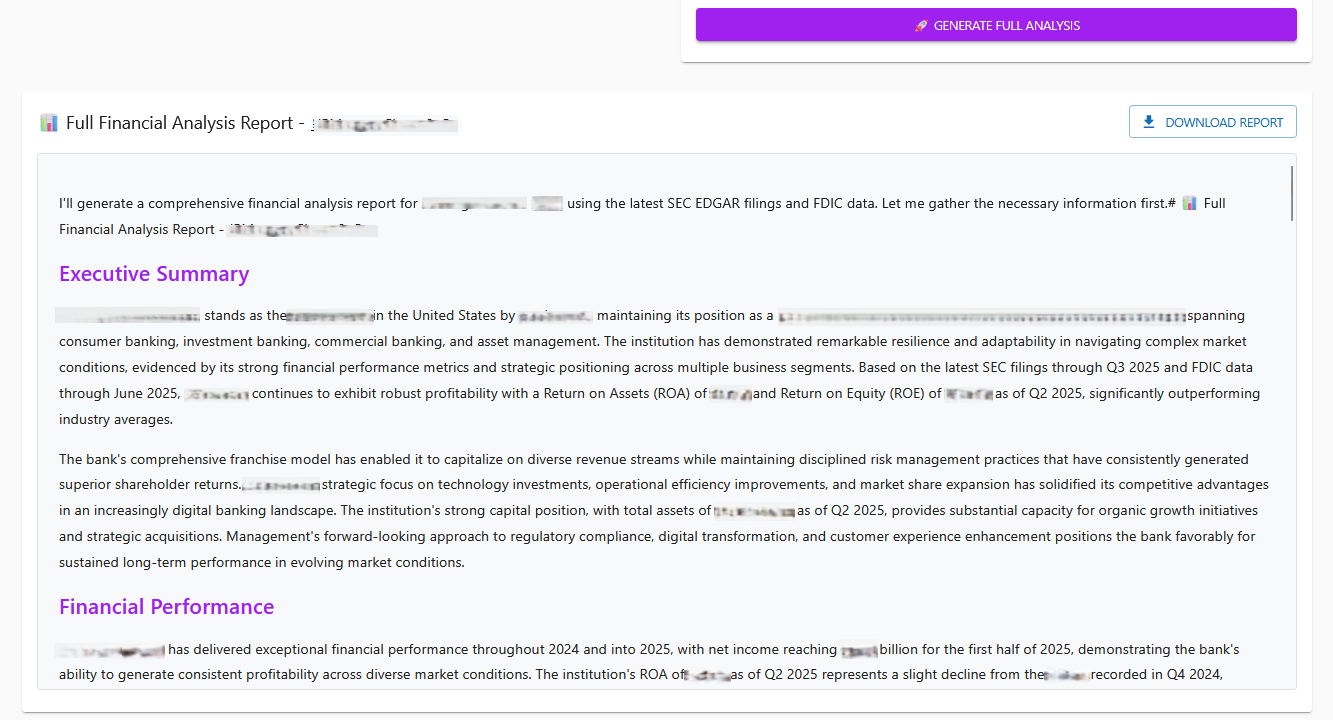 Figure 5: GenAI-Generated Financial Analysis Report
3) Compliance & Audit Dashboard
The Compliance & Audit module delivers real-time monitoring of a bank’s regulatory and risk posture. Using Amazon Bedrock AgentCore, the platform automatically orchestrates analysis of FDIC metrics and other relevant sources to assess capital adequacy, liquidity, and credit risk. Users receive intuitive visualizations such as Risk Temperature Gauges, compliance score breakdowns, and risk-versus-threshold charts.
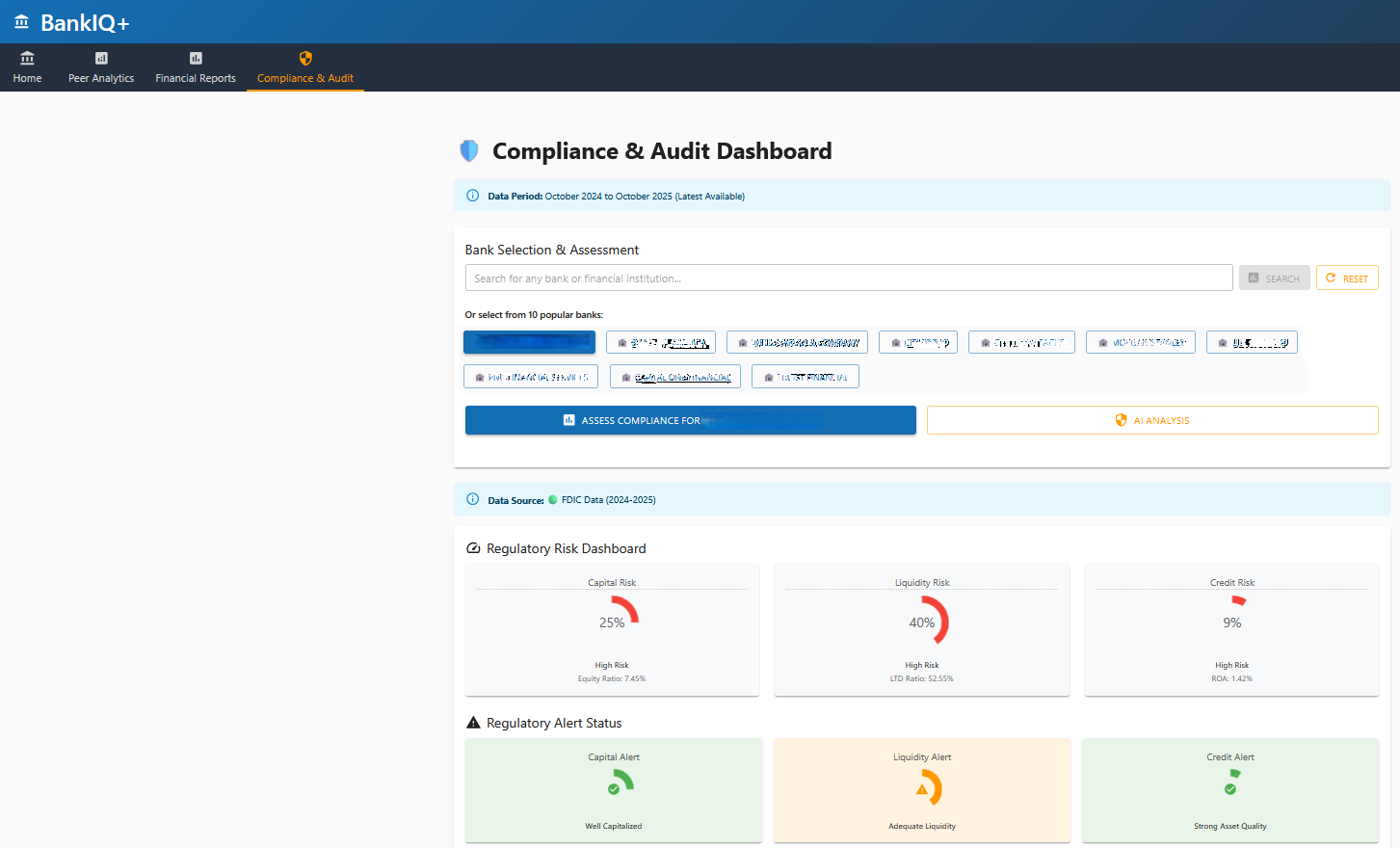
Figure 6: Compliance & Audit Dashboard – Risk Assessment
With AI-driven executive summaries and recommendations, this module transforms compliance from a static reporting process into a proactive, intelligent decision-making tool, while maintaining traceability, auditability, and adherence to regulatory expectations.
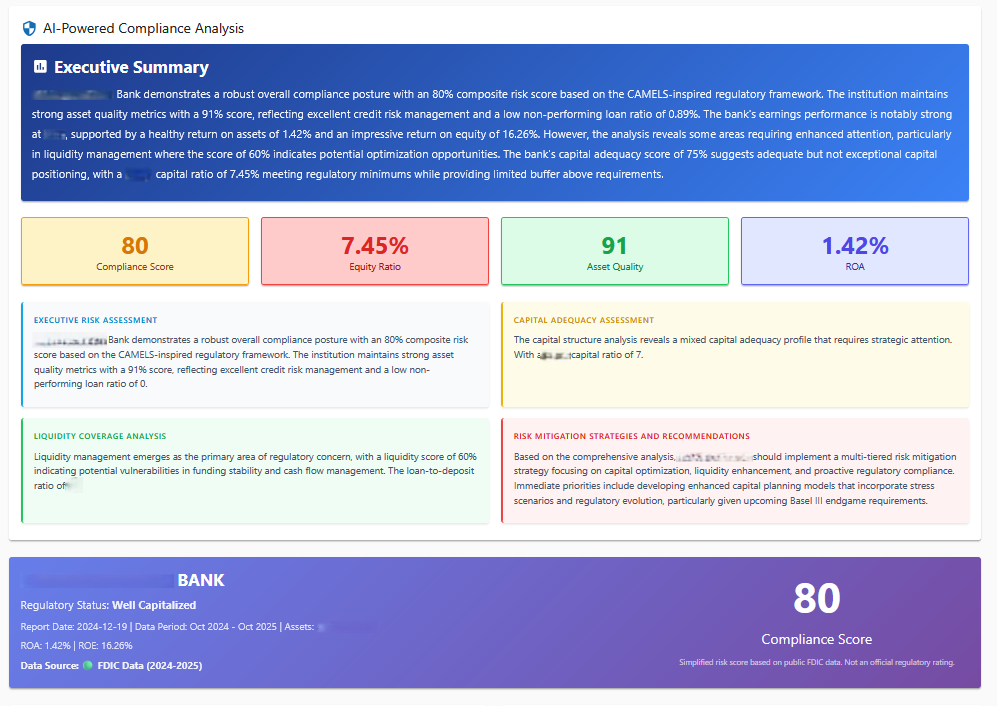
Figure 7: GenAI-Powered Compliance Analysis Report
BankIQ+ Architecture Overview
BankIQ+ uses Amazon Bedrock AgentCore Runtime to deploy a Strands framework agent that provides banking analytics through natural language queries, document analysis, and access to FDIC filings and SEC data. The architecture separates static content delivery, API request handling, and agent orchestration across AWS services while maintaining conversational memory across sessions.
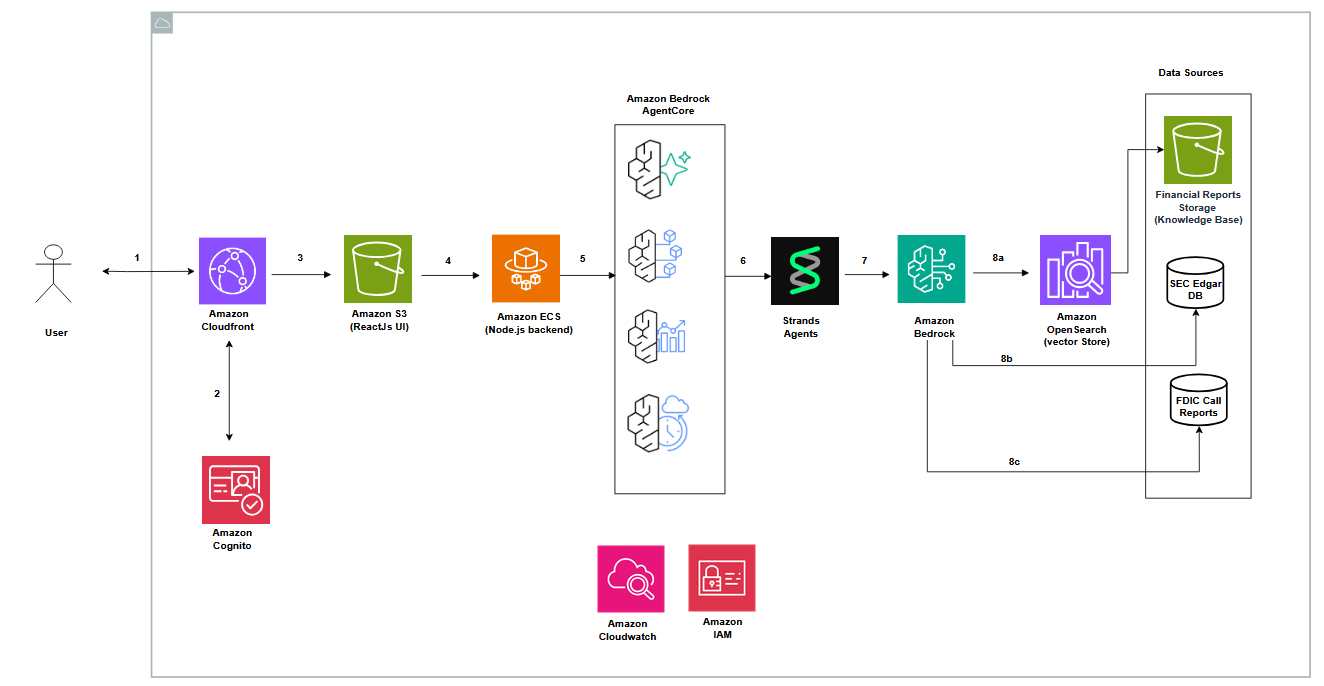
Figure 8: BankIQ+ Application Architecture
Request Flow:
- Authentication (Steps 1 & 2): Users authenticate through Amazon Cognito user pools with OAuth 2.0. Cognito issues JWT tokens that authorize subsequent API requests.
- Content Delivery (Steps 3): Amazon CloudFront serves as the entry point with a 300-second timeout configuration. CloudFront routes static assets (React application) directly from Amazon Simple Storage Service (Amazon S3), while API requests forward to an Application Load Balancer.
- Backend Processing (Step 4): The ALB distributes traffic to Node.js Express containers running on Amazon ECS Fargate in private subnets. The backend validates JWT tokens against Cognito before processing requests. ECS Fargate removes the need to manage Amazon EC2 instances while providing automatic scaling based on CPU and memory utilization.
- Agent Invocation (Step 5): The backend invokes the Strands agent deployed on Amazon Bedrock AgentCore Runtime. AgentCore manages the agent lifecycle, including conversation memory persistence and response streaming back to the client.
- AI Processing (Step 6 & 7): AgentCore uses Claude Sonnet 4.5 via the Amazon Bedrock Converse API to process queries. The agent has access to over 10 specialized tools for banking calculations, data retrieval, and document analysis.
- Document Handling (Steps 8a): When users upload financial documents, the backend stores files in Amazon S3. The agent retrieves documents from S3 and uses PyPDF2 for text extraction, then passes extracted content to Claude for analysis.
- External Data Integration (Steps 8b-8c): The agent retrieves real-time data from FDIC Call Reports and SEC EDGAR filings (10-K and 10-Q reports) through direct API calls or Lambda-backed tools exposed via AgentCore Gateway.
Monitoring and Security
Amazon CloudWatch collects logs and metrics from all components. IAM roles enforce least-privilege access—the ECS task role can only invoke AgentCore and access specific S3 buckets, while the AgentCore execution role can only call Bedrock APIs and read from designated S3 paths.
Deploy the Solution with One-Click Automation:
To deploy all resources in one automated step, follow the instructions below:
1. Sign in to the AWS Management Console using an administrator account.
2. Clone the sample repository to your local machine or AWS CloudShell, then navigate to the project folder:
git clone https://github.com/aws-samples/genai-quickstart-pocs.git
cd genai-quickstart-pocs/industry-specific-pocs/financial-services/bankiq-plus-agentcore
Complete prerequisites listed in the README.md to ensure your AWS environment is ready.
3. Configure AWS credentials:
aws configure
4. Deploy the application stacks using the one-command deployment script for your operating system.
For Linux:
./cfn/scripts/deploy-all.sh
5. Monitor the deployment progress in your terminal or AWS CloudShell.
The script provisions all required components, including:
- Amazon Cognito for authentication
- Core infrastructure including VPC, Subnets, IAM roles, ECS Cluster and other required services.
- Frontend React application
- Backend services with Bedrock AgentCore and RAG integration.
Deployment typically completes in under 30 minutes.
6. Once complete, the application URL is provided via CloudFront. Users can sign-up and start exploring BankIQ+ application.
Real-World Impact
Early adopters of BankIQ+ report measurable improvements in both efficiency and insight generation.
- CRE Concentration Monitoring: A mid-sized bank in the Southeast benchmarked its CRE exposure against peer banks. While its CRE concentration was near regulatory limits, peer comparisons revealed a significant gap, prompting proactive portfolio adjustments.
- Net Charge-Off Analysis: A regional lender tracked NCO ratios against peers and identified higher-than-average trends, enabling targeted improvements to underwriting standards.
- Delinquency Rate Insights: Another bank monitored 30+ day delinquency rates and detected early stress in unsecured lending, allowing preemptive adjustments to loss reserves and collections strategies.
Across institutions, benefits include:
- Manual analysis reduced by up to 80%, freeing analysts for strategic initiatives.
- Faster decision-making with near real-time insights on key metrics like NIM, ROA, ROE, and LDR.
- Accelerated compliance reporting through automated extraction and structured insights from regulatory filings.
- Improved risk management by detecting peer credit risk signals earlier.
By combining public datasets (FDIC, SEC, FFIEC, Fed) with optional commercial feeds (S&P Global, FactSet, Moody’s), BankIQ+ provides a richer, contextualized view of the competitive landscape.
Taking the First Step
Implementing AI-powered benchmarking does not require a “big bang” approach. Banks can start small, focusing on their most pressing challenges:
- Assess current benchmarking processes and pain points.
- Define use cases that would benefit most, such as monitoring CRE concentration, NCOs, or peer NIM performance.
- Pilot the solution using FDIC Call Report APIs, SEC/EDGAR filings, and Federal Reserve datasets.
- Expand gradually by layering in OCC bulletins, FFIEC UBPR data, and commercial feeds like S&P Global or FactSet.
- Integrate dashboards and AI insights into day-to-day decision-making.
This phased approach helps banks capture early wins while building confidence in generative AI technologies.
Clean up
To avoid ongoing charges after a walkthrough or pilot, simply run the one-command cleanup script from the project root directory:
./cfn/scripts/cleanup.sh
This script automatically removes all deployed resources, including ECS clusters, Cognito user pools, and backend services. It ensures a cost-efficient, repeatable environment while maintaining security and compliance.
Conclusion
In today’s fast-moving financial environment, speed, accuracy, and regulatory alignment are essential. BankIQ+ demonstrates how U.S. banks can responsibly adopt generative AI on AWS to transform public and internal financial data into actionable intelligence.
With AWS as the foundation, institutions can modernize benchmarking, strengthen risk management, accelerate compliance reporting, and gain a competitive edge—all while maintaining security, auditability, and regulatory compliance.
To explore how your organization can implement AI-powered banking analytics, contact your AWS Financial Services Solutions Architect or visit the AWS Financial Services resource hub.