Migration & Modernization
Security at Machine Speed: Why Continuous Defense Is the New Competitive Advantage
A New Chapter in Security
For years, cybersecurity defense traditionally followed a familiar, non-continuous rhythm. An issue is discovered, security teams investigate, developers prioritize a fix, and operations deploy a patch. The organization moves on until the next one. That cycle worked when changes happened weekly and threat actors needed months to develop proof-of-concept code. Then, in early 2026, Anthropic released Claude Mythos Preview alongside Project Glasswing.
Mythos can discover previously unknown software issues, generate working proof-of-concept code, and recommend fixes. AWS tested it against AWS codebases and identified additional opportunities to further strengthen it. It shows that the speed of issue discovery has permanently shifted and what used to take a well-funded red team an entire quarter now happens in a few hours. AWS CISO Amy Herzog described Mythos as signaling the next generation of AI-powered security challenges and opportunities. The same AI that accelerates threats also gives defenders capabilities that did not exist a year ago.
Customers can harness it by understanding what has changed and adapting accordingly. This blog walks through what has changed, why it matters, and how security teams operate at this new speed using tools and defense in depth approach. For organizations migrating workloads to the cloud or modernizing existing applications, this shift carries a dual implication: the move to cloud-native architecture creates the opportunity to embed these security capabilities from day one, turning migration into a security upgrade, not just an infrastructure change.
Where Things Stand
IBM’s 2025 Cost of a Data Breach report put the global average cost of a data breach at $4.99 million, with U.S. security events hitting an all-time high of $10.22 million per event. While these costs are an attention grabber, in the same report, it was reported that organizations using AI and automation extensively across security operations saved $1.9 million per security event and cut the event lifecycle by 80 days. One of the most common patterns observed across AI-related security events was proper access control, seen 97% of the time across organizations that experienced unauthorized access to their AI models or applications. Public security disclosures tracked in the Common Vulnerabilities and Exposures (CVEs) database topped 29,000 in 2023 and keep climbing, driven by growing software complexity and expanding open-source supply chains. The OWASP Top 10 Risk and Mitigation for LLM Applications and MITRE ATLAS, among many others, now track AI-specific risks that did not have names two years ago: prompt injection, tool misuse, data exfiltration through agent chains and identity expansion. Every new microservice, every API endpoint, every agent deployment adds exposure surface area. As the efficiency promise of AI accelerates, security teams won’t be increasing in size, so tooling and approach will need to compensate.
In conversations with security teams across industries, we hear a consistent theme: continuous, AI-powered security does not just catch more, it lets teams ship faster, because they have real-time confidence in their posture instead of waiting on a quarterly checkpoint to tell them where they stand. That confidence tends to come down to three shifts in how security operates day to day. We will walk through each one.
Three Shifts That Matter
Shift left and act early at machine speed because validation has to be continuous
Quarterly pen tests and annual compliance audits were designed for systems that sat still between checks but modern cloud environments may change multiple times a day. A system that looked secure on Friday may have three new exposure paths by Monday. Traditionally, CI/CD pipeline deploys multiple times daily and security reviews happen quarterly which creates a large gap. Closing it means putting security validation in the same continuous loop as development. While the concept is not new, AI powered tooling has caught up with this idea.
Enhance operational observability and defense at machine speed for data analysis at volume
When AI can find and demonstrate an issue in hours, a team that triages on Monday mornings is working with stale information. Humans do not need to manually sort through hundreds of findings when AI can rank them by business impact, confirm exploitability, and kick off remediation for known patterns. This does not replace security teams, it redirects them. AI takes on the volume and repetitive analysis. Humans focus on judgment calls, architectural thinking, and novel problems such as inherited issues surfaced during migration. In our experience, this is where security practitioners want to spend their time and expertise.
Application-level governance in the new agentic AI world
For most organizations, Agentic AI is new territory and they are still figuring out what “governed” actually looks like in practice. These are autonomous software entities interacting with APIs, databases, and infrastructure on their own. Modernized applications increasingly rely on them, often faster than a human could review each action. The OWASP Top 10 for Agentic Applications catalogs risks like tool misuse, cascading failures, and privilege escalation in multi-agent systems, and in our conversations with customers, these are exactly the scenarios keeping security teams up at night.
In summary, to secure agentic AI at enterprise scale, organizations must embed security validation continuously into development, use AI to handle detection and triage at machine speed, and govern autonomous agents with the same identity and access controls applied to human users.
The principle we would suggest starting with is a familiar one: an AI agent with access to your customer database probably deserves the same scrutiny as a human with that same access, scoped identity, least privilege, session-level permissions, and full audit trails. Worth thinking through, for example, is a multi-agent workflow where Agent A’s output becomes Agent B’s input without validation in between. If Agent A is misconfigured or simply produces an unexpected result, Agent B may act on it without knowing anything went wrong. That is the kind of cascading failure OWASP is pointing to, and it is a useful lens for reviewing your own agent workflows.
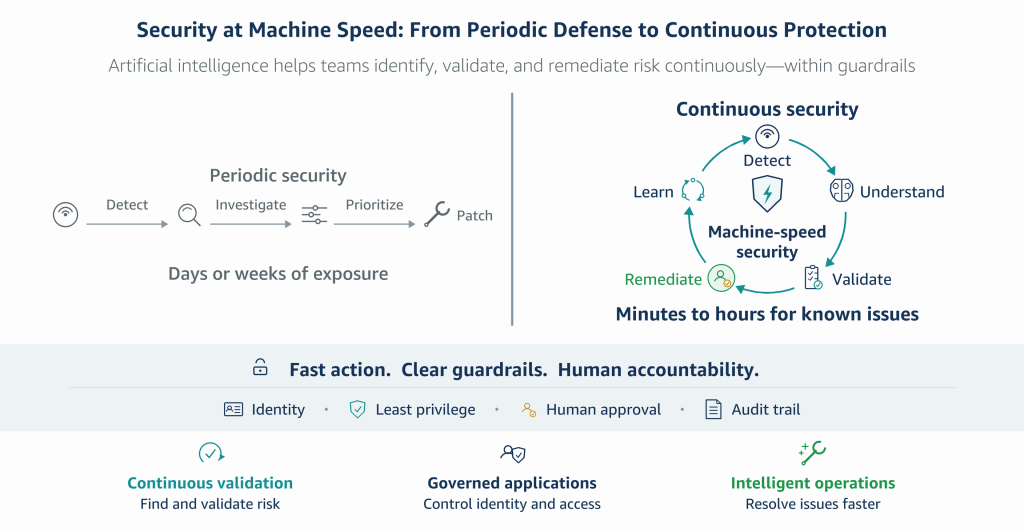
Figure 1: From Periodic Security to Continuous, Governed Defense at Machine Speed
Building this on AWS
Each of the services below maps to one of those shifts: continuous validation for the speed of change, governed agents for AI autonomy, and AI-powered operations for threat velocity.
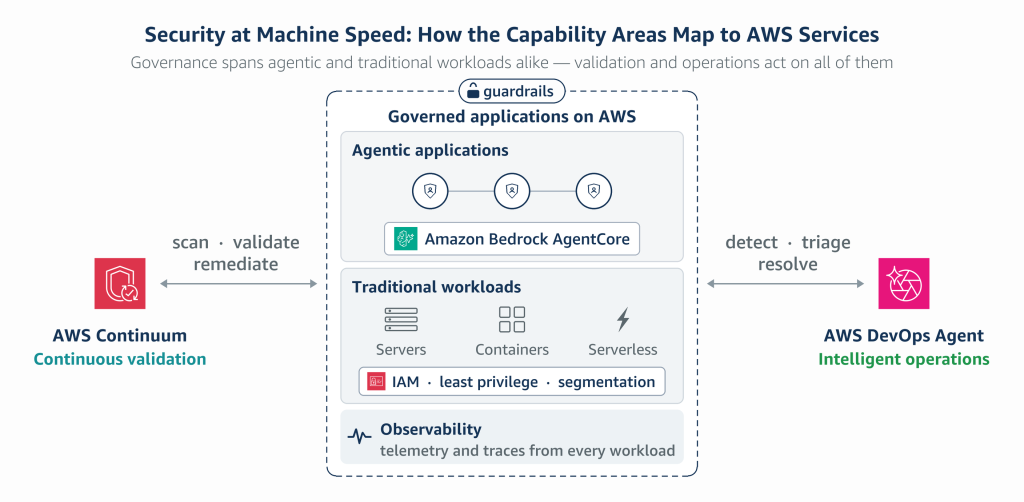
Figure 2: How the Three Shifts Map to AWS Services
AWS Continuum
Announced at AWS Summit New York, June 2026, AWS Continuum is an AI-native security service that discovers, prioritizes, validates, and remediates risks at machine speed within guardrails you define. It uses a context graph of your actual environment, including newly migrated workloads, to determine which findings matter. Is this component deployed? Is it reachable from the internet? Is it in a production path? AWS Continuum validates findings with evidence-backed reasoning before surfacing them to the team, reducing the false positives that slow everyone down. It starts in “learn mode” with human approval on every recommendation and as confidence builds, teams move to “enforce mode” with progressive automation for risk categories they have validated.
Through AWS Continuum, issue time-to-fix compresses from days to minutes for known patterns. A critical CVE drops Tuesday morning. Normally it enters a triage queue and gets discussed Wednesday. It gets assigned Thursday and patched next sprint. With AWS Continuum, exposure is assessed, affected workloads identified, and patching initiated before your morning standup. That compression represents a material reduction in exposure surface. Early customers are seeing real results. HENNGE K.K. reduced typical testing duration by more than 90%, and SmugMug now completes penetration test assessments in hours rather than days at a fraction of manual costs.
Amazon Bedrock AgentCore
Amazon Bedrock AgentCore is a platform for building, deploying, and operating agentic applications at scale with any framework or model, so teams focus on business logic instead of infrastructure to run and govern agents. Its modular components map closely to security concerns. AgentCore Runtime gives each session true isolation at the compute layer. AgentCore Identity handles agent authentication and token management through IAM or OAuth 2.0/OIDC, using the identity provider you already run. AgentCore Gateway turns existing APIs into Model Context Protocol (MCP) tools, a standard that lets AI agents discover and call external tools securely, behind inbound and outbound authentication, and accepts an AWS WAF protection pack. When tool calls route through AgentCore Gateway, it becomes the enforcement point: AgentCore Policy evaluates each against deny-by-default rules written in Cedar, an open-source policy language used across AWS services. Amazon Bedrock Guardrails screens for prompt injection and sensitive data exposure in the agent code. AgentCore Memory applies per-tenant isolation. AgentCore Observability underpins the rest, tracing which identity invoked which tool against which data. Customers are already scaling with confidence. Cox Automotive went from zero to 17 production AI agents in under a year, and Druva now resolves 68% of support issues without human intervention, both built on AgentCore’s governance and infrastructure layer.
AWS DevOps Agent
AWS DevOps Agent does for operational reliability what Continuum does for security posture. It acts as an always-available on-call engineer – autonomously triaging incidents the moment an alert fires, correlating signals across observability tools, code repositories, and CI/CD pipelines to deliver root-cause analysis and actionable mitigation steps. Post-incident, it analyzes patterns across historical events to surface recommendations that strengthen observability, infrastructure, deployment pipelines, and application resilience. With built-in integrations spanning AWS-native and third-party tools, it lets on-call engineers focus on resolution rather than investigation. The philosophy behind both: AI handles speed, correlation, and volume while humans focus on judgment, context, and creativity. Western Governors University reduced mean time to resolution by 77% during a production investigation, with DevOps Agent pinpointing a misconfigured Lambda function in 28 minutes instead of the estimated two hours. Zenchef traced a partner-facing API regression to a code-level root cause in under 30 minutes, roughly 75% faster than a manual investigation, while their engineering team stayed focused on a company hackathon.
Security Starts with a Strong Foundation
Strengthening the security fundamentals remains the most important defense even as AI accelerates the threat landscape. Identity and access management, MFA, least-privilege access, network segmentation, and data classification provide the building blocks toward a strong security posture. These infrastructure and core services form the foundation on which application-layer security operates. The AI-powered capabilities discussed in this blog focus on securing the application stack at machine speed, and they deliver the most value when built on a well-governed infrastructure foundation. AI makes these fundamentals faster to enforce, easier to monitor, and harder to accidentally violate. With these capabilities, teams can focus on the application layer where business value is generated.
The Security Pillar of the AWS Well-Architected Framework structures its guidance around seven focus areas, guided by design principles. In the age of AI, each takes on renewed urgency:
- Strong identity foundation with least privilege: Every user, system, and AI agent must authenticate with verifiable identity and operate with only the permissions required.
- Enable traceability: Real-time monitoring and audit logging across all layers, including AI agent actions.
- Apply security at all layers: Defense in depth from network to application to data.
- Automate security best practices: Security as code, deployed consistently and continuously.
- Protect data in transit and at rest: Encryption, tokenization, and access controls on all sensitive data.
- Keep people away from data: Reduce direct access through automation and zero-operator architecture.
- Prepare for security events: Event response plans tested and automated.
These seven focus areas remain the foundation, but agentic AI introduces scenarios they were not originally designed to address, such as securing agent memory and state, preventing goal manipulation, and governing multi-agent orchestration. The AWS Well-Architected Agentic AI Lens — Security extends the framework with nine purpose-built capabilities for autonomous AI workloads, covering agent identity management, secure tool usage, observability and non-repudiation, and human oversight protection. We recommend using both together: the Security Pillar for your foundational cloud posture, and the Agentic AI Lens for the additional governance agentic systems require.
Whether you are building new applications, modernizing existing workloads, migrating to the cloud, or adopting agentic AI patterns, the moment of architectural change is the single best opportunity to implement these security fundamentals correctly. Organizations that treat every major application initiative as a security transformation, not just a functional one, are realizing cloud value faster and reducing long-term risk.
It is important to acknowledge the boundaries of these capabilities. Novel zero-day issues, ambiguous risk decisions, and situations requiring business context and ethical judgment still need experienced humans in the loop. AI handles speed and scale but it does not replace the security team’s expertise or accountability. The most effective posture treats AI as a force multiplier for skilled practitioners, not a substitute for them.
Where to Start
Here is a practical starting sequence for teams ready to act:
- Match your validation cadence to your deployment cadence. If you deploy daily and review quarterly, this gap is your first priority. AWS Continuum is built for exactly this.
- Extend identity to agents. If you are deploying or planning agentic AI, treat agent identity with the same rigor as human identity. Amazon Bedrock AgentCore Identity handles this at the runtime level.
- Automate what is already understood. For known CVE patterns and common misconfigurations, let AI handle repeatable work through AWS DevOps Agent and AWS Continuum.
- Revisit your architecture. The AWS Well-Architected Security Pillar provides structured reviews that surface overlooked risks in production workloads. If you are deploying agentic AI, apply the Agentic AI Lens – Security to verify that the agents accelerating your defenses are themselves governed with least-privilege access, secure communication flows, and bounded behaviors.
- Invest in people. Automation without understanding is fragile. Ensure your team is current on OWASP and MITRE ATLAS frameworks.
Where This Goes
The security landscape of 2026 is genuinely different from even two years ago, and arguably more interesting. The same AI capabilities reshaping the threat environment are giving defenders tools that did not exist before: continuous validation, context-aware prioritization, autonomous remediation, governed agent infrastructure. For the first time, the defender’s toolkit is evolving at the same pace as the threat actors. That has not been true for most of cybersecurity’s history.
Organizations that embrace this shift will ship faster, detect issues in real time, and turn security from a cost center into a value accelerator. This is particularly true for those using cloud migration and modernization as the catalyst. Migration done right does not just move workloads; it upgrades your entire security posture and unlocks the move to the cloud.
The security capabilities discussed in this blog deliver the most value when your foundational practices are solid. If you are looking to assess or strengthen your baseline, the AWS Security Pillar whitepaper, AWS Security Best Practices, AWS Security Hub, and Agentic AI Lens – AWS Well-Architected provide comprehensive guidance on IAM, MFA, data classification, zero-trust, and continuous compliance. For organizations in the middle of a migration, the AWS Cloud Adoption Framework aligns these practices with your migration waves.