AWS Public Sector Blog
Author: AWS Public Sector Blog Team
The Amazon Web Services (AWS) Public Sector Blog team writes for the government, education, and nonprofit sector around the globe. Learn more about AWS for the public sector by visiting our website (https://aws.amazon.com/government-education/), or following us on Twitter (@AWS_gov, @AWS_edu, and @AWS_Nonprofits).

Top Ten Public Sector Stories from 2018
Happy New Year! As we start off 2019, we wanted to share the most popular posts from 2018. With a focus on developing our next-generation of cloud practitioners to best practices to get started in your cloud environment, read the top ten blog posts from the AWS Government, Education, & Nonprofit blog.
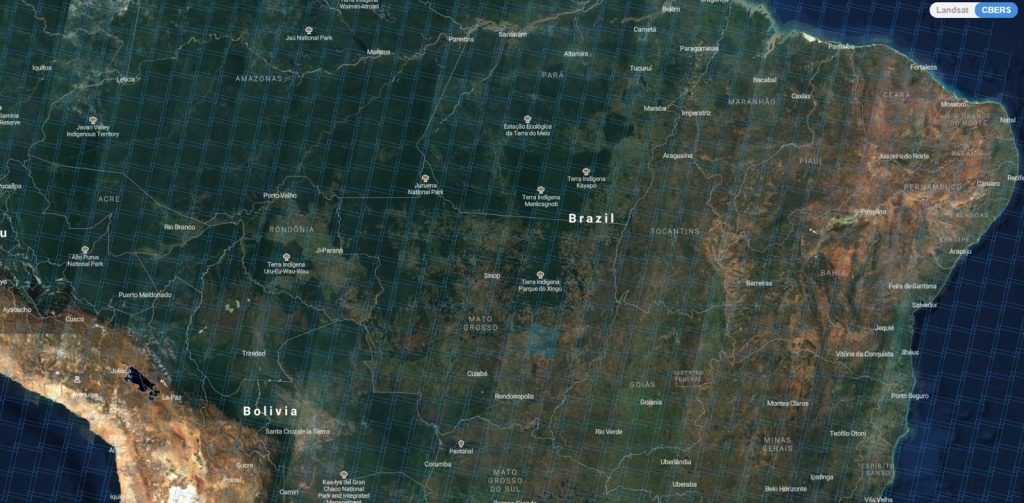
Keeping a SpatioTemporal Asset Catalog (STAC) Up To Date with SNS/SQS
The SpatioTemporal Asset Catalog (STAC) specification aims to standardize the way geospatial assets are exposed online and queried. The China-Brazil Earth Resources Satellites (CBERS) are the result of a cooperation agreement between Brazilian and Chinese space agencies (INPE and CAST, respectively), which started in 1988. Since then, five satellites were launched (CBERS-1/2/2A/3/4). The mission generates images from Earth with characteristics similar to USGS’ Landsat and ESA’s Sentinel-2 missions. In 2004, INPE announced that all CBERS-2 images would be available at no charge to the public. It was the first time this distribution model was used for medium-resolution satellite imagery. Now, this model is used for all CBERS satellite images.

Drug Discovery and Biomarkers Development on the Human Gut Microbiome Using AWS Batch and Nextflow
Gut microbiome plays a critical role in building our immune system at birth. It provides a life-long personal and natural protection. To fully explore and characterize the role of the human gut microbiome, Enterome uses different approaches, including the latest genome sequencing technologies, to reconstruct microbial genomes and quantify the abundance of different species and microbial genes in the gut across large cohorts of patients. The current high throughput sequencing technologies produce tens of millions of DNA sequences for each biological sample and the human gut microbiome is estimated to contain hundreds of species and several million unique bacterial genes that can be identified and analyzed. Enterome’s mission is to translate all of this information into actual knowledge, which can be applied to advanced clinical and drug discovery programs.

How to Bring Your PACS Solution to AWS
Healthcare providers suffer from having to purchase hardware, storage, and licenses, and then renewing all of that when they become deprecated. They have to think ahead how much they plan to grow and then make large purchases considering that growth, which may turn out to be over or under estimated. Effort is spent on matters that are not core to the healthcare business. One of the main solutions for patient’s care is the PACs (Picture Archiving and Communication System). This solution is responsible for storing, retrieving, presenting, and sharing medical images, like X-Rays, CT scans, MRIs, and Ultrasounds. Durability, availability, and lowering expenditures are top priorities for companies hosting PACs solutions.

Meet the Women Building AWS Technical Communities Around the World
At the center of the AWS technical community are community-led AWS Meetups or User Groups – now over 300 in more than 75 countries. These groups meet regularly to learn about AWS products and services, network with others, gain programming best practices, and more. As these communities continue to expand, it’s exciting to see new communities being formed in smaller, emerging markets, as well as ones focused on underrepresented communities. This fall, AWS launched a diversity scholarship program, inviting engineers to re:Invent on a full scholarship who help lead or co-lead an AWS-focused User Group in an emerging market who also identify with an underrepresented community.
A Father’s Story: Empowering People Living with Seizures
Rob Moss is the co-founder and president of Seizure Tracker – an organization that gives patients, doctors, and researchers the tools to link seizure activity with anti-epileptic therapies. Together with AWS Partner, Element 84, Rob and his wife, Lisa, have grown Seizure Tracker into the largest database of patient-collected seizure data in the world.

National Quantum Initiative Act: An Important Step for American Leadership
Quantum science offers amazing opportunities and will have profound impacts on society, the economy, and national security. Because of this, we are excited about and fully support the National Quantum Initiative Act. Greater quantum investment and a cohesive national quantum strategy are essential to ensuring American leadership in quantum science. This bipartisan legislation has received overwhelming support in both the House and Senate, demonstrating the national priority of quantum science.

Best Practices in Ethical Data-Sharing: An Interview with Natalie Evans Harris
The AWS Institute interviewed Natalie Evans Harris, co-founder and CEO of BrightHive and former senior policy advisor to the US Chief Technology Officer in the Obama administration. Harris founded the Data Cabinet, a federal data science community of practice with over 200 active members across more than 40 federal agencies, co-led a cohort of federal, nonprofit, and for-profit organizations to develop data-driven tools through the Opportunity Project, and established the Open Skills Community through the Workforce Data Initiative. She also led an analytics development center for the National Security Agency (NSA) that served as the foundation for NSA’s Enterprise Data Science Development program and became a model for other intelligence community agencies.

The Path Forward: How State and Local Government Can Overcome Hurdles to Cloud Adoption
The Center for Digital Government surveyed more than 170 state and local government technology professionals to gauge their cloud ambitions and identify sticking points. Based on survey data, government IT leaders perceive four key stumbling blocks around their cloud-adoption efforts.

Ready to Use Future Climate Information
The climate data factory is a French startup working on making future climate information easily accessible. The team believes that easy access to actionable data of future climate conditions is essential to fight climate change. Read on for the Q&A with Dr. Harilaos Loukos of the climate data factory on how we can best make use of data.