AWS Security Blog
Category: Technical How-to
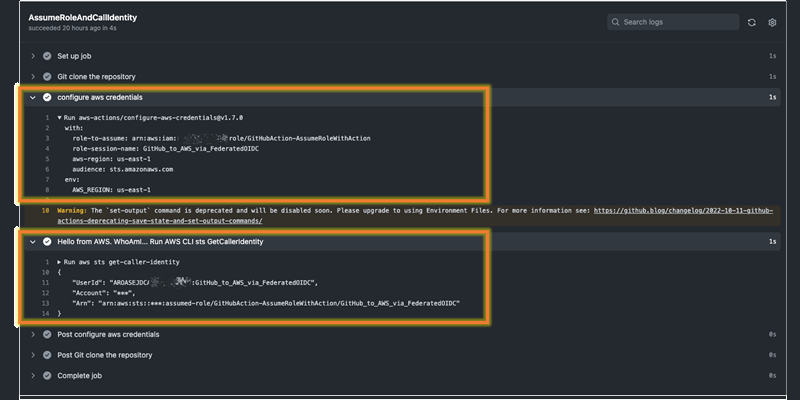
Use IAM roles to connect GitHub Actions to actions in AWS
May 22, 2023: We updated the post to reflect case sensitivity in the IDP entered: https://token.actions.githubusercontent.com. The IDP created in this post should be entered in lowercase through the post. Have you ever wanted to initiate change in an Amazon Web Services (AWS) account after you update a GitHub repository, or deploy updates in an […]

How to prioritize IAM Access Analyzer findings
AWS Identity and Access Management (IAM) Access Analyzer is an important tool in your journey towards least privilege access. You can use IAM Access Analyzer access previews to preview and validate public and cross-account access before deploying permissions changes in your environment. For the permissions already in place, one of IAM Access Analyzer’s capabilities is that […]

Scale your authorization needs for Secrets Manager using ABAC with IAM Identity Center
With AWS Secrets Manager, you can securely store, manage, retrieve, and rotate the secrets required for your applications and services running on AWS. A secret can be a password, API key, OAuth token, or other type of credential used for authentication purposes. You can control access to secrets in Secrets Manager by using AWS Identity […]

Investigate security events by using AWS CloudTrail Lake advanced queries
This blog post shows you how to use AWS CloudTrail Lake capabilities to investigate CloudTrail activity across AWS Organizations in response to a security incident scenario. We will walk you through two security-related scenarios while we investigate CloudTrail activity. The method described in this post will help you with the investigation process, allowing you to […]
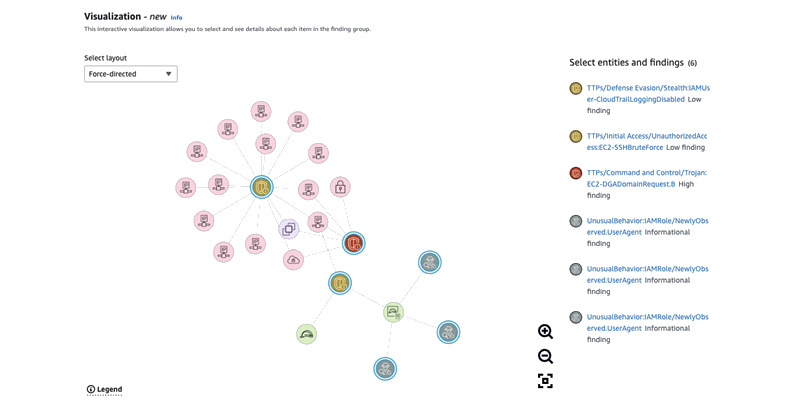
Reduce triage time for security investigations with Amazon Detective visualizations and export data
To respond to emerging threats, you will often need to sort through large datasets rapidly to prioritize security findings. Amazon Detective recently released two new features to help you do this. New visualizations in Detective show the connections between entities related to multiple Amazon GuardDuty findings, and a new export data feature helps you use […]

Simplify web app authentication: A guide to AD FS federation with Amazon Cognito user pools
September 8, 2023: It’s important to know that if you activate user sign-up in your user pool, anyone on the internet can sign up for an account and sign in to your apps. Don’t enable self-registration in your user pool unless you want to open your app to allow users to sign up. August 13, […]

How to use Amazon GuardDuty and AWS WAF v2 to automatically block suspicious hosts
In this post, we’ll share an automation pattern that you can use to automatically detect and block suspicious hosts that are attempting to access your Amazon Web Services (AWS) resources. The automation will rely on Amazon GuardDuty to generate findings about the suspicious hosts, and then you can respond to those findings by programmatically updating […]

Automate the deployment of an NGINX web service using Amazon ECS with TLS offload in CloudHSM
Customers who require private keys for their TLS certificates to be stored in FIPS 140-2 Level 3 certified hardware security modules (HSMs) can use AWS CloudHSM to store their keys for websites hosted in the cloud. In this blog post, we will show you how to automate the deployment of a web application using NGINX […]

Use backups to recover from security incidents
Greetings from the AWS Customer Incident Response Team (CIRT)! AWS CIRT is dedicated to supporting customers during active security events on the customer side of the AWS Shared Responsibility Model. Over the past three years, AWS CIRT has supported customers with security events in their AWS accounts. These include the unauthorized use of AWS Identity […]

Simplify management of Network Firewall rule groups with VPC managed prefix lists
In this blog post, we will show you how to use managed prefix lists to simplify management of your AWS Network Firewall rules and policies across your Amazon Virtual Private Cloud (Amazon VPC) in the same AWS Region. AWS Network Firewall is a stateful, managed, network firewall and intrusion detection and prevention service for your […]