Accelerating autism research using AWS HealthOmics with Korea University
Learn how Korea University College of Health Science supports inclusion in autism research with AI by using AWS HealthOmics.
Benefits
- genomes analyzed constituting over 1.4 PB of data
- 43,000+
- peer-reviewed journal publications
- 2
Overview
For years, research on autism spectrum disorder (ASD) focused on data from European populations, and ASD diagnoses remain strongly male-biased. This resulted in gaps in understanding how genetic risk manifests itself across ethnic groups and sexes.
To narrow these gaps, Korea University College of Health Science (KU CHS) turned to Amazon Web Services (AWS) to build and analyze 1.4 PB of East Asian whole-genome sequencing data. Using AWS HealthOmics for fully managed bioinformatics workflows, KU CHS uncovered how inherited genetic risk behaves differently across sexes within families. The analysis of over 43,000 genomes revealed new insights into underdiagnosis and delayed diagnosis in females while expanding ASD research beyond European populations.
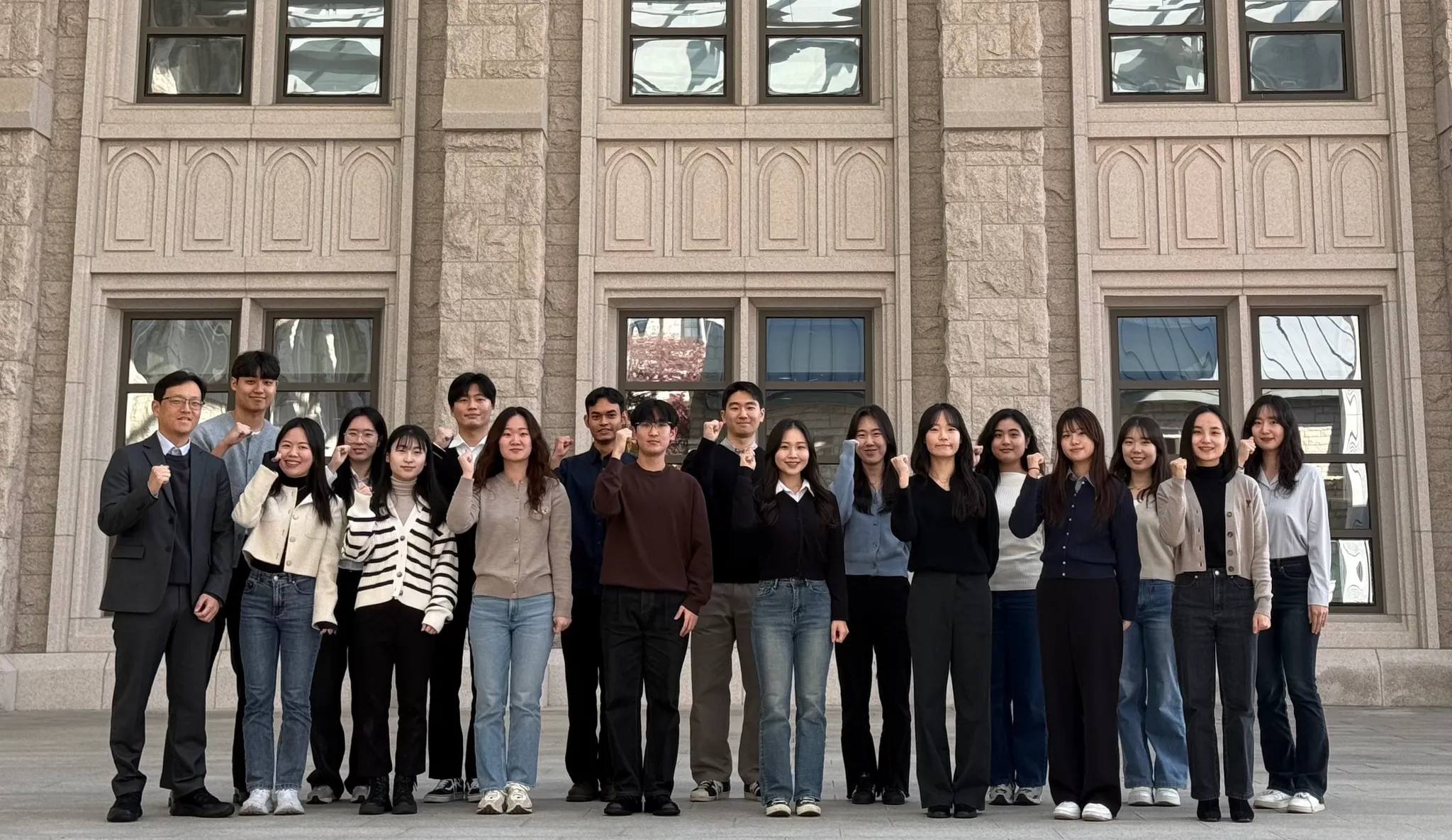
About Korea University College of Health Science
Founded in 2006, Korea University College of Health Science is a research-focused institution dedicated to training health science innovators across biomedical engineering, biomedical science, environmental health, and health policy and management.
Opportunity | Using AWS to support ASD research for KU CHS
Historically, most ASD genetic research data comes from populations of European ancestry. This lack of diversity means that findings might not be applicable across populations, leading to gaps in diagnosis and care for underrepresented groups. Similarly, more males are diagnosed with ASD than females, with a ratio of about four to one. To address these challenges, KU CHS set out to investigate how genetic risk for ASD differs according to ethnicity and sex.
Researching this, however, presented technical challenges. Whole-genome sequencing generates massive datasets, making large-scale analysis on legacy, on-premises high performance computing (HPC) systems difficult. “One person’s genomic data is about 200 GB, so for 10,000 people, it’s about 2 PB,” says Dr. Joon-Yong An, associate professor in the School of Biosystem and Biomedical Science at Korea University. “Large-scale datasets need to be processed efficiently.” That’s why Dr. An’s lab (An Lab) at KU CHS selected AWS to access scalable storage and HPC.
Solution | Building a diverse, family-based dataset
With support from the AWS Health Equity Initiative—a program for advancing global health equity—An Lab set out to better understand how ASD-related traits are inherited and expressed within families.
An Lab designed a family-based study that integrated genomic and phenotypic (observable trait) data across individuals with ASD and their siblings and parents, establishing a massive dataset of East Asian ASD families. This would help researchers analyze how genetic risk varies across sexes and among family members to create a more representative dataset. “Examining the family phenotypic distribution is critical to understanding ASD, so the family is central to our study design,” says Dr. An.
For a deeper analysis of sex-based genetic differences, the lab integrated this dataset with global ASD ones, including the Simons Simplex Collection (SSC) and the Simons Foundation Powering Autism Research for Knowledge (SPARK).
AWS HealthOmics served as the foundation of the lab’s genomic workflow, helping An Lab orchestrate bioinformatics pipelines, manage sequencing data, and process large-scale datasets effectively. “Using AWS HealthOmics accelerates data processing and supports our use of AI, especially as we look at gene expression at the cellular level,” says Dr. An.
The lab centralized the data for processing by using Amazon Simple Storage Service (Amazon S3), an object storage service. GPU-based instances in Amazon Elastic Compute Cloud (Amazon EC2) offered secure and resizable compute capacity, providing HPC resources to process petabyte-scale datasets efficiently. To analyze billions of genetic variants, An Lab also used Hail, an open source framework for exploring genomic data.
For advanced modeling, Amazon SageMaker provided an integrated experience for analytics and AI. And the use of Amazon Bedrock—a service for building generative AI applications and agents—helped researchers move from data to insights quickly.
Outcome | Advancing inclusive ASD research globally
An Lab used AWS to analyze billions of genetic data points from more than 43,000 genomes across combined global datasets, constituting more than 1.4 PB of data. By incorporating family-based data into the study, researchers revealed that females can carry a higher genetic risk while showing fewer signs of ASD—leading to underdiagnosis and delayed diagnosis in females. KU CHS has published two peer-reviewed studies in medical journals to detail researchers’ findings.
Using AWS, KU CHS also integrated international datasets, including SSC and SPARK, to connect its East Asian cohort to the global research community. “This is not only about data analysis,” says Dr. An. “It’s about connecting different lives and different communities.”
KU CHS will continue its research to uncover more findings, including why females are diagnosed later or underdiagnosed. “Using AWS introduced many new capabilities to our system,” says Dr. An. “With advancing technology, we can explore new dimensions and unlock new opportunities in research and healthcare.”
An Lab genomic analysis pipeline on AWS

Using AWS HealthOmics accelerates data processing and supports our use of AI, especially as we look at gene expression at the cellular level.
Dr. Joon-Yong An
Associate Professor, School of Biosystem and Biomedical Science, Korea University College of Health ScienceAWS Services Used
Did you find what you were looking for today?
Let us know so we can improve the quality of the content on our pages