The NBA's game-changing move happened behind the scenes.
The NBA moved its global digital platforms to AWS in six months, including the NBA App, with zero disruption to fans.

Watch how the NBA migrated to AWS in time for tip-off
The story of the NBA’s ambitious six-month migration to AWS that transformed the future of the fan experience, as told by the engineers and execs who made it happen.
- 40% reduction in latency during peak game-times
- 50% faster VOD transcription with AWS Transcribe
- 66% decrease in average API error rates
- 99.9% uptime across Core and Media Services platforms At glance
About NBA
The National Basketball Association (NBA) is one of the world's most popular and widely followed professional sports leagues, captivating fans across more than 200 countries through elite competition, global broadcasts, and innovative digital experiences. Founded in 1946, the NBA features 30 teams competing across the Eastern and Western Conferences, delivering a season that spans from October through the NBA Finals in June.
How AWS future-proofed the NBA’s digital infrastructure in six months
How do you rebuild, improve and future-proof the technology powering one of the world's biggest sports leagues without missing a single possession?
Every enterprise migration carries risk. Almost none have stakes as high as this one did: the NBA and AWS had only months to migrate the league’s critical direct-to-consumer workloads to AWS, while ensuring the experiences fans rely on every day didn’t skip a beat. From League Pass to NBA.com, from the NBA App to identity services, from live streaming and video-on-demand to advanced stats, the league’s suite of DTC workloads all had to continue working seamlessly as millions of fans around the world watched, streamed, scrolled and reacted in real time.
What the NBA needed was more than a standard lift-and-shift. Together, the NBA and AWS mapped out a six-month migration strategy to rebuild the league’s technology foundation to be more flexible, scalable and ready for what’s next. The teams moved workloads into containers using Amazon EKS, modernized the NBA’s data infrastructure, and strengthened security across the new environment. The result was a foundation designed to handle the demands of the NBA’s digital platforms today, while giving more room for the league to innovate tomorrow.
And when the migration was complete and the lights came on for live NBA action, the measurable improvements were immediate: a 40% reduction in latency during peak game times, a 66% decrease in average API error rates, 50% faster video transcription, and 99.9% uptime across core and media services.
One standout: the NBA's advanced stat Gravity, which measures a player's defensive pull on opponents, went from taking over seven seconds of latency down to a sub-second. That meant it could run live on-screen during broadcasts instead of only appearing in post-production replays.
Beyond delivering on a condensed timeline (a typical enterprise migration might be a year, or 18 months) with zero disruptions, this landmark migration offers a blueprint for enterprises facing similar challenges. The league’s new digital bedrock unlocks the ability to scale services, handle spikes in demand and deliver content anywhere in the world, in real-time.
For us at the NBA, it wasn't about a migration. It was about positioning ourselves for a digital future.
Mark Bennett
SVP/Head of Tech Infrastructure and Operations at the NBAThe migration was an important milestone for us, but what's going to set us up for real long-term value is the great partnership we've built. The trust and shared vision between our teams is going to help support innovation for years to come.
Jesse Robbins
VP of DTC Product, Technology and Operations at the NBAThe timeline was very aggressive, but what made it work was just how well we worked together with the AWS team.
Jesse Robbins
VP of DTC Product, Technology and Operations at the NBAA lot of what we migrated for the NBA is fan-facing, and there's high stakes in that.
Mike Lally
Senior Solutions Architect at AWS SportsCommunication between the two teams was critical to identify any risks quickly be able to mitigate them.
Dash Flynn
Global Head of AI for Sports at AWSBehind the NBA’s crossover to AWS
A look inside the strategy, technology, and execution that powered the NBA’s six-month migration to AWS.
The Challenge
The size and speed of the NBA’s migration to AWS made it unique. While a migration of this complexity would normally take at least 18 months, with the NBA’s Summer League on the horizon that timeline had to be cut down to only six months. With millions of fans watching and no room for downtime, the NBA and AWS teams had to stay closely aligned and work as one team toward a common goal.
That meant months of pre-planning before anything went live. The teams worked together to map the NBA’s core workloads, dive deep into the architecture, and determine how existing capabilities would translate to AWS. AWS engineers were embedded in the NBA’s sessions and meetings, creating real-time feedback loops and helping the teams move with confidence.
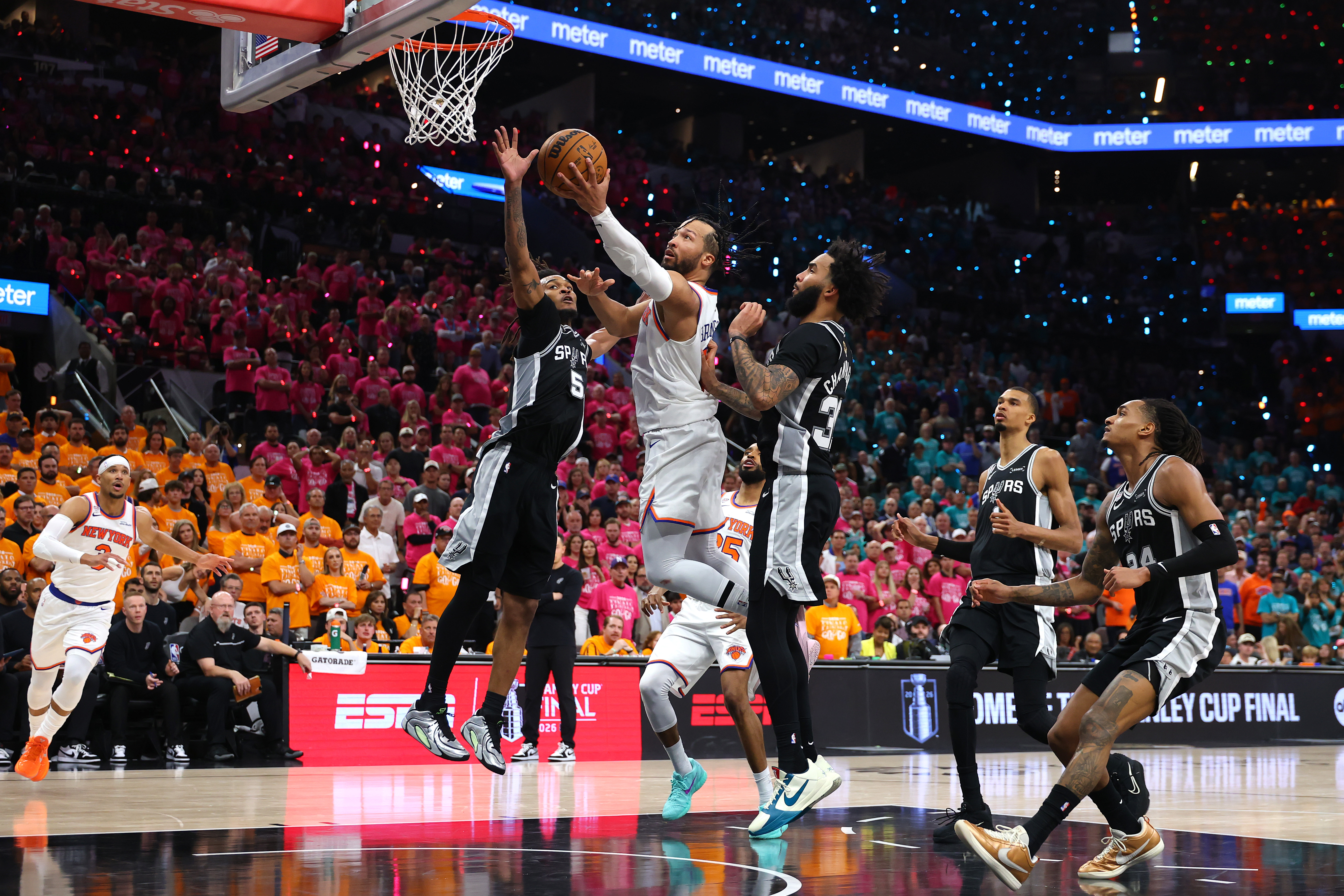
When the season began, the work had already been done behind the scenes. The teams had built and tested the new environment, put support mechanisms in place, and developed a high level of confidence that the NBA’s critical services could handle up to 15 live games nightly.
Scalability and Elasticity
The NBA was already using containers and Kubernetes, but the migration to AWS was an opportunity to rethink how those workloads could perform at scale. Working closely with AWS, the teams dived deep into the NBA’s existing architecture and helped to refactor container deployments to optimize for scalability, speed and elasticity.
Amazon EKS became a key part of that foundation, running the NBA’s containerized microservices and giving teams the flexibility to spin up specific services as demand changed. That ability to be nimble is critical to the NBA, as the number of games, viewers, and regions being served changes from one night to the next based on the pro basketball schedule.
By optimizing how containers run on AWS, the NBA built an architecture that can respond to those peaks while creating a foundation for future growth.

Data in Motion
The NBA’s data infrastructure has to keep pace with millions of fans watching games, scrolling highlights, and looking up statistics or standings in real-time on the platform. As part of the migration, the NBA and AWS modernized the underlying data environment, creating flexibility for its fan-facing experiences.
The results were immediate: a 40% reduction in latency during peak game times, a 66% decrease in average API error rates, 50% faster video transcription, and 99.9% uptime across core and media services.
One standout: the NBA's advanced stat Gravity, which measures a player's defensive pull on opponents, went from taking over seven seconds of latency down to a sub-second. That meant it could run live on-screen during broadcasts instead of only appearing in post-production replays.

Defense wins championships
As the NBA migrated and transformed its direct-to-consumer platform, security and governance had to be part of the foundation. The NBA and AWS built a multi-account architecture using AWS Control Tower, creating the guardrails needed to operate securely at scale. In basketball terms, think of it as an elite defensive system for the cloud.
AWS Control Tower helped give the NBA the guardrails, visibility and control to keep its growing platform secure and organized across teams and workloads. The NBA now has command and control over its digital platform, and the platform has the resiliency and security built-in to scale with confidence. For an always-on platform serving millions of fans, this makes for a foundation that the league can trust, even in the most important moments.
Ask any fan: good defense doesn’t always get talked about, but there’s a reason they say defense wins championships. There’s no way to succeed without it.

Building for the Future
With a solid, rearchitected foundation at its core, the NBA’s completed migration opens the door to an exciting opportunity for future innovation. With AWS, the league can explore what comes next, including adopting AI across its digital experiences to create new and more personalized ways to connect fans with the game.
The platform is built to help the NBA scale internationally, deliver predictive insights to fans, and continue optimizing the fan journey through hyper-personalization. With AWS AI tools, the NBA can deliver more relevant insights and experiences across existing services like League Pass, the NBA App and NBA.com, plus new digital experiences like the AWS NBA Draft Combine Data Hub, launched in 2026.

Learn more about the NBA’s move to AWS
See how the NBA migrated to AWS in record time




Did you find what you were looking for today?
Let us know so we can improve the quality of the content on our pages