What Are Data Silos?
What are Data Silos?
Data silos are digital systems where data is difficult to share or access by other services. This isolation diminishes the value of that data and can lead to duplicates, inaccuracies, increased manual processes, and business performance issues. Data silos exist in software applications, within different departments, and in rapidly growing environments. Organizations can overcome data silos through planning, data governance structures, infrastructure changes, and data migration and integration strategies. Centralized data management, whether the data itself is co-located or spread across multiple sources, removes data from isolation for reuse across the organization.
What are the benefits of centrally managed data?
There are several business benefits of managing data centrally and breaking down data silos.
Easy to locate specific data or files
Centralized data storage systems make sure that employees know exactly where to look for specific files or datasets. Instead of searching through siloed data looking for where data is stored, a centrally managed data system allows for intelligent searching. Tagging tools, such as metadata tags and indexing, also allow for precise storage within data warehouses, making files even easier to locate. Data warehouses are systems that combine multiple data sources.
No manual shifting of data between systems
Centralized data systems rely on effective extract, transform, load (ETL) pipelines and application programming interfaces (APIs) that allow data to flow automatically across a company’s systems. With a centralized and reliable data storage system, employees won’t have to manually export or upload files to separate systems. The movement to an automatic, centralized method of collecting and storing data saves employee time and simplifies the data management process.
Increased productivity and faster decision-making
When employees know exactly where to look for the data they need to enable their decision-making processes, it enhances their productivity. Centralized data systems offer employees agility, as there is less time searching for data and more time acting upon it.
Consistency in reported data
When an organization dismantles data silos, it removes duplicates in data across different systems, instead referencing a single piece of synced data with each query. This means that reporting will never have data conflicts or non-up-to-date data.
What are the causes of data silos?
Data silos are a product of technical limitations and operational inefficiencies in an organization.
Legacy systems
Legacy systems create data silos, as they are often not integrated into wider company technology stacks. Without the same APIs that many modern tools use to share data with other systems, these legacy systems accumulate data in an isolated data silo.
Organizations might need to migrate this data manually to a centralized hub or implement middleware that connects these legacy systems.
Organization structure
The internal organizational structure of an organization can also create data silos if business units don’t actively share their data with others. Fragmented departments with data silos between them can create a significant organizational risk, as organizations need accurate, up-to-date data to make informed decisions.
Organizations can foster cross-departmental data governance and sharing systems to enhance connectivity. Additionally, investing in centralized enterprise data systems ensures that different departments know exactly where they should be sending data to.
Lack of data governance
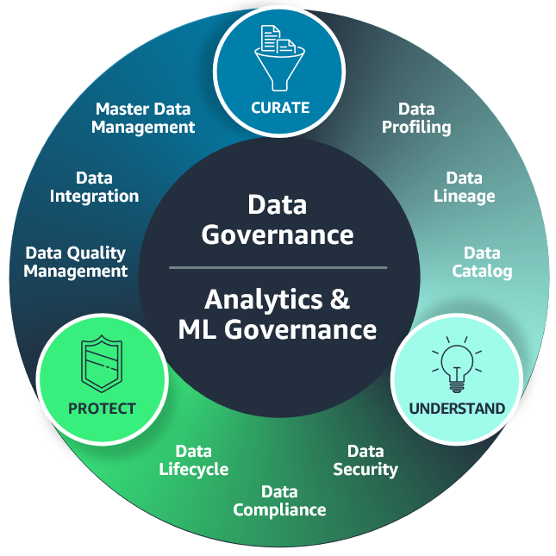
Data governance frameworks cover rules that apply to internal data systems, including data collection, sharing, storage, deletion, and more. By providing a strict data governance regulatory system to follow, every single department, team, and employee will know how to handle data in your organization.
This approach to data ensures it is consistent, helping to maintain data quality and overcome storage issues. Data governance is also a central part of meeting compliance regulations, making this a key focus for organizations.
Rapid scaling
When an organization undergoes a rapid digital transformation or scales quickly, it may ignore its data policies to accomplish tasks faster. If individuals or departments are under pressure to meet other goals or objectives, then they may ignore data governance rules, leading to a failure to correctly use the optimal data architecture.
When teams scale too quickly without a clear data plan, they can construct data silos in their teams.
How to break down data silos
After an organization identifies its data silos, it can look to the wider cause of why data silos occur. From this standpoint, the organization can then take action to unify disparate systems, implement data integration tools, and systematically break down data silos.
Here are a few leading strategies to overcome data silos.
Implement a data governance structure
An enterprise data governance structure defines the correct practices and responsibilities that employees have when they are interacting with data. By defining roles, obligations, and rules in relation to how data is managed, accessed, shared, stored, and tracked across your organization, you’ll embed clarity into your data management pathways. Data governance is key in managing customer data for compliance.
Developing data governance documentation that new hires and seasoned employees alike can read through also helps ensure that everyone understands and follows the data management structure. With clear documentation, employees are much less likely to store data in the wrong place, inadvertently forming data silos.
Map all current data architecture and data flows
Another effective way of removing data silos in an organization is to map out all of the current data systems it uses. Gaining full visibility into the entire data landscape of an organization helps identify where existing data silos are, why data is stuck in them, and how to create a better data flow.
Conducting an extensive inventory of existing data systems, the pipelines that data flows across, and who owns specific segments of that data model, helps boost visibility. After you have better visibility into these systems, you can create a plan to overcome any silos or bottlenecks.
Identify major data bottlenecks
An organization can identify data silos by identifying bottlenecks in its organization, where data has reduced accessibility or visibility. Bottlenecks are typically related to the underlying architecture that a business uses, like API limitations, moments where manual data transfer is used, or departmental data ownership conflicts.
After mapping out your existing systems, bottlenecks will become more obvious to track.
Develop data management systems
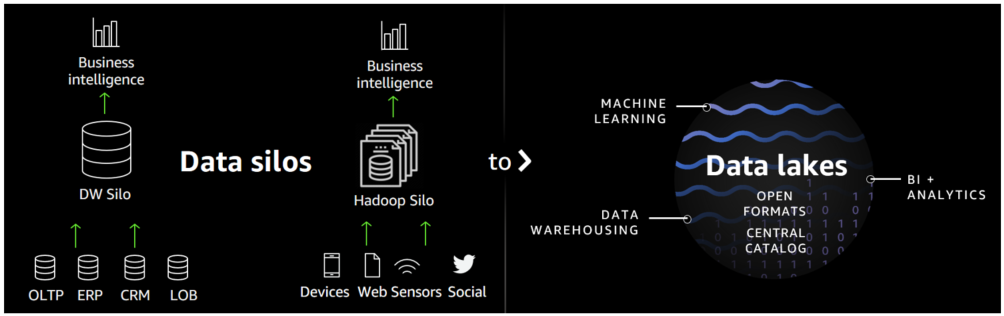
Organizations can develop more effective data systems and introduce infrastructure to help streamline their internal use and storage of data. For example, a company can use data lakes to store large quantities of structured and unstructured data. Connecting a data lake to other existing data tools provides a centralized method of object storage and facilitates business intelligence and ML use cases.
A data warehouse architecture provides a similar system for structured data and repositories that rely on a strict schema. A data warehouse provides a centralized location to store company data, helping to reduce data silos that form due to disconnected systems.
Using data synchronization services also helps to keep event-driven systems in sync.
Migrate and integrate legacy systems
Data silos form when organizations rely on legacy systems, meaning that migrating away from these systems and modernizing organizational architecture can help dismantle them. An organization can assess current systems and trace all dependencies. By conducting a phased migration, companies avoid any downtime associated with legacy systems migration.
Implement correct access permissions
Access control and privilege permission systems provide granular control over who can access what data. Combined with compliance efforts that boost visibility, such as data tagging, helps ensure that only authorized personnel have access to certain data files. Role-based access control systems, attribute-based access controls, and auditable data trails all improve data privacy and minimize security and compliance risks.
Promote a data-sharing company culture
Even with unified data systems in place, an organization can only overcome data silos if its employees engage with these systems. Creating a data-sharing culture by leading from the top down can foster a higher degree of collaboration. When every department readily shares any data assets and relevant data they generate into a centralized system, everyone benefits.
Fostering a cross-department data-sharing culture empowers your teams and motivates people to use the systems you have in place to overcome data silos.
How can AWS help you to overcome data silos?
AWS has created a range of services to help organizations with centralized data management in the cloud. AWS services can help you to migrate and integrate siloed data, provide data cataloging, and allow you to perform analytics and search across multiple data sources at once. Here are a few AWS services to help you overcome data silos:
- AWS Data Exchange is a place where you can find data files, data tables, and data APIs from a vast portfolio of third-party data sets. AWS makes the world’s third-party data easy to find in one data catalog, seamless to use with AWS data and analytics and machine learning services.
- Amazon DataZone is a data management service that makes it faster and easier for customers to catalog, discover, share, and govern data stored across AWS, on premises, and third-party sources.
- AWS Glue provides all the capabilities needed for data integration, so you can gain insights and put your data to work quickly. AWS Glue provides a fully managed, serverless toolkit to design and automate modern data pipelines—with built-in ETL, schema discovery, and cross-service integration.
- AWS Lake Formation can help you centrally manage and scale fine-grained data access permissions and share data with confidence within and outside your organization.
Get started with centralized data management on AWS by creating a free account today.
Browse all cloud computing concepts
Browse all cloud computing concepts content here:
Did you find what you were looking for today?
Let us know so we can improve the quality of the content on our pages