AWS opens applications for the Compute for Climate Fellowship 2026
By Alexandra Lucke, Alae Ismail and Benoît de Chateauvieux | 1 September 2026
- AWS opens applications for the Compute for Climate Fellowship 2026
- Entering the fourth year of the Compute for Climate Fellowship
- Applications for the 2026 Compute for Climate Fellowship are now open
- Key solution areas for 2026
- Cross-cutting priority: Community-led and Indigenous-led approaches
- Area of special interest: Extreme heat
- Technology focus: Frontier AI and advanced compute
- How previous winners are making a global impact
- What our previous winners say
- Program features and benefits
- Key dates
AWS opens applications for the Compute for Climate Fellowship 2026
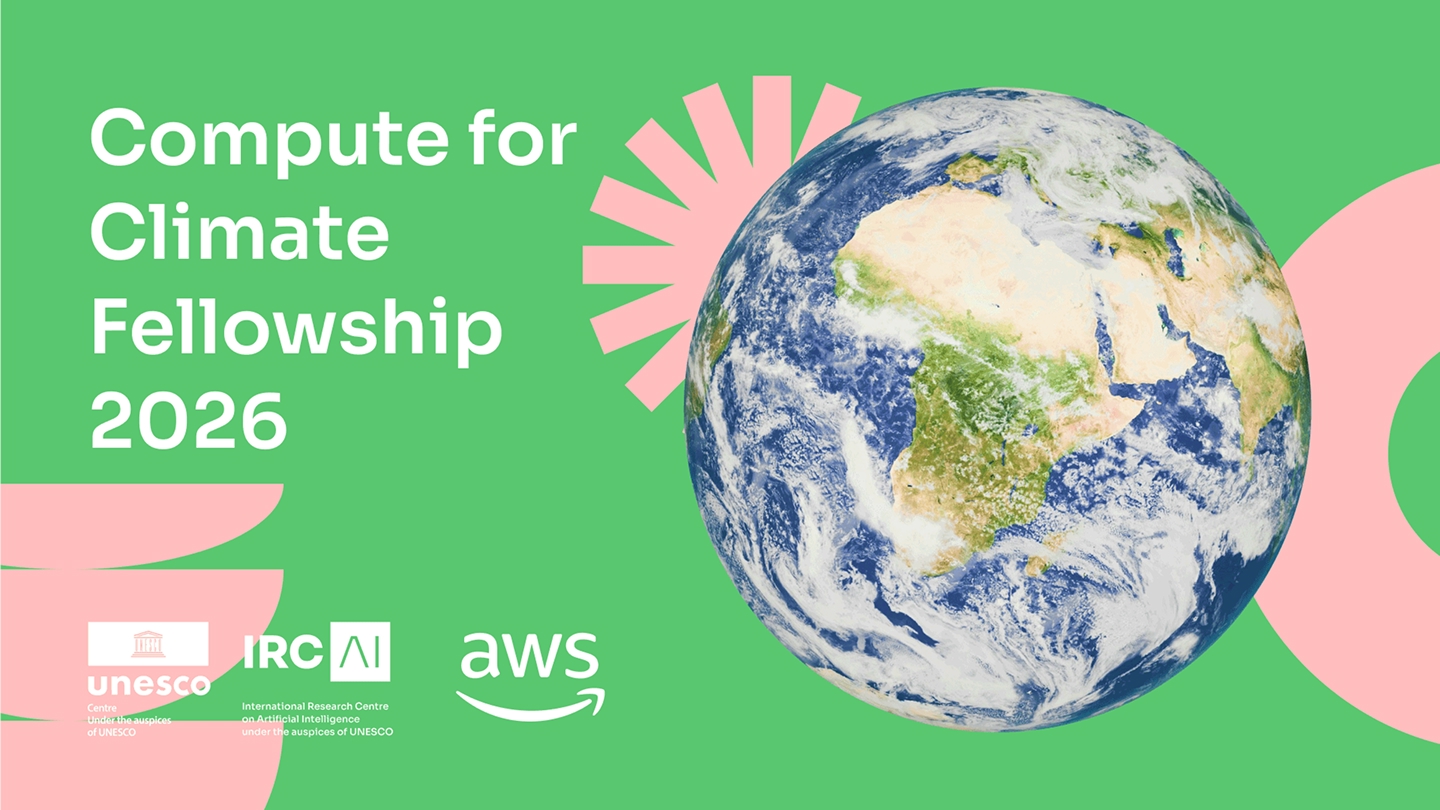
AWS and IRCAI are opening applications for the Compute for Climate Fellowship’s fourth year. In 2026, we will accept up to 10 startups and provide up to $2 million USD grants in the form of AWS credits to help them build groundbreaking proof of concepts (POCs) that tackle the climate crisis with advanced cloud computing and AI. Applications are open from September 1 through September 30, 2026.
The climate crisis is showing no signs of slowing down. The past eleven years (2015-2025) were the warmest in recorded history, with 2025 marking the third hottest year on record at 1.47°C above pre-industrial levels, according to the World Meteorological Organization and the Copernicus Climate Change Service. This trend continues in 2026: Western Europe has just recorded its hottest June and July on record at 2.79°C above the 1991-2020 average, with July 2026 tying 2024 for the hottest July ever recorded globally.
The human cost of this warming is undeniable. In January 2025, the Los Angeles wildfires destroyed more than 18,000 structures, displaced over 200,000 people, and caused an estimated $53 billion USD in damages. Later that year, a series of catastrophic floods and cyclones swept across Southeast Asia, affecting nearly 11 million people across Indonesia, Sri Lanka, Thailand, and Malaysia, displacing over 1.2 million into shelters, and causing over $25 billion USD in damages. Meanwhile, extreme heatwaves in the summer of 2026 have broken temperature records in 18 European countries and forced France to temporarily reduce or shut down nuclear reactors, while exposing an estimated 80 million people to dangerous temperatures above 40°C.
Climate tech startups are responding to the worldwide need for innovative solutions. These companies are inventing groundbreaking new science and technology to reduce greenhouse gas emissions, remove carbon from the atmosphere, and help communities adapt to the impacts of climate change. At AWS, we believe we can help these startups move faster by providing access to advanced computing services, high-performance computing, AI and machine learning, generative AI, and quantum computing. Along with expert guidance to help them build solutions efficiently and with confidence.
Entering the fourth year of the Compute for Climate Fellowship
In 2023, we launched the Compute for Climate Fellowship in partnership with the International Research Centre on Artificial Intelligence (IRCAI), an organization under the auspices of the United Nations Educational, Scientific, and Cultural Organization (UNESCO). The Fellowship was a first-of-its-kind global R&D funding program that provides grants in the form of AWS credits for groundbreaking POCs that think big and use advanced cloud computing to address the climate crisis.
Over three cohorts, the program has supported 35 startups around the world, from fusion energy companies in the United States to virtual power plant builders in South Africa and ocean biodiversity mappers in France to AI crop scientists in the United Kingdom. Each Fellow company builds a groundbreaking POC climate solution funded by AWS with technical and scientific advisors from both AWS and IRCAI.
In 2026, IRCAI and AWS will award up to $2 million USD in AWS credits to up to 10 companies from around the world, with individual grants of up to $200,000 per startup.
Applications for the 2026 Compute for Climate Fellowship are now open
Startups can apply for the 2026 Compute for Climate Fellowship starting September 1, 2026. The deadline for proposals is September 30, 2026 at 11:59pm EST.
The program is global and startups from all countries can apply. The Fellowship selects proposals that think big, demonstrate innovative use of advanced cloud computing, and show the greatest promise of global impact.
Key solution areas for 2026
Proposals must address at least one of the following solution areas in the fight against climate change:
- Clean energy, grid flexibility, and fusion/nuclear simulation—generation, storage, distribution, and intelligent management of clean energy, including nuclear and fusion reactor simulation, renewable energy forecasting, virtual power plants, grid digital twins, and hydrogen production modelling.
- Climate intelligence, earth observation, and risk analytics—data infrastructure and analytics systems that measure, monitor, predict, and communicate climate-related risks, including geospatial AI, climate and weather modelling, greenhouse gas measurement reporting and verification, methane detection, and multi-hazard warning systems.
- Sustainable agriculture, food systems, and water security—technologies that transform food production and water systems through precision agriculture, alternative proteins, autonomous farming, physical AI and robot automation, drought resilience, and climate-smart supply chains.
- Circular economy, industrial simulation, and low-carbon materials—technologies that decarbonize industrial processes and enable circular resource flows through generative AI materials discovery, industrial digital twins, manufacturing optimization, and critical minerals traceability.
- Carbon removal and ecosystem restoration—technologies that remove CO2 from the atmosphere and restore natural ecosystems, including direct air capture simulation, enhanced weathering, biochar optimization, blue carbon, and automated MRV for permanence verification.
- Low-carbon transportation, logistics, and autonomous systems—technologies that decarbonize the movement of people and goods through autonomous vehicle simulation, EV battery modelling, fleet electrification, route optimization at scale, and urban motility simulation.
- Sustainable built environment and data center infrastructure—technologies that optimize the energy performance and climate resilience of buildings and data centers through cooling simulation, carbon-aware workload scheduling, thermal digital twins, and waste-heat recovery.
Cross-cutting priority: Community-led and Indigenous-led approaches
Across all seven solution areas, the Fellowship especially encourages community-led and Indigenous-led approaches that combine advanced technology with local knowledge, lived experience, and culturally appropriate mitigation, adaptation, and resilience strategies. The Fellowship recognizes that Indigenous Peoples are important leaders in addressing climate change and welcomes proposals from innovators in Indigenous communities worldwide.
Area of special interest: Extreme heat
Given the record-breaking heatwaves witnessed in 2026, we particularly encourage proposals that harness advanced computing and AI to anticipate heat risks, protect vulnerable communities, strengthen energy and infrastructure resilience, and enable more effective adaptation to a rapidly warming climate.
Technology focus: Frontier AI and advanced compute
The 2026 Fellowship is also interested in proposals that make innovative use of frontier AI and advanced compute technologies, including:
Core compute technologies:
- AI/ML and generative AI—foundation models (including geospatial, weather, and domain-specific models), and agentic AI systems
- Physical AI and robotics—robot learning, simulation-to-real training, and embodied foundation models for field, industrial, and mobility applications
- High-performance computing—GPU-accelerated training, inference, and scalable simulation
- Physics-informed and scientific ML—neural operators, surrogate modelling, and scientific ML for physical systems
- Climate and weather modelling/earth observation—downscaling, scenario analysis, and geospatial AI
- Digital twins—for energy systems, infrastructure, industry, natural systems, and cities
- Quantum and quantum-inspired optimization—for climate modelling, materials discovery, routing, or energy systems
Enabling technologies:
- Automated measurement, reporting, and verification for emissions, carbon removal, biodiversity, and climate finance
- Large-scale optimization requiring distributed compute
- Time-series analytics, IoT, edge computing, and real-time monitoring at scale
- Privacy-preserving, secure, and interoperable climate data infrastructure
How previous winners are making a global impact
Over the past three years, the Compute for Climate Fellowship has supported 35 startups around the world. Here’s a few examples of how these companies are using advanced computing to solve some of the toughest climate and energy challenges:
- Asoba (South Africa)—building intelligence infrastructure for distributed energy markets in Africa, helping energy operators improve asset performance and unlock new revenue opportunities through AI-driven virtual power plants and microgrid optimization.
- Cosma (France)—mapping deep-sea ecosystems with swarms of autonomous underwater drones and AI, capturing up to 100,000 seabed images per hectare to monitor ocean biodiversity at scale.
- Smartex (Portugal)—using AI-powered computer vision to detect textile defects in real time, preventing fabric waste before it happens and helping manufacturers reduce their environmental footprint.
- Hum.AI (Canada)—building generative AI foundational models to track, predict, and protect the natural world, working closely with Canadian First Nations communities on coastal monitoring and ecosystem restoration.
- Phytoform Labs (United Kingdom)—developing AI models that invent novel crop genetics to create more climate-resilient plants, securing the food of tomorrow.
- Realta Fusion (United States)—developing compact magnetic mirror fusion energy systems and running first-of-a-kind plasma stability simulations in the cloud.
- Thea Energy (United States)—developing proprietary stellarator fusion technology with simpler, planar programmable magnets to reach commercial-scale carbon-free fusion energy faster.
What our previous winners say
Through the Fellowship, these companies have built POCs that accelerated their R&D and opened up new opportunities for growth.
“Advances in AWS cloud computing have paved a new pathway for Realta Fusion to expedite research in magnetic confinement fusion energy systems. Such intensive plasma physics simulations have never been done in the cloud before. The Realta Fusion team is grateful for this fellowship award and excited to use the power of cloud computing to advance fusion energy research.”
– Cary Forest, Co-Founder and Chief Scientific Officer at Realta Fusion
“The Compute for Climate Fellowship is absolutely crucial for Phytoform’s mission of improving sustainability in agriculture. With help from AWS and IRCAI we were able to really accelerate our solution to deploy a unique approach to enhance R&D and secure the food of tomorrow.”
– Nicholas Kral, CTO at Phytoform Labs
Program features and benefits
Selected companies will receive:
- Grants in the form of AWS credits to cover the cloud computing costs of the POC (up to $200,000 USD per startup)
- Three-month POC build period with personalized technical support and mentorship
- Access to advanced computing services including HPC, generative AI, and quantum computing tools
- Expert guidance in advanced computing, AI, sustainability, and ethics from IRCAI and AWS mentors
- Media and visibility opportunities including speaking opportunities and PR on a case-by-case basis
- A showcase of results across AWS channels, United Nations events, and international bodies
All POCs will be designed under the guidelines of UNESCO’s Ethics Impact Assessment for AI, ensuring each solution is built with safe, responsible technology.
Startups that apply but are not selected will have access to up to $5,000 USD in AWS credits and be invited to join the IRCAI Industrial Club.
Key dates
- Applications open: 1 September, 2026
- Applications close: 30 September, 2026
- Review and finalist interviews: October-November 2026
- Winners announced: December 2026
- POC build period: January-April 2027
- Demo Day: April 2027
To apply for the Compute for Climate Fellowship and find out if your startup is eligible, visit https://ircai.org/ircai-aws-climate-fellowship-program-2026/.
The Compute for Climate Fellowship is a partnership between Amazon Web Services (AWS) and the International Research Centre on Artificial Intelligence (IRCAI).
Alexandra Lucke
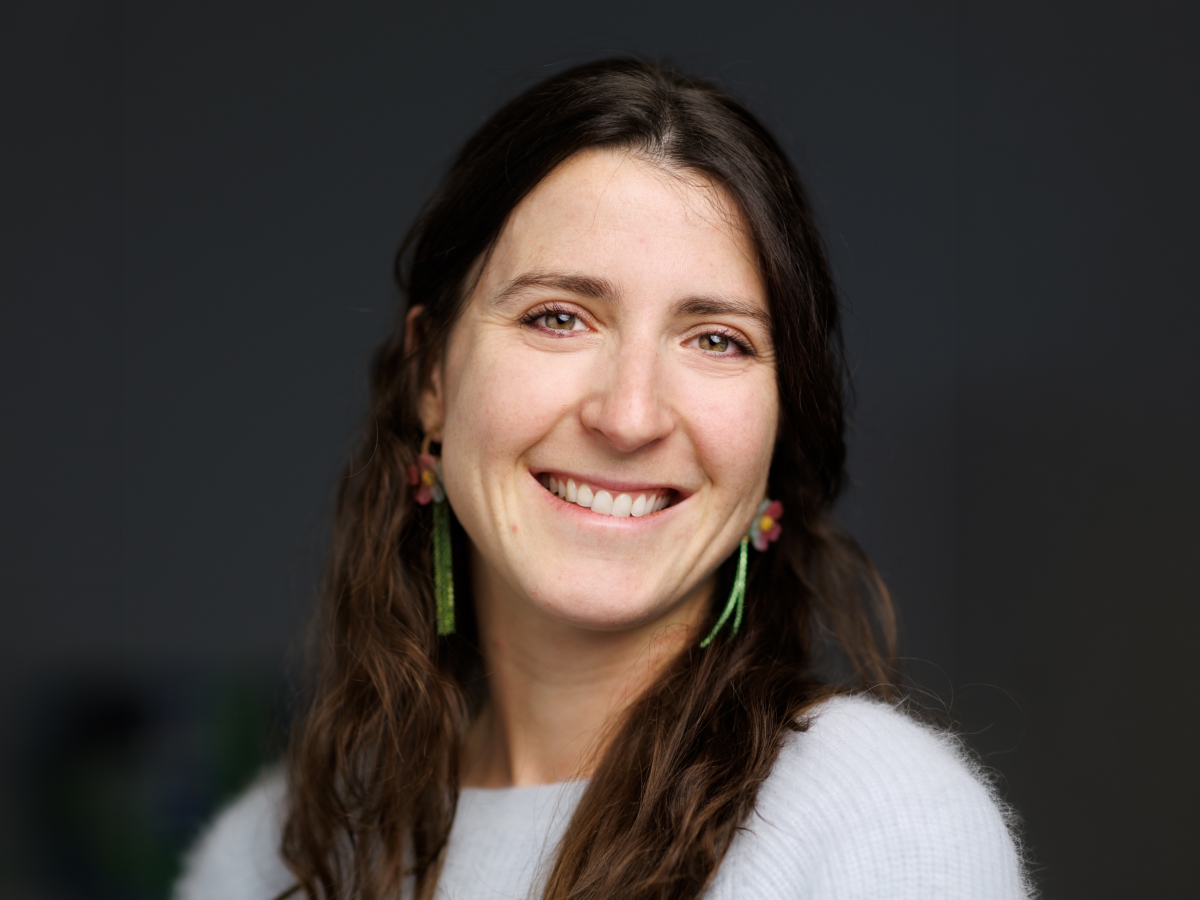 Alexandra Lucke launched the Climate Tech segment for EMEA startups at Amazon Web Services (AWS), helping the region’s best climate tech founders scale through access to cloud technology, go-to-market support, and funding - while building deep relationships with top early-stage and climate-focused VCs. She is proud to be leading this edition of the Compute for Climate Fellowship with IRCAI to accelerate R&D in Climate technologies. Before AWS, Alexandra ran Microsoft for Startups in France and global business adoption programs at Sigfox (French IoT scaleup, $320M raised, acquired in 2022). She joined AWS in 2020 to lead early-stage startups strategy and relationships with the public research and academic ecosystem in France, before specializing in climate tech startups and venture capital. Alexandra’s been an active mentor at Techstars Sustainability Paris and Incubateur HEC Paris for many years.
Alae Ismail
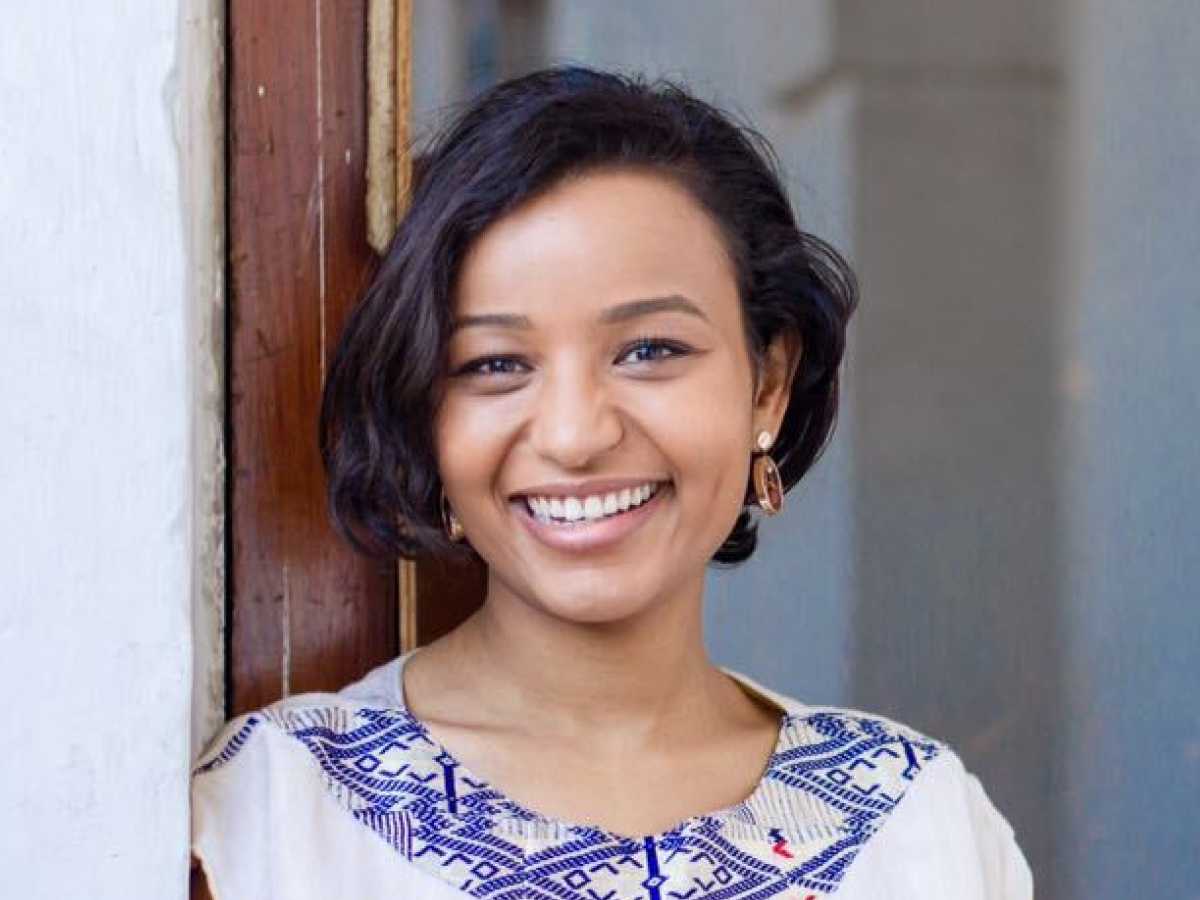 Alae Ismail leads strategic partnership programs for EMEA Startups at Amazon Web Services (AWS), designing initiatives to solve startups’ most pressing challenges. She joined AWS in 2022 and has since pioneered the GTM Sprint — a cohort-based program boosting partner success across EMEA. She is proud to be co-leading this edition of the Compute for Climate Fellowship with IRCAI to advance R&D in climate technologies. Alae’s commitment to sustainability and social impact spans her career — she co-founded the award-winning e-commerce platform Styled By Africa, promoting sustainable Made in Africa luxury across Ethiopia, Nigeria, Ghana, and Kenya to drive trade and job creation. She led the DeFINE (Developing a Fashion Innovation Network for Europe) initiative at London College of Fashion, commissioned by the European Commission, and scaled female-led startups at Imperial Enterprise Lab across tech sectors from climate to healthcare. Alae also hosted Fixing Aid by The New Humanitarian, exploring innovations within the humanitarian sector.
Benoît de Chateauvieux
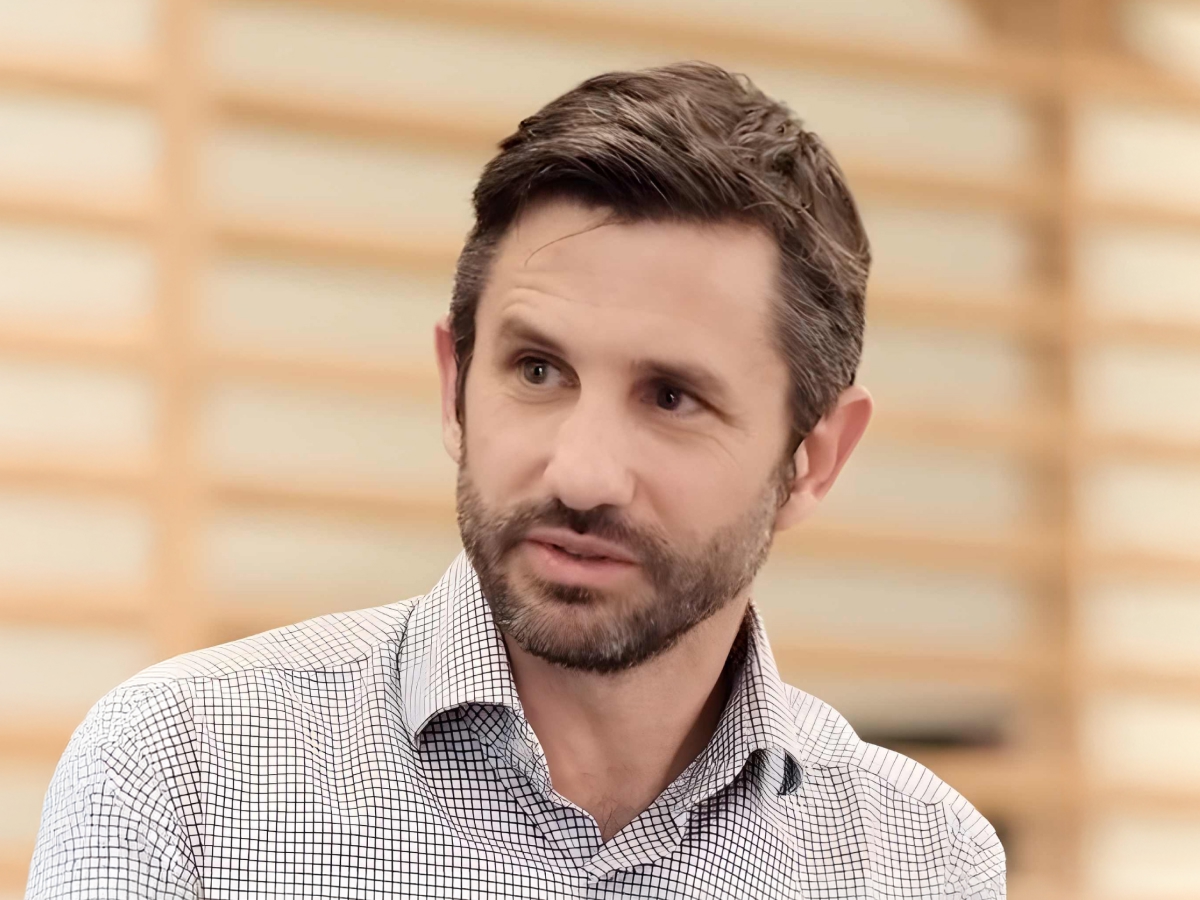 Benoît de Chateauvieux works at the intersection of AI, Cloud, and climate. He has spent the past four years studying the environmental impact of AI and how AWS customers can reduce it. As a Climate Tech Solutions Architect at AWS, he helps climate tech startups build and scale. He serves as NAMER Technical Lead for Climate Tech and is a member of the AWS Environmental Sustainability Technical Field Community, where he leads the Sustainable IT and AI group. Before AWS, Benoît spent nearly two decades building and leading engineering teams — as VP Engineering and CTO — across shared-mobility and fintech, with a career spanning France, Senegal, Chile, Morocco, Vietnam, and Canada.


Did you find what you were looking for today?
Let us know so we can improve the quality of the content on our pages