AWS Partner Network (APN) Blog
Exploration Technology Fusion: Connecting Subsurface Data to HPC Insights
By: Andrew Huang, Product Marketing Manager – Seagate
By: Jamie Hisee, Global Partner Manager – Petrosys | Interica
By: Yuriy Gubanov, Worldwide Principal Partner Solutions Architect – AWS
By: Dmitriy Tishechkin, Principal Technical Leader for HPC, AI, and Advanced Compute – AWS
 |
| Seagate |
 |
The oil and gas (O&G) exploration industry faces an unprecedented data challenge. Modern exploration activities generate massive volumes of complex subsurface data—from high-resolution seismic surveys producing hundreds of terabytes per project to advanced logging tools and monitoring networks contributing additional complex datasets. Many organizations struggle to unlock its full value of this wealth of information because of fragmented workflows, data silos, and the sheer complexity of moving and analyzing petabyte-scale datasets.
In this post, we’re excited to share how Seagate Technology, Petrosys Group, and AWS have collaborated to create an integrated technology fusion that transforms how O&G exploration companies manage, transport, and analyze their most critical data assets. This solution addresses the fundamental challenge of connecting subsurface data to high-performance computing (HPC), dramatically reducing time-to-insight while enabling advanced analytical techniques that were previously impractical.
The challenge: Breaking down data silos in exploration
Traditional exploration workflows suffer from significant discontinuities between data acquisition, management, and analysis phases. Field teams collect vast amounts of subsurface data using sophisticated instruments, but this data often becomes trapped in isolated storage systems. The result is that valuable insights remain locked away, exploration decisions are delayed, and organizations cannot fully benefit from their data investments.
The challenges are multifaceted and interconnected. Modern seismic surveys can generate tens to hundreds of terabytes of data per project, while advanced logging tools, permanent monitoring systems, and real-time acquisition networks add layers of complexity and volume that traditional data management approaches cannot handle efficiently. This volume challenge is compounded by workflow fragmentation, where data typically moves through disconnected systems—from field acquisition devices to on-premises storage, then through various processing and analysis tools. Each transition introduces delays, potential data integrity issues, and operational overhead.
Many organizations possess rich historical archives and current project data but lack the integrated infrastructure needed to apply advanced computational techniques like machine learning (ML), AI-driven interpretation, or large-scale comparative analysis. Additionally, on-premises HPC resources often cannot scale to meet peak computational demands, leading to project delays and suboptimal resource utilization.
The solution: Technology fusion for seamless data-to-insights
Our integrated solution combines three specialized technologies to create a seamless pipeline from data acquisition to actionable insights. At the foundation lies Seagate’s Lyve Mobile storage and data transfer service —high-capacity, ruggedized storage arrays designed specifically for secure physical transport of large datasets. Organizations can lease these devices to efficiently move petabyte-scale data between field locations, data centers, and cloud environments while maintaining data integrity, security, and reducing storage ownership costs with an op-ex model.
Lyve Mobile addresses the last mile problem in data movement, where network bandwidth limitations make cloud transfer impractical for the largest datasets. By providing a reliable physical transport mechanism, organizations can drastically reduce data transfer times and maintain their existing field operations while gaining access to cloud-scale analytics capabilities. The system supports mass import and export services, ensuring that even the most data-intensive exploration projects can benefit from cloud-based analysis without being constrained by network limitations.
The second component is Interica OneView from Petrosys Group, a specialized subsurface data management system that provides intelligent metadata extraction, organization, and workflow management. Interica OneView acts as the orchestration layer, ensuring that data maintains its scientific context and accessibility throughout the entire lifecycle. The platform delivers automated metadata extraction and cataloging capabilities, seamless archiving and recall of exploration data, and workflow management that maintains data lineage and provenance. Integration APIs enable bidirectional data flows with other systems, creating a truly connected data ecosystem. Interica OneView can be deployed both on-premises and in the AWS Cloud, providing flexibility in how organizations structure their data management workflows while maintaining consistent access and control. This hybrid deployment model helps ensure that organizations can optimize their architecture based on specific operational requirements, regulatory constraints, and performance needs.
The third component uses the comprehensive cloud infrastructure of AWS to provide scalable, on-demand compute and storage and make the data ready for AI/ML workloads. Our architecture, shown in Figure 1, integrates two key AWS Solutions: Energy Data Insights (EDI), and Energy HPC Orchestrator (EHO). Energy companies can use EDI, a fully managed AWS offering, to deploy and operate their subsurface data management platform in compliance with OSDU® technical standards, providing the trusted data foundation that complements Interica’s OneView data management and analytics capabilities. After exploration data is stored in the cloud through EDI, it becomes immediately accessible to HPC workflows. EHO then provides an innovative open platform that democratizes access to advanced computing resources, offering a shared marketplace where HPC applications can be created, tested, and deployed without requiring massive capital investment. Meanwhile, companies can use AI/ML services, like Amazon SageMaker and Amazon Bedrock, to apply ML models for automated interpretation and intelligent decision-making directly on their OSDU data. This integrated environment maximizes AWS cloud elasticity by dynamically scaling workloads across CPU, GPU, and Graviton instances while using purpose-built AI/ML infrastructure—helping to ensure that resources are acquired when needed and released when not, driving optimal performance, innovation, and cost-efficiency for energy companies of every size.
By using this cloud-based approach (shown in Figure 1), organizations can scale computational resources dynamically, accessing virtually unlimited processing power when needed while avoiding the capital expenses and maintenance overhead of large on-premises HPC clusters. The elastic nature of cloud resources means that organizations can handle peak computational demands without over-provisioning infrastructure for average workloads.
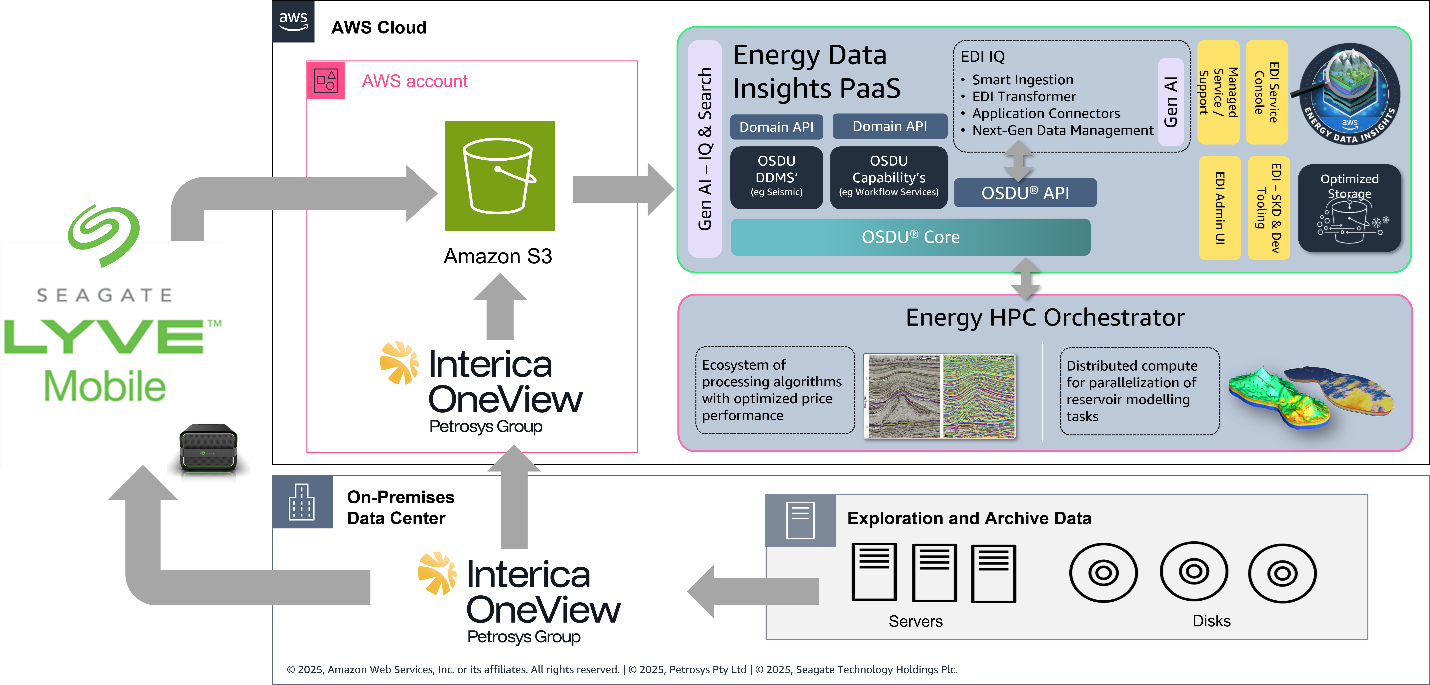 Figure 1: Conceptual solution architecture for exploration technology fusion
Business impact and results
Organizations implementing this integrated solution have achieved significant improvements across multiple dimensions. The elimination of workflow discontinuities and provision of seamless data access dramatically reduces the time required to move from data acquisition to analytical results. Projects that previously required weeks or months for data preparation and initial analysis can now deliver insights in days, fundamentally changing the pace of exploration decision-making.
Faster access to comprehensive analytical capabilities enables more thorough evaluation of prospects and more informed decision-making. Organizations can apply advanced techniques like ML-driven pattern recognition and large-scale comparative analysis that were previously impractical because of data access limitations or computational constraints. This enhanced analytical capability directly translates to improved exploration success rates and more efficient resource allocation.
The solution also delivers enhanced operational efficiency through automated workflows and integrated data management that reduce manual overhead and eliminate many sources of error and delay. Teams can focus on interpretation and decision-making rather than data wrangling and system integration, leading to better utilization of skilled personnel and faster project completion.
Perhaps most importantly, the solution’s cloud-centered architecture helps ensure that organizations can adopt new analytical techniques and technologies as they emerge. This architectural flexibility provides long-term value and competitive advantage, positioning organizations to benefit from future innovations in geoscience computing and data analysis.
Conclusion
The fusion of Seagate’s data transport capabilities, Petrosys Group’s specialized data management platform Interica OneView, and the AWS cloud HPC infrastructure creates a transformative solution for oil and gas exploration. By breaking down traditional data silos and enabling seamless workflows from field to insight, organizations can unlock the full value of their subsurface data investments while positioning themselves for future innovation and growth. This integrated approach doesn’t just solve today’s data management challenges—it creates a foundation for the future of exploration, where advanced analytics, ML, and AI-driven interpretation become standard tools rather than aspirational goals. As the industry continues to evolve, organizations with integrated, cloud-enabled data-to-insights capabilities will be best positioned to discover new resources efficiently and sustainably. To learn more about implementing this solution for your organization, contact your AWS account team or visit the AWS Partner Network to connect with Seagate Technology and Petrosys Group representatives.
.

.
Seagate – AWS Partner Spotlight
Seagate is an AWS Technology Partner and a global leader offering data storage and management solutions for over 40 years. Lyve™ Drive Mobile is yet another groundbreaking innovation from Seagate®: a high-capacity edge storage solution that enables businesses to aggregate, store, move and activate their data. Scalable, modular, and vendor agnostic, this integrated solution bundle eliminates network dependencies, so you can transfer mass data sets in a fast, secure and efficient manner.