Containers
Category: Amazon Elastic Kubernetes Service

Connect any Kubernetes cluster to Amazon EKS
Amazon Elastic Kubernetes Service (Amazon EKS) now allows you to connect any Kubernetes cluster to AWS and visualize it in Amazon EKS via the AWS Management Console. You can connect any Kubernetes cluster, including Amazon EKS Anywhere clusters running on-premises, self-managed clusters on Amazon Elastic Compute Cloud (Amazon EC2), and other Kubernetes clusters running outside […]

Implementing the Saga Orchestration pattern with Amazon EKS and Amazon SNS
This blog post proposes an ecommerce scenario with an Orders microservice, an Orders Rollback microservice and an Inventory microservice that communicate with each other. This communication happens while raising an order successfully or rolling back an order when the Inventory microservice reports an error. This communication is orchestrated with Amazon Simple Notification Service (Amazon SNS) […]
Getting started with Amazon EKS Anywhere
We are excited to announce the general availability of a new deployment option for Amazon Elastic Kubernetes Service (Amazon EKS) called Amazon EKS Anywhere. EKS Anywhere allows customers to create and operate Kubernetes clusters supported by AWS on customer-managed infrastructure. It provides consistent, automated cluster management for your hybrid needs. There are no upfront commitments […]

Amazon VPC CNI plugin increases pods per node limits
As of August 2021, Amazon VPC Container Networking Interface (CNI) Plugin supports “prefix assignment mode”, enabling you to run more pods per node on AWS Nitro based EC2 instance types. To achieve higher pod density, the VPC CNI plugin leverages a new VPC capability that enables IP address prefixes to be associated with elastic network […]

Introducing CloudWatch Container Insights Prometheus Support with AWS Distro for OpenTelemetry on Amazon ECS and Amazon EKS
You can use CloudWatch Container Insights to monitor, troubleshoot, and alarm on your containerized applications and microservices. Amazon CloudWatch collects, aggregates, and summarizes compute utilization information like CPU, memory, disk, and network data. It also helps you isolate issues and resolve them quickly by providing diagnostic information like container restart failures. Container Insights gives you […]
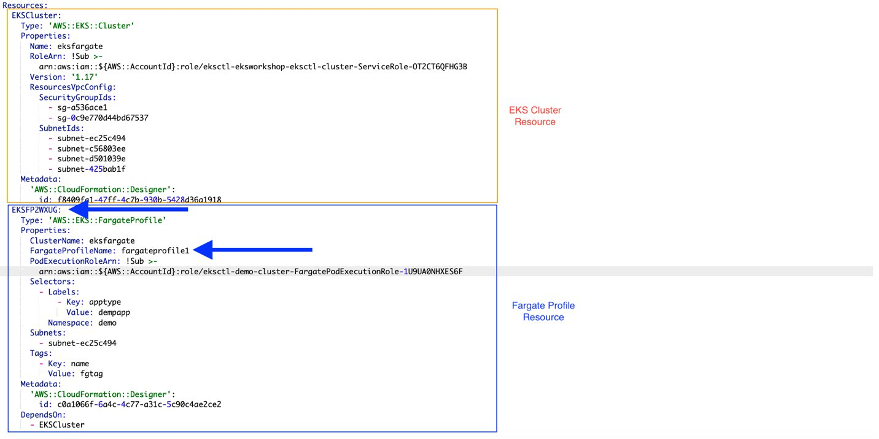
Use CloudFormation to automate management of the Fargate profile in Amazon EKS
Organizations are embracing microservices architectures and container-based deployments to gain agility, scalability, isolation, and separation of concerns. AWS Fargate, the serverless compute engine for running containers in the AWS Cloud, improves agility by taking away the undifferentiated heavy lifting of worker node provisioning and management. With Fargate, organizations can focus on building applications and application […]

Amazon EKS now supports Multus CNI
Today, Amazon Elastic Kubernetes Service (Amazon EKS) announced support for the Multus Container Network Interface (CNI) plugin, enabling customers to attach multiple network interfaces and apply advanced network configuration to Kubernetes-based applications. With Multus availability, communication service providers and other customers with unique networking requirements can configure their EKS clusters to run multi-homed Kubernetes pods […]

Speeding up Windows container launch times with EC2 Image builder and image cache strategy
Update: On January 11, 2022, AWS announced the ability to launch Microsoft Windows Server instances up to 65% faster on Amazon Elastic Compute Cloud (EC2). Customers can flag any Amazon Machine Image (AMI) running Microsoft Windows Server to launch faster. Once flagged, every instance launched from the AMI will automatically launch faster. This is an […]

Capturing logs at scale with Fluent Bit and Amazon EKS
Earlier this year, AWS support engineers noticed an uptick in customers experiencing Kubernetes API server slowness with their Amazon Elastic Kubernetes Service (Amazon EKS) clusters. Seasoned Kubernetes users know that a slow Kubernetes API server is often indicative of a large, overloaded cluster or a malfunctioning controller. Once support engineers ruled out cluster size as […]
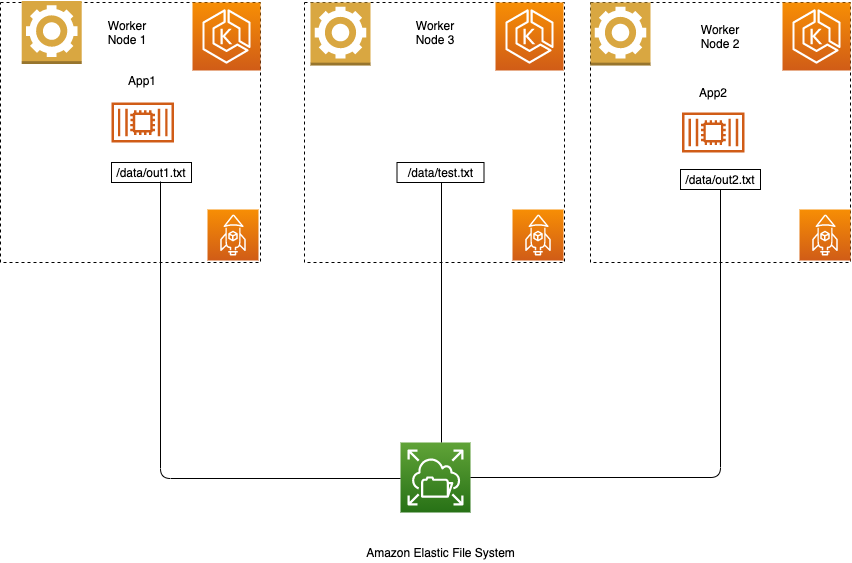
Persistent Storage using EFS for EKS on Bottlerocket
In this post, we discuss about how to achieve persistent storage with Amazon Elastic Kubernetes Service (Amazon EKS) clusters running on Bottlerocket OS with Amazon Elastic File System (Amazon EFS). Persistent storage is needed for long running stateful applications to persist state for high availability or to scale out around shared datasets. This is true […]